News you may have missed #0115

  • China says US intelligence report shows Cold War prejudice. The 2009 US National Intelligence Strategy (.pdf) report singles out Iran, North Korea, China and Russia as nations with the ability to challenge US interests. But government-owned China Daily newspaper says the report is “stuffed with outdated pride and prejudice” and “reflects typical Cold War and power politics mentality”.
  • Somali suicide bomber lived in the US. After Shirwa Ahmed, a US citizen of Somali descent who last October became history’s first known US-born suicide bomber, another Somali-American, who lived in Seattle, has been identified as one of the participants of a suicide bombing that killed 21 peacekeepers in Mogadishu last week. US officials have been warning for almost a year about the strange phenomenon of the “disappearing Somali youths” from their US homes.
  • UK spies used Monopoly sets to help WWII prisoners escape. British secret services embedded escape tools and maps in Monopoly game sets distributed by humanitarian groups in care packages to imprisoned British soldiers during World War II. The article contains some interesting photographs.

Bookmark and Share

US moves to shield operatives in CIA abduction case

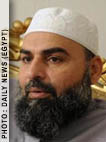
Hassan Nasr

Hassan Nasr

By JOSEPH FITSANAKIS | intelNews.org |
The US government has moved to officially prevent Italian authorities from prosecuting an American Colonel who in 2003 was involved in the illegal kidnapping of a Muslim cleric in Milan. If the Reuters report is accurate, it will be the first time that Washington moves officially to shield its covert operatives from prosecution in the Italian court system. Colonel Joseph Romano is one of 26 Americans, many of them CIA agents, believed to have been involved in the daylight abduction of Hassan Mustafa Osama Nasr from a Milan street. Nasr, who is also known as Abu Omar, says he was brutally tortured and held illegally for years without charge in Egypt, where he was renditioned by his American abductors. Read more of this post

News you may have missed #0114

Bookmark and Share

Spy chief’s records feature prominently in France’s “trial of the century”

Yves Bertrand

Yves Bertrand

By IAN ALLEN | intelNews.org |
A five-year court case described in France as “the trial of the century” or “France’s Watergate” resumed on Monday with the appearance in court of one of five defendants, who is no other than France’s former Prime Minister Dominique de Villepin. He is accused of forging a series of documents showing that France’s current President, Nicolas Sarkozy, had laundered millions of dollars in defense contract bribes through secret accounts in Luxembourg’s Clearstream bank. At the center of the trial is the adversary relationship between Mr. de Villepin, who was former French President Jacques Chirac’s preferred successor, and Nicolas Sarkozy. Mr. Sarkozy accuses Mr. de Villepin of ordering an intelligence investigation into his financial dealings in order to ruin his reputation and score a political victory. Read more of this post

Busted spy ring in Lebanon was Israel’s top network in the Arab world

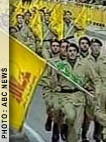
Hezbollah parade

Hezbollah parade

By IAN ALLEN | intelNews.org |
French newspaper Le Figaro has published a well-researched account of an ongoing counterintelligence operation in Lebanon, which has resulted in the dismantling of an enormous network of Israeli spy cells in the country. The paper describes the discovery of the Israeli spy network as “one of the most resounding defeats in [Israel’s] history”. IntelNews has been following the counterintelligence operation from its very beginning last February. Since then, over 70 Lebanese nationals have been charged with conducting espionage operations on behalf of Israel, of whom nearly 40 have been apprehended. According to Lebanese officials, the dismantled spy ring was probably Israel’s most important intelligence network in the Arab world. Read more of this post

News you may have missed #0113

  • US intelligence caused change in missile shield plans, says Gates. US Defense Secretary Robert Gates said that the Obama administration’s decision to abandon the previous administration’s plans for a land-based missile defense system in Eastern Europe came about because of a change of the alleged threat posed by Iran in US intelligence reports. But he also said that the Bush administration plans will not be scrapped. The land-based missiles in Poland and the Czech Republic will be replaced by missile interceptors aboard US naval ships.
  • Canada preparing big balloon (?) to spy on Taliban. The Canadian armed forces are testing a large white balloon equipped with an on-board spy camera, which will be used in Afghanistan to detect improvised explosive devices. Depending on the exact camera used, the system could have a surveillance range of five to twenty kilometers.
  • Portugal’s secret services deny spying on president. Portugal’s SIS secret service agency was forced to issue a rare public statement last week, denying having spied on the country’s president, Anibal Cavaco Silva, of the Social Democratic Party, just 10 days before a closely-fought parliamentary election. Silva is Portugal’s first right-wing head of state since the end of the dictatorship in April 1974.

Bookmark and Share

Analysis: Is Afghanistan really important in the “war on terrorism”?

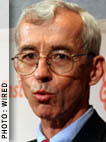
Paul P. Pillar

Paul P. Pillar

By JOSEPH FITSANAKIS | intelNews.org |
The Deputy Chief of the CIA’s Counterterrorism Center from 1997 to 1999, Paul Pillar, has authored an interesting editorial in which he asks “how important are physical havens to terrorist groups, such as al-Qaeda?”. The answer: not very. Writing in The Washington Post, Pillar points out that the main unstated assumption behind the US invasion of Afghanistan, namely that the country must not be allowed to again become a haven for terrorist groups, is incompatible with what we know about how such groups organize. If they are offered a haven, groups such as al-Qaeda will use it for basic training of recruits, says Pillar. But operations planning and training does not require such a base, nor is such a center crucial for successful execution of operations. Read more of this post

Colombia to dismantle scandal-prone spy agency

Semana cover

Semana cover

By JOSEPH FITSANAKIS | intelNews.org |
Colombia’s Administrative Department of Security (DAS) is to be dismantled and most of its 6,000 employees are to be transferred to the country’s other law enforcement agencies, according to Colombian officials. The decision was announced last Friday by DAS director Felipe Muñoz, who said that a new organization would be established to replace the corrupt and scandal-prone agency. A day earlier, Colombian President Álvaro Uribe said that a flood of recent scandals involving DAS had forced him to consider eliminating the agency. Earlier this year, the Colombian government was forced to fire 33 DAS agents for illegally wiretapping the phones of several public figures Read more of this post

News you may have missed #0112

  • Obama refuses to halt CIA probe. Arguing that “nobody’s above the law”, the US President has rejected a request by seven former heads of the CIA to end the inquiry into abuse of suspects held by the Agency.
  • Naval intel agent caught spying on famous Philippine artist. Philippine prizewinning poet, critic and dramatist Bienvenido Lumbera says he will file a complaint against the Philippines armed forces over the apprehension of a Naval Intelligence Security Force agent, who was caught spying outside his home. The country’s government is supposedly concentrating (with US logistical, intelligence and combat assistance) on fighting the Muslim separatist Moro ethnic group (including the Abu Sayyaf Group) in the south, but it is apparently spying on artists and intellectuals on the side.

Bookmark and Share

Ex-President Carter says US knew about 2002 Venezuela coup

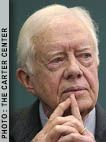
Jimmy Carter

Jimmy Carter

By JOSEPH FITSANAKIS | intelNews.org |
Former US President Jimmy Carter has said that the US was aware of plans for a 2002 military-civilian coup against the government of Venezuelan leader Hugo Chávez, and that it may have even provided assistance to the coup plotters. In an interview to Colombian newspaper El Tiempo, published yesterday, Carter said there was “no doubt that in 2002 the United States had at the very least full knowledge about the coup, and could even have been directly involved”. The coup attempt took place on April 11, 2002, when President Chávez was illegally detained by the coup plotters, who also dissolved the Venezuelan National Assembly and the Supreme Court, and voided the country’s Constitution. But the move ended in failure 47 hours later, after key sectors of the military and parts of the anti-government opposition refused to side with the coup leaders. Read more of this post

CIA to deploy in record numbers in Afghanistan

CIA HQ

CIA HQ

By JOSEPH FITSANAKIS | intelNews.org |
The CIA is preparing to deploy record numbers of operatives and analysts to Afghanistan, according to US officials with access to classified documents, who spoke on condition of anonymity to The Los Angeles Times. Some said that once the intelligence surge is over the CIA’s station at the US embassy in Kabul, Afghanistan, which coordinates CIA activity in the country, will be “among the largest in the agency’s history”, rivaling and perhaps even surpassing those in Iraq, and even in Vietnam in the late 1960s. By the end of 2001, the Agency’s presence in Afghanistan was limited to about 150 agents. This number had doubled by 2005, and current estimates place the CIA’s force in the country to about 700, a number which may double again, once the intelligence surge has reached its peak. Read more of this post

News you may have missed #0111

  • Obama supports extending USA PATRIOT Act domestic spy provisions. The move confirms the US President’s support for the Act, whose warrantless communications monitoring provisions he approved with his Senate vote in 2008.
  • Poland jails alleged Belarusian spy. The man, known only as “Sergei M.” was sentenced Wednesday to five-and-a-half years in prison by a Warsaw district court for spying against Poland between 2005 and 2006. Meanwhile in Belarus four local army officers are still on trial, accused of spying for Poland.
  • Tolkien was trained as a British spy. Novelist JRR Tolkien, whose day occupation was in linguistics research, secretly trained as a British government spy in the run up to World War II, new documents have disclosed.

Bookmark and Share

Declassified study sheds new light on Soviet nuclear war thinking

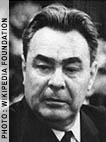
Brezhnev

Brezhnev

By JOSEPH FITSANAKIS | intelNews.org |
US defense analysts exaggerated Soviet aggressiveness and understated Moscow’s fears of a US first nuclear strike, according to a recently released study on Soviet Intentions: 1965-1985, prepared in 1995 by the Pentagon contractor BDM Corporation. The two-volume report, published earlier this week for the first time by the National Security Archive, is based on an extraordinarily revealing series of interviews with former senior Soviet defense officials, conducted during the final days of the Soviet Union. Read more of this post

News you may have missed #0110

  • So, was it pirates or Israeli spies that intercepted a ship carrying Russian missiles? Several observers are beginning to think that Israeli intelligence intercepted or was otherwise involved in the interception of the Arctic Sea, a Russian ship that reportedly carried Russian missiles destined for either Iran or Hezbollah.
  • Trial of accused Palestinian spy begins in Israel. Rawi Sultani is accused of having informed Hezbollah of his membership in the same fitness club as the head of Israel’s military forces, Lieutenant-General Gabi Ashkenazi, in the town of Kfar Saba, as well methods of access into the club. Sultani says that the whole case is nonsense and that he doesn’t even know what Ashkenazi looks like.
  • Czech spies see Russians behind antiwar group’s actions. The Czech Security Information Service (BIS) is monitoring a billboard agency, which has given free advertising space to an antiwar group opposing the country’s participation in US missile defense shield plans. The US announced on Thursday that it plans to abandon the plans. Newspaper Aktuálně reported that BIS suspects Russian involvement. People in the Czech Republic are incapable of opposing US missile shield plans without Russian prompting, it appears.

Bookmark and Share

Analysis: Bush focus on Daily Brief skewed policy decisions

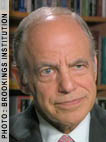
Lieberthal

Lieberthal

By JOSEPH FITSANAKIS | intelNews.org |
A study by a Brookings Institution analyst says the “unprecedented” level of importance given to the President’s Daily Brief (PDB) by George W. Bush skewed his administration’s policy decisions after 9/11 and had negative consequences for the US intelligence community. The PDB arrives at the US President’s desk every morning with highly classified summaries of the latest findings from America’s intelligence community. The importance given to the PDB, whose contents are often highly speculative or unprocessed, varies with Presidents. But Kenneth Lieberthal, former National Security Council staffer in the Bill Clinton administration and senior fellow at Brookings, says the Bush cabinet overwhelmingly relied on the PDB to make policy decisions, which were often based on information that lacked substantial analysis. Read more of this post