Radio station names hundreds of Zimbabwe secret agents

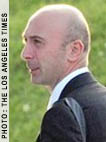
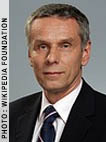
Happton Bonyongwe

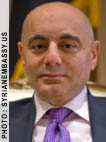
Bonyongwe

By JOSEPH FITSANAKIS | intelNews.org |
A Zimbabwean opposition radio station has begun disclosing the names of hundreds of Zimbabwe intelligence operatives, in what experts say could potentially decimate Zimbabwean intelligence collection activities around the world. On June 30, SW Radio Africa, which is based in London, United Kingdom, aired the names of 83 officers of Zimbabwe’s Central Intelligence Organisation (CIO), and promised to air over 400 more in the coming weeks. The revelation is based on a 2001 document, which was leaked to the station by an unnamed CIO insider. In a statement, SW Radio Africa station manager Gerry Jackson dismissed national security concerns, arguing that the CIO “is not used to protect national security and to safeguard Zimbabweans”, but rather as “the brains behind the regime” of Zimbabwe’s President Robert Mugabe and his political grouping, ZANU PF. Jackson also cited a 2007 Human Rights Watch report, which found that the CIO is among the country’s most serious perpetrators of widespread human rights abuses. The station said that it decided to publish the names “in the interests of transparency and accountability and in the hope that by exposing these names [...] some of the perpetrators of violence [will] think twice before they commit further human rights abuses”. Among the names included in the initial list of 83 persons is that of Hamad Adam, who is listed as a “political councilor” in the embassy of Zimbabwe in Berlin, Germany, as well as Paul Chikawa, who is a staffer in the country’s consulate in Hong Cong. Read more of this post

News you may have missed #530

  • Another spy ring reportedly busted in Kuwait. Kuwait has allegedly busted another spy ring, working for the intelligence services “of an Arab country [that] is currently embroiled in political turmoil”, reports Al-Jaridah daily. The paper also said that information gathered by the spy ring was sent to a liaison officer in the embassy of that country. Last April, two Iranians and a Kuwaiti national, all serving in Kuwait’s army, were sentenced to death for belonging to an Iranian spy ring.
  • How defectors come in from the cold. Interesting historical account of how defectors adjust to their new lives, from the BBC’s News Magazine. Sadly, much of the article is about –you guessed it– the Cambridge Five, which the British seem unable to get over, half a century later.
  • UK report says hackers should fight cyber spies. Britain faces losing its position at the leading edge of technology unless new ideas are developed to fight cyber attacks, including recruiting computer hackers to help fight organized cyber crime and espionage by foreign powers. This is the conclusion of a new report by the University College London’s Institute for Security and Resilience Studies.

News you may have missed #529 (analysis edition)

  • Analysis: US Senate backs Petraeus for CIA chief. The US Senate Intelligence Committee on Tuesday unanimously approved General David Petraeus’s nomination to head the CIA. But, asks, The Washington Post‘s Walter Pincus, which Petraeus will arrive at the CIA? The officer or the gentleman?
  • Analysis: US spies can’t stop buying face microchips from China. US military officials have known since 2005 that they have a quality control problem with the microchips they’ve been buying from China. Already, thousands of fake Chinese microchips are crashing American military networks. Last week, the US government finally announced that they want to find a way to spot “trojan horse” chips. What took them so long?
  • Analysis: Has the CIA penetrated Hezbollah? Hezbollah’s admission that it has seized three spies in its ranks, two supposedly recruited by the CIA, is a serious blow to the Iranian-backed movement’s prestige soon after it took control of Lebanon’s government for the first time. On the other hand, it is worth noting that, in recent years, the Lebanese Shiite group has proven near-impenetrable to both the CIA and the Mossad.

News you may have missed #528

News you may have missed #527

  • Has Microsoft broken Skype’s encryption? The US Congress has finally discovered Skype. But the timing may be bad, since there are rumors that Microsoft has found a way to break the encryption behind Skype communications, rendering all Skype calls potentially open to surveillance by governments. The company (Microsoft) has even filed a related patent application. Communications interception experts have been trying for some time to achieve this.
  • Ex-CIA agent loses legal battle over ‘unauthorized’ book. A former CIA deep-cover operative, who goes by the pseudonym ‘Ishmael Jones’, may have to financially compensate the Agency for publishing a book without the CIA’s approval, after a US judge ruled against him. Jones maintains that the CIA is bullying him because of his public criticism of its practices.
  • Family of accused Australian spy seeks support. The family of Australian-Jordanian citizen Eyad Abuarga, who has been charged with being a technical spy for Hamas, have called on the Australian government to do more to help him, with less than a month before he is due to face trial in Israel.

News you may have missed #526

  • Russia convicts colonel of exposing US spy ring. Colonel Alexander Poteyev has received a (relatively lenient) 25-year sentence for exposing a Russian ‘sleeper cell’ network in the United States. The sentence was delivered in absentia, as Poteyev is believed to have defected to the US, where he probably lives under an assumed identity. As he was fleeing Russia in June 2010, he texted his wife: “try to take this calmly: I am leaving not for a short time but forever. I am starting a new life. I shall try to help the children”. Here is the most detailed recent account the Poteyev’s case in English.
  • Libyan defector holed up in luxury hotel. Moussa Koussa, Libya’s former intelligence chief and foreign minister, faced calls last night to return to Britain for prosecution after he was tracked down to a penthouse suite at the Four Seasons Hotel in Doha, the capital of Qatar, where he has been living under the protection of the Qatari security services.
  • New NZ SIGINT spy agency boss named. The government of New Zealand has appointed Simon Murdoch as the acting chief executive and director of the Government Communications Security Bureau (GCSB) intelligence agency.

New Gaza flotilla organizers accuse Mossad of sabotaging ships

Gaza Freedom Flotilla raid

2010 Flotilla raid

By JOSEPH FITSANAKIS | intelNews.org |
International organizers of a new fleet of ships that is preparing to sail for the Gaza strip, in a bid to challenge the Israeli embargo, have accused Israeli intelligence services of secretly sabotaging two of the vessels. The first announcement emerged on Tuesday from the crew of the Juliano, a Swedish/Norwegian ship harbored in Piraeus, Greece. The organizers, who said that their technicians had documented the results of the sabotage on video, claimed in a statement that “hostile divers had destroyed the [ship’s] propeller house and cut the propeller shaft”. A day later, Irish organizers onboard the MV Saoirse, which is currently docked in Turkey, told Reuters that the vessel experienced major technical damage as it was sailing for refueling to the harbor town of Göcek. The ship was eventually inspected by a marine engineer, who confirmed that it had been sabotaged. Speaking to Irish media, former Irish rugby international Paul Trevor Hogan, who is one of the activists onboard the MV Saoirse, said the damage was “identical [to that of] the Swedish boat and you don’t need to be Sherlock Holmes to figure out who is behind this”. Another member of the ship’s crew, Irish Member of the European Parliament Paul Murphy, called on the government in Dublin to expel the Israeli ambassador to the country. Read more of this post

Follow

Get every new post delivered to your Inbox.

Join 797 other followers