Saudis paid Pakistan to shelter bin Laden, claims security expert

R.J. Hillhouse

R.J. Hillhouse

By JOSEPH FITSANAKIS | intelNews.org |
An American academic and security expert with deep links in the intelligence community claims that, at the time of his killing by US Special Forces, Osama bin Laden was living under house arrest, following a secret arrangement between Pakistan and Saudi Arabia. Former professor and Fulbright Fellow R.J. Hillhouse has cited “sources in the intelligence community” in alleging that the CIA discovered bin Laden’s whereabouts through a Pakistani intelligence officer. The officer, who was privy to the alleged deal between the Saudis and the Pakistanis, appeared as ‘a walk-in’, a term meaning someone who voluntarily contacts an intelligence outpost, usually by simply walking into an embassy or consulate and asking to speak to the intelligence officer on duty. According to Hillhouse, the ‘walk-in’ provided CIA officers with detailed information as to the al-Qaeda leader’s whereabouts, in exchange for US citizenship for him and his family and the $25 million reward offered by the US Department of State for bin Laden’s head. According to Hillhouse’s story, which was picked up yesterday by The Daily Telegraph and The Sydney Morning Herald, the Pakistani informant also told the Americans that elements in the government of Saudi Arabia had entered into a complex monetary agreement with senior members of Pakistan’s main spy agency, the Inter-Services Intelligence directorate (ISI). Under the arrangement, the ISI was paid to keep bin Laden under house arrest in Abbottabad —a military community in Pakistan, selected precisely in order to keep bin Laden under constant and close supervision. Read more of this post

US government wants to use secret witnesses in CIA leak trial

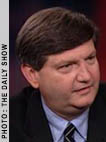
James Risen

James Risen

By JOSEPH FITSANAKIS | intelNews.org |
Prosecutors in the case of an ex-CIA officer accused of disclosing classified information to a journalist have asked the court for permission to introduce evidence in secret and to use privacy screens to shield the identities of witnesses. Jeffrey Sterling, who worked for the CIA’s Iran Task Force,  faces 10 felony counts and up to 120 years in prison for sharing information about the CIA’s operations in Iran. Court documents do not name the recipient of Sterling’s information, but it is common knowledge that Sterling spoke to James Risen, a Pulitzer Prize-winning journalist for The New York Times. In chapter 9 of his 2006 book State of War: The Secret History of the CIA and the Bush Administration, Risen details a botched operation by the Iran Task Force, which tried to pass to the Iranians a series of faulty nuclear bomb design documents. To do this, the CIA apparently recruited a Russian former nuclear scientist, who had defected to the United States. The unnamed scientist was told to travel to Vienna, Austria, in early 2000, and offer to sell the documents to the Iranians. But the documents contained a deliberate technical flaw, which, Risen alleges, the Russian CIA operative thought was so obvious that it could make him look untrustworthy in the eyes of the Iranians, thus endangering the entire mission. The Russian scientist ended up letting the Iranians know about the flaw, reveals Risen. He further alleges that the CIA operation may have actually helped the Iranian nuclear weapons program, as Iranian scientists would have been able to “extract valuable information from the blueprints while ignoring the flaws”. Read more of this post
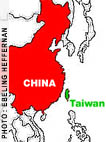

News you may have missed #564 (China/Taiwan edition)

China & Taiwan

China & Taiwan

►►Taiwan opposition party alleges Chinese hacking. Taiwan’s pro-independence Democratic Progressive Party (DPP) says it has been the target of a Chinese hacking campaign that since March has made daily incursions into its computers, complicating its preparations for presidential elections in January. A DPP spokesman said the hackers had downloaded the party’s research reports, schedules and meeting notes, but hadn’t stolen any sensitive information.
►►Taiwanese businessman sentenced for spying for China. Taiwan’s High Court has sentenced 35-year-old Lai Kun-chieh to 18 months in prison for spying for China. Taiwan’s Defense Ministry says Lai was recruited by Chinese intelligence agents while working in China. But apparently a Taiwanese military officer approached by Lai and asked to share classified information, reported the incident to the authorities.
►►Taiwanese ex-spy arrested in China. There are reports in Southeast Asian news outlets of an arrest in China of a retired Taiwanese intelligence official, who was allegedly vacationing in the country. The former spy, who is identified simply as “Wu” in Chinese-language media, was arrested four months ago, soon after he arrived in China “as a tourist”. It is worth noting that, in 2010, the Deputy Director of Taiwan’s National Security Bureau Secret Service Center, Chang Kan-ping, warned retired intelligence officers to avoid visiting China, “because of the risk of arrest or interrogation there”.

Turkish intel report raises fears of Syrian, Iranian support for PKK

PKK banner

PKK banner

By JOSEPH FITSANAKIS | intelNews.org |
By all accounts, in 1998 Syria discontinued its clandestine support for the Kurdistan Workers’ Party (PKK), a leftist secessionist movement that aspires to create a Kurdish homeland comprising mostly of territories in Turkey’s Anatolia region. But a leading Turkish newspaper claims that, according to a classified intelligence report, Damascus has resumed its support for the PKK. The paper, Zaman, said that according to the report, Turkey’s main intelligence directorate, the MİT, has concluded that Syria has “started to support the PKK” again, thus reverting to its pre-1998 stance. It was on that year that Damascus expelled the PKK’s founder and leader, Abdullah Öcalan, who had previously been given shelter and protection in the country. A few months later, Öcalan was snatched by Turkish commandos from the hands of Greek diplomats in Nairobi, Kenya, and flown to Turkey, where he is now serving a life sentence. Following Öcalan’s expulsion, Syria, which is home to an estimated 400,000 Kurds, quietly began cooperating with Ankara against the PKK and its sister organizations operating on Syrian soil. But the MİT report cited by Zaman says that, under the fear of anti-government militancy and continuous popular and ethnic uprisings, Damascus has tried to mend relations with its Kurdish minority, and is now “providing shelter to some of the PKK’s most important leaders”. The classified report, which Zaman says gives “a highly detailed overview” of the PKK’s regional activities, also alleges that Syria has increased its security collaboration with Iran, which is also home to several thousand ethnic Kurds. Read more of this post

News you may have missed #563 [updated]

Mike McConnell

Mike McConnell

►►Colombia spy official imprisoned for illegal wiretapping. Gustavo Sierra Prieto, the former analysis chief of Colombia’s soon-to-be-dismantled DAS intelligence agency, has been sentenced to eight years and four months in jail for his role in the illegal wiretapping of government opponents, judges and journalists. But the main culprit in the wiretapping scandal, former DAS Director Maria Pilar Hurtado, is still hiding in Panama.
►►Cold War documents detail CIA interest of Canada. The CIA has declassified some of its Cold-War-era reports on Canada. The documents show that the Agency’s interest in America’s northern neighbor was mostly related to the its satellite R&D, as well as its economic sector, with a particular focus on Canada’s energy and minerals sector. There is also discussion in some documents of how to best utilize Canada’s energy resources in a possible war with the Soviet Union.
►►Ex-intel official says US must engage in cyberspying. Is it just me, or is there a calculated echo chamber developing by former senior US spy officials? Read more of this post

Did Russian secret services avert military coup in Sverdlovsk?

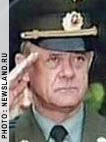
Vladimir Kvachkov

V.V. Kvachkov

By JOSEPH FITSANAKIS | intelNews.org |
The Russian intelligence services arrested members of an illegal paramilitary unit that planned an armed insurrection in one of central Russia’s biggest cities. According to reports from Yekaterinburg, the administrative capital Russia’s Sverdlovsk province, leaders of the alleged paramilitary unit hoped that their action would lead to a nationwide rebellion, eventually resulting in a military coup in Moscow. Several people were arrested by security forces of the FSB, Russia’s Federal Security Service a few days before August 2, the day when the alleged insurrection was to have taken place. Sources from the FSB say that the plotters were working on a four-step plan of action. First, they planned to attack the FSB’s Sverdlovsk district command center, the Russian Ministry of the Interior’s regional headquarters, as well as the offices of Russia’s Ministry of Emergency Situations, and capture or kill all senior staff. They would then blow up key power stations around Yekaterinburg, effectively shutting down the city’s electricity network. Taking advantage of the widespread confusion among the regional security apparatus and the population, they would move to seize local weapons depots. The alleged insurrection plan called for distributing the seized weapons among members of Yekaterinburg’s urban poor, in an attempt to widen the base of the rebellion. The plan’s final step viewed a widening insurrection in Yekaterinburg as a spark that would trigger similar Libya-style uprisings across Russia, resulting in a coup that would depose the current government in Moscow and replace it with a transitional military regime. According to news reports, the FSB arrested several leaders of the alleged insurrection, including former members of the Russian military, who are said to be linked with the People’s Militia, an insurrectionist group composed by former military and intelligence officials, led by Colonel Vladimir Kvachkov. Kvachkov, a retired Colonel in the Russian Military Intelligence Directorate (GRU), was arrested in December of 2010 on charges of planning “an armed rebellion for the forceful seizure of power in Russia”. Read more of this post

News you may have missed #562 (East German Stasi edition)

Stasi emblem

Stasi emblem

►►Archive photos show East German spy service disguises. While sifting through the archives of the East German secret state police, the Stasi, Berlin-based artist Simon Menner unearthed a series of images used by the organization for an internal course called The Art of Disguising. He reproduced the photos and has put them on display in a new exhibition entitled Pictures from the Secret Stasi Archives.
►►Former German leftwing radical was Stasi informant. In the 1960s and 1970s, Horst Mahler was a leader of the German left and a lawyer for the militant-left Red Army Faction. Now he is a member of the radical right, sitting in jail for denying the Holocaust. But he has reportedly verified reports that he also worked as an informant for East Germany’s secret police, the Stasi, from 1967 to 1970.
►►Thousands of Stasi informants still unidentified. Fifty years after the construction of the Berlin Wall, thousands of West German spies for the former East German Stasi secret police have yet to be identified, according Read more of this post

Soviet KGB may have killed Albert Camus, claims paper

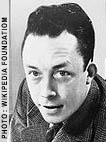
Albert Camus

Albert Camus

By JOSEPH FITSANAKIS | intelNews.org |
Albert Camus, one of France’s most revered intellectuals, who died in a mysterious accident in 1960, may have been killed by Soviet intelligence, according to an article in one of Italy’s most reputable newspapers. Camus, a philosopher, novelist and journalist, who won the 1957 Nobel Prize for Literature, died on January 4, 1960, during a road trip from Provence to Paris. Camus had initially planned to accompany his wife and children on a train ride to Paris, but changed his mind at the last minute, after his trusted friend and publisher, Michel Gallimard, offered him a ride in his car to the French capital. That evening, as Gallimard and Camus were driving through the small town of Villeblevin, Gallimard’s Facel Vega FV3B rammed into a tree at high speed. Camus was killed instantly, while Gallimard died in hospital several days later. But an article published last week in one of Italy’s oldest newspapers, Corriere della Sera, claims that the two men may have been killed after Soviet intelligence agents sabotaged Gallimard’s car. The allegation is based on Italian literary scholar Giovanni Catelli, who reportedly unearthed a written testimony by Czechoslovakian author and translator Jan Zábrana. The testimony is included in the Czech-language edition of Zábrana’s personal diary, in which he claims that “a man who knew lots of things and had very informed sources” had told him that Camus’ assassination was “ordered personally” by Dmitri Shepilov, who was the Soviet Union’s Minister of Foreign Affairs from 1956 to 1957. Read more of this post

News you may have missed #561

Francis Gary Powers

Francis G. Powers

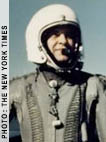
►►US to phase out U-2 spy plane after 50 years. After more than 50 years gathering intelligence 13 miles above the ground, the United States’ U-2 spy planes will be phased out and replaced by unmanned drones by 2015, according to reports this past week. The classified U-2 program came to light in 1960, when a Soviet surface-to-air missile brought down a U-2 flown by CIA pilot Gary Powers, who parachuted to safety but was soon captured.
►►Security company unearths ‘massive’ cyberespionage operation. A widespread cyberespionage campaign stole government secrets, sensitive corporate documents, and other intellectual property for five years from more than 70 public and private organizations in 14 countries. This is according to Dmitri Alperovitch, vice president of threat research at the cyber-security firm McAfee, who uncovered the alleged plot. The operation, dubbed SHADY RAT, targeted the United Nations and the United States, among other national and international entities.
►►South Korea expands spy ring investigation. South Korean authorities have expanded the controversial investigation into the alleged Wangjaesan spy ring, to include Read more of this post

News you may have missed #560 (new books edition)

Khalil al-Balawi

Khalil al-Balawi

►►New book on CIA’s Khost bomb disaster. Washington Post reporter Joby Warrick has authored a new book, examining the December 31, 2009, killing of seven CIA operatives by Jordanian doctor Humam Khalil al-Balawi in Khost, Afghanistan. In the book, entitled The Triple Agent, Warrick quotes several “anonymous” sources from within CIA and Jordan’s General Intelligence Department (GID), which was involved in running al-Balawi. Aside from blaming GID, Warrick says the CIA’s Amman station chief was partly responsible for the botched operation.
►►Hollywood producer was Mossad spy, says new book. The book Confidential: The Life of Secret Agent Turned Hollywood Tycoon Arnon Milchan, says that Milchan was a full-fledged operative for Israel’s now-defunct intelligence agency, Lakam. The agency, which was also known as Israel’s Bureau of Scientific Relations, collected scientific and technical intelligence abroad. It was disbanded in 1986 following the arrest of US Navy analyst Jonathan Pollard for engaging in espionage on behalf of Israel. The book’s authors, Meir Doron and Joseph Gelman, argue that Milchan, who produced such movies as Love and Other Drugs and Knight and Day, worked for Israeli intelligence by supervising government-backed accounts and front companies that financed “the special needs of the entirety of Israel’s intelligence operations outside the country”.
►►Book alleges US-Russian spy swap deal. In 2010 the CIA considered a swap deal that would have delivered to Moscow two Americans currently imprisoned in the US for spying for Russia. This information is included Read more of this post

News you may have missed #559

Manuel Noriega

Manuel Noriega

►►Why did Pakistani spy chief secretly visit China? Reports reveal Lt. Gen. Ahmed Shuja Pasha, head of Pakistan’s main military intelligence agency, the ISI, flew on a secret mission to Beijing for urgent talks this Monday. China’s ties with Pakistan have traditionally been tense, and have become worse in recent years, because China accuses Pakistan of harboring secessionist Chinese Muslim militants. Some observers suggest that Pasha’s trip may have been more of a summons than a visit.
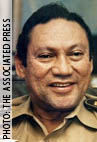
►►France to extradite Manuel Noriega to Panama. France has confirmed it will extradite Manuel Noriega to Panama, where he is wanted over human rights violations during his rule in the 1980s. The former Panamanian military leader is currently serving a prison sentence in France for money laundering. Speaking during his trial in Paris last year, the former US ally claimed that millions of dollars he deposited in several French bank accounts were CIA payments for his services, not income from illicit drug sales.
►►US intel budget drops by $500 million. More than $500 million would be cut from US intelligence agencies under a bill authorizing programs and spending for spying operations next year, Read more of this post

Ex-CIA counterterrorist chief says al-Qaeda to turn to computer hacking

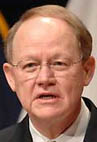
Cofer Black

Cofer Black

By JOSEPH FITSANAKIS | intelNews.org |
The strategic retreat currently being experienced by al-Qaeda will force the group to concentrate on inflicting damage on its enemies through the Internet. This is the opinion of Cofer Black, the straight-talking CIA veteran who retired in 2002 as Director of the Agency’s Counterterrorism Center. Black, who is known for his hawkish views on Washington’s ‘war on terrorism’, gave the keynote speech on Wednesday at the Black Hat Technical Security Conference in Las Vegas, Nevada. He told an audience of nearly 7,000 conference participants that “the natural thing” would be for al-Qaeda in the post-bin-Laden age to continue to engage in terrorism by “fall[ing] back to things that are small and agile”, with computer hacking being an ideal candidate. Black, who since 2002 has worked for private contractors, including Blackwater/Xe, illustrated his point by referring to Stuxnet, the elaborately programmed computer virus that targeted electronic hardware in Iran’s nuclear energy program in July of 2010. “The Stuxnet attack is the Rubicon of our future”, said the former CIA official, adding that it was the computer virus designed to cause “physical destruction of a national resource”. Black is rightly revered by intelligence observers for having warned US government officials of a large-scale terrorist attack in August of 2001, one month prior to the September 11 hijackings. Having said this, it is not exactly prophetic to state, as he did, that “cyber will be a key component of any future conflict”. Read more of this post

News you may have missed #558

Amrullah Saleh

Amrullah Saleh

►► US government says Iran aids al-Qaeda. The US Treasury Department has accused the Iranian authorities of aiding al-Qaeda, saying Tehran had entered into financial agreements with six people believed to be al-Qaeda operatives in Iran, Kuwait, Qatar and Pakistan. According to Treasury officials, one of the six “is believed to have recently ascended to the No. 2 position in Al Qaeda, reporting directly to the organization’s new leader, Ayman al-Zawahri”.
►►Interview with Afghan spy chief. CNN has an exclusive interview with Amrullah Saleh, the –usually media-shy– former head of Afghanistan’s National Directorate for Security. The interview is essentially one long attack on Pakistan, which Saleh blames for destabilizing Afghanistan, hiding and sheltering al-Qaeda members, and providing funding and arms to the Taliban.
►►Sudan’s spy chief secretly visited France in June. The director of Sudan’s National Security and Intelligence Services (NISS), Mohamed Atta al-Moula Abbas, secretly traveled to Paris last June. He held talks there with Read more of this post

High-level spy-ring arrests send shockwaves in S. Korea

Lim Chae-jung

Lim Chae-jung

By JOSEPH FITSANAKIS | intelNews.org |
South Korean prosecutors have indicted or are questioning dozens of alleged members of a North Korean spy ring, in what is said to be the country’s largest espionage case in over a decade. Seoul’s political establishment has been rocked by the espionage scandal, which allegedly involves several trade unionists, academics, and at least ten members of the country’s opposition Democratic Party. According to security officials, the suspects were members of an underground organization called Wangjaesan, after Mount Wangjae which is a revered national monument in North Korea. The official indictment claims that Wangjaesan was handled by operatives of Office 225 of the North Korean Workers’ Party Korea, which is tasked with overseeing the activities of sleeper agents operating in South Korea. The organization was allegedly headed by a man identified only as ‘Kim’, who owned a South Korean electronics import-export company, and routinely traveled to China and Japan, where he purportedly met his North Korean handlers. Aside from ‘Kim’, South Korean counterintelligence investigators are reportedly questioning close to ten senior members of the Federation of Korean Trade Unions, several academics, as well as at least a dozen opposition political figures. Among the latter are members of South Korea’s leftwing Democratic Labor Party, widely considered as the political wing for the Korean Confederation of Trade Unions. Read more of this post

News you may have missed #557 (‘CIA getting away with stuff’ edition)

CIA HQ

CIA HQ

►►Judge dismisses CIA mind-control lawsuit. A court has dismissed a federal lawsuit against the CIA by the Vietnam Veterans of America (VVA) for allegedly subjecting US military personnel to chemical, biological and mind control experiments from 1953 until 1976. According to the presiding judge, the veterans can’t sue the CIA because they can’t prove they took “secrecy oaths” administered by the Agency. But the lawsuit continues to apply against the US Department of Defense and other government entities and individuals.
►►Judge absolves CIA for destroying torture tapes. In 2007, the US Justice Department began an investigation into the destruction by the CIA of videotapes, which reportedly showed acts of torture committed during interrogations of terrorism detainees. It concluded that the CIA destroyed the tapes on purpose, after it was instructed to deliver them to the DoJ for examination. But, in a move that hardly surprised observers, a judge on Monday ruled that the CIA did not act in contempt when it destroyed videotapes.
►►Norway quietly drops US spy activities investigation. Back in November of 2010, Norway, Sweden and Denmark launched official investigations into media reports that accused US embassies in their countries of operating illegal intelligence-gathering networks. Read more of this post