‘We killed Iranian scientist’ claims Israel intel source

Daryoush Rezaei

Daryoush Rezaei

By JOSEPH FITSANAKIS | intelNews.org |
A source in Israeli intelligence has told a quality German newsmagazine that Israel was behind the recent killing of an Iranian physicist in Tehran. The 35-year-old physicist, Darioush Rezaei, was shot twice in the throat on July 23, by two men on a motorcycle, as he and his wife were picking up their four-year-old daughter from kindergarten. Iranian authorities dismissed early reports that Rezaei was a nuclear academic, saying that there had been “some confusion” about the dead man’s identity, and that Rezaei was simply studying for a masters’ degree in electronics. It later became clear, however, that Rezaei’s electronics expertise was in the use of high-voltage switching systems for triggering nuclear warheads explosions. Rezaei was the fourth Iranian physicist or nuclear expert to be assassinated since 2007, after Ardeshire Hassanpour,  Masoud Ali Mohammadi and Majid Shahriari. Another nuclear scientist, Fereydoon Abbasi, who was injured in a separate bomb attack on the same day Dr Shahriari was killed, now heads Iran’s Atomic Energy Organization. There is little doubt in intelligence circles that the attacks on the Iranian researchers are part of a wider Western and Israeli covert action program that includes —apart from assassinations— sabotage and cyberwarfare. Now an article in German quality newsmagazine Der Spiegel quotes an unnamed “Israeli intelligence source” as saying that Rezaei’s July 23 assassination “was the first serious action taken by the new Mossad chief Tamir Pardo”. Read more of this post

News you may have missed #556

David Irvine

David Irvine

►►Australian computer networks spied ‘massively’. Cyberespionage is being used against Australia on a “massive scale” and some foreign spies are using Australian government networks to penetrate the cyberdefenses of allies such as the United States. This according to the Director of the Australian Security Intelligence Organisation (ASIO) David Irvine. Speaking at a business forum, Mr. Irvine said that “it seems the more rocks we turn over in cyberspace, the more [cyberespionage] we find”.
►►US to give Iraq wiretapping system. The US will give the government of Iraq a wiretapping system that will allow it to monitor and store voice calls, data transmissions and text messages from up to 5,000 devices simultaneously. The system is to be installed with the acquiescence of the three current cellular communications providers in Iraq, according to the US Air Force. A similar system was set up by a US contractor three years ago in Afghanistan.
►►Judge says NSA whistleblower faced ‘tyrannical’ US government. This blog has kept an eye on the case of Thoma Drake, a former US National Security Agency employee  who was taken to court for leaking secrets about the agency to a journalist. But the judge in his case, Richard D. Bennett, refused Read more of this post
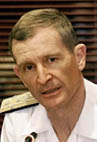

Former US spy chief questions ‘war on terrorism’ logic, tactics

Dennis Blair

Dennis Blair

By JOSEPH FITSANAKIS | intelNews.org |
America’s former top intelligence official has publicly questioned the logic and methods informing Washington’s “war on terrorism”, and called for the CIA unmanned drone assassination program in Afghanistan and Pakistan to be grounded. Dennis C. Blair, who was Director of National Intelligence (DNI) until May of 2010, was speaking last week at the Aspen Security Forum in Colorado.  In an hour-long forum conversation with television journalist Leslie Stahl, Blair —a retired Admiral— explained that, in his view, America’s “war on terrorism” is misconceived, strategically counterproductive and ludicrously expensive. Speaking on the CIA’s unmanned drone war in Afghanistan and Pakistan, Admiral Blair agreed that the drone attacks have killed some “mid-level” Taliban or al-Qaeda operatives, but said that the strikes have had a negligible overall impact on American security. As a terrorist outfit, al-Qaeda has shown that it is able to easily “sustain its level of resistance to an air-only campaign”, said Blair. Additionally, the former DNI said that unilateral air strikes are legally questionable and have proven strategically damaging, by “alienating the countries concerned” and dominating Washington’s relations with key nations such as Pakistan, Yemen and Somalia (click here to read intelNews’ criticism of American raids in Somalia). In doing so, the drone attacks tend to “threaten the prospects of long-term reform” in those countries, said the retired Admiral. Earlier in the conversation, Blair had questioned the economic basis of America’s “war on terrorism”, telling his audience that the US intelligence and security establishment currently spends around $20 million a year for each member of al-Qaeda scattered around the world. Read more of this post

News you may have missed #555

IARPA logo

IARPA logo

►►US spy agencies want to use photos to trace people. In announcement for its new Finder research program, IARPA, the US intelligence community’s research arm, says that it is looking for ways to “geolocate images” by extracting data and metadata from the images themselves and using this to make guesses about where they were taken.
►►Norway to reassess domestic intelligence gathering. Norway’s main domestic intelligence agency, the Police Security Service (PST), is facing questions over whether its focus on Islamic radicalism caused it to miss a rising threat from far-right extremists, such as Anders Behring Breivik, who killed 77 people on July 22. But PST Director Janne Kristiansen says it would have been hard to stop Breivik even if more attention had been focused on far-right groups.
►►CIA pulls second station chief from Pakistan. For the second time in seven months, the CIA is replacing its station chief in the Pakistani capital of Islamabad, citing “medical reasons” for the move. Last time this happened, Read more of this post

Computer hacking reveals Italian spying on Russia, India

CNAIPIC emblem

CNAIPIC emblem

By JOSEPH FITSANAKIS | intelNews.org |
Documents posted online by an anonymous hacker group point to extensive Italian espionage against Russian and Indian defense and energy deals. The hacked documents contain raw data and intelligence reports authored by officials in Italy’s National Anti-Crime Computer Center for Critical Infrastructure Protection (CNAIPIC), an electronic security outfit operating under the auspices of the Italian National Police. It appears that Italian National Police servers were recently hacked by a group of international hackers calling itself Anonymous Hackers for Antisec Operation. On July 26, the group published over eight gigabytes of hacked CNAIPIC documents on various subjects, ranging from reports on Egypt’s Ministry of Transportation to information about the Vietnam Oil and Gas Group (PetroVietnam). Among the documents are reports that seem to point to systematic intelligence-gathering operations by CNAIPIC against Russia’s government-owned energy and defense industries. Some of the information contained in the reports appears to have been stolen from the embassy of India in Moscow, probably through cyberespionage. The stolen information would suggest that CNAIPIC has had access since late 2009 to confidential correspondence between the Indian embassy and a number of Russian military aircraft industries, including Aviazapchast, Ilyushin Aircraft, and NPO Saturn. Read more of this post