China’s intelligence modernization has outpaced military increases: British report
August 9, 2023 4 Comments
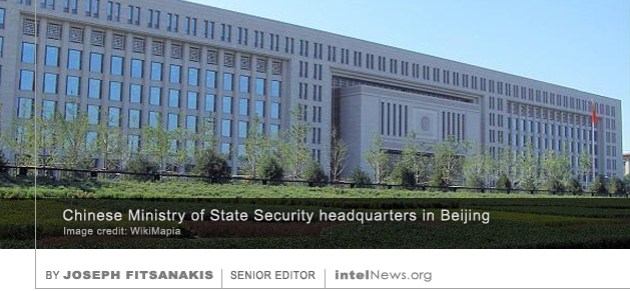 THE MODERNIZATION OF CHINA’S intelligence community is without parallel in recent history and has even outpaced the funding increases given to the Chinese military, a British government report has concluded. According to the same report, the Chinese government spends more on what it perceives as domestic threats than on external targets involving Western countries and their allies.
The redacted version of the report was issued last month by the British Parliament’s Intelligence and Security Committee, which monitors the activities of the British intelligence community. It concentrates on China’s domestic and global ambitions and discusses the role of the Chinese intelligence services in these pursuits. A theme that permeates the 222-page report is that China’s domestic and international ambitions are interconnected, as Beijing does not distinguish between its key national interests in the domestic and foreign domains. Moreover, the report notes that the Chinese intelligence community plays a central role in both facets.
The report notes that China “almost certainly maintains the largest state intelligence apparatus in the world”, dwarfing those of its Western rivals. The latter are forced to concentrate their counterintelligence work “on those aspects that are most demanding”. The official Chinese intelligence agencies are three, the report notes; they consist of the Ministry of State Security and the Ministry of Pubic Security —both of which are civilian— as well as the Strategic Support Force of the Chinese People’s Liberation Army. The latter provides signals intelligence support, whereas the two civilian agencies carry out a host of intelligence and counterintelligence duties.
Nevertheless, the Chinese state’s “whole-of-government” approach on matters of security means that almost every government agency fulfils some type of intelligence-related role. This makes it difficult to calculate with accuracy the full extent of the Chinese intelligence apparatus, the report notes.
Notably, Chinese intelligence agencies are focused primarily on what the Chinese government perceives as domestic threats to its rule, which Beijing has termed “the five poisons”. According to the report, these consist of: the Taiwanese independence movement; the separatist movements in Tibet and Xinjiang; the Falun Gong religious movement; and pro-democracy activism inside China. Intelligence collection and other operations that relate to the so-called “five poisons” include intelligence activities that take place abroad and target Chinese expatriate communities.
It is also worth noting that, according to the report, Beijing spends “almost 20% more on domestic security than on external defence”. Moreover, the rise in expenditures for intelligence infrastructure and operations is impressive by any standards of assessment and “has outpaced even China’s recent dramatic military modernization” of recent years, the report notes. The increase in spending “appears to have led to an improvement in capability”, the report concludes.
► Author: Joseph Fitsanakis | Date: 09 August 2023 | Permalink







 intelNews.org
As with Intelligence in almost all totalitarian regimes, interpretation of Information is hampered by orthodoxy and doctrines. Anything that does not fit with predefined models and leadership’s existing perceptions and wishes, tends to be discharded.
This reinforces the belief that the Chinese Communist Party wants to know everything about everyone everywhere. The technology is available and they are using it to our detriment.
Here’s hoping China’s MSS enforced crony capitalist regime (with a “communist” veneer) eventually goes the way of the East German regime that collapsed due, in part, to grim internal repression by the Stasi and Party.
Even the most senior Chinese officials fear Xi https://en.wikipedia.org/wiki/Anti-corruption_campaign_under_Xi_Jinping#Due_process
Bonsoir ; Le pouvoir de l’espionage reste centralisé par le Comité permanent du Politburo du PCC en sapant les fonctions initiales des commissions locales d’inspection de la discipline.