US government wants to ban Chinese-made smart cars over espionage, sabotage fears
September 23, 2024 3 Comments
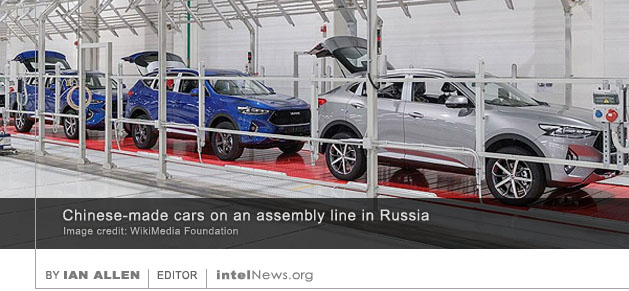 THE UNITED STATES DEPARTMENT of Commerce is proposing new regulations that seek to ban the sale of Chinese-made cars in the United States, over concerns that they could be used for espionage or sabotage. Several reports on the proposal noted that it was hurriedly introduced last week as a “national security action,” rather than a trade-related dispute between the US and China.
American government officials said that the new proposals come out of lengthy investigations into the software and technical specifications of Chinese cars. The investigations raised concern about “[c]ertain technologies originating from the [People’s Republic of China] or Russia” that are often found in Chinese-made cars. Such technologies include vehicle cameras, microphones, tracking devices, and several software packages that connect the cars to the world wide web.
Washington is concerned that these devices, and the software that runs them, could be used to collect the personal data of users, or to facilitate espionage activities on a large scale. Concerns have also been raised by US officials that Chinese-made smart cars could be remotely manipulated and used for sabotage during wartime. According to the US Department of Commerce, a central source could potentially “take control of all [the Chinese-made] vehicles operating in the US all at the same time, causing crashes, block[ed] roads, etc.”
When asked by reporters to justify the proposed regulations, Jake Sullivan, White House national security adviser, replied that the US had “already seen ample evidence of the [People’s Republic of China] pre-positioning malware on our critical infrastructure for the purpose of disruption and sabotage. And with potentially millions of vehicles on the road, each with 10- to 15-year lifespans, the risk of disruption and sabotage increases dramatically”.
► Author: Ian Allen | Date: 23 September 2024 | Permalink







 intelNews.org
Dod/cui.
DNI-DCIA/AVHMCMC698514
En officier sous-traitant.
Ces inquiétudes découlent de la technologie avancée des véhicules connectés, qui collectent et transmettent de vastes quantités de données sensibles. S’ils sont contrôlés par des entités étrangères, en particulier de pays comme la Chine, ces véhicules pourraient être exploités pour accéder aux infrastructures américaines, aux données personnelles et même contrôler ou désactiver à distance des véhicules.
Nous soutenons la démarche du ministère du Commerce envisage d’interdire l’importation et la vente de véhicules dotés de composants logiciels et matériels fabriqués en Chine, car ceux-ci présentent des risques importants pour la sécurité nationale. Les réglementations proposées devraient entrer en vigueur à partir de 2027 pour les logiciels et vers 2030 pour le matériel. L’administration Biden examine également les risques similaires émanant d’autres pays adversaires, comme la Russie. Les États-Unis souhaitent garantir la sécurité du secteur automobile national tout en équilibrant la concurrence commerciale et technologique avec la Chine.
Ces efforts font partie d’une initiative plus large visant à protéger les infrastructures et les chaînes d’approvisionnement critiques des États-Unis contre les vulnérabilités qui pourraient être exploitées par des puissances étrangères. Le public et les acteurs du secteur auront la possibilité de donner leur avis au cours du processus d’élaboration de la réglementation afin de garantir que les préoccupations en matière de sécurité nationale soient prises en compte sans perturber excessivement le marché.
En dod/cui.
Aujourd’hui, si nous devons en plus conclure qu’ils inonderont le marché européen, La Belgique-France, il est nécessaire de rassurer et de protéger les intérêts européens. En effet, ces derniers présentent généralement de grandes lacunes dans le domaine du contre-espionnage, surtout face à l’actualisation constante des menaces dans ces matières.
la secrétaire au Commerce, Gina Raimondo, a exprimé de sérieuses inquiétudes concernant les véhicules aux États-Unis utilisant des logiciels ou du matériel chinois.
Une contre après mon étude des cas ? Vous pouvez imaginer le résultat le plus catastrophique théoriquement si vous aviez quelques millions de voitures sur la route et que le logiciel était désactivé ?
Un groupe commercial représentant GM, Toyota, VW et Hyundai a déclaré que les entreprises auront besoin de temps pour apporter les modifications logicielles et matérielles nécessaires pour se conformer à toute interdiction.
Le public aura 30 jours pour commenter l’interdiction proposée avant que les règles ne soient finalisées.
Une répression des fonctionnalités logicielles et matérielles en provenance de Chine ferait suite à la décision de l’administration Biden de quadrupler les droits d’importation sur les véhicules électriques fabriqués en Chine, les faisant passer de 25 % à 100 %.
Aujourd’hui, le département du Commerce des États-Unis a publié un préavis de projet de réglementation (ANPRM) https://www.commerce.gov/news/press-releases/2024/02/citing-national-security-concerns-biden-harris-administration-announces
La maison a publié un avis https://www.whitehouse.gov/briefing-room/statements-releases/2024/02/29/fact-sheet-biden-harris-administration-takes-action-to-address-risks-of-autos-from-china-and-other-countries-of-concern/
Sécuriser la chaîne d’approvisionnement des technologies et des services de l’information et des communications : Véhicules connectés AGENCE : Bureau de l’industrie et de la sécurité, Département du commerce des États-Unis. SUIVI : Préavis de la réglementation proposée. RÉSUMÉ : Dans le présent préavis de projet de réglementation (ANPRM), le Bureau de l’industrie et de la sécurité (BIS) du ministère du Commerce (le Département) sollicite les commentaires du public sur les questions et les questions liées aux transactions impliquant des technologies et des services d’information et de communication (TIC) Le portail fédéral Rulemaking : https://www.regulations.gov au numéro de dossier BIS-20
https://www.bis.doc.gov/index.php/documents/about-bis/newsroom/press-releases/3457-2024-02-29-2024-fr-2024-04382-4251333-ppiv/file
Bon début de semaine à tous.
En tant officier sous-traitant DNI-DCIA
AVHMCMC698514.
Are these Chinese vehicles – made in Russia – EV or hybrid? A thoughtfully-designed hybrid version has a greater range of kinetic possibilities in its tactical utilization.
The US Government weighing up security concerns against American consumers’ demand for low cost Chinese goods is going to be a major policy problem.
China pre-positioning or reprogramming software that controls the heat buildup within Large Lithium Batteries in the hybrids and full EVs China exports to the US is a serious risk. Unless heating is limited hot Lithium Batteries can explode.
This may be analogous to Hezbollah’s experience of Israel possibly using software reprogramming to cause explosions of the Lithium Batteries in Pagers and Walkie Talkies, recently.
Other security, political and trade complications are millions of electronic components and whole Tesla cars being made in China and then exported to the US and other Western countries. China’s Tesla Giga Shanghai factory, in 2023, produced close to 950,000 Model 3 and Model Y cars [1]. In first quarter 2023 China exported 88,000 Teslas [2].
Also there are problems in all the other electronic consumer goods China exports to the US being used for intelligence collection and disruption eg. Laptops, Desk Top Computers, Printers, Cell-phones, Smart Watches, Smart TVs and Smart Headphones (the last item could damage hearing) etc.
[1] https://insideevs.com/news/725227/tesla-china-ev-sales-june2024/
[2] https://www.automotivelogistics.media/trade-and-customs/chinese-vehicle-exports-above-13m-in-first-quarter-reports-ecg/45578.article