Canadian NATO intern arrested on suspicion of spying for third country

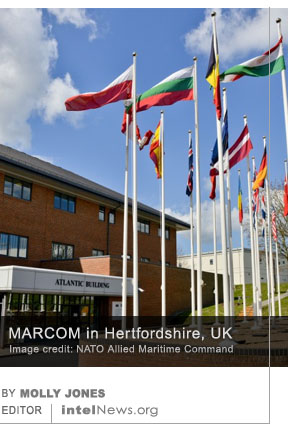
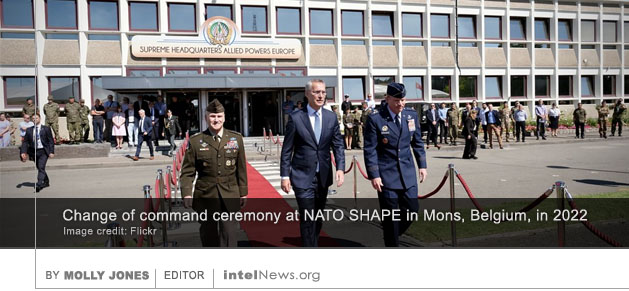
NATO SHAPE Mons BelgiumA CANADIAN WOMAN OF Chinese origin was arrested on Friday July 24 on suspicion of spying for a third-party country, whilst serving as an intern at the North Atlantic Treaty Organization (NATO) Supreme Headquarters Allied Powers Europe (SHAPE) in Mons, Belgium.

Belgian authorities stated on July 25 that the woman “is suspected of spying on behalf of a third country and of being a member of a criminal organization”. Security services at SHAPE were reportedly the first to convey concerns to the Belgian Federal Prosecutor’s Office over the woman’s behavior—such as staying at NATO facilities after hours and asking questions of her colleagues. This prompted a raid of the suspect’s residence and workplace inside NATO headquarters, which resulted in an order for her to be held in a one-month pretrial custody.

No official report from Belgian or Canadian authorities has disclosed the third country or criminal organization mentioned in the press release. Moreover, whilst no official authority has disclosed the suspect’s identity, a CBC News investigation reportedly traced her background to the name of Biwei Zhang, a systems engineer with an economics background, who had previously been employed at the Canadian Space Agency and Statistics Canada. The suspect has reportedly used other aliases such as “Claire” and “Catina”.

At a systemic level, this case underscores reservations concerning Canadian national security and the processing of security clearances in Canada. Such lapses can potentially harm the security of Canadian allies; notably, the present suspect allegedly held previous positions at the World Trade Organization and the European Space Agency. This case also flags the role of internships at global security organizations such as NATO. One report described the intern position as an “Achilles’ heel”, as it provides direct insight into the institutions at the core of global security architecture.

Author: Molly Jones | Date: 03 August 2026 | Permalink

Iranian attacks on CIA facilities in Gulf prompts probe into Russian assistance

Iran UAV droneINTELLIGENCE ANALYSTS IN THE United States are looking into the possibility that Russia may have given Iranian targeters information about the location of secret Central Intelligence Agency (CIA) facilities in the Gulf. According to the Reuters news agency, Iran has managed to strike “several” CIA facilities in at least three countries in the Middle East in the past few months. Some of the strikes appear to have been surgically targeted at specific buildings, and even parts of buildings.

The CIA maintains official stations inside American embassy facilities throughout the Gulf. But the agency also manages an extensive network of offices, logistics hubs, safe houses, and surveillance or other operational facilities throughout the region. The location of these facilities is highly classified and compartmentalized even within the CIA itself. According to intelligence sources cited by Reuters, few nations other than Russia possess the necessary resources to map the precise locations of CIA facilities and the desire to share them with Tehran.

Citing “four people familiar with US intelligence”, Reuters said that Iran has managed to successfully target “more than one and fewer than a dozen” CIA facilities in the Gulf since March. Among them is a secret facility in Iraq, as well as the CIA station in Saudi Arabia, which is located inside the US embassy complex in Riyadh. According to reports, Tehran deployed an advanced version of its Shahed and Mohajer drones to demolish the exterior wall of the CIA station before another set of kamikaze drones burst into the interior of the facility. Some analysts believe that the kinetic capabilities of the drones used in the attack had been enhanced using Russian technical expertise.

The Reuters report added that Moscow has a longstanding intelligence-sharing relationship with Iran and has been known to provide Tehran with targeting information and other forms of support. This relationship only strengthened since the onset of the current war between the US, Israel, and Iran. However, the report states that intelligence officials have yet to draw firm conclusions about Russia’s precise role in the Iranian attacks on CIA facilities.

Author: Joseph Fitsanakis | Date: 23 July 2026 | Research credit: M.J. | Permalink

Russian spies hacked security cameras to monitor weapons shipments to Ukraine

CCTV cameraSTATE-SPONSORED RUSSIAN HACKERS compromised surveillance cameras in the Netherlands in an effort to monitor the transportation of weapons to Ukraine, according to a report issued by the Dutch government. The compromised cameras were located across routes used by North Atlantic Treaty Organization (NATO) forces to transport weapons to Kyiv, according to the report.

The revelation is contained in a joint communique issued by the two primary intelligence agencies of the Netherlands—the Military Intelligence and Security Service (MIVD) and the General Intelligence and Security Service (AIVD). It states that Russian hackers targeted security camera systems—most of them belonging to private businesses—located along transportation routes that are frequented by NATO military convoys heading to Ukraine.

Access to the camera feeds enabled Russian intelligence to identify the precise routes used by NATO military convoys and to monitor the types of equipment being transported to Ukraine. Ground-level security cameras also offered an important intelligence advantage over satellite and drone imagery by providing close-range views of vehicles and cargo, revealing operational details that overhead collection platforms often fail to capture.

The communiqué does not specify the exact number of compromised security cameras, noting only that it was “small”. Nor does it identify the specific transportation routes covered by the affected cameras. It does, however, confirm that the compromised systems were positioned along military logistics routes used to support NATO assistance to Ukraine. It further notes that the cameras were compromised as part of a “large-scale Russian operation” that aims to monitor, and if possible stop, NATO military assistance to Ukraine.

Author: Joseph Fitsanakis | Date: 14 Jul 2026 | Permalink

Female suspect in Monaco bombing that targeted sanctioned oligarch found dead

Anastasiia BerezovskaA WOMAN SUSPECTED OF having planted an explosive device that critically injured a sanctioned oligarch and members of his family in Monaco has been found dead in Ukraine, according to reports. Two men have been charged with murdering the woman, both of whom are Ukrainian government employees. One of the suspects is a law enforcement officer and the other is a military intelligence officer, according to reports.

Authorities in Monaco believe that Anastasiia Berezovska, 39, a Ukrainian national, planted a parcel bomb that seriously injured multi-millionaire Vadym Yermolaiev on June 29. Yermolaiev’s mistress and their 13-year-old son were also injured, according to reports. In 2019, Yermolaiev renounced his Ukrainian citizenship and became a citizen of Cyprus. In 2022, when Russia launched the latest phase of its invasion of Ukraine, Yermolaiev moved his family to Monaco.

In 2023 the Ukrainian government imposed financial sanctions on Yermolaiev, claiming that he collaborated with the authorities in Russian-occupied eastern Ukraine. But Yermolaiev refuted these allegations, claiming that he regarded Russia as an “enemy” and that he had provided financial donations to the Ukrainian Armed Forces. He also claimed that he had renounced his Ukrainian citizenship because the Ukrainian tax system was unfair and he wanted to receive “international protection”.

On Tuesday the BBC reported that it contacted the office of Monaco’s prosecutor, who said that Berezovska had “spent days casing out” Yermolaiev’s residence and that she had disguised herself as a man when she planted the parcel bomb in the entranceway of Yermolaiev’s Monaco apartment. Shortly after the bomb exploded, at 9:00 p.m. local time, Berezovska used a rented car to drive across the border to Italy and then to Germany.

By that time, Interpol had issued a Red Notice alert for Berezovska, which prompted German special forces personnel to raid an apartment the suspect had rented in Germany’s central state of Hesse. However, Berezovska was not found there. It now appears that she had entered Ukraine on July 1, where she made contact with her family and two men, according to Ukrainian authorities. According to the prosecutor general’s office, Berezovska “traveled a certain distance with [the two men], after which she was killed”.

Citing the office of Ukraine’s prosecutor general, the Security Service of Ukraine (SBU), and “a current officer” in Ukraine’s Defense Intelligence of Ukraine (DIU), the BBC reports that Berezovska’s body was found buried in a forest in Kyiv. Her body displayed two bullet wounds to the head. A law enforcement officer and a DIU officer have been charged with murdering Berezovska, according to the BBC. Previously, the men are believed to have transferred funds to Berezovska’s bank and cryptocurrency accounts.

In a statement cited by the BBC, the SBU said that a house belonging to one of the two suspects contained a basement room that “resembled a torture chamber”. The two men have been charged with “intentional murder committed by prior conspiracy by a group of persons”. Ukrainian law enforcement officials stated on Tuesday that they are working on identifying more suspects in the case.

Author: Joseph Fitsanakis | Date: 07 July 2026 | Permalink

US spy agencies resisting White House plan to create master list of espionage threats

ODNI DNIAMERICAN INTELLIGENCE AGENCIES are reportedly refusing to abide by a White House directive that requires them to turn over the names of all individuals who are believed to be spying on the United States. The directive aims to build a master list of all known foreign intelligence actors with the goal of streamlining American counterintelligence efforts against them. However, according to a New York Times report, senior counterintelligence officials are concerned that such a centralized master list could leak and result in a catastrophic compromise of national security information.

Citing “people familiar with the matter”, the Times said on Monday that the effort to create a master list of foreign spies and Americans who are spying on behalf of foreign intelligence services is being led by the Office of the Director of National Intelligence (ODNI). The agency has asked the Federal Bureau of Investigation FBI to provide the names of all individuals who have been found to engage in espionage and are being watched by the Bureau. Likewise, the Central Intelligence Agency (CIA) has been asked to provide names of foreign espionage operatives that populate its lists of potential assets—foreign spies who may in time be turned by the CIA.

The master list of spies would potentially allow the entirety of the United States Intelligence Community (IC) to monitor the global activities of these espionage operatives and share information about them in real time. Additionally, the existence of such a list would in theory prevent operational duplication and help deconfliction within the IC when it comes to counterintelligence efforts. The central idea behind the master list dates to National Security Presidential Memorandum – 7, a directive issued by President Donald Trump in October 2017, during his first term in office.

However, senior counterintelligence officials are reportedly concerned that giving the ODNI full access to such a comprehensive master list of espionage threat actors could potentially compromise the integrity of counterintelligence operations. Information about espionage operatives and assets—both current and prospective—is usually protected behind several layers of classification and compartmentalization that shield it even within individual intelligence agencies. Additionally, some of the information relating to these individuals is acquired through counterintelligence activities authorized by the Foreign Intelligence Surveillance Court, and is thus subject to tight restrictions.

At a deeper level, the resistance of senior counterintelligence officials to surrender sensitive information about espionage to the ODNI reflects years of mutual suspicion and turf wars within the IC. According to the Times, these officials have yet to agree about how such a master list would be constructed, what information it would contain, who should have access to it, and how it should be maintained and updated.

Author: Joseph Fitsanakis | Date: 1 July 2026 | Permalink

Iran has mostly replenished its missile stockpiles: Western intelligence

Iran War 2026IRAN USED THE EIGHT-week ceasefire with the United States and Israel to replenish its military arsenal to at least three-quarters of its pre-war levels, according to Western intelligence estimates. Tehran has been able to incorporate substantial supplies of Russian-built weapons to its firepower and could easily reach 100 percent of its pre-war arsenal capacity soon, according to reports.

The latest estimates directly contradict earlier assessments by the administration of US President Donald Trump, which claims Iran’s military firepower has been obliterated in the past three months. In March, US Defense Secretary Pete Hegseth announced that Iran’s offensive capability had been reduced by as much as 90 percent. Earlier this month, President Trump claimed that Iran’s missile arsenal stood at 60 percent of its pre-war level.

However, Western intelligence estimates now suggest that the Iranian regime’s ability to replenish its military arsenal has been far more advanced than presumed by its adversaries. In a related development, the Reuters news agency reported last week that the United Arab Emirates directly approached Tehran and offered to pay it in return for not being attacked again.

According to Reuters, the UAE agreed to give Iran between $10 and $20 billion in return for halting its attacks on the Gulf state. The news agency claimed that $3 billion of the earmarked funds had already been delivered to Tehran. In a subsequent statement, the UAE’s Ministry of Foreign Affairs dismissed the Reuters report as “entirely false and unfounded” and stated that no funds had been “released, transferred or facilitated through the UAE”.

Author: Joseph Fitsanakis | Date: 15 June 2026 | Permalink

CIA officer found with over $42 million in gold and cash had created ‘fake’ program

CIAA CENTRAL INTELLIGENCE AGENCY officer allegedly created a fake government program in order to embezzle over $42 million in government funds, according to reports. The Federal Bureau of Investigation arrested David J. Rush on May 19, after he has found in possession of 303 bars of gold worth over $40 million. He was also found in possession of over $2 million in cash and over 30 luxury watches.

Late last week, The Washington Post reported that Rush had built an unacknowledged special access program (SAP). Dating to World War II, SAPs are government-authorized support operations or ‘black’ projects with information-sharing restrictions that exceed those of regular classified projects. Select government personnel are typically ‘read in’ to such projects after signing specialized nondisclosure agreements (NDAs) that exceed the scope of their top-secret clearances.

According to The Post, Rush created a CIA unacknowledged SAP relating to “continuity of government operations”. The term refers to state-wide plans to enable the United States government to continue to perform essential operations in the event of a catastrophic disaster, such as a highly destructive earthquake, a pandemic, or a nuclear war.

Using the ‘read-in’ provisions of SAPs, Rush allegedly read two of his CIA colleagues into the program he created. In doing so, Rush used carefully crafted NDAs that prevented his colleagues from disclosing the program’s existence to others. He then allegedly convinced his colleagues to transfer bars of gold and cash into the program, claiming that the resources were to be used to keep the United States government operating as part of continuity planning.

The accused reportedly remains in detention in Alexandria, Virginia, after a federal judge ruled last week that there was significant likelihood he would abscond or fail to appear for future proceedings.

Author: Joseph Fitsanakis | Date: 08 June 2026 | Permalink

US, Mexican authorities deny claims CIA is assassinating cartel members in Mexico

Sinaloa cartelAUTHORITIES IN MEXICO AND the United States have rejected as “fictions” reports in American and Mexican media that Central Intelligence Agency (CIA) personnel are directly involved in assassination operations against the cartels. Notably The New York Times and CNN reported last week that the CIA participated in the killing of mid-level Sinaloa cartel member Francisco “El Playin” Beltran and his driver. The two men were killed by a car bomb on March 28 in a suburb of Mexico City.

According to the reports, Beltran’s killing was part of a rapidly expanding CIA campaign in Mexico, which aims to eliminate selected mid-tier members of the cartels. Some of the operations allegedly involve the participation of the CIA’s so-called “Ground Branch”, which is the paramilitary and covert action wing of the CIA’s Special Activities Center (SAC). Some Ground Branch members have directly participated in assassination operations in Mexico, either in collaboration with the Mexican authorities or as teams operating independently, according to the reports.

But Mexican President Claudia Sheinbaum issued an outright denial of the claims last Wednesday during her weekly media conference in Mexico City, describing them as “fictions the size of the universe”. Sheinbaum’s claims came a day after Omar Harfuch, Mexico’s Secretary of Security and Citizen Protection, dismissed the reports as “false and salacious reporting”, adding that they serve as “nothing more than a [public relations] campaign for the cartels and [put] American lives at risk”.

American officials insist that the role of American military and intelligence agencies in anti-cartel operations in Mexico is limited to training and intelligence-sharing, and stress that American government personnel have no direct involvement in these activities. However, there is intense speculation about the death of two American embassy officials in a car crash in April, following their alleged participation in a counter-cartel operation in the Mexican state of Chihuahua. According to The New York Times, the two embassy officials were CIA officers.

Author: Joseph Fitsanakis | Date: 18 May 2026 | Permalink

China is now sending missiles to Iran, according to US intelligence agencies

MANPAD missileTHERE IS MOUNTING EVIDENCE to suggest that the government of China may be supplying missiles to the Iranian armed forces, according to American intelligence agencies. Combined with prior reports about alleged Russian intelligence assistance to Iran, these latest indicators may demonstrate that China and Russia are aiding the Iranian military in a systematic and coordinated fashion in order to contribute to an American strategic defeat in the Middle East.

On Saturday, the US-based international television network CNN cited “three people familiar with recent intelligence assessment” in reporting that China was preparing to deliver to Iran several shipments of shoulder-fired anti-air missile systems, known as MANPADs. These missile systems are highly prized in both low- and high-intensity conflicts because they give individual soldiers a cheap, portable way to destroy multimillion-dollar aircraft. Their low cost and ease of concealment allow ambush-style attacks that are difficult to detect, forcing enemy pilots to fly higher or avoid certain areas. Thus, if utilized appropriately, MANPAD weapons can effectively strip an opponent of their low-altitude air superiority.

Later on Saturday, a report in The New York Times claimed that United States intelligence agencies have obtained evidence that China may have already sent at least one shipment of MANPADs to Iran. The paper noted that the intelligence collected is “not definitive” and that there is no evidence to suggest that the Iranians have received the shipment of missiles from China, or that they have deployed these weapons on the battlefield.

If it is verified, however, the intelligence may indicate that the Chinese are abandoning their traditional reluctance to supply Iran with finished or fully assembled weapons systems—especially for use against the United States armed forces. In the past, China has used a number of state-controlled export companies to supply Iran with fuel, chemicals and hardware components that can, under certain circumstances, be used to aid Iran’s military effort.

If China were to begin to systematically supply Iran with missiles and other weapons systems, it could significantly alter the course of the ongoing conflict between the Islamic Republic and the United States-Israeli alliance. Much of the course of this war depends on the ability of each side to maintain its supply of weapons—especially offensive and defensive missiles, or other interceptor ammunition.

Author: Joseph Fitsanakis | Date: 13 April 2026 | Permalink

Investigation uncovers previously unknown Russian covert action unit

Valery GerasimovA JOINT PROJECT BY the German newsmagazine Der Spiegel and the investigative website The Insider has uncovered the existence and inner workings of a previously unknown Russian intelligence and cover action unit. The unit’s formal name is Military Unit 75127, but it is known within Russia’s intelligence establishment as Center 795. The Russian government reportedly created the unit in December 2022—less than a year following the Kremlin’s full military invasion of Ukraine.

By mid-2023, Center 795 was “fully staffed”, with its ≈500 officers coming mostly from the Main Directorate of the Russian Armed Forces’ General staff (known as GU or GRU). Other Center 795 officers came from ALPHA and VYMPEL—covert action units belonging to the Special Purpose Center of the Russian Federal Security Service (FSB). A smaller number of officers came from the Russian Armed Forces, the Federal Protective Service, and from the ALPHA Group of the Belarussian security service, known as KGB.

The structure of Center 795 features three directorates: Intelligence, Combat Support, and Assault Operations. The Directorate of Intelligence consists of nine distinct departments tasked with—among other things—collecting and analyzing intelligence from social media platforms, conducting reconnaissance using satellite networks and drones, carrying out signals intelligence, as well as executing human intelligence and covert operations, including assassinations and abductions.

The Directorate for Combat Support is staffed with explosive, air defense, armored warfare, and artillery operatives. It also maintains combat units that conduct technical maintenance, logistics, fortification, and other specialized tasks. The Assault Operations Directorate consists of four departments, which appear to conduct strictly compartmentalized functions that include airborne tasks.

Notably, unlike other special activities units in Russia’s intelligence arsenal, Center 795 does not appear to reside within the GRU. Instead, it appears to operate independently of military intelligence oversight and to report directly to General Valery Gerasimov (pictured), Chief of the Russian Armed Forces’ General Staff of and First Deputy Minister of Defense, or to one of his subordinate deputy defense ministers.

According to the investigative reports, the existence of Center 795 was revealed when one of its officers, Denis Alimov, used Google to translate a message sent to him by a Serbian operative living in the United States. This allowed the United States Federal Bureau of Investigation to use a Foreign Intelligence Surveillance Court (FISA) warrant and access the Google Translate transcripts. Alimov was eventually arrested in Bogotá, Colombia, on February 24, 2026, after arriving there on a Turkish Airlines flight from Istanbul, Turkey. He is currently awaiting extradition to New York.

Author: Joseph Fitsanakis | Date: 16 March 2026 | Permalink

Classified US intelligence report suggests Iran regime unlikely to fall or change

Iran KhameneiA CLASSIFIED REPORT ISSUED two weeks ago by the United States National Intelligence Council (NIC) found that even a full-scale interstate war against Iran would be unlikely to dislodge or drastically alter the current regime. A summary of the report was revealed by The Washington Post, which cited three anonymous sources the paper said were intimately familiar with the report’s contents.

Composed of senior and highly respected intelligence analysts from across the U.S. Intelligence Community (IC), the NIC is tasked with producing classified strategic assessments on critical issues of concern to American decision-makers. Technically NIC reports represent the collective voice of all 18 intelligence agencies that make up the U.S. IC, and come as close as possible to the IC’s consensus view on pressing national security concerns.

According to The Washington Post, the NIC report outlines several scenarios for leadership succession in Iran, resulting from either a surgical “decapitation” campaign against specific elements of regime, or from a large-scale military assault against the entirety of the Iranian security state. It concludes that in both cases the Iranian regime is too entrenched and powerful to fall. Moreover, even in the event of “decapitation”, the regime has substantial human resources to keep replenishing its fallen military and civilian leaders, including the Supreme Leader.

Lastly, the NIC report concludes that the Iranian opposition within Iran and around the world is too disjointed, fragmented and disorganized to pose a credible alternative to the Iranian security state. While discussing a number of different potential scenarios for the takeover of power by the Iranian opposition, the NIC report concludes that such an eventuality remains “unlikely”, The Post reports.

The Post’s report appears to confirm earlier accounts by The New York Times and the Reuters news agency, which suggested that the consensus view among the U.S. IC is that, if killed, Supreme Leader Ayatollah Khamenei would almost certainly be replaced by another hardliner, who would be ideologically opposed to both Israel and the West.

Notably, The Washington Post notes that the NIC report does not consider the possibility that the U.S. and Israel might decide to engage in a protracted ground war against Iran. Additionally, the report does not entertain the possibility that ethnic separatist forces within Iran—such as the Kurds, the Azeris or the Balochis—might revolt against Tehran, thus sparking a nationwide armed conflict.

Author: Joseph Fitsanakis | Date: 09 March 2026 | Permalink

CIA working with Kurdish separatists to foment armed rebellion in northwestern Iran

Iran KurdistanTHE UNITED STATES CENTRAL Intelligence Agency (CIA) is arming and training ethnic separatists in northwestern Iran with the goal of fomenting an armed rebellion against Tehran in the coming weeks, according to reports. Several news outlets, including CNN, report that Iranian Kurdish opposition forces are preparing to launch a ground operation in northwestern Iran “in the coming days”.

The nearly 10 million Kurds in Iran are one of the largest ethnic minorities in the country, concentrated in the mountainous western provinces bordering Iraq and Turkey. They are predominantly Sunni Muslims in a country governed by a Shia clerical state, creating both religious and ethnic tension. The central government has generally responded to calls for autonomy by various Kurdish factions with security crackdowns and suppression of dissent. Kurdish regions have been subject to heavy surveillance and military deployment, particularly during periods of regional instability.

British news outlet ITV reports that American and Israeli air strikes have consistently targeted Iranian military installations in western Iran in recent days, in an effort to degrade Tehran’s security assets in the region and provide Kurdish rebel forces with the ability to launch a successful armed campaign. According to ITV, Kurdish rebels have asked Israeli and American forces to provide air cover for an eventual ground campaign—though whether this request has been approved remains unknown.

According to Axios, US President Donald Trump spoke directly with Iraqi Kurdish leaders last weekend, seeking access to Iran’s Kurdish provinces through the Kurdish-controlled autonomous region of northern Iraq. Such access would allow the CIA and US Special Operations Forces to create a supply route for the provision of weapons and other war materiel to Iranian Kurdish rebels. The US president also spoke with at least one Iranian Kurdish leader on Tuesday, according to reports.

CNN said it reached out to the CIA about this story but the agency refused to comment on it.

Author: Joseph Fitsanakis | Date: 05 March 2026 | Permalink

Israelis with high-level clearances betted on military operations on Polymarket

PolymarketA CIVILIAN AND A reservist with high-level classified access used Israel Defense Forces (IDF) confidential information to place bets on Polymarket regarding future Israeli military operations. Polymarket is among the most prominent platforms in the rapidly emerging cryptocurrency-based prediction market sector.

Polymarket users are invited to bet “yes” or “no” on whether specific events will occur. These events may relate to political, sporting, cultural, security, environmental, or other fields. Prediction market platforms such as Polymarket match buyers and sellers for each event and hold the funds until the event occurs.

An Israeli court permitted publication that the two individuals were identified during a joint operation conducted by the Israel Security Agency (ISA) and the police. According to the indictment, the civilian and the reservist are charged with serious security offenses, alleging that they placed bets on the Polymarket website based on classified military information. The indictment further states that, in the course of their IDF duties, they were exposed to the inside information on which they relied when making bets. The reservist had access to classified intelligence concerning future IDF operations, and the civilian opened an account on Polymarket and placed the bets.

At the conclusion of the investigation, after an evidentiary foundation had been established against the civilian and the reservist, the prosecutor’s office indicted them on charges of serious security offenses, bribery offenses, and obstruction of justice. According to a formal statement: “It should be noted that in June 2025, the two successfully bet on the occurrence of four security events in Israel related to Operation ‘Am Kalavi’ (the Israeli attack on Iran in June 2025). They wagered tens of thousands of dollars and were correct, with remarkable accuracy, in predicting: Israel will attack Iran on Friday; Israel will attack Iran by the end of June 2025; Israel will announce the end of the operation in Iran by July; Israel will attack Iran before July.” According to one source, they earned $150,000.

It was further stated that: “the execution of such bets, relying on secret and classified information, poses a real security risk to the activities of the IDF and to state security. The State of Israel views the acts attributed to the defendants with great severity and will act resolutely to thwart and bring to justice any person involved in the illegal use of classified information.” According to the findings of the investigation, no operational harm resulted from the Israeli attack on Iran in June 2025. The statement added: “The IDF will not tolerate this type of conduct. Following the incident, steps were taken, and procedures will be tightened across all IDF units to prevent similar incidents from recurring.”

The remaining details of the affair remain prohibited from publication for security reasons.

Author: Avner Barnea* | Date: 23 February 2026 | Permalink

Dr. Avner Barnea is a research fellow at the National Security Studies Center of the University of Haifa in Israel. He served as a senior officer in the Israel Security Agency (ISA). He is the author of We Never Expected That: A Comparative Study of Failures in National and Business Intelligence (Lexington Books, 2021).

France arrests alleged Chinese spies living in small village—four arrests so far

France GirondeFOUR MEN HAVE BEEN arrested in France on suspicion of spying for China using a system of parabolic antennas and computers installed at a rented property in the French countryside. The men were arrested last Saturday and Sunday by the General Directorate for Internal Security (DGSI), which focuses on counterterrorism and counterespionage.

Two of the arrests took place on-site at a property in Camblanes-et-Meynac, a picturesque village located around 10 miles from Bordeaux in south-western France’s Gironde region. The property had reportedly been rented through the rental broker application Airbnb by two Chinese nationals who arrived in France in January. They are believed to have entered the country using work visas as engineers for a wireless telecommunications firm.

After settling in Camblanes-et-Meynac, the men erected a large parabolic antenna system in the garden of the rented property. The move reportedly alarmed locals, who noticed that their own Internet service experienced disruptions following the erection of the parabolic antenna system by the Chinese nationals. A local family proceeded to alert local authorities about the antenna.

According to reports the DGSI arrested two Chinese nationals aged 27 and 29, while also seizing a substantial quantity of computer and satellite equipment that was found on the property. Two other men reportedly “of Chinese origin” but based in France, were also arrested over the weekend. They were charged with providing assistance to the two residents of the Airbnb property by illegally importing the satellite equipment installed on the property. Their identities have not been released by the authorities.

The French prosecutor’s office stated that the suspects were engaged in efforts to “capture satellite data from the Starlink [mobile broadband] network”. They were also allegedly trying to intercept communications data from “vital entities” in the military realm and “retransmit them to their country of origin”, namely China, according to the statement. They are now in custody facing charges of “delivering information to a foreign power […] likely to damage the interests” of France—a standard phraseology used in the French legal code to describe foreign espionage.

France’s Gironde region has long been an epicenter of espionage by international actors due to its proximity to a growing number of facilities and restricted sites related to critical telecommunication, aerospace, and defense industries. Several small towns and villages in the area are in proximity to the industrial core of France’s defense, space and aeronautics operations.

Author: Joseph Fitsanakis | Date: 11 February 2026 | Permalink

Poland to probe alleged ties between Jeffrey Epstein and Russian intelligence

Donald Tusk

THE GOVERNMENT OF POLAND has announced plans to launch an investigation into the possibility that an international sex trafficking ring set up by the late financier and sex offender Jeffrey Epstein was a “honey trap” set up by Russian intelligence to entrap “the elites of the Western world,” according to Poland’s Prime Minister Donald Tusk.

Tusk announced the commencement of what he referred to as a “special investigation” at a press conference on Wednesday, following a senior-level government meeting. He told reporters that the investigation would be led by members of the Office of the Prime Minister in association with the Ministry of Justice and the Polish intelligence services.

In 2008 a Florida court convicted Epstein—a jet-setting financier with links to hundreds of prominent individuals in finance, politics, industry, and academia—for sex offences. The disgraced financier was found dead in his jail cell in 2019. Prosecutors in the United States say they have identified over 100 victims of Epstein’s sex-trafficking ring, but some estimates claim that as many as 1,000 other victims have yet to come forward.

At last week’s press conference, a stern-looking Tusk pointed to Epstein’s large fortune, describing it as “unexplained” and adding that it raised important questions about the late financier’s links with state actors. He reminded his audience that “a growing number of commentators and experts assume that it is highly probable that this pedophilia scandal was a premeditated operation by the Russian KGB”—a term still frequently used in Eastern European countries to refer to the post-Soviet intelligence community.

The operation may have been a “so-called ‘honey trap’, a sweet bait, a trap set for the elites of the Western world, primarily the United States,” Tusk said. The Polish prime minister then added: “I don’t need to tell you how serious the increasingly likely possibility that Russian intelligence services co-organized this operation is.” Among other things, it could “mean that they also possess compromising materials against many leaders still active today.” He added that investigators would systematically review and assess “every document currently available in the public domain.”

In a social media post later that day, Russian businessman Kirill Dimitriev, who last year was appointed by Russian President Vladimir Putin as Russia’s special presidential envoy on foreign investment and economic cooperation, dismissed the Polish government’s move. According to Dimitriev, all allegations about connections between Epstein and Russian intelligence are “lies” spread by “leftist elites.”

Author: Ian Allen | Date: 06 February | Permalink