US spy agencies resisting White House plan to create master list of espionage threats
July 1, 2026 11 Comments
 AMERICAN INTELLIGENCE AGENCIES are reportedly refusing to abide by a White House directive that requires them to turn over the names of all individuals who are believed to be spying on the United States. The directive aims to build a master list of all known foreign intelligence actors with the goal of streamlining American counterintelligence efforts against them. However, according to a New York Times report, senior counterintelligence officials are concerned that such a centralized master list could leak and result in a catastrophic compromise of national security information.
Citing “people familiar with the matter”, the Times said on Monday that the effort to create a master list of foreign spies and Americans who are spying on behalf of foreign intelligence services is being led by the Office of the Director of National Intelligence (ODNI). The agency has asked the Federal Bureau of Investigation FBI to provide the names of all individuals who have been found to engage in espionage and are being watched by the Bureau. Likewise, the Central Intelligence Agency (CIA) has been asked to provide names of foreign espionage operatives that populate its lists of potential assets—foreign spies who may in time be turned by the CIA.
The master list of spies would potentially allow the entirety of the United States Intelligence Community (IC) to monitor the global activities of these espionage operatives and share information about them in real time. Additionally, the existence of such a list would in theory prevent operational duplication and help deconfliction within the IC when it comes to counterintelligence efforts. The central idea behind the master list dates to National Security Presidential Memorandum – 7, a directive issued by President Donald Trump in October 2017, during his first term in office.
However, senior counterintelligence officials are reportedly concerned that giving the ODNI full access to such a comprehensive master list of espionage threat actors could potentially compromise the integrity of counterintelligence operations. Information about espionage operatives and assets—both current and prospective—is usually protected behind several layers of classification and compartmentalization that shield it even within individual intelligence agencies. Additionally, some of the information relating to these individuals is acquired through counterintelligence activities authorized by the Foreign Intelligence Surveillance Court, and is thus subject to tight restrictions.
At a deeper level, the resistance of senior counterintelligence officials to surrender sensitive information about espionage to the ODNI reflects years of mutual suspicion and turf wars within the IC. According to the Times, these officials have yet to agree about how such a master list would be constructed, what information it would contain, who should have access to it, and how it should be maintained and updated.
► Author: Joseph Fitsanakis | Date: 1 July 2026 | Permalink
 INTELLIGENCE PARTNERS IN THE North Atlantic Treaty Organization (NATO) are “not talking openly” anymore, while authorities in Denmark have advised government officials to disable Bluetooth functions on their devices due to spying concerns. According to reports in British news outlets, intelligence-sharing functions inside NATO are at a breaking point following a series of actions by the United States that one source
  IN A RARE MEDIA interview, the chief of Colombia’s National Intelligence Directorate (DNI) has said that his agency’s collaboration with the Central Intelligence Agency (CIA) and other American spy organizations continues unabated. This statement appears to contradict a prior statement by the president of Colombia, who said his country had stopped all intelligence-sharing with the United States in protest against the lethal targeting of civilian vessels in the Caribbean.
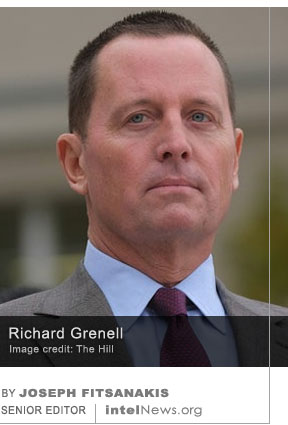 The administration of United States President Donald Trump is considering the possibility of limiting or terminating the sharing of intelligence with countries around the world that criminalize homosexuality. The move is being led by Richard Grenell, an American diplomat, civil servant and media consultant, who was appointed by the White House as acting Director of National Intelligence in February. This makes Grenell the most senior intelligence official in the US.
 The sudden decision by the United States to deploy significant firepower to the Middle East was partly in response to intelligence that was given to Washington by Israeli officials, according to a report. On Wednesday, the US announced that the USS Abraham Lincoln carrier strike group had received instructions to sail to the Middle East. The aircraft carrier is
  Britain secured the largest expulsion of Russian diplomats in history by sharing “unprecedented degrees of intelligence” with dozens of foreign countries about the attempted killing of former spy Sergei Skripal. Nearly 30 countries and international organizations, including the European Union and the North Atlantic Treaty Organization, have expelled or refused to accredit over
  The United States Immigration and Customs Enforcement (ICE) is reportedly seeking to join the Intelligence Community, which includes the Central Intelligence Agency, the Defense Intelligence Agency, and other intelligence-focused arms of the federal government. Currently, ICE is a federal law enforcement that operates under the umbrella of the Department of Homeland Security. It consists of two components: Homeland Security Investigations, which probes cross-border criminal activity, including drugs and weapons trafficking, money laundering and cybercrime; and Enforcement and Removal Operations, whose mission is to find and capture undocumented aliens.












Iranian attacks on CIA facilities in Gulf prompts probe into Russian assistance
July 23, 2026 by Joseph Fitsanakis 4 Comments
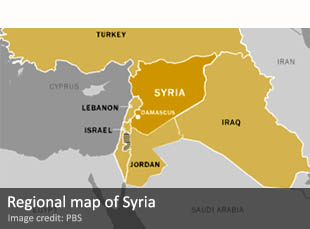
The CIA maintains official stations inside American embassy facilities throughout the Gulf. But the agency also manages an extensive network of offices, logistics hubs, safe houses, and surveillance or other operational facilities throughout the region. The location of these facilities is highly classified and compartmentalized even within the CIA itself. According to intelligence sources cited by Reuters, few nations other than Russia possess the necessary resources to map the precise locations of CIA facilities and the desire to share them with Tehran.
Citing “four people familiar with US intelligence”, Reuters said that Iran has managed to successfully target “more than one and fewer than a dozen” CIA facilities in the Gulf since March. Among them is a secret facility in Iraq, as well as the CIA station in Saudi Arabia, which is located inside the US embassy complex in Riyadh. According to reports, Tehran deployed an advanced version of its Shahed and Mohajer drones to demolish the exterior wall of the CIA station before another set of kamikaze drones burst into the interior of the facility. Some analysts believe that the kinetic capabilities of the drones used in the attack had been enhanced using Russian technical expertise.
The Reuters report added that Moscow has a longstanding intelligence-sharing relationship with Iran and has been known to provide Tehran with targeting information and other forms of support. This relationship only strengthened since the onset of the current war between the US, Israel, and Iran. However, the report states that intelligence officials have yet to draw firm conclusions about Russia’s precise role in the Iranian attacks on CIA facilities.
► Author: Joseph Fitsanakis | Date: 23 July 2026 | Research credit: M.J. | Permalink
Filed under Expert news and commentary on intelligence, espionage, spies and spying Tagged with 2026 Iran War, CIA, intelligence sharing, Iran, News, Russia, United States, US embassy in Saudi Arabia