Analysis: The fate of Russia’s military bases in Syria seems highly uncertain
December 9, 2024 1 Comment
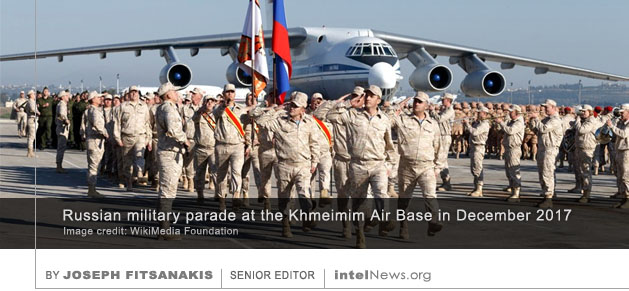 THERE ARE CONFLICTING REPORTS about the fate of Russia’s military bases in Syria, following the complete collapse of the 54-year-long Assad dynasty. Late on Sunday it was announced on Russian state media that the Kremlin had extended Bashar al-Assad and his family political asylum “on humanitarian grounds”. Attention quickly turned to the fate of the Russian embassy in the capital Damascus and the Russian military facilities in Tartous and Khmeimim.
It is difficult to overstate the strategic significance of the Russian military facilities in Syria, some of which date as far back as 1971, when Hafez al-Assad, Bashar al-Assad’s father, assumed power in the country. The Russian naval base in Tartous is currently the only Russian military  facility outside of the former Soviet Union. Furthermore, it constitutes the sole warm-port fueling and repair facility that is exclusively available to the Russian Navy. It is home to the Russian naval group in Syria, which consists of a submarine and five warships.
Likewise, the Khmeimim Air Base in Syria’s Latakia province is home to dozens of Russian fighter jets, which have been stationed there since 2015, ostensibly in order to protect the Syrian government from the Islamic State. However, Russia regularly uses the Khmeimim Air Base to transport troops and war materiel to Africa, and to project air power in the Mediterranean, through the presence of several bomber aircraft. The latter can be found, not only in the Khmeimim Air Base, but also in the Syrian military airports of Homs and Palmyra.
But these two military airports are now in the hands of the Hayʼat Tahrir al-Sham (HTS) forces that have captured much of Syria in the past two weeks. It is doubtful that the Russian Aerospace Forces will be able to use them from now on. Moreover, there are reports that Moscow will be forced to engage in a strategic withdrawal of the entirety of its military forces from Syria within hours, if not days.
On Sunday, the Russian Ministry of Foreign Affairs issued a dismissive statement claiming that, although Russian troops in Syria had been placed on high alert, “no serious threat to their security” had been detected. According to the Reuters news agency, the Russian government had been in communication with the leadership of the HTS leadership for several days. As a result of this communication, an agreement had allegedly been struck, which guaranteed “the safety of Russian military bases and diplomatic institutions in Syria”.
At the same time, however, a host of Russian military bloggers, who are supportive of the Kremlin, but are not affiliated with it, claimed that severe clashes were taking place around Russian military facilities in Syria. They also claimed that the Khmeimim Air Base had been abandoned and that no Russian warships could be found at the Tartous naval port. It appeared that the Russian naval group in Syria had been given strict orders to sail off the coast of Syria “for security reasons”.
Are these arrangements temporary, or are we witnessing the strategic withdrawal of Russia’s military from Syria? Unquestionably, the Kremlin is  currently in intense negotiations with the Turkish government, which is the main backer of the HTS forces, with the goal of ensuring the safety of Russian military and diplomatic personnel in Syria. Even though the assumption that Turkey fully controls the HTS forces is simplistic, Ankara’s ability to temporarily guarantee the physical safety of the Russian military forces seems plausible.
But that is very different from guaranteeing the continued presence of Russian forces in Syria. It is true that the leadership of the HTS has gone to considerable pains to reframe itself from an al-Qaeda offshoot to a reliable conservative Islamic force, modeled after the Egyptian Islamic Brotherhood. However, the wounds left by the 13-year Syrian Civil War are still raw, and there are no indications that the HTS, or any other rebel group in Syria, is willing to forgive Russia for its unwavering support for the Assad dictatorship.
Could Turkey engage in an effort to convince Syria’s new government to let the Russians remain on Syrian soil, possibly in exchange for some type of diplomatic or political support? Perhaps. What is more likely is that, as far as the HTS is concerned, this is reckoning time for Assad’s supporters, including the Kremlin. Its warships and planes are likely to be making their way back to the relative safety of Russia in the coming weeks, if not sooner.
► Author: Joseph Fitsanakis | Date: 09 December 2024 | Permalink







 intelNews.org
An excellent IntelNews analysis of Russia’s well earned troubles in Syria.
It looks like NATO and Israeli intelligence agencies have their work cut out clarifying what is happening to the Russian bases and what deals Russia is making with Turkey’s ambitious President Erdoğan [1]. The agencies need all sources and methods: informants in the region, SigInt and satellite imagery.
Turkey’s apparent power over Syria’s new Hayʼat Tahrir al-Sham (HTS) regime gives Turkey considerable power and latitude. Turkish forces have invaded large parts of northern Syria without HTS resistance (or US complaints?) – in order for Turkey to destroy the Kurds to the extent possible.
HTS’s advance south from Aleppo was so rapid and efficient it is reminiscent of Islamic State in Iraq and Syria’s (ISIS‘s) conquest of large parts of Syria and Iraq in 2014 [2]. At worst ISIS elements might be the real power behind HTS.
Like the Arab Spring in 2011 any optimism that the Sunni Jihadist HTS takeover of Syria will bring lasting peace and Western style democracy should be tempered by reality. The Sunni (74% of Syria’s population [3]) HTS regime are liable to round up and eventually kill many of the Shiites (13%) who dominated ex-President Assad’s [4] old regime. Also the 300,000+ Syrian Christians are under threat. The Shiites and Christians may be trying to escape over borders in large numbers.
Generally a bleak picture. One hopes HTS might surprise with continuing moderation. But we shouldn’t bank on it.
[1] https://en.wikipedia.org/wiki/Recep_Tayyip_Erdo%C4%9Fan
[2] https://en.wikipedia.org/wiki/Islamic_State
[3] https://en.wikipedia.org/wiki/Religion_in_Syria see right sidebar
[4] https://en.wikipedia.org/wiki/Bashar_al-Assad