European Union exploring spy satellites to replace its reliance on US network
March 17, 2025 4 Comments
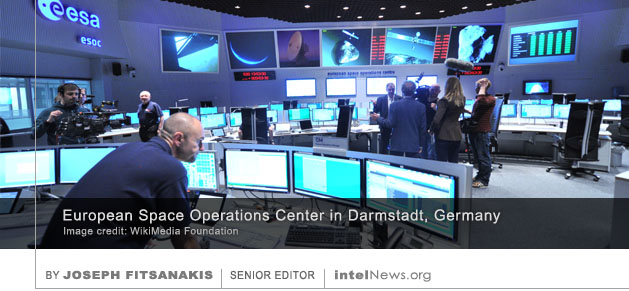 THE EUROPEAN UNION IS considering building its own military satellite network in an effort to reduce or eliminate its reliance on American satellite capabilities, according to reports. The London-based Financial Times newspaper said on Saturday that the exploratory project is being led by Andrius Kubilius, a veteran Lithuanian politician who is serving as the European Commissioner for Defense Industry and Space.
Speaking to The Financial Times, Kubilius confirmed that the European Union is considering the construction of a low Earth orbit (LEO) satellite system. Such a system would complement the European Union’s existing Copernicus Earth observation program, which is managed by the European Commission in partnership with the individual European Union member states. The costs and benefits of Copernicus are shared by member states and by several agencies, including the European Space Agency, the European Environment Agency, and the European Maritime Safety Agency.
Unlike Copernicus, a new LEO satellite system would primarily satisfy military priorities and would generate imagery updates every 30 minutes, thus providing near-real-time intelligence on targets. In contrast, Copernicus satellites are able to generate new imagery every 24 hours. Moreover, a new LEO satellite system would integrate into IRIS², an internet network of multi-orbit satellites intended to provide on-demand location-tracking, security surveillance and secure communications links to European Union member states. IRIS² is scheduled to become operational in 2027.
In his comments to The Financial Times, Kubilius acknowledged that the idea for a new European Union LEO satellite system was sparked by “changes in the geopolitical situation” relating to the United States. Subsequently, the European Union is exploring ways to “reduce its reliance on United States military assets”, he said. The commissioner admitted that such a project would be costly—perhaps in excess of $540 billion—as well as time-consuming. But there was much desire to proceed, he said.
In the meantime, the European Union is considering “commercial alternatives” until an independent European Union-run satellite network becomes fully operational, according to the The Financial Times.
► Author: Joseph Fitsanakis | Date: 17 March 2025 | Permalink







 intelNews.org
Non-US (NUS) NATO would be well served to learn from Israel about Israel’s Ofeq Low Earth Orbiting (LEO) satellite system. [1]
Ofeq is the designation of a series of Israeli LEO reconnaissance satellites. While Ofeq satellites are launched in Israel NUS NATO could launch its LEO satellites from the European Space Agency‘s primary launch site in French Guiana, South America, near the equator. [2] At that site satellites are launched eastward to gain a boost from the Earth’s rotational speed.
NUS NATO LEO satellites might have ultraviolet, visible light and radar imaging sensors and an effective operational lifespan of perhaps 4 years. A LEO satellite can now read car license plates and find Putin’s face in Moscow. Also of interest are Russian and Chinese cruise, ballistic missiles, drones and warplanes being launched.
A constellation with a rolling average of 10 x NUS NATO LEOs could be phased to give 24/7 coverage of Russia, China and perhaps in future a hostile USA.
[1] https://en.wikipedia.org/wiki/Ofeq
[2] https://gentleseas.blogspot.com/2007/11/new-isreali-technology-for-syrian-raid.html
“and perhaps in future a hostile USA.”
Should The US become hostile, no matter how many satellites Europe is able to muster, will not matter… US has the biggest, and by far meanest stick in the land, and if/when it should decide to use the full might, there is nothing anyone could do. Just crossing the Atlantic, would be a major accomplishment for EU, without Refueling from “hostile USA”… EU would be better served when the Adults come back and attempt to get along. Time for all the cry babies be put to bed…
US isn’t hostile, just tired of being the world’s piggy bank, and the taxpayers/voters are tired as well… Time for the world to grow a pair… Trump is wrong about Ukraine and Russia. Stomping your feet, and playing the blame game is playing right into Putin’s hands… Way past time for the adults to come back to the table.
En tant qu’officier sous-traitant DOD/CUI – Projet Copernicus
Salut Pete, et Jimmy, L’Union européenne envisage de développer des satellites espions afin de réduire sa dépendance au réseau américain. L’acquisition d’une autonomie dans ce domaine devient indispensable, notamment avec les avancées en intelligence artificielle et d’autres technologies stratégiques.
Cependant, soyons clairs : l’Europe entretient des partenariats solides avec la NASA. Il est donc peu probable qu’elle restreigne totalement sa dépendance aux États-Unis en matière de recherche spatiale. Le programme d’exploration humaine et robotique de l’ESA comprend des vols spatiaux habités, principalement par le biais de sa participation à la Station spatiale internationale. Dès lors, il est difficile d’imaginer une réduction de cette coopération internationale, qui demeure essentielle.
L’Union européenne a lancé le programme IRIS² (Infrastructure for Resilience, Interconnectivity and Security by Satellite), visant à déployer une constellation de satellites en orbite terrestre basse (LEO). Ce projet, annoncé en novembre 2022, a pour objectif de fournir une connectivité Internet haut débit indépendante et sécurisée, renforçant ainsi la souveraineté numérique de l’Europe face aux initiatives privées telles que Starlink d’Elon Musk.
Le consortium SpaceRISE, composé d’entreprises telles qu’Eutelsat, SES et Hispasat, en collaboration avec des fabricants comme Thales Alenia Space et Airbus, a été sélectionné pour mener à bien ce projet. La constellation prévue comprendra environ 290 satellites, avec un investissement estimé à 10,6 milliards d’euros. Les premiers services opérationnels sont attendus d’ici 2027, avec une mise en service complète envisagée pour 2030.
Parallèlement, le programme Copernicus, géré par la Commission européenne en partenariat avec les États membres et des agences telles que l’ESA et l’Agence européenne pour l’environnement, constitue le programme phare de l’UE pour l’observation de la Terre. Il fournit des données en temps quasi réel sur l’état de notre planète et contribue à la gestion durable de l’environnement. Les coûts et bénéfices de Copernicus sont partagés entre les États membres et plusieurs agences, notamment l’ESA, l’Agence européenne pour l’environnement et l’Agence européenne pour la sécurité maritime.
Le programme IRIS² viendra compléter Copernicus en offrant des services de communication sécurisés, renforçant ainsi les capacités de l’Europe en matière de surveillance environnementale et de sécurité. Cette initiative s’inscrit dans une stratégie plus large visant à assurer l’autonomie stratégique de l’Europe dans le domaine spatial.Le partenariat ESA – NASA et la mission Artemis
En janvier 2013, la NASA a annoncé que l’Agence spatiale européenne (ESA) fournirait le module de service pour la mission Artemis I, basé sur le véhicule de transfert automatique (ATV) de l’ESA. Ce module a été livré à la NASA fin 2018 par Airbus Defence and Space à Brême, en Allemagne. Après l’approbation du premier module, l’ESA fournira les ESM (European Service Module) d’Artemis II à Artemis VI.
Le module de service européen (ESM) joue un rôle clé dans la mission Artemis I, qui a marqué la première étape majeure du programme Artemis visant à ramener des humains sur la Lune. Le 16 novembre 2022, le Space Launch System (SLS) a lancé Orion vers la Lune, où l’ESM a placé le vaisseau spatial en orbite rétrograde lointaine avant de le ramener sur Terre.
Le module ESM, fabriqué par Airbus Defence and Space et conçu par l’ESA, assure plusieurs fonctions essentielles :
L’implication de l’Europe dans Artemis confirme la solidité des partenariats entre l’ESA et la NASA. Malgré la volonté de l’UE de renforcer son autonomie stratégique, la coopération transatlantique reste un élément clé du développement spatial.
Point/ 2
Au niveau de la Russie, malgré les tensions géopolitiques, il existe des accords interspatiaux à long terme avec l’Union européenne et l’ESA. Ces accords pourraient ressurgir lors des négociations en cours entre l’Ukraine et la Russie. Suivant sa stratégie d’autonomie en matière de satellites espions, la Russie pourrait envisager un partenariat avec l’ESA dans ses efforts pour garantir l’accès à l’espace, notamment en exploitant les lanceurs russes, comme le prévoient certains accords avec l’Europe.
Pour nous, DoD/CUI, la conquête de l’espace ne pourra se faire sans la coopération des États-Unis, de la Russie et de la Chine. L’intérêt de l’Europe n’est pas de diviser l’espace, mais au contraire, de renforcer la coordination collective afin de faire avancer la recherche spatiale. Cela inclut la mise en place de satellites espions ou d’autres technologies utiles pour connecter l’atmosphère et la Terre à des fins stratégiques.
En termes de sécurité, si l’Europe souhaite obtenir son autonomie avec la création de sa propre défense spatiale, ce qui lui permettrait de sécuriser sa zone en 30 minutes, elle devra impérativement redéfinir le partage de l’espace. Cela implique le renforcement des accords de collaboration avec la Russie afin de garantir une surveillance multifonctionnelle efficace.
DoD/CUI considère que cette question doit être intégrée aux discussions sur le conflit ukrainien. Certains pays européens doivent en prendre conscience et l’entendre, selon moi.
1- Documents techniques | Copernic
2-ESA – Coopération internationale
3-SAR/ Imagerie SAR haute résolution à large bande https://en.m.wikipedia.org/w/index.php?title=High_Resolution_Wide_Swath_SAR_imaging&wprov=rarw1
A bientot Pete, et Jimmy.
PS/ Je publie les articles sur ma facebook, à titre open source ouverte aux yeux de tous ;) Afin d’élargir la prise de conscience collectives.
Cui/ Pascal lembree
Translating Pascal’s French to make his comment understandable to we English speakers:
“As a DOD/CUI Contracting Officer – Copernicus Project
Hi Pete and Jimmy, The European Union is considering developing spy satellites to reduce its dependence on the American network. Achieving autonomy in this area is becoming essential, particularly with advances in artificial intelligence and other strategic technologies.
However, let’s be clear: Europe maintains strong partnerships with NASA. It is therefore unlikely that it will completely reduce its dependence on the United States for space research. ESA’s Human and Robotic Exploration Program includes human spaceflight, primarily through its participation in the International Space Station. Therefore, it is difficult to imagine a reduction in this international cooperation, which remains essential.
The European Union has launched the IRIS² (Infrastructure for Resilience, Interconnectivity and Security by Satellite) program, aimed at deploying a constellation of satellites in low Earth orbit (LEO). This project, announced in November 2022, aims to provide independent and secure high-speed internet connectivity, thus strengthening Europe’s digital sovereignty in the face of private initiatives such as Elon Musk’s Starlink.
The SpaceRISE consortium, composed of companies such as Eutelsat, SES, and Hispasat, in collaboration with manufacturers such as Thales Alenia Space and Airbus, was selected to carry out this project. The planned constellation will comprise approximately 290 satellites, with an estimated investment of €10.6 billion. The first operational services are expected by 2027, with full commissioning targeted for 2030.
In parallel, the Copernicus program, managed by the European Commission in partnership with Member States and agencies such as ESA and the European Environment Agency, is the EU’s flagship program for Earth observation. It provides near-real-time data on the state of our planet and contributes to sustainable environmental management. The costs and benefits of Copernicus are shared between Member States and several agencies, including ESA, the European Environment Agency, and the European Maritime Safety Agency.
The IRIS² program will complement Copernicus by providing secure communication services, thus strengthening Europe’s capabilities in environmental monitoring and security. This initiative is part of a broader strategy aimed at ensuring Europe’s strategic autonomy in space. The ESA-NASA Partnership and the Artemis Mission
In January 2013, NASA announced that the European Space Agency (ESA) would provide the service module for the Artemis I mission, based on ESA’s Automated Transfer Vehicle (ATV). This module was delivered to NASA in late 2018 by Airbus Defence and Space in Bremen, Germany. Following approval of the first module, ESA will deliver the ESMs (European Service Modules) from Artemis II to Artemis VI.
The European Service Module (ESM) plays a key role in the Artemis I mission, which marked the first major milestone of the Artemis program to return humans to the Moon. On November 16, 2022, the Space Launch System (SLS) launched Orion to the Moon, where the ESM placed the spacecraft in a deep retrograde orbit before returning it to Earth.
The ESM, manufactured by Airbus Defence and Space and designed by ESA, performs several essential functions:
Attitude control and high-altitude ascent abort management,
Provision of water and oxygen for a habitable environment,
Generation and storage of electrical power,
Thermal regulation of vehicle systems and components,
Capacity to transport unpressurized cargo and scientific payloads.
Europe’s involvement in Artemis confirms the strength of the partnerships between ESA and NASA. Despite the EU’s desire to strengthen its strategic autonomy, transatlantic cooperation remains a key element of space development.
Point/2
At the Russian level, despite geopolitical tensions, there are long-term interspace agreements with the European Union and the ESA. These agreements could resurface during the ongoing negotiations between Ukraine and Russia. Following its strategy of autonomy regarding spy satellites, Russia could consider a partnership with the ESA in its efforts to ensure access to space, notably by exploiting Russian launchers, as provided for in certain agreements with Europe.
For us, the DoD/CUI, the conquest of space cannot be achieved without the cooperation of the United States, Russia, and China. Europe’s interest is not to divide space, but rather to strengthen collective coordination to advance space research. This includes the deployment of spy satellites or other technologies useful for connecting the atmosphere and Earth for strategic purposes.
In terms of security, if Europe wishes to achieve autonomy by creating its own space defense system, which would allow it to secure its territory within 30 minutes, it will absolutely have to redefine how space is shared. This implies strengthening cooperation agreements with Russia to ensure effective multifunctional surveillance.
DoD/CUI believes that this issue must be included in discussions on the Ukrainian conflict. Certain European countries need to be aware of this and listen to it, in my opinion.
1- Technical Documents | Copernicus
2-ESA – International Cooperation
3-SAR/ High Resolution Wideband SAR Imaging https://en.m.wikipedia.org/w/index.php?title=High_Resolution_Wide_Swath_SAR_imaging&wprov=rarw1
See you soon, Pete and Jimmy.
PS/ I publish the articles on my Facebook page, as open source, open to all ;) To broaden collective awareness.
Cui/ Pascal Lembree”