South Korea ends intelligence pact with Japan as bilateral relations enter crisis mode
August 23, 2019 Leave a comment
 South Korea has formally terminated an intelligence-sharing agreement with Japan, as relations between the two countries have reached their lowest point since they formally recognized each other in 1965. Seoul’s decision is the latest move in a tit-for-tad row sparked by the use of forced Korean labor by Japan in World War II. South Korea is demanding financial compensation for the use of slave labor, including sex slaves, by Japanese occupation troops during Korea’s annexation by Japan from 1910 until 1945. Last month, Tokyo responded to a mass boycott of Japanese goods by South Korean consumers by limiting the export of electronics to be used in South Korea’s ship-building industry. A few days ago, Tokyo also removed South Korea from the list of countries with the ability to fast-track their exports to Japan.
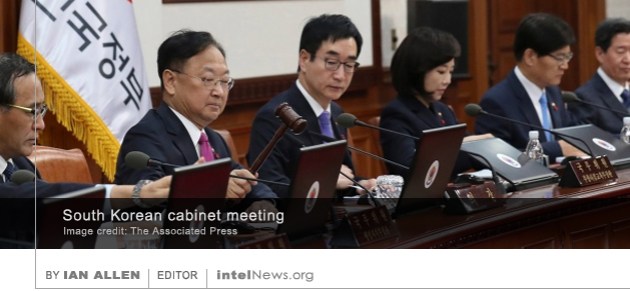
Earlier this week, the foreign ministers of South Korea and Japan met in China in an attempt to bridge the differences between the two countries. But the negotiations failed. This morning South Korea responded to Japan’s latest move by refusing to renew the General Security of Military Information Agreement (GSOMIA). This treaty between Japan and South Korea, which was due to be renewed today, facilitates the sharing of intelligence about North Korea’s missile and nuclear programs. But the South Korean government announced it would not renew the agreement, following a decision taken by the country’ National Security Council. The country’s President, Moon Jae-in, has agreed with the decision. A South Korean government spokesman said South Korea had determined that maintaining “an agreement we signed with the aim of exchanging military information which is sensitive to security […] would not serve our national interest”.
Japan called South Korea’s decision to scrap GSOMIA “extremely regrettable” and said that it “completely misreads the security situation” in the region. It added that it would continue to cooperate with South Korea “where cooperation is necessary”. Late last night, Tokyo summoned the South Korean ambassador to Japan to voice its disapproval of Seoul’s decision. Meanwhile there has been no response from the United States government, which was the architect of GSOMIA in 2016. Washington worked closely with the two countries for over 6 years to convince them to agree to exchange intelligence, despite their mutual animosity. American observers have warned that the termination of GSOMIA “threatens real-time information sharing between the United States, Japan and South Korea to monitor North Korean nuclear activity”.
► Author: Joseph Fitsanakis | Date: 23 August 2019 | Permalink
 In a move that highlights the thaw in relations between South Korea and Japan, the two nations appear to be closer than ever to entering an intelligence agreement with each other. In 2014, Washington, Seoul and Tokyo signed a trilateral intelligence-sharing agreement on regional security issues, with the United States acting as an intermediary. But a proposed new agreement between South Korea and Japan would remove the US from the equation and would facilitate direct intelligence-sharing between the two East Asian nations for the first time in history.






 intelNews.org
South Korea rejects US pressure to maintain intelligence agreement with Japan
November 22, 2019 by Joseph Fitsanakis 2 Comments
The agreement has fallen victim to an escalating tit-for-tat row between the two Asian countries, which is rooted in the use of forced Korean labor by Japan in World War II. South Korea is demanding financial compensation for the use of slave labor, including sex slaves, by Japanese occupation troops during Korea’s annexation by Japan from 1910 until 1945. In July, Tokyo responded to a mass boycott of Japanese goods by South Korean consumers by limiting the export of electronics to be used in South Korea’s ship-building industry. It also removed South Korea from the list of countries with the ability to fast-track their exports to Japan. South Korea responded last summer by threatening to effectively abandon GSOMIA.
Since that time, Washington has been pressuring Seoul to remain in the treaty. The United States is widely seen as the architect of GSOMIA, as it worked closely with Japan and South Korea for over 6 years to convince them to agree to exchange intelligence, despite their deep-rooted mutual animosity. The White House has traditionally viewed GSOMIA as a significant parameter in security cooperation between its allies in the Far East. Back in August, American officials warned that terminating GSOMIA would threaten its ability to monitor North Korean nuclear activity.
But Seoul is not willing to back down. On Thursday, the country’s Minister of Foreign Affairs, Kang Kyung-wha, said that unless there was “a change in Japan’s attitude, our position is we won’t reconsider”. Kang Gi-jung, Political Affairs Secretary to South Korean President Moon Jae-in, added that Seoul would “not wave a white flag”. Japan’s Minister of Defense, Taro Kono, urged South Korea to “make a sensible decision” and warned that Seoul, not Tokyo, would be the biggest victim of the termination of GSOMIA. Most observers expect that GSOMIA will simply expire come Saturday.
► Author: Joseph Fitsanakis | Date: 22 November 2019 | Permalink
Filed under Expert news and commentary on intelligence, espionage, spies and spying Tagged with General Security of Military Information Agreement, GSOMIA, intelligence cooperation, Japan, News, North Korea, South Korea