December 9, 2024
by Joseph Fitsanakis
 THERE ARE CONFLICTING REPORTS about the fate of Russia’s military bases in Syria, following the complete collapse of the 54-year-long Assad dynasty. Late on Sunday it was announced on Russian state media that the Kremlin had extended Bashar al-Assad and his family political asylum “on humanitarian grounds”. Attention quickly turned to the fate of the Russian embassy in the capital Damascus and the Russian military facilities in Tartous and Khmeimim.
It is difficult to overstate the strategic significance of the Russian military facilities in Syria, some of which date as far back as 1971, when Hafez al-Assad, Bashar al-Assad’s father, assumed power in the country. The Russian naval base in Tartous is currently the only Russian military  facility outside of the former Soviet Union. Furthermore, it constitutes the sole warm-port fueling and repair facility that is exclusively available to the Russian Navy. It is home to the Russian naval group in Syria, which consists of a submarine and five warships.
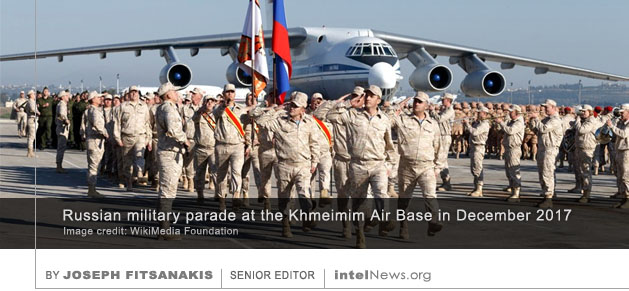
Likewise, the Khmeimim Air Base in Syria’s Latakia province is home to dozens of Russian fighter jets, which have been stationed there since 2015, ostensibly in order to protect the Syrian government from the Islamic State. However, Russia regularly uses the Khmeimim Air Base to transport troops and war materiel to Africa, and to project air power in the Mediterranean, through the presence of several bomber aircraft. The latter can be found, not only in the Khmeimim Air Base, but also in the Syrian military airports of Homs and Palmyra.
But these two military airports are now in the hands of the Hayʼat Tahrir al-Sham (HTS) forces that have captured much of Syria in the past two weeks. It is doubtful that the Russian Aerospace Forces will be able to use them from now on. Moreover, there are reports that Moscow will be forced to engage in a strategic withdrawal of the entirety of its military forces from Syria within hours, if not days.
On Sunday, the Russian Ministry of Foreign Affairs issued a dismissive statement claiming that, although Russian troops in Syria had been placed on high alert, “no serious threat to their security” had been detected. According to the Reuters news agency, the Russian government had been in communication with the leadership of the HTS leadership for several days. As a result of this communication, an agreement had allegedly been struck, which guaranteed “the safety of Russian military bases and diplomatic institutions in Syria”. Read more of this post








 intelNews.org
Analysis: The fate of Russia’s military bases in Syria seems highly uncertain
December 9, 2024 by Joseph Fitsanakis 1 Comment
It is difficult to overstate the strategic significance of the Russian military facilities in Syria, some of which date as far back as 1971, when Hafez al-Assad, Bashar al-Assad’s father, assumed power in the country. The Russian naval base in Tartous is currently the only Russian military facility outside of the former Soviet Union. Furthermore, it constitutes the sole warm-port fueling and repair facility that is exclusively available to the Russian Navy. It is home to the Russian naval group in Syria, which consists of a submarine and five warships.
Likewise, the Khmeimim Air Base in Syria’s Latakia province is home to dozens of Russian fighter jets, which have been stationed there since 2015, ostensibly in order to protect the Syrian government from the Islamic State. However, Russia regularly uses the Khmeimim Air Base to transport troops and war materiel to Africa, and to project air power in the Mediterranean, through the presence of several bomber aircraft. The latter can be found, not only in the Khmeimim Air Base, but also in the Syrian military airports of Homs and Palmyra.
But these two military airports are now in the hands of the Hayʼat Tahrir al-Sham (HTS) forces that have captured much of Syria in the past two weeks. It is doubtful that the Russian Aerospace Forces will be able to use them from now on. Moreover, there are reports that Moscow will be forced to engage in a strategic withdrawal of the entirety of its military forces from Syria within hours, if not days.
On Sunday, the Russian Ministry of Foreign Affairs issued a dismissive statement claiming that, although Russian troops in Syria had been placed on high alert, “no serious threat to their security” had been detected. According to the Reuters news agency, the Russian government had been in communication with the leadership of the HTS leadership for several days. As a result of this communication, an agreement had allegedly been struck, which guaranteed “the safety of Russian military bases and diplomatic institutions in Syria”. Read more of this post
Filed under Expert news and commentary on intelligence, espionage, spies and spying Tagged with Analysis, Hayʼat Tahrir al-Sham, Joseph Fitsanakis, Khmeimim Air Base (Syria), Russia, Syria, Syrian Civil War, Tartous (Syria)