Spy’s release by higher court shows Austria is unable to find its intelligence footing
September 9, 2024 1 Comment
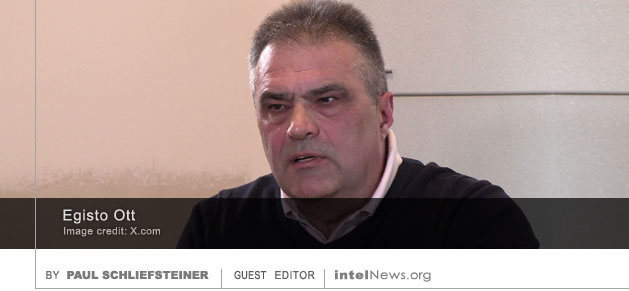 ON JUNE 26, THE longwinded case of Austria’s counter intelligence failure regarding a possible inside threat took yet another —quite surprising— turn: the state court of Vienna (Landesgericht Wien) released from pre-trial detention (Untersuchungshaft) Egisto Ott, a former member of the Federal Office for the Protection of the Constitution and Counterterrorism (BVT) —Austria’s now-dissolved domestic intelligence agency. Ott, who was accused of spying against Austria, had been arrested (again) at the end of March on suspicion of obtaining classified information for which he could provide no reason, as well as for presumably selling it. Among the suspected recipients of the classified information were Russian assets and —more or less directly— Russian intelligence.
However, the three-judge panel called to decide on the detention complaint came to the conclusion that, while there remains a strong suspicion (dringender  Tatverdacht) against Ott, the reasons for his further detention were not sufficiently given. In the judges’ view, all activities that could carry a pre-trial detention were committed before Ott was arrested and released for the first time in 2021. Back then, Ott had also been released after a short detention, following a decision by the same court. Briefly summarized, in 2021 the Landesgericht concluded that Ott could no longer spy against Austria as he did not have access to classified information, having been removed from the domestic intelligence agency years earlier. Additionally, since the BVT was in the process of reorganization and reformation at that point, the judges deemed the possibility of further criminal behavior by Ott to be unrealistic.
The recent assessment that Ott did not conduct additional punishable offences following his first release is surprising, since the prosecutor alleged —with a certain undertone directed against the initial decision to release Ott, which can be noted in the arrest warrant— that Ott had resumed his information-gathering and handling activities immediately upon being set free in 2021. Specifically, Ott is accused of having unlawfully retrieved data from the Central Register of Residents (Zentrales Melderegister) on March 24 of that year and then passing it on. The information accessed by Ott concerned the Bulgarian investigative journalist Christo Grozev, who was living in Austria at the time. Consequently, Grozev had to leave Vienna, since his life was deemed to be in severe danger. Today, whenever Grozev returns to Austria to visit members of his family who remain there, he has to do so under heavy protection by the Austrian authorities.
Between June and November 2022, when Ott had been released from his first pre-trial detention, there was also an alleged transfer to Russia of three mobile phones, or their data, as well as a highly-encrypted SINA-workstation laptop. However, the judges of the Landesgericht concluded that, while information or intelligence provided to foreign services does not have to be secret to constitute criminal espionage against Austria, “concrete and vital interests of Austria” have to be violated by such a transfer. The judges did not deem that the evidence furnished by the prosecutor met their criteria. Die Presse, Austria’s ‘newspaper of record’, published a detailed explanation of the court decision.
The court did not deliberate about the third possible reason for keeping a suspect such as Ott in pre-trial detention, namely flight risk, because the state attorney had not introduce that argument. This is rather remarkable, since two alleged accomplices of Ott, his former superior Martin Weiß and the suspected head of the network, Jan Maršálek, managed to relocate to non-European countries. Both are now beyond the reach of Austrian and German authorities. However, it must be noted that Ott —who continues to deny all allegations against him— appears to have remained in Austria.
Upon his release, Ott immediately went into the offensive, giving interviews to Zack-Zack, the media outlet run by his longtime associate and former member of parliament Peter Pilz. In these video interviews Ott —understandably— refrains from discussing several aspects of the ongoing criminal investigation against him. However, he claims that some of the data retrievals he is under investigation for were parts of an official operation, codenamed DOCTOR. In the past, Ott has provided a number of explanations that seem unlikely —for instance that he needed the SINA laptops because he cooperated with investigative journalists. However, Ott’s latest claim of being involved in an officially sanctioned operation appears to be substantiated enough to prompt the state attorney’s office to task an investigator to get to the bottom of it (an alternative explanation is that the state attorney’s office wants to make absolutely sure that there are no  further surprises down this particular path). It should be noted that, in the meantime, it has emerged that Pilz and Ott seem to have maintained rather close relations for many years.
At the time of his arrest, Egisto Ott had garnered broad attention even beyond Austria’s borders, further-tarnishing Austria’s international image as a country unable to rid itself of Russian espionage and influence operations. The media reporting and accusations also led to a wild —though not always topical— debate within Austria’s political establishment. This makes it all the more noticeable that Ott’s unexpected release from detention sparked only a very limited public or political reaction. When asked about the court order to release Ott, Austria’s minister of the interior, Gerhard Karner, who is tasked with executive oversight of the civilian domestic intelligence service and all counter-espionage activities, simply remarked: “I have relatively little appreciation [for the decision] if that is the case. [But] the public prosecutor’s office is the master of the proceedings”. As far as this author can tell, Karner’s statement was the only public reaction by the government as a whole in a case that has been ongoing since at least 2017. Ultimately, the whole Ott affair seems to be not only an espionage scandal, but also a judicial scandal.
This silence and demonstrated lack of interest are even more surprising given that major international publications have published highly critical investigative pieces in recent months: Politico alleged that “Putin hijacked Austria’s spy service. Now he’s going after its government”, while The Wall Street Journal characterized Austria’s capital as “A Den of Spies: Vienna Emerges as Hub for Russian Espionage”. It therefore would be in Austria’s interest to mitigate and counteract this negative image, especially regarding intelligence matters. One would assume that strong public statements, let alone actions, would have been the order of the day. But the Austrian government, which is in election mode for the national vote on September 29, seems unable and unwilling to find its footing regarding intelligence and security matters.
By now it also seems a viable possibility that the Austrian political establishment is simply failing to grasp the ramifications of the Ott case and the consequences of its foreign media coverage for the country’s internal security as well as the international image.
► Author: Paul Schliefsteiner | Date: 09 September 2024 | Permalink
Paul Schliefsteiner is the Director of the Austrian Center for Intelligence, Propaganda and Security Studies (ACIPSS) and the Editor of the Journal for Intelligence, Propaganda and Security Studies (JIPSS). He studied History, Philosophy and Law at the University of Graz, as well as International Security Studies at the University of the Bundeswehr Munich and the George C. Marshall Centre in Garmisch-Partenkirchen. He was previously a guest researcher at the Institute for Peace Preservation and Conflict Research at the Defence Academy of the Austrian Armed Forces in Vienna.
Note: The investigation into the case of Egisto Ott and the network around Jan Maršálek now extends over several years and has to be considered ongoing, with new details and aspects of the case emerging on an almost daily basis. This article, therefore, can only provide a general overview and a broad depiction of the publicly available information at this time. All individuals named herein have been subject to prior public reporting and should be considered not guilty until proven otherwise in a court of law.
 About intelNews






 intelNews.org
As a former member of Austria’s Security Service Ott appears to have deep legal knowledge and strong personal contacts. These have allowed Ott to manipulate Austria’s legal system sufficiently to keep himself out of jail.
Also, as a neutral (non-NATO) country Austria lacks the political will to risk antagonizing Russia on such a marginal case.
Furthermore, I think laws serve political interests. So with Austria’s neutral status (and other political considerations) Austria has not constructed a system of security laws to convict someone in Ott’s situation.