April 7, 2025
by Joseph Fitsanakis
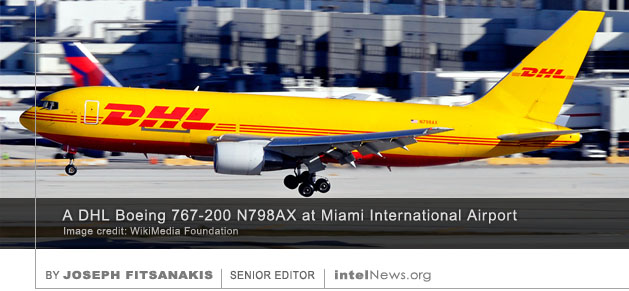 THE REUTERS NEWS AGENCY has disclosed more information about an alleged plot by Russian intelligence to detonate bombs on cargo flights from Europe to North America. Initial details of the plot emerged in October 2024, when it was reported that explosions had occurred earlier that year at shipping warehouses in England and Germany. It later emerged that a similar explosion had occurred at a third shipping warehouse, located in Poland.
It is now understood that the explosions occurred on July 19, 20 and 21, 2024, and that at least two of them took place in facilities belonging to DHL, a German logistics firm headquartered in Bonn. Affected facilities are reportedly located in Leipzig, Warsaw, and Birmingham. All three explosions were caused by rudimentary incendiary devices hidden inside commercial shipments. European officials said at the time that the explosions were part of a broader wider campaign by Russian intelligence to sabotage Western European transportation and shipping networks.
Now the Reuters news agency claims that the explosions were meant to test security systems in preparation for a major sabotage operation. The operation aimed to detonate explosive mechanisms in mid-air on cargo flights from Europe to the United States and Canada. Moreover, a fourth incendiary device, which was found at a Warsaw shipping facility, failed to explode and has been forensically examined by bomb experts, Reuters said. Citing “interviews with more than a dozen European security officials”, including a person familiar with the case in Poland, the news agency said it was able to provide “the most granular account yet of the alleged plot”.
The report claims the incendiary devices were concealed inside pillows, bottles of cosmetics, and sex toys. They were ignited with the use of remote timers taken from cheap Chinese electronic goods. Once detonated, the timers sparked explosions with the help of gelled flammable cocktails that included compounds such as nitromethane—a highly flammable liquid chemical used in industrial applications. All ingredients used in the incendiary devices, including nitromethane, are easily accessible to consumers at a relatively low cost.
According to Reuters, the procedures followed in the DHL attacks fit the profile of similar operations that have been carried out in recent years by the Main Intelligence Directorate of the Russian Forces’ General Staff, known as GRU. Such procedures include hiring disposable agents, most of which are not Russian citizens, for one-off operations. In the case of the DHL attacks, the agents were allegedly hired on the encrypted messaging platform Telegram and paid with the use of cryptocurrencies, or in cash.
Among the alleged suspects in the case is a Ukrainian man identified by Reuters as Vladyslav Dekravets, who was recruited in southern Poland and is now facing extradition to Poland from Bosnia. Another suspect, identified in the Reuters report as Alexander Bezrukavyi, allegedly packaged parcels containing sneaker shoes for shipment to the United States and Canada. The shipments were intended to help the GRU “gather information about parcel-processing methods and timing”. During the operation, the two men came in contact with individuals who appeared to be GRU officers, using the cryptonyms WARRIOR and MARY.
The DHL cases remain at a pre-trial stage in several European countries, Reuters said. They involve the pending extradition of suspects from elsewhere in Europe. The trials are going to feature evidence gathered from criminal investigators and intelligence agencies, according to the report.
► Author: Joseph Fitsanakis | Date: 07 April 2025 | Permalink
 AUTHORITIES IN BRITAIN AND Germany are reportedly investigating the possibility that the Russian intelligence services may be behind two fires that occurred in shipping warehouses last summer. The fires occurred in late July in facilities belonging to DHL, a German logistics firm headquartered in Bonn.






 intelNews.org
Reuters publishes details about alleged Russian airline sabotage plot
April 7, 2025 by Joseph Fitsanakis 4 Comments
It is now understood that the explosions occurred on July 19, 20 and 21, 2024, and that at least two of them took place in facilities belonging to DHL, a German logistics firm headquartered in Bonn. Affected facilities are reportedly located in Leipzig, Warsaw, and Birmingham. All three explosions were caused by rudimentary incendiary devices hidden inside commercial shipments. European officials said at the time that the explosions were part of a broader wider campaign by Russian intelligence to sabotage Western European transportation and shipping networks.
Now the Reuters news agency claims that the explosions were meant to test security systems in preparation for a major sabotage operation. The operation aimed to detonate explosive mechanisms in mid-air on cargo flights from Europe to the United States and Canada. Moreover, a fourth incendiary device, which was found at a Warsaw shipping facility, failed to explode and has been forensically examined by bomb experts, Reuters said. Citing “interviews with more than a dozen European security officials”, including a person familiar with the case in Poland, the news agency said it was able to provide “the most granular account yet of the alleged plot”.
The report claims the incendiary devices were concealed inside pillows, bottles of cosmetics, and sex toys. They were ignited with the use of remote timers taken from cheap Chinese electronic goods. Once detonated, the timers sparked explosions with the help of gelled flammable cocktails that included compounds such as nitromethane—a highly flammable liquid chemical used in industrial applications. All ingredients used in the incendiary devices, including nitromethane, are easily accessible to consumers at a relatively low cost.
According to Reuters, the procedures followed in the DHL attacks fit the profile of similar operations that have been carried out in recent years by the Main Intelligence Directorate of the Russian Forces’ General Staff, known as GRU. Such procedures include hiring disposable agents, most of which are not Russian citizens, for one-off operations. In the case of the DHL attacks, the agents were allegedly hired on the encrypted messaging platform Telegram and paid with the use of cryptocurrencies, or in cash.
Among the alleged suspects in the case is a Ukrainian man identified by Reuters as Vladyslav Dekravets, who was recruited in southern Poland and is now facing extradition to Poland from Bosnia. Another suspect, identified in the Reuters report as Alexander Bezrukavyi, allegedly packaged parcels containing sneaker shoes for shipment to the United States and Canada. The shipments were intended to help the GRU “gather information about parcel-processing methods and timing”. During the operation, the two men came in contact with individuals who appeared to be GRU officers, using the cryptonyms WARRIOR and MARY.
The DHL cases remain at a pre-trial stage in several European countries, Reuters said. They involve the pending extradition of suspects from elsewhere in Europe. The trials are going to feature evidence gathered from criminal investigators and intelligence agencies, according to the report.
► Author: Joseph Fitsanakis | Date: 07 April 2025 | Permalink
Filed under Expert news and commentary on intelligence, espionage, spies and spying Tagged with Alexander Bezrukavyi, DHL Group, Germany, GRU, News, Poland, Russia, sabotage, transportation security, UK, Vladyslav Dekravets