Russia flew unmarked military aircraft to Libya to evacuate mercenaries, US claims
May 28, 2020 3 Comments
 The United States has alleged that the Russian military flew over a dozen unmarked aircraft to Libya, in an attempt to provide air support for Russian mercenaries who are fighting in Tripoli. If true, this development marks a major escalation of Russia’s military intervention in the Libyan civil war.
The war has been raging in Libya since 2011, when a popular uprising backed by the West and its allies led to the demise of the country’s dictator, Muammar Gaddafi. Much of the east of the country is controlled by the United States-backed Tobruk-led Government, which is affiliated with the Libyan National Army (LNA) and its commander, Field Marshal Khalifa Haftar. Russia also backs the LNA and is vying with the United States for influence among Haftar’s commanders and troops. The LNA is fighting against the United Nations-recognized Libyan Government of National Accord (GNA), which is supported by Qatar and Turkey.
On Tuesday, the Africa Command of the United States Department of Defense alleged that Russian pilots had flown military planes to Jufra, an LNA stronghold. The Americans claimed that the jets had been repainted in Syria to hide their Russian Federation insignia, before being flown first to Tobruk, in Libya’s east, and from there to Jufra. According to the Pentagon, the Russian planes were flown to Libya in order to provide air support to over 1,000 Russian mercenaries who are fighting alongside the LNA.
The mercenaries reportedly belong to the PMC Wagner (also known as the Wagner Group), a Russian security contractor with presence on the ground in Syria, eastern Ukraine, the Central African Republic, and elsewhere. Western officials allege that Russian private contractor firms like Wagner could not operate without permission from the Kremlin. According to recent reports, Wagner personnel have been participating in the LNA’s year-long effort to take Tripoli from the hands of the GNA and by doing so put an end to the Libyan civil war. But the offensive has not been going well in recent days, and Wagner forces were reportedly pushed back by Turkish- and Qatari-supported GNA troops.
The US Pentagon alleged that Moscow sent the Russian military aircraft to Libya in order to “provide close air support and offensive fires for the Wagner Group PMC that is supporting the LNA’s fight”. Other commentators have argued that the main purpose of the mission was to reach the outskirts of Tripoli and airlift the Russian mercenaries to safety. But Ahmed Mismari, a spokesman for the LNA, rejected reports of the arrival of Russian military aircraft to Libya as “media rumors and lies”. He said that all aircraft used by the LNA were “repaired […] old Libyan jets”. The Russian military has not commented on the allegations by the US Pentagon.
► Author: Joseph Fitsanakis | Date: 28 May 2020 | Permalink
 The United Arab Emirates is behind a “covert air bridge” to supply weapons to Libyan warlord Khalifa Haftar, according to a leaked report by a United Nations investigative panel. A war has been raging in Libya since 2011, when a popular uprising backed by the West and its allies led to the demise of the country’s dictator, Muammar Gaddafi. Much of the east of the country is controlled by the United States-backed Tobruk-led Government, which is affiliated with the Libyan National Army (LNA) and its commander, Field Marshal Khalifa Haftar (pictured). The LNA is fighting against the UN-recognized Libyan Government of National Accord.
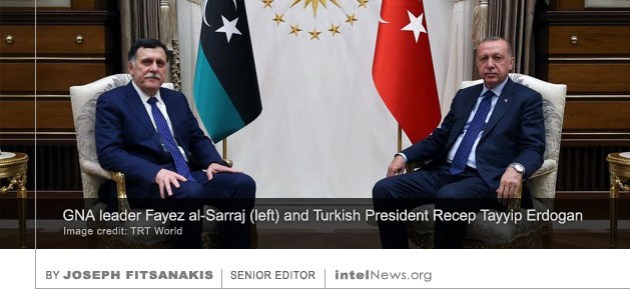 Turkish President Recep Tayyip Erdoğan has said his country is prepared to deploy troops to Libya, just days after Ankara surprised analysts by announcing an agreement with the embattled Libyan government in Tripoli. The Turkish-Libyan agreement has spurred angry reactions from Israel, Greece and Egypt, all of which are
 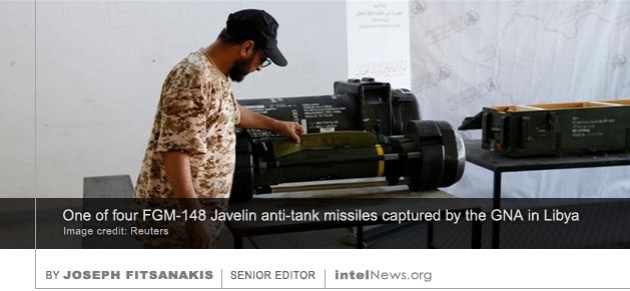 The French government has admitted that four anti-tank missiles found in a Libyan rebel camp belonged to its Special Forces units, but denied accusations that it deliberately breached the United Nations-imposed weapons embargo on Libya. Libya’s UN-recognized government, the Government of National Accord (GNA), which is headed by Fayez al-Sarraj, announced in June that it discovered a cache of FGM-148 Javelin portable anti-tank missiles during a raid on a rebel camp. The camp belonged to forces loyal to Khalifa Haftar, a rogue Libyan warlord who is supported by a group of Western-led nations that includes the United States, France, Israel, Egypt and the United Arab Emirates.
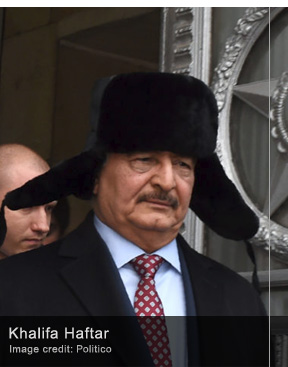 Several European Union member states, led by Italy, have criticized France for blocking a joint resolution calling on all warring factions in Libya to cease all hostilities and return to the negotiations table. The latest round of hostilities was sparked by an all-out attack by a group calling itself the Libyan National Army (LNA). The commander of the LNA is Field Marshal Khalifa Haftar, an old adversary of the Libyan leader Muammar al-Gaddafi, who lived in the United States under Washington’s protection for several decades. In 2011, following an uprising that toppled Gaddafi, Haftar returned to Libya and launch a military campaign from the eastern city of Tobruk. Since that time, he has led the LNA in a war of attrition against the United Nations-backed Government of National Accord (GNA), which is based in the Libyan capital Tripoli.
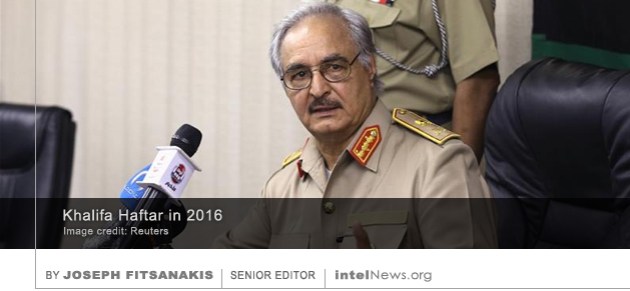 Libya’s most powerful warlord, who was an asset of the United States Central Intelligence Agency before entering the Libyan Civil War, ordered his troops to commit war crimes, according to two American legal experts. Libya has remained in a state of war since 2011, when a popular uprising backed by the West and its allies led to the demise of the country’s dictator, Colonel Muammar Gaddafi. Currently the strongest faction in the ongoing Libyan Civil War is the eastern-based Tobruk-led Government, which is affiliated with the Libyan National Army (LNA). The commander of the LNA is Field Marshal Khalifa Haftar, an old adversary of Colonel Gaddafi, who lived in the United States under Washington’s protection for several decades before returning to Libya in 2011 to launch his military campaign.






 intelNews.org
Embattled Libyan government announces surprise visit by CIA director
January 13, 2023 by Ian Allen Leave a comment
According to reports in the Libyan media, Burns spent most of Thursday in Tripoli, where he met with Abdul Hamid Dbeibah, a controversial businessman who is serving as prime minister in the Government of National Unity (GNU). Burns also met with GNU Minister of Foreign Affairs Najla al-Mangoush, as well as with Hussein al-Ayeb, who leads the GNU’s intelligence agency. The CIA director also met with Field Marshal Khalifa Haftar (pictured), head of the Libyan National Army (LNA). The LNA nominally supports the GNU’s rival government in eastern Libya, the Government of National Stability (GNS). However, Haftar is seen by many as Libya’s de facto strongman. Notably, Burns did not meet with Fathi Bashagha, the self-styled ‘prime minister’ of the GNS, which, unlike the GNU, is not recognized by the United Nations, but is supported by a number of regional powers, including NATO member Turkey.
Al-Monitor reported that the subject of the GNU’s relations with Russia was high on the agenda during Burns’ visit, as was the subject of Libya’s energy exports to Europe. Counterterrorism was also discussed, which is unsurprising, given that last month the GNU surrendered Abu Agila Mohammad Mas’ud Kheir Al-Marimi to American authorities. Washington alleges that Al-Marimi was involved in the 1988 downing of Pan Am Flight 103 over Lockerbie, Scotland, which was conceived and plotted by the regime of the late Colonel Moammar al-Gadhafi. The move was seen as an attempt by the GNU to strengthen relations with Washington, in light of the challenge it faces from the GNS and the LNA.
► Author: Ian Allen | Date: 13 January 2023 | Permalink
Filed under Expert news and commentary on intelligence, espionage, spies and spying Tagged with CIA, Government of National Stability (Libya), Government of National Unity (Libya), Khalifa Haftar, Libya, News, United States, William Burns