South African probe into murder of Rwandan ex-spy chief unearths new evidence
January 25, 2019 Leave a comment
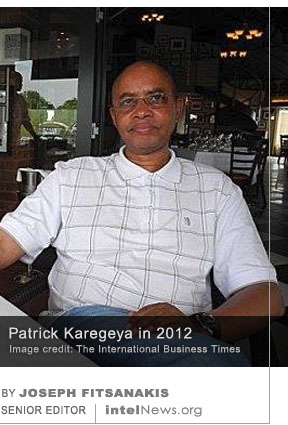 A public inquest into the 2014 killing of a Rwandan dissident and former spy chief, who had been given political asylum in South Africa, has unearthed evidence showing that South African authorities believed the killers had close links to the government of Rwanda. It also appears that the South Africans chose not to prosecute the killers in order to protect their diplomatic ties with the Rwandan government. Patrick Karegeya was a leading member of the Rwandan Patriotic Army (RPA), the armed wing of the Rwandan Patriotic Front (RPF), which was founded in 1987 in Uganda by Rwandan Tutsi refugees. In 1994, the RPA, led by Paul Kagame, took control of Rwanda, thus putting an end to the genocide of up to a million Tutsis and moderate Hutus. Soon afterwards Karegeya was named Director General of External Intelligence in the RPA, which was renamed to Rwandan Defense Forces.
In 2004 however, after falling out with Kagame, who had become President of Rwanda in 2000, Karegeya was arrested, stripped of his rank of colonel, and served 18 months in prison for “insubordination and desertion”. He fled the country in 2007 and received political asylum in South Africa. In 2011, the Rwandan government issued an international arrest warrant for Karegeya, but South Africa refused to extradite him. His body was discovered on December 31, 2014, in a room at the Michelangelo Towers Hotel in Sandton, an affluent suburb of Johannesburg. He was 53.
Earlier this month, in response to pressures from Karegeya’s family and human rights groups, the government of South Africa began a formal inquest into the murder, in anticipation of launching a possible court case. Earlier this week, the magistrate in charge of the inquest, Mashiane Mathopa, made public a previously secret letter from the South African prosecutor’s office about Karegeya’s murder. In the letter, dated June 5, 2018, explains the prosecutor’s decision to “decline at this stage” to prosecute the murder. The decision rests on two arguments. The first argument is that the four men who were believed to have killed Karegeya had already “left South Africa and returned to Rwanda”. The second argument is that there were “close links […] between the suspects and the current Rwandan government”.
On Monday, Mathopa suggested that the South African authorities may have decided not to investigate Karegeya’s murder in order to “help repair” South Africa’s bilateral relations with Rwanda. He then halted the inquest and gave police officials two weeks to “explain their failure to prosecute” Karegeya’s alleged murderers. He also requested detailed information about the “steps, if any, [that] have been taken to arrest the four suspects […], since their whereabouts and their identity are known” to the authorities. Supporters of the inquest said earlier this week that Mathopa could potentially order a trial of the case, which might lead to a formal request made by South Africa for Rwanda to extradite the four men implicated in the case.
► Author: Joseph Fitsanakis | Date: 25 January 2019 | Permalink
 The government of Rwanda uses intelligence operatives to systematically spy on, harass, and even kill opposition figures living abroad, according to a report issued by a Canadian security agency. The report was written by the National Security Screening Division of the Canada Border Services Agency, and was partly based on information from the Canadian Security Intelligence Service (CSIS). It was released as part of a court case involving a Rwandan man living in Canada, who was accused of working as a spy for the government of Rwanda.
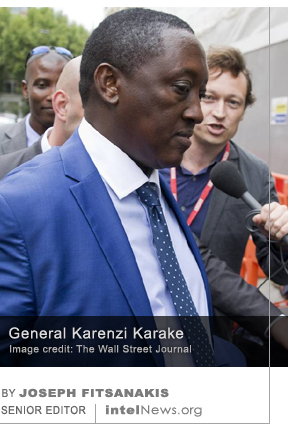 A Rwandan former intelligence chief, whose legal team is led by the wife of British former Prime Minister Tony Blair, has been freed after a court in the United Kingdom refused to extradite him to Spain to face war crimes charges. General Emmanuel Karenzi Karake, 54, was the most senior intelligence official in the administration of Rwandan President Paul Kagame. He rose to fame as a commander in the Rwandan Patriotic Front (RPF), an armed rebel group from Rwanda’s minority Tutsi tribe that fought to end the genocide inflicted upon the Tutsis by their rival Hutus. In 1994, following the death of nearly a million people, the RPF took power in Rwanda and ended the slaughter. That accomplishment caused a rapid upsurge in the popularity of Karake and other senior RPF leaders. Karake’s popularity remains strong among the Tutsis despite his dramatic falling-out with Kagame in 2010, which led to the general’s dismissal from the government.







 intelNews.org
Activist portrayed in movie Hotel Rwanda sues airline for alleged abduction
December 17, 2020 by Joseph Fitsanakis Leave a comment
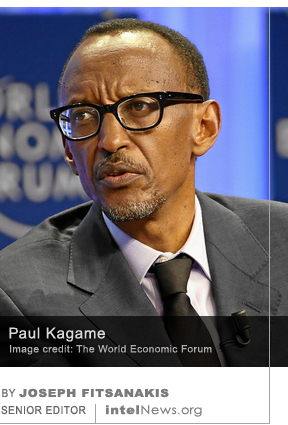
After the end of the genocide, Rusesabagina, a Hutu, became a vocal critic of Rwanda’s Tutsi president, Paul Kagame (pictured). In 1996, Rusesabagina survived an assassination attempt, after which he went into self-exile in Belgium, of which he is a citizen. Eventually he obtained permanent residency to the United States and relocated to San Antonio, Texas. He continued to voice strong criticisms of President Kagame from exile, whom he accuses of dictatorial tendencies, corruption and mismanagement.
In August 2020, Rusesabagina boarded a chartered airplane in Dubai, United Arab Emirates, which he was told would transport him to Burundi. While there, he had agreed to do a lecture tour, hosted by a Christian group. However, according to Rusesabagina, the invitation was a trap designed to lure him to Rwanda. He was allegedly bound and gagged shortly after the plane took off from Dubai. He was then transported to Kigali, where he was arrested on August 31 on an international warrant issued by the Rwandan government.
Rusesabagina has remained in prison since his arrest, charged with terrorism, murder, kidnap, arson, and forming, as well as funding, terrorist organizations. He rejects these charges and claims he was abducted and subjected to extraordinary rendition for supporting groups that oppose President Kagame’s rule. He is awaiting trial, which is scheduled to take place on January 26, 2021.
On Thursday, Rusesabagina’s lawyers filed a lawsuit in the US state of Texas, claiming that GainJet, the charter airline company whose plane was allegedly used to transport him from Dubai to Kigali, was complicit in his abduction. According to the BBC, the airline, which is registered in Greece, agreed to participate in his abduction because of its close relationship with senior Rwandan government officials. Rusesabagina’s lawyers are expected to file a similar lawsuit against GainJet in Belgium.
► Author: Joseph Fitsanakis | Date: 17 December 2020 | Permalink
Filed under Expert news and commentary on intelligence, espionage, spies and spying Tagged with abductions, GainJet, lawsuits, News, Paul Kagame, Paul Rusesabagina, Rwanda