Czech media name alleged Russian spy behind poison plot against Prague officials
May 13, 2020 2 Comments
 News media in the Czech Republic have named a Russian diplomat who allegedly transported poison to Prague last month, in what officials claim was a foiled plot to kill as many as three high-profile Czech politicians. Late last April, the Czech weekly investigative magazine Respekt reported that a Russian assassination plot had been foiled by authorities in the capital Prague.
Respekt said a Russian citizen carrying a diplomatic passport had arrived in Prague in early April. The man allegedly had with him a suitcase with a concealed quantity of ricin —a deadly toxin. His alleged mission was to assassinate Prague mayor Zdeněk Hřib, as well as Pavel Novotny and Ondřej Kolář, two of Prague’s three district mayors. All three men are known as fervently anti-Russian. Earlier this year, Hřib led a nationwide effort to rename the square in front of the Russian Embassy in Prague after Boris Nemtsov, a Russian opposition activist who was gunned down in Moscow in 2015. Kolář has been advocating for years for the removal of Soviet-era statues from Prague’s public spaces.
This past Sunday, Czech state television’s flagship investigative program 168 Hodin (168 Hours) claimed that the Russian diplomat who tried to smuggle poison into the country is Andrei Konchakov (pictured). Konchakov, 34, directs the Russian Center for Science and Culture in Prague, which is an extension of the Russian Embassy there. Citing “intelligence sources” 168 Hodin said Czech counterintelligence officials believe Konchakov is a actually an non-official-cover intelligence officer for Russian intelligence. Konchakov is alleged to have arrived at Prague’s Vaclav Havel International Airport on in April, where he was picked up by a Russian Embassy car and driven to the compound of the Russian diplomatic representation in the Czech capital.
Soon after the allegations against him emerged, Konchakov spoke to the Czech news website Seznam Zprávy. He strongly denied the accusations against him and told the website that the suitcase he was carrying with him during upon his arrival in Prague contained “disinfectant and candies”. He added that he would not, for the time being, respond to further questions, as he would first have to be granted permission to do so from the Russian government. Meanwhile, the Russian Embassy in Prague released a statement claiming that it had asked Czech authorities to provide police protection for Konchakov, because of “credible threats” he had received following the allegations against him by 168 Hodin.
► Author: Joseph Fitsanakis | Date: 13 May 2020 | Permalink
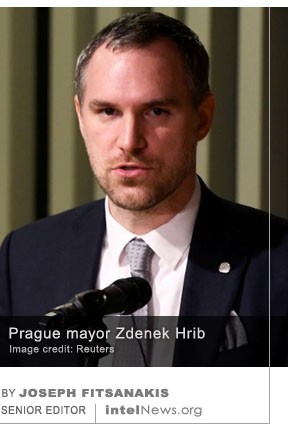 The Russian government has strongly denied accusations in the Czech media that it dispatched an assassin to Prague to kill two leading Czech politicians. The denial was issued by the Kremlin a day after Prague mayor Zdeněk Hřib said he had been placed under 24/7 police protection because of fears his life could be in danger.
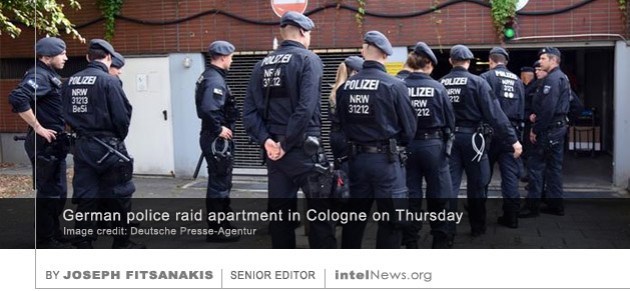 German authorities have charged a Tunisian citizen with building a biological weapon, after finding significant quantities of the highly toxic substance ricin in his apartment. The 29-year-old man is referred to in public reports only as “Sief Allah H.”, in compliance with German law that forbids the naming of suspects until they are found guilty in court. German officials said last Thursday that the man remains in custody and has been charged with violating Germany’s War Weapons Control Act (known as Kriegswaffenkontrollgesetz) and “preparing a serious act of violence against the state”.






 intelNews.org
Russia responds angrily to Czech expulsions of Russian diplomats in poison probe
June 9, 2020 by Joseph Fitsanakis 2 Comments
In April, the Czech weekly investigative magazine Respekt reported that a Russian assassination plot had been foiled by authorities in Prague. The magazine said a Russian citizen carrying a diplomatic passport had arrived in Prague in early April. The man allegedly had with him a suitcase with a concealed quantity of ricin —a deadly toxin. His alleged mission was to assassinate Prague mayor Zdeněk Hřib, as well as Pavel Novotny and Ondřej Kolář, two of Prague’s three district mayors. All three men are known as fervently anti-Russian. Earlier this year, Hřib led a nationwide effort to rename the square in front of the Russian Embassy in Prague after Boris Nemtsov, a Russian opposition activist who was gunned down in Moscow in 2015. Kolář has been advocating for years for the removal of Soviet-era statues from Prague’s public spaces.
A few weeks later, the Czech state television’s flagship investigative program 168 Hodin (168 Hours) claimed that the Russian diplomat who tried to smuggle poison into the country is Andrei Konchakov (pictured). Konchakov, 34, directs the Russian Center for Science and Culture in Prague, which is an extension of the Russian Embassy there. Citing “intelligence sources” 168 Hodin said Czech counterintelligence officials believed Konchakov was a actually an intelligence officer for Russia.
Now the Czech government has officially declared Konchakov and one of his colleagues at the Center for Science and Culture persona non grata (unwanted persons) and has ordered their expulsion from the country. In a statement issued on Friday, the Czech Ministry of Foreign Affairs accused the two diplomats of “trying to harm the relations of the two countries”. At a news conference in Prague, Czech foreign minister Tomas Petricek told reporters that Prague had “made efforts to settle the situation discreetly and diplomatically”. However, “Russia’s approach gives us no choice but to expel the diplomats”, said Petricek.
Speaking later that day, Russia’s Minister of Foreign Affairs, Sergey Lavrov, dismissed Prague’s allegations as “absurd”. The head of the Russian Foreign Intelligence Service (SVR), Sergey Naryshkin, called the expulsions “a very vile and mean provocation by the Czech authorities” and vowed that “retaliatory measures will be taken”. In a press statement issued in response to the expulsions, the Russian Ministry of Foreign Affairs said that the Czech authorities had “seriously damaged” bilateral relations between the two countries “without any basis”. The statement went on to state that “Prague’s actions will not only receive an adequate response, but will also be taken into account when forming the Russian policy on bilateral relations with the Czech Republic”.
► Author: Joseph Fitsanakis | Date: 09 June 2020 | Permalink
Filed under Expert news and commentary on intelligence, espionage, spies and spying Tagged with Andrei Konchakov, Andrey Konchakov, assassinations, Czech Republic, News, poisoning, Prague (Czech Republic), ricin, Russia, Russian Center for Science and Culture in Prague