Chinese technology firm denies it had access to Dutch government’s phone calls
April 21, 2021 Leave a comment
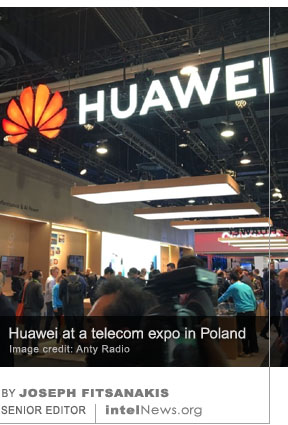 A LEADING CHINESE TELECOMMUNICATIONS firm has strongly denied a claim by a newspaper that its service personnel could listen in on calls made by Dutch telephone users, including senior government officials. The report dates from 2010 and was authored by consultancy firm Capgemini on behalf of KPN, one of Holland’s largest telecommunications service providers. The Rotterdam-based firm had hired Capgemini to conduct a risk analysis on whether more equipment should be purchased from Chinese telecommunications giant Huawei. By that time the Chinese company, one of the world’s largest in its field, was already supplying KPN with hardware and software equipment.
According to the newspaper De Volkskrant, which accessed the 2010 Capgemini report, the consultants cautioned KPN against purchasing more equipment from Huawei. They told KPN bosses that the Chinese firm had “unlimited access” to the content of phone conversations by subscribers through Huawei-built hardware and software that was already present in the Dutch company’s telephone system. These included Holland’s then-Prime Minister, Jan Peter Balkenende, and virtually every government minister. The report claimed that privacy standards existed in theory, but there was no mechanism in place to ensure that they were being followed.
On Tuesday, Huawei issued strong denials of the De Volkskrant report. The firm’s chief operating officer in the Netherlands, Gert-Jan van Eck, said that the Capgemini report allegations, as reported by the newspaper, were “just not [technically] possible”. Van Eck added that such claims were “patently untrue” and represented “an underestimation of the security of the interception environment” that Huawei was operating under in Europe. The Dutch government has made no comment on the De Volkskrant report.
► Author: Joseph Fitsanakis | Date: 21 April 2021 | Permalink
 The Norwegian National Security Authority (NSM) has warned the country’s information technology firms to prioritize national security over cutting costs when outsourcing their operations abroad. The warning follows what has come to be known as the “Broadnet affair”, which, according to the Norwegian government, highlighted the dangers of extreme cost-cutting measures by Norway’s heavily privatized IT industry. The incident is named after Broadnet, Norway’s leading supplier of fiber-optic communications to the country’s industry and state sectors. Among Broadnet’s customers is Nødnett, an extensive digital network used by agencies and organizations that engage in rescue and emergency operations, including police and fire departments, as well as medical response agencies. Although 60% of the Nødnett network is owned by the Norwegian government, Broadnet is a member of the Nødnett consortium, and is thus supervised by Norway’s Ministry of Transport and Communications.
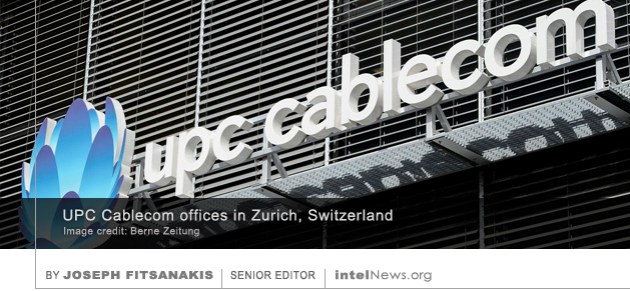 The Swiss federal government has rejected a multi-million dollar contract bid by one of the world’s largest broadband Internet service providers, saying it is foreign-owned and could serve as “a gateway for foreign spies”. The company, UPC Cablecom, is headquartered in Zurich, is subject to Swiss law, and is currently the largest broadband cable operator in Switzerland. However, in 2005 it became a subsidiary of the UPC Broadband division of Liberty Global Europe, an international telecommunications and television company based in London, England. It is therefore technically considered a foreign company according to Swiss law. In 2013, UPC Cablecom submitted a bid for a competitive contract to provide broadband Internet services to Swiss government agencies. But in January 2014, the company was informed by Swiss officials that such a contract could not be awarded to a foreign-owned telecommunications service provider such as UPC Cablecom.







 intelNews.org
White House holds emergency meeting with telecoms over ‘massive’ Chinese breach
November 25, 2024 by Joseph Fitsanakis 1 Comment
On Thursday, following a briefing provided by intelligence officials, Senator Mark Warner (D-VA), who chairs the United States Senate’s Select Committee on Intelligence, referred to the Chinese breach as “far and away the most serious telecom hack in [American] history”. Warner added that the volume of data the Chinese hackers were able to collect on “important American officials” was alarming, but that the extent of the intrusion was significantly broader than initially thought and compromised the privacy of telephone users across the United States.
According to reports, the breach affected a host of American telecommunications service providers (TSPs), including the three largest —T-Mobile, Verizon, and AT&T. The initial breach compromised the system employed by the TSPs to facilitate communications interception requests by government agencies following the issuance of court warrants. Eventually, however, the hackers were eventually able to exploit antiquated software and hardware in the United States’ national telecommunications network in order to target a wide array of users.
The extent of the damage caused by the breach remains unknown, as very little about it has been shared by the White House or the telecommunications industry. Nevertheless, it appears that the hackers selected telephone service users with senior current or former posts in government, including President-Elect Donald Trump. The hackers were reportedly able to access the metadata, and even content, of all unencrypted telephone calls and text messages to and from these users.
Friday’s meeting at the White House was reportedly convened by National Security Adviser Jake Sullivan and co-led by Anne Neuberger, who is serving as Deputy National Security Adviser for Cyber and Emerging Technology. The names of telecommunications industry executives that attended the closed-door meeting were not provided to the media.
► Author: Joseph Fitsanakis | Date: 25 November 2024 | Permalink
Filed under Expert news and commentary on intelligence, espionage, spies and spying Tagged with AT&T, China, News, Salt Typhoon, T-Mobile, telecommunications industry, Verizon