August 21, 2017
by Ian Allen
 Australia has expressed concern about a plan by a Chinese telecommunications company to provide high-speed Internet to the Solomon Islands, a small Pacific island nation with which Australia shares Internet resources. The company, Huawei Technologies, a private Chinese venture, is one of the world’s leading telecommunications hardware manufacturers. In recent years, however, it has come under scrutiny by Western intelligence agencies, who view it as being too close to the Communist Party of China.
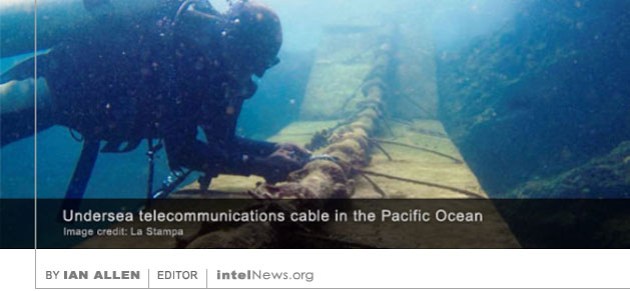
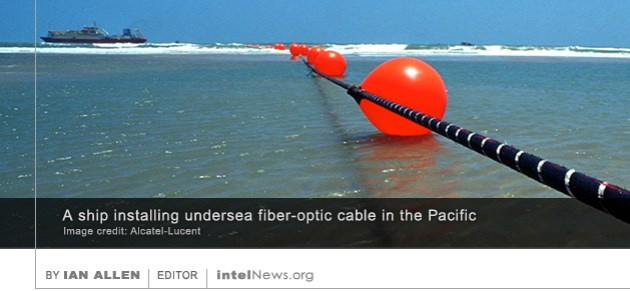
One of Huawei’s most recent large-scale projects involves the Solomon Islands, a former British overseas territory that became independent in 1978 and is today a sovereign nation. The Pacific country consist of a complex of nearly 1,000 islands of different sizes, scattered over a distance of 11,000 square miles. It lies northeast of Australia and directly east of Papua New Guinea. In 2014, the government of the Solomon Islands began an ambitious project to connect its Internet servers to those of Australia via a 2,700-mile undersea fiber optic cable. The ultimate goal of the project is to provide Solomon Islands inhabitants with reliable high-speed Internet. The project was approved by Canberra (Australian government) and Sydney (Australian private sector) and given the green light by the Asian Development Bank, which promised to fund it. But in 2016 the Solomon Islands government suddenly named Huawei Marine as the project’s main contractor. Huawei Marine, a subsidiary of Huawei Technologies, is a joint venture between the Chinese firm and Global Marine Systems, a British-headquartered company that installs undersea telecommunications cables.
The news was greeted with concern in Canberra. The Australian intelligence community has previously warned that Huawei operates as an arm of the Chinese spy services. Intelligence agencies in the United Kingdom and the United States have issued similar warnings. In 2011, a report by a research unit of the US Office of the Director of National Intelligence concluded that Huawei Technologies relied on a series of formal and informal contacts with the Chinese People’s Liberation Army and the Ministry of State Security. But a subsequent 18-month review commissioned by the White House found no evidence that Huawei spied for the Chinese government.
Canberra is concerned that, by constructing the Solomon Islands undersea cable, Huawei would be “plugging into Australia’s telecommunications infrastructure backbone”, something that, according to some intelligence officials, “presents a fundamental security issue”. To further-complicate things, opposition officials in the Solomon Islands allege that the country’s government contracted the services of Huawei after the Chinese company promised to make a multi-million dollar donation to the ruling political party. Last June, the director of the Australian Secret Intelligence Service (ASIS), Nick Warner, visited the Solomon Islands and tried to convince the country’s Prime Minister, Manasseh Sogavare, to drop Huawei from the project. The topic was also discussed in a meeting between Mr. Sogavare and his Australian counterpart, Malcolm Turnbull, in Canberra last week. Following the meeting, the Solomon Islands leader said that his government would “continue to have discussions with the Australian government to see how we can solve that […] security issue”.
► Author: Ian Allen | Date: 21 August 2017 | Permalink
 The Russian government sent a team of spies to Ireland to monitor undersea fiber-optic cables, which enable communications traffic between North America and Western Europe, according to a new report. The spies were allegedly sent to Ireland by the Main Directorate of the General Staff of the Russian Armed Forces, which is known in Russia as GU, and formerly as GRU.
 In a move observers describe as unprecedented, a United States government regulator is preparing to recommend blocking the construction of an 8,000-mile long undersea cable linking America with China, allegedly due to national security concerns. Washington has never before halted the construction of undersea cables, which form the global backbone of the Internet by facilitating nearly 100% of Internet traffic. Much of the undersea cable network is in the process of being replaced by modern optical cables that can facilitate faster Internet-based communications than ever before.
 An increased presence of Russian submarines near American territorial waters appears to correspond to the location of undersea Internet cables used for commercial and military communications, according to officials.






 intelNews.org
Russia uses merchant navy fleet for intelligence operations in North Sea, study reveals
June 24, 2024 by Joseph Fitsanakis 10 Comments
HUNDREDS OF RUSSIAN MERCHANT ships have been utilized by the Kremlin for over a decade to carry out intelligence operations in the North Sea, a major new investigation has revealed. Belgian newspaper De Tijd and the investigative journalism website Follow the Money (FTM) carried out the joint investigation, using data provided by Global Fishing Watch, a Google-based international nonprofit organization that gathers information on commercial fishing activities worldwide.
Encompassing 220,000 square miles, the North Sea lies between France, Belgium, the Netherlands, the United Kingdom, Norway, Denmark, and Germany. It hosts many of the world’s major shipping lanes, an extensive network of energy pipelines, as well as key undersea communication cables. The development of large-scale offshore energy production has further-augmented the significance of the North Sea for the security of Europe in recent years. The strategic value of the North Sea has become even clearer since the onset of the Russo-Ukrainian war in 2014.
According to the De Tijd/FTM study, the Russian government has been highly active in the North Sea through a variety of stealthy means –primarily by deploying civilian vessels to collect intelligence and possibly even carry out sabotage operations. The study focused on 1,012 Russian-flagged non-military vessels that have been active in the North Sea since 2014. These consist of oil tankers, scientific research vessels, fishing boats, cargo ships, and even privately owned yachts.
The study identified 60,000 loitering events involving these Russian vessels. In the shipping domain, the term ‘loitering event’ refers to vessels that deviate from their normal route, reduce speed for no obvious reason, drift aimlessly, or circle around a location that may initially appear arbitrary. Loitering and other such peculiar behavior by merchant ships makes no economic sense, as it requires more fuel and results in added compensation for crews. Notably, close to 1,000 loitering events by nearly 170 different Russian ships were found to have taken place within less than a mile from an underground cable or energy pipeline. Read more of this post
Filed under Expert news and commentary on intelligence, espionage, spies and spying Tagged with 2022 Russian invasion of Ukraine, maritime intelligence, News, North Sea, North Sea Security Pact, Russia, sabotage, undersea communications cables