January 2, 2020
by intelNews
 Since 2008, when we launched intelNews, it has been our end-of-year tradition to take a look back and highlight what we believe were the most important intelligence-related stories of the past 12 months. In anticipation of what 2020 may bring in this highly volatile field, we present you with our selection of the top spy stories of 2019. They are listed below in reverse order of significance. This is part three in a three-part series. Part one is available here. Part two is available here.
04. No shortage of high-profile assassinations and abductions in 2019. There was no shortage of assassinations, assassination attempts, suspicious deaths and abductions in 2019. In January, the Dutch government officially accused Iran of ordering the contract murders of two Iranian men on Dutch soil in 2015 and 2017. The accusation prompted Iran to expel two Dutch diplomats from Tehran, which in turn prompted Holland to recall its ambassador from the Iranian capital. In March, a medical examination suggested that Mikhail Yuriyevich Lesin, a former senior adviser to Russian President Vladimir Putin, who died allegedly by falling while intoxicated in a luxury hotel room in Washington, may in fact have been strangled to death. According to the medical examiner —whose name has been redacted in the declassified report— the state of Lesin’s hyoid bone showed signs of “hanging or manual strangulation” or asphyxiation. Also in March, Daniel Forestier, a former paramilitary officer in France’s Directorate-General for External Security (DGSE), who was under investigation for allegedly plotting to kill General Ferdinand Mbahou, a senior Congolese opposition figure, was shot dead in the French Alps. According to a police report, Forestier had been shot five times in the chest and head in what a public prosecutor described as “a professional job”. In August, German authorities accused Moscow of ordering the assassination in Berlin of Zelimkhan Khangoshvili, a 40-year-old Chechen separatist who was shot in the head in broad daylight by a man wearing a wig and carrying a pistol fitted with a silencer. In October, Yossi Cohen, the chief of the Mossad —Israel’s main external intelligence agency— said in an interview that he had authorized “more than a few” assassinations during his tenure and warned that more may be on the way. In October, Iranian authorities announced the capture of Ruhollah Zam, a Paris-based Iranian dissident, who was reportedly lured out of France and then abducted by Iranian agents in a third country. It was later reported that the Iranian government may have used a female intelligence officer to lure Zam from his home in France to Iraq, where he was abducted by Iranian security forces and secretly transported to Iran. In November, Ibragim Eldzharkiev, a senior counter-terrorism officer in the Russian police, was gunned down along with his brother in a downtown Moscow street, in what authorities described as a contract killing.
03. Saudi Arabia hired Twitter employees to spy on users. In November US authorities charged two Saudi-born employees of the social media firm Twitter with spying on American soil. They also charged a member of staff of Saudi Arabia’s royal family with handling the two employees. They were allegedly recruited in 2015, on orders from the Saudi government, to spy on the identities of anonymous Twitter users who posted negative views of Saudi Arabia’s ruling dynasty. The employees gave the Saudis private information that included the email addresses, IP addresses and dates of birth of up to 6,000 Twitter users, who had posted negative comments about the Saudi royal family on social media. One of the two Twitter employees reportedly managed to escape to the oil kingdom before he was captured by the FBI. Remarkably, only a day after the US Department of Justice charged the three Saudi citizens with engaging in espionage on American soil, Saudi officials hosted in Riyadh Gina Haspel, the director of the CIA, reportedly to discuss “the longstanding Saudi-US partnership”.
02. A wiretapping scandal of vast proportions was unearthed in Spain. At the beginning of 2019, a Spanish court widened an investigation into an illegal network that spied on scores of politicians, business executives, journalists and judges for over 20 years. At the center of the case is José Manuel Villarejo, a 67-year-old former police chief, who allegedly spied on hundreds of unsuspecting citizens on behalf of corporate competitors and individual wealthy clients. A year earlier, five active police officers and an employee of Spain’s tax revenue service admitted to working for Villarejo’s network. They disclosed information about Operation KITCHEN, an espionage effort that targeted Luis Bárcenas, a senator and party treasurer of Spain’s conservative Partido Popular, who was eventually jailed for 33 years for his role in the so-called Gürtel case. The Gürtel case was the largest corruption scandal in modern Spanish history, and brought down the conservative government of Prime Minister Mariano Rajoy in July of 2017. The BBVA, Spain’s largest bank, is also accused of having made illicit payments of nearly $11.1 million to Villarejo for over 13 years.
01. US weapons given to UAE and Saudi Arabia are diverted to al-Qaeda. Weapons supplied to the Saudi and Emirati governments by the United States and other Western nations are ending up in the hands of al-Qaeda-linked Sunni militias in Yemen, according to two separate investigations. The weapons are being supplied to Saudi Arabia and the United Arab Emirates (UAE) by the West on the understanding that they will be used in the war in Yemen, in support of the country’s Sunni-dominated government. Since 2015, the Yemeni state has been at war with an Iran-backed alliance of rebel groups from Yemen’s Shiite communities, known as the Houthi movement. In an effort to support Yemen’s Sunni government, Western countries have supplied Saudi Arabia and the UAE with more than $5 billion-worth of weaponry. However, a report published in February by Amnesty International alleged that some of that weaponry, including machine guns, mortars and even armored vehicles, are being deliberately diverted to Sunni militia groups in Yemen, which have al-Qaeda links. A separate investigation aired by CNN claimed that weaponry given by Washington to the Saudi and Emirati militaries has been ending up in the hands of Salafist militias in Yemen. Among them is the Sunni Abu al-Abbas Brigade, which is closely linked to al-Qaeda in the Arabian Peninsula (AQAP).
This is part three in a three-part series; Part one is available here. Part two is available here.
► Author: J. Fitsanakis and I. Allen | Date: 2 January 2020 | Permalink
 Since 2008, when intelNews was launched, it has been our end-of-year tradition to take a look back and highlight what we believe were the most important intelligence-related stories of the past 12 months. In anticipation of what 2022 may bring in this always timely and highly volatile field, we present you with our selection of the top spy stories of 2021. They are listed below in reverse order of significance, starting from 10 and leading up to 1. This is part two in a three-part series. Part one is available here. Part three is available here.
 Since 2008, when intelNews was launched, it has been our
  04. Unprecedented security changes are taking place in Saudi Arabia. Analysts agree that the Kingdom of Saudi Arabia is undergoing its most important political changes in generations. On November 4, 2017, nearly 50 senior Saudi officials, including at least 11 princes, some of them among the world’s wealthiest people, were suddenly
 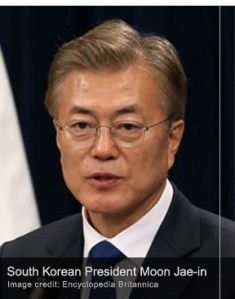 taking place in the intelligence infrastructure of South Korea, which are arguably as important as developments north of the 38th parallel. In June, the new center-left government of President Moon Jae-in
  assist policy-makers, including the president. So when the CIA and the FBI conclude that the Russian government launched an extensive and sophisticated campaign to undermine the 2016 US presidential election, one expects the president to take that advisement under serious consideration. However, the US leader has openly dismissed the conclusions of his own Intelligence Community and has
  as a result of “acute poisoning from an undefined substance”, according to his doctors. Also in February, Kim Jong-nam, half-brother of North Korean Supreme Leader Kim Jong-un, was killed in an
  support for the rebels could backfire by causing the suddenly unemployed fighters to join jihadist organizations. In August, there were reports that US troops
  10.
10. 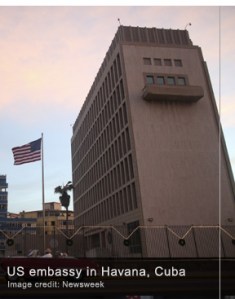 the alleged device may have been deployed by an intelligence service of a third country —possibly Russia— without the knowledge of the Cuban authorities. In October, the White House expelled 15 Cuban diplomats from the US in response to the incident. But the question of what harmed the health of at least 20 employees at the US embassy in Havana remains largely unanswered.






 intelNews.org
Year in review: The biggest spy-related stories of 2021, part 3
December 31, 2021 by intelNews Leave a comment
04. FBI built a fake phone company in massive global wiretapping operation. The United States Federal Bureau of Investigation built a fake telephone service provider for a secret worldwide operation that officials described as “a watershed moment” in law enforcement history. The operation, known as TROJAN SHIELD, involved over 9,000 law enforcement officers in 18 countries around the world. When the existence of TROJAN SHIELD was announced in a series of official news conferences in June, officials said the operation had “given law enforcement a window into a level of criminality [never] seen before on this scale”.
03. US spied on some of its closest European allies with the help of Denmark. The first claims of an alleged secret collaboration between the signals intelligence agencies of the United States and Denmark surfaced in November of 2020. By January of 2021, it was clear that the Danish government would, sooner or later, need to deal with the fallout of its controversial spy deal with Washington, under which Denmark enabled the US to spy on some of its closest European allies. Still, the news in June that Denmark helped the US spy on countries such as Germany, France, Sweden and Norway, was nothing short of remarkable, and has a huge symbolic significance that cannot be overlooked.
02. For the first time, Chinese and North Korean spies were tried in the US. For the first time, an alleged Chinese spy was tried—and convicted—in the United States. According to prosecutors Yanjun Xu, also known as Qu Hui or Zhang Hui, was a deputy division director in the Ministry of State Security (MSS)—China’s intelligence agency. His conviction was described by observers as a “seminal moment” for American counterintelligence. Also for the first time, an alleged intelligence officer of North Korea, Mun Chol-myong, was tried in a US court. A North Korean citizen based in Singapore, Mun had tried to defraud international banks and launder money though the US financial system, allegedly for the benefit of North Korean spy agencies.
01. At least 14 heads of state were targeted through controversial phone spyware. At least 14 current or former heads of state were among 50,000 individuals worldwide whose personal telephones were allegedly compromised through a controversial surveillance software, known as Pegasus. The spyware is marketed by NSO Group Technologies, an Israeli digital surveillance company based near Tel Aviv. Pegasus can install itself on targeted telephones without requiring their users to click a link, or download an application. The list of the spyware’s targets allegedly contains telephone devices belonging to three presidents, France’s Emmanuel Macron (pictured), South Africa’s Cyril Ramaphosa, and Iraq’s Barham Salih. The devices of three current prime ministers, Morocco’s Saad-Eddine El Othmani, Egypt’s Mostafa Madboul, and Pakistan’s Imran Khan, are also on the list. There are countless others. As a result of these revelations, the US Department of Commerce placed the NSO Group Technologies on a sanctions list in November 3.
This is part three in a three-part series. Part one is available here. Part two is available here.
► Author: Joseph Fitsanakis and Ian Allen | Date: 31 December 2021 | Permalink
Filed under Expert news and commentary on intelligence, espionage, spies and spying Tagged with year in review