Year in review: The 10 biggest spy-related stories of 2016, part I
December 29, 2016 Leave a comment
 Since 2008, when we launched intelNews, it has been our end-of-the-year tradition to take a look back and highlight what we think were the most important intelligence-related stories of the past 12 months. In anticipation of what 2017 may bring in this highly volatile field, we present you with our selection of the top spy stories of 2016. They are listed below in reverse order of significance. This is part one in a two-part series; part two is here.
10. Kim Philby videotaped lecture surfaces in Germany. While working as a senior member of British intelligence, Harold Adrian Russell Philby, known as ‘Kim’ to his friends, spied on behalf of the Soviet NKVD and KGB from the early 1930s until 1963, when he secretly defected to the USSR from his home in Lebanon. Philby’s defection shocked Western intelligence and is seen as one of the most dramatic moments of the Cold War. In April of this year, the BBC found a videotaped lecture by Philby in the archives of the BStU, the Federal Commissioner for Stasi Records in Germany. During the one-hour lecture, filmed in 1981, Philby addresses a select audience of operations officers from the Stasi, the Ministry of State Security of the former East Germany. Excerpts were aired publicly for the first time.
9. Britain’s MI6 to increase in size by 40% by 2020. It was revealed in July that, according to satellite images, the headquarters of the Russian Foreign Intelligence Service, known as SVR, has doubled, and possibly tripled, in size in the past nine years. So it probably shouldn’t come as a surprise that the British government plans to implement a 40 percent increase in personnel numbers for MI6 over the next four years. The agency, which is formally known as the Secret Intelligence Service, currently employs about 2,500 people. But that number will rise to approximately 3,500 by 2020. Experts agree that we are witnessing the most significant growth in the size of state intelligence agencies since the end of the Cold War.
8. Israel’s Mossad has a successful year, allegedly. It has been quite a year for Israel’s primary external intelligence agency, the Mossad. In 2015, the secretive organization got a new director, Yossi Cohen. Since that time, it has emerged that Bassam Mahmoud Baraka, a senior member of the military wing of Hamas, the Palestinian militant group that governs the Gaza Strip, has defected to Israel. Mossad is also believed to be behind the killing of Mohamed Zaouari, a senior aviation engineer who headed Hamas’ unmanned aerial vehicle program. Zaouari was shot dead outside his home in Tunisia earlier this month, by a group of assailants using gun silencers.
7. Information points to previously unknown ISIS spy agency. According to The New York Times, the Islamic State has set up a secretive intelligence agency whose task is to set up sleeper cells abroad and has already sent “hundreds of operatives” to Europe and Asia. The ISIS intelligence agency goes by the name Emni and appears to be a multilevel organization that includes domestic and external operational components. Emni’s external unit is tasked with conducting terrorist operations abroad. These are the responsibility of several lieutenants, who are permitted to recruit the most capable members of ISIS from around the world.
6. South Korea announces most high-profile defection from North since Korean War. An announcement issued by the South Korean government in April said it had given political asylum to a colonel in the Korean People’s Army, who worked for the Reconnaissance General Bureau, a military-intelligence agency that resembles the US Central Intelligence Agency’s Special Activities Division. The unnamed man is the most high profile defector to the South since the end of the Korean War in 1953, according to authorities in Seoul. Meanwhile, Thae Yong-Ho, the second-in-command at the North Korean embassy in the United Kingdom, also defected with his wife and children in August, and was given political asylum in South Korea.
This is part one in a two-part series; part two is here.
► Author: Joseph Fitsanakis and Ian Allen | Date: 29 December 2016 | Permalink
 Ever since 2008, when we launched intelNews, we have monitored daily developments in the highly secretive world of intelligence while providing an expert viewpoint removed from sensationalism and conspiratorial undertones. As 2015 is about to conclude, we take a look back at what we think are the ten most important intelligence-related developments of the past 12 months. Regular readers of this blog will surely agree that we witnessed our fair share of significant intelligence-related stories this year. Some of them made mainstream headlines, while others failed inexplicably to attract the attention of the news media. In anticipation of what 2016 may bring, we present you with our selection of stories, which are listed below in reverse order of significance. This is part two in the series;
  By J. FITSANAKIS and I. ALLEN | intelNews.org








 intelNews.org
Year in review: The 10 biggest spy-related stories of 2016, part II
January 2, 2017 by intelNews Leave a comment
5. Turkey’s intelligence agency wins the 2016 ‘clueless’ award. It seems everyone predicted the July 15 coup in Turkey, except its spy agency. Unlike countless political analysts in Turkey and abroad, who have been warning about a possible coup as early as October 2015, Turkey’s National Intelligence Organization (MİT) was caught in the dark. So unprepared was the agency, that it was unable to defend its headquarters in Ankara from an attack on the morning of July 16 by military helicopters. Meanwhile, dozens of Turkish nationals with diplomatic passports have been applying for political asylum in Germany and elsewhere since the coup. How many of those are MİT personnel, one wonders?
4. Panama papers leak shows immense extent of global financial crime. This year saw the unauthorized release of the Panama Papers, 11.5 million leaked documents that represent history’s largest leak. The documents were leaked form the vaults of the secretive Panamanian law firm Mossack Fonseca, and reveal secret information relating to over 200,000 offshore entities. This website opined at the time that the Panama Papers reveal the enormous extent of tax evasion and money laundering on a worldwide scale, which now directly threatens the very survival of the postwar welfare state. National intelligence agencies must begin to view offshore tax evasion as an existential threat to the security of organized government and need to augment their economic role as part of their overall mission to protect and secure law-abiding citizens.
3. Nuclear power plant computers found to be infected with viruses. In April, the computers of Gundremmingen, a nuclear power plant in southern Germany, were found to be infected with computer viruses that are designed to steal files and provide attackers with remote control of the system. The power plant is located in Germany’s southern district of Günzburg, about 75 miles northwest of the city of Munich. It is owned and operated by RWE AG, Germany’s second-largest electricity producer. RWE AG insisted that the malware did not pose a threat to the nuclear power plant’s computer systems, because the facility is not connected to the Internet. But there was no explanation of how the viruses found their way into the nuclear power plant’s systems in the first place.
2. German intelligence accuses Russia of pretending to be ISIS online. In June, a German intelligence report alleged that the so-called ‘Cyber Caliphate’, the online hacker wing of the Islamic State, is in fact a Russian front, ingeniously conceived to permit Moscow to hack Western targets without retaliation. The Cyber Caliphate first appeared in early 2014, purporting to operate as the online wing of ISIS. Now, however, a German intelligence report claims that the Cyber Caliphate is in fact a project of APT28 (also known as ‘Pawn Storm’), a notorious Russian hacking collective with close ties to Russian intelligence. The findings of the German intelligence report echo previous assessments by French and American authorities.
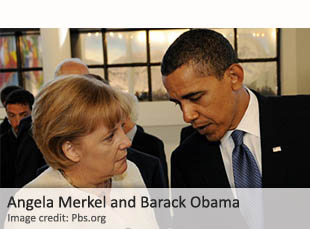
1. Intelligence features heavily in domestic US politics. Many, including this website, saw last week’s expulsion of 35 Russian diplomats by US President Barack Obama as a move directed “more towoard domestic American politics than foreign policy”. The expulsion aimed to expose Moscow’s alleged campaign of interference in the 2016 US Presidential elections. But another of its goals was to force president-elect Donald Trump, seen widely as a Russo-file, to take sides. Russian President Vladimir Putin responded by saying Moscow “reserves the right” to retaliate, but would not do so at this point. The Russian response was unexpected and highly uncharacteristic, an important reminder of the uncharted waters that US politics –and US-Russian relations– have entered in 2016. Still, it is remarkable to see the president-elect of the US effectively side with the Kremlin and not with his own country’s Intelligence Community. If nothing more, 2017 promises to be exceedingly interesting from an intelligence point of view.
This is part two in a two-part series; you can access part I here.
► Author: Joseph Fitsanakis and Ian Allen | Date: 30 December 2016 | Permalink
Filed under Expert news and commentary on intelligence, espionage, spies and spying Tagged with Analysis, espionage, intelligence, year in review