British soldier who spied for Iran found guilty of espionage and terrorism
December 2, 2024 4 Comments
 DANIEL KHALIFE, A BRITISH soldier who spied for Iran, has been found guilty of espionage and terrorism, in a case that has revealed serious vulnerabilities in the British security clearance-vetting system. The then-20-year-old Khalife was arrested in January 2022 while serving on active duty in Staffordshire, in Britain’s Midlands region. He was charged with violating the Official Secrets Act 1911 and the Terrorism Act 2000.
Prior to his arrest, Khalife was reportedly seen by his fellow soldiers and superiors as a promising soldier. Having joined the British Army at 16, he was quickly promoted to lance corporal (the lowest ranking of a non-commissioned officer) and cleared to work in the area of signals intelligence. He had also expressed a strong interest in joining the Special Air Service (SAS), which are the British Army’s special forces.
However, on November 9, 2021, Khalife voluntarily called the national security concerns hotline of the British Security Service (MI5). He told the operator on the other end of the line that he was a British soldier who had been spying for Iran for “more than two years”, but had now decided to become a double agent by cooperating with the British government. Khalife called again, and although he did not identify himself during the telephone conversations, MI5 was able to track him.
It has since become known that Khalife began spying for Iran when he was just 17 years old, shortly after joining the British Army. Over the next two years, Khalife provided his Iranian handlers with information about the identities of SAS personnel, military computer systems, as well as government surveillance programs and hardware, including unmanned aerial vehicles. Throughout that time, he communicated with his Iranian handlers via the Telegram instant messaging service, or via dead drops in Britain, as well as during trips abroad.
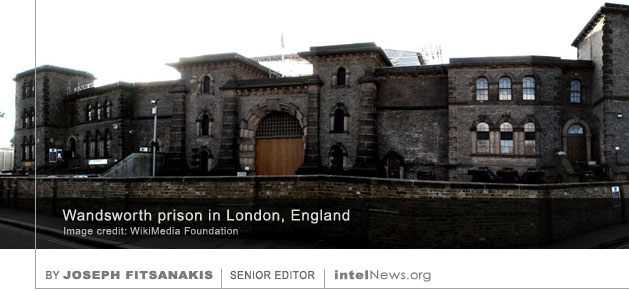
Shockingly, Khalife was temporarily able to escape justice twice following his arrest. In January 2023, he disappeared while on bail. He was found after nearly a month, living in a stolen van, which he had converted into a rudimentary camper. In September of that year, Khalife escaped from Wandsworth prison (pictured) in southwest London, by hiding beneath a delivery vehicle. He was captured three days later and eventually taken to court, where he was convicted and is now awaiting sentencing.
According to reports, British authorities are still unable to piece together the entirety of the information that Khalife shared with the Iranians. Consequently, the full extent of the damage he caused to British national security remains unknown. What is clear is that the Khalife case has exposed serious vulnerabilities in the security clearance-vetting process, which is “lacking in a lot of ways” —not least in the fact that it relies largely on self-reporting, as one expert told The Guardian newspaper on Saturday.
► Author: Joseph Fitsanakis | Date: 02 December 2024 | Permalink
 About intelNews






 intelNews.org
En tant qu’officier sous-traitant DoD/CUI, il semble impossible, au vu du développement psychologique d’un jeune, qu’un enfant puisse échapper à tous les paliers de sécurité sans avoir été préparé dès son plus jeune âge à des activités liées à l’espionnage. En effet, à cet âge, les individus sont encore en pleine construction de leur psychisme secondaire.
L’Iran, comme d’autres pays, exploite la vulnérabilité de l’homme face à l’enfant pour former de futurs agents. Ces failles psychologiques et sociétales peuvent avoir été exploitées soit par le MI5, qui reste un service de renseignement reconnu pour ses nombreuses réussites, soit par des négligences liées aux officiers traitants ayant contribué à la formation de cet enfant à multiples facettes.
Le fait qu’un jeune puisse être promu caporal suppléant, le grade le plus bas d’un sous-officier, à un âge si précoce, témoigne d’un parcours et d’un enseignement spécifiques. Ces apprentissages sont susceptibles d’avoir été inculqués dans des centres de formation des Gardiens de la Révolution islamique en Iran, connus pour leur endoctrinement et leur structuration rigoureuse dès l’enfance.
Belle journée à vous.
Pour mon Miroir de conscience AVHMCMC698514
Khalife revealing US (Fort Hood, Texas) secrets to Iran would have prevented any UK discretion to go soft on his security breaches.
Vetting systems are especially problematic when someone comes from a very different (from the norm (Anglo-Saxon, generations in Five Eyes countries)) background.
Hence, in The [UK] Guardian article [1], the UK officer’s advice below was quite justified:
“In September 2021, Khalife was promoted to lance corporal and even expressed an interest in joining the special forces, before an officer advised him he was unlikely to pass vetting “because of where his parents were from” – Iran and Lebanon.”
Probably, part of the UK security vetting process is for MI5 to ask Five Eyes, NATO and some other friendly, reliable, allies, about a subject’s background before he/she gets a Secret or higher clearance.
MI5 would be nervous about asking Lebanon and definitely would not ask an “Axis of Evil” country Iran. The UK or US asking Iranian, Russian, Chinese or North Korean security services to assist in somebody’s clearance process would be a definite self-defeating no-no.
[1] https://www.theguardian.com/uk-news/2024/nov/30/daniell-khalife-spy-who-blew-his-own-cover-and-exposed-gaping-holes-in-uk-security
En tant qu’officier sous-traitant DoD/CUI,
Salut Pete, ton analyse est alignée avec la mienne dans la mesure où la vérification ne devrait pas poser de problème, tant qu’elle respecte les paliers de sécurité établis. Le UK Security Vetting (UKSV) fournit des conseils détaillés sur les habilitations de sécurité internationales. Cela inclut les procédures pour obtenir des autorisations d’accès aux informations classifiées de l’OTAN, de l’UE ou d’autres partenaires internationaux. Pour demander de telles autorisations, il est généralement nécessaire de détenir une habilitation valide au niveau SC (Security Check) ou DV (Developed Vetting).
Un profil a été défini pour y accéder. Sans cela, il est impossible de participer aux directives. Pete, selon mon expérience analytique, il semble que le MI5 ait interféré avec le dispositif mis en place par l’Iran. Ce dispositif, qui exploite des jeunes, a probablement été ciblé par une opération visant à inverser le processus pour clarifier les mécanismes utilisés par l’Iran. Ces mécanismes incluraient, entre autres, le recours à des enfants espions, pour des raisons que j’ai déjà évoquées avec toi.
De manière générale, en suivant les opérations, les services sont intégrés. Cependant, au-delà des opérations clandestines qui nécessitent des investissements spécifiques et parfois du personnel particulier, comme les opérateurs des forces spéciales, la protection du public contre les menaces émergentes exige une coopération internationale continue et renforcée. L’Iran, comme d’autres nations, ne participe pas à cette coopération, en raison de facteurs qui la limitent.
Pour des détails plus précis, nous devons nous référer aux directives officielles disponibles sur le site web GOV.UK. C’est un aspect spécifique des autorisations à venir. À l’avenir, le MI5 sera sans aucun doute plus vigilant à l’égard de ce type d’intégration impliquant de jeunes adolescents originaires d’Iran, du Liban, ou d’autres pays.
AVHMCMC698514/
Pascal lembree.
Pete, je te joins une série de liens conformes pour approfondir cette analyse.
1- https://www.gov.uk/guidance/united-kingdom-security-vetting-international-personnel-security-clearances
2- https://www.gov.uk/government/news/home-secretary-hosts-five-eyes-security-summit
3- https://www.mi5.gov.uk/news/five-eyes-launch-drive-to-secure-innovation
4-https://assets.publishing.service.gov.uk/government/uploads/system/uploads/attachment_data/file/1041985/2021-11-24_-_Guidance_-_Vetting_process_for_accessing_International_Classified_Information_.pdf
5- https://assets.publishing.service.gov.uk/government/uploads/system/uploads/attachment_data/file/1144843/2023-01-17_Guidance_How_to_support_colleagues_through_NSV__1_.pdf
6- https://www.gov.uk/guidance/united-kingdom-security-vetting-international-personnel-security-clearances
BTA/ Pete.
Hi Pascal
So we English readers can comprehend your Belgian accented French language – my most cunning linguists have translated your comment below.
“reserve34 says:
December 5, 2024 at 08:57
As a DoD/CUI Contracting Officer,
Hi Pete, your analysis is aligned with mine in that vetting should not be a problem, as long as it is within the established security thresholds. UK Security Vetting (UKSV) provides detailed advice on international security clearances. This includes procedures for obtaining clearances to access classified information from NATO, the EU or other international partners. To apply for such clearances, it is usually necessary to hold a valid clearance at SC (Security Check) or DV (Developed Vetting) level.
A profile has been defined to access it. Without this, it is impossible to participate in the guidance. Pete, in my analytical experience, it appears that MI5 has interfered with the Iranian scheme. This scheme, which exploits young people, was likely targeted by a reverse-engineering operation to clarify the mechanisms used by Iran. These mechanisms would include, among others, the use of child spies, for reasons I have already discussed with you.
Generally speaking, following the operations, the services are integrated. However, beyond clandestine operations which require specific investments and sometimes specific personnel, such as special forces operators, the protection of the public against emerging threats requires continued and enhanced international cooperation. Iran, like other nations, does not participate in this cooperation, due to factors that limit it.
For more precise details, we must refer to the official guidance available on the GOV.UK website. This is a specific aspect of the upcoming authorisations. In the future, MI5 will undoubtedly be more vigilant with regard to this type of integration involving young teenagers from Iran, Lebanon, or other countries.
AVHMCMC698514/
Pascal lembree.
Pete, I am attaching a series of suitable links to further this analysis.
1- https://www.gov.uk/guidance/united-kingdom-security-vetting-international-personnel-security-clearances
2- https://www.gov.uk/government/news/home-secretary-hosts-five-eyes-security-summit
3- https://www.mi5.gov.uk/news/five-eyes-launch-drive-to-secure-innovation
4-https://assets.publishing.service.gov.uk/government/uploads/system/uploads/attachment_data/file/1041985/2021-11-24_-_Guidance_-_Vetting_process_for_accessing_International_Classified_Information_.pdf
5- https://assets.publishing.service.gov.uk/government/uploads/system/uploads/attachment_data/file/1144843/2023-01-17_Guidance_How_to_support_colleagues_through_NSV__1_.pdf
6- https://www.gov.uk/guidance/united-kingdom-security-vetting-international-personnel-security-clearances
BTA/ Pete.”
VIVE LA FRANCE ! :) https://youtu.be/215W-29Gt7s?si=KDZOs0MssEsEhWNr