Analysis: Assad’s collapse in Syria was a strategic surprise to Israel
December 20, 2024 7 Comments
 THE COLLAPSE OF THE regime of Syrian President Bashar al-Assad on December 8 caught the Israel Defense Forces (IDF) and Israel’s intelligence community —mainly Israel Military Intelligence (IMI) and the Mossad— by surprise. Assad’s collapse occurred much faster than Israel had estimated. Israel did not expect that the Syrian Arab Army would disintegrate so resoundingly, within 48 hours of the attack by the Syrian rebels.
Israeli intelligence assessed that, despite the shocks it had suffered in recent months, the so-called Axis of Resistance against Israel —mainly Hezbollah, Syria, and Iran— was stable. A scenario of rapid collapse of the government in Syria had not been assessed as a possibility, or even given a low probability tag. That was primarily because the Assad family had governed Syria for almost 60 years.
Following the Assad regime’s collapse, the focus of Israel’s intelligence is on analyzing the intentions of the major rebel organization, Hayat Tahrir al-Sham, and understanding how —if at all— it will lead the new administration in Syria. Israel is also examining developments in  southern Syria, as well as what is happening at the Syrian and Russian military bases in Latakia and Tartus. Moreover, the IDF is monitoring the activities of Iranian elements in Syria, including on the border with Lebanon, to prevent the possibility of military equipment being transferred from Syria to Hezbollah.
It is clear to Israel that Turkey stands behind the Hayat Tahrir al-Sham organization and that Ankara armed and supported the group for a significant period. What is less clear is whether and how Turkey’s involvement in Syria could threaten Israel’s interests, given that Israel’s relations with Turkey have deteriorated dramatically in recent years.
Assad was a key member of the pro-Iranian Axis of Resistance. Following his fall from power, Iran and Hezbollah could lose their main logistical hub for producing, transferring, and storing weapons, as well as training their forces and militias. Additionally, Syria under Assad constantly posed the threat of turning into yet another battlefront against Israel. Without Assad, Russia could lose its grip on Syria —the only country in the Middle East where Russian influence dominates that of the United States. The Russians could also lose access to their military bases in Syria, which offered the Russian Navy access to the waters of the Mediterranean.
Despite the fall of the bitter enemy that was Assad’s Syria, and the deep shock suffered by the Iranian-led Axis of Resistance camp that has been dominant in the Middle East in recent decades, Israeli intelligence is not optimistic about the emerging situation in post-Assad Syria. Syria is a collection of minorities —Druze, Kurds, Alawites, and Christians— that have been artificially joined together despite carrying bitter, bloody scores. The latter may erupt sharply, especially against the Alawites. Concepts such as liberal politics, civil society, or a cohesive nation-state, have never existed inside Syria.
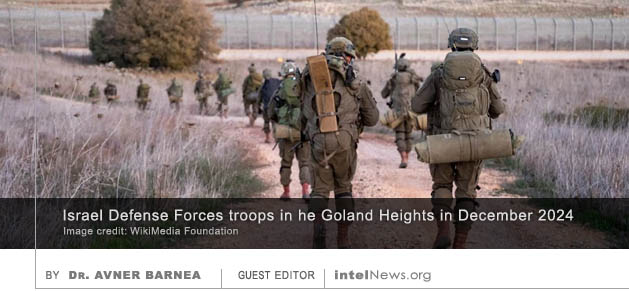
It follows that Israel is very concerned about the emerging uncertainty in Syria. Immediately after the fall of Assad, the IDF strengthened its defenses on the Golan Heights border to ensure that the chaos in Syria did not spill over into Israel. Meanwhile, Israel is in contact —both directly and through intermediaries— with several Syrian rebel groups, including Hayat Tahrir al-Sham. The Israeli message at this stage is a demand that the rebels not approach the border, along with a warning that, if they violate the separation of forces agreement, Israel will respond with force.
And a final note: assessments in relation to the Syrian regime’s collapse continue to emerge in the IDF and the Israeli intelligence community. These assessments concern the extent to which the lessons of October 7 have been sufficiently analyzed and assimilated within Israel. Specifically, there are questions about whether this new intelligence surprise in Syria may stem from the fact that an in-depth investigation into the lessons of October 7 has yet to be carried out during the 14 months of the war with Hamas.
► Author: Avner Barnea* | Date: 20 December 2024 | Permalink
Dr. Avner Barnea is research fellow at the National Security Studies Center of the University of Haifa in Israel. He served as a senior officer in the Israel Security Agency (ISA). He is the author of We Never Expected That: A Comparative Study of Failures in National and Business Intelligence (Lexington Books, 2021).
 About intelNews






 intelNews.org
Yea a surprise party
Whoever wants sustainable peace in Syria (and in the whole MENA region) must advocate for a change in the legislation in these countries that still allow different forms of violence (see the “Culture of Violence Scale” by peace researcher Franz Jedlicka). It is contradictory to claim that peace is a high goal and still allow child corporal punishment and the beating of women. Best regards, Caroline
Ongoing Syrian civil warring (that includes harsh Sunni-HTS treatment of minority Alawite-Shias, Christians and that large “minority” (Syrian women)) is likely to benefit Israel.
Benefits include Iranian Shia armed forces and militia (eg. Hezbollah) being heavily committed combatting the rise of the Sunni HTS threat with less Iranian-Shia forces available to fight Israel.
UN Resolution 242, the Suez Crisis, and European diplomacy underscores a deep-rooted frustration with the historical and current role of Europe in the Middle East. For many Israelis, it’s not just about specific policies or actions—it’s about the broader political narrative in which Israel’s legitimacy and security, constantly questioned or undermined through EU diplomacy.
Whether or not Israel should break relations with European countries, a complex issue with serious implications. Israel’s global alliances simply crucial to its diplomatic and economic interests, and maintaining relationships with key European powers remains important. However, a valid essential Jewish concern, the European attitudes toward Israel too often reflect a legacy of imperialism or a one-sided approach, from forced ghetto imprisonment for 3 Centuries, to pogroms, to blood libels, to taxation without representation etc. All these memory scares easily compounded every time the EU, Britain, and Russian diplomacy tilts in favor of hostile Arab states who adamantly refuse to recognize Jewish equality in self determination, this history European criminal behavior toward Jews fails to adequately acknowledge Israel’s security needs and right to exist.
The struggle for Israel’s sovereignty in a region full of external influences—including European powers, Arab states, and global organizations—remains one of the defining elements of the Israeli-Palestinian conflict, specifically the strategic Arab policies to internationalize war in the Middle East. Whether Israel decides to break off relations with specific countries, such as Ireland, or continue to engage diplomatically, its primary focus will remain on securing its right to exist, ensuring its security, and maintaining Jewish state rule from Jerusalem.
Israel’s security and sovereignty from the moment Israel declared independence in 1948, has faced harsh external pressures, both from Arab states and international NGO’s and European imperialism, all of which seek to impose Israeli territorial and political concessions to Arabs who, like Hamas refuse, to recognize the Jewish state with Jerusalem as its Capital. The idea of a divided Jerusalem as repugnant as a divided Berlin. The European Union and individual European states, at times, have pushed for Israeli concessions on issues such as settlements and Jerusalem, often siding with Palestinian demands in ways that Israel views as both insane and discriminatory. Post Shoah the sanity of Europeans, always a concern of deep suspicion.
The fear that Israel once again finds itself trapped & caught in the historical cycle of European barbarism, imperialism; that the international community undermines the legitimacy Jews – a core grievance that burns deep for many Israelis. The secret Sykes-Picot Agreement (1916) basically determined the borders and political structure of the Middle East States. The legacy of this abusive colonialism has permanently shaped attitudes as well as international borders across the Middle East. Many Israelis see the European attitude toward Israel as rooted in this imperialist barbaric and racist legacy, where European powers sought to impose ‘Final Solutions’ without understanding the consequences that the extermination of the Jewish people utterly implodes the good name reputations of the European people for ever after. This abstract idea – known as ‘Fear of Heaven’. Remains to this day an idea totally alien to both Europeans and Arabs.
Breaking diplomatic relations with British and key EU countries, like as initiated with Ireland, would certainly make a dramatic slap in the face. Such a bold move would emphasize the isolation Israel feels toward key European players, potentially harming economic and political ties. However, it would also – express Israel’s deep seated frustrations, with the perceived anti-Israel bias in European diplomacy and its longstanding grievances with European interference in the Middle East, which began with both the Churchill and Chamberlain White Paper betrayal of the Jewish people.
Relations with Britain, France, and Rome, historically complex. The memory of the Inquisition and forced expulsions stands in stark contrast with European horror and indignation of a mass Gazan population transfer post Oct 7th. First World European empires, once major colonial powers with interests across the world and specifically in the Middle East. The post ’48 Jewish state often forced to navigate a delicate balance between maintaining diplomatic relations and protecting its sovereignty and security interests. Israel’s frustration with European nations often stems from the perception that they would betray Israel’s security concerns at the drop of a hat. Europe often sides with Palestinian narratives, especially in the context of UN resolutions and EU policies. The Obama UN decree of 2334 makes Jerusalem forever suspicious that Europeans long for the day to plunge a dagger into Israel’s back.
Ireland’s stance on the Israeli-Palestinian conflict, particularly its support for resolutions that criticize Israel’s actions, seen by many Israelis as beyond simply biased and unfair. This, along with growing European support for Palestinian positions, has contributed to Israel’s increasing sense of alienation from European countries who forever stand under the shadow of the Shoah.
The Suez Crisis serves as a powerful example. The 8 year old nation, treated as a political pawn by England and France. Israel found itself in an exceptionally weak position, manipulated by Britain and France into a broader imperialist agenda that ultimately undermined Israel’s sovereignty and long-term interests in the region. The ’56 war introduced “Land for Peace”. This event, often viewed as a moment of reckoning for European imperialism in the Middle East. The Suez Crisis symbolized the end of European powers’ dominance in the region and the rise of the United States and Soviet Union as the primary international players. Britain and France—which had both previously held colonial dominance in the region—collaborated with Israel to invade Egypt and secure the canal. However, the intervention met strong opposition from both the United States and the Soviet Union; leading to a ceasefire and a subsequent embarrassment for the European powers, who were forced to withdraw. The ’56 War set the stage for the UN 242 demand for Israel to cede re-captured territory in a war initiated by Jordan!
The Suez Crisis (also known as the Second Arab-Israeli War), a clear example of European imperial powers, and their repeated attempts to assert their dominance & control over the Suez Canal and other regional matters, with a military intervention designed to bring down Egyptian President Gamal Abdel Nasser, who had nationalized the canal. The aftermath of the Suez Crisis also marked a turning point for Israel. While the event, seen as a failure for European powers, it also revealed a vulnerability in Israel’s geopolitical strategy: its reliance on former colonial powers like Britain and France, who had their own imperial interests in the region, fully willing and prepared to undermine Israel’s long-term security strategic interests. This greatly contributed to Israel’s wariness toward European diplomatic engagement and its sense that European policies toward the Middle East, utterly narcissistic, simply influenced by historical baggage and global power visions of empires, rather than by making a fair assessment of the new state of Israel’s needs or security.
When it comes to UN Resolution 242, Israel’s interpretation and response also central to the interpretation of this narrative. Resolution 242, passed after the 1967 Six-Day War, calls for Israel to withdraw from territories occupied during the war, in exchange for peace with neighboring Arab states. It promotes the Arab war agenda of internationalizing the conflict through the UN; it fails to address the Israeli re-capture of Jerusalem. Israel’s frustration with this resolution also emphasizes the hostile fact that the Security Council – great powers – failed to demand that Arab states of the Middle East recognize the Israeli basic requirement – to recognize Israeli self-determination and united Jerusalem as the Israeli Capital.
Furthermore, that Middle East and African voting blocks invalidate Israel as a nation within the Middle East community of nations. UN 242 does not adequately guarantee Israeli security, recognition of its right to exist as a sovereign state, or Jerusalem as the Capital of Israel.. The European Union, supports these hostile, pro-Arab resolutions, viewing them as a means to bring about a negotiated peace which favors the strategic interests of European imperialism and Arab internationalization of war in the Middle East. Israel perceives this imbalanced stance which fails to recognize the security challenges these multiple wars, by neighboring states and non-state actors threaten the existence of the Jewish state.
Many Israelis view European diplomacy through the lens of colonial history, especially the Sykes-Picot Agreement that carved up the Middle East and laid the groundwork for many of the region’s modern political challenges and border wars – like the Iraq invasion of Kuwait. The EU refusal to recognize Jerusalem as the Capital of Israel, coupled with the demands to dismantle post ’67 Israel, burns within the hearts of Israelis. There’s a persistent feeling that European powers, their repeated attempts to “solve” the Israeli-Palestinian conflict, smells a lot like the Nazi ‘Final Solution’. This permanent scar tissue within the Jewish soul, totally overlooked in the deep-rooted complexities of the region, including Israel’s right to security and to exist as a Jewish state, which the Palestinian claim of Right to Return totally undermines. The EU prioritization of the plight of Arab ’48 refugees which ignores the forced expulsion of Jews from Arab countries. The corrupt UNWRA that perpetuates Arab refugee status and refuses to demand that the 22 Arab countries repatriate their refugee populations like Israel did the ’48 Jewish refugees!
Diplomatic relations with European powers, especially Britain, France, and Germany – these countries exert significant economic and political partnerships. Israeli navy, for example, has bought multiple German submarines. Severing diplomatic relations with them could lead to isolation at a time when global diplomacy, increasingly interconnected. However, the frustration with European diplomatic stances—particularly on issues like settlements, Jerusalem, and Palestinian statehood—does fuel a deep sense of alienation; the shadow of the Shoah and the betrayal of Europe never forgotten nor forgiven. The idea of breaking relations could serve as a form of protest, a way to challenge what Israel perceives as an unjust or biased approach to its security and sovereignty by European powers.
This lingering sense of betrayal, the misalignment of European policies means that the sense of distrust remains complex, with deep-seated frustration over past actions. The apple doesn’t fall far from the Tree. The historical context of European diplomacy in the region, especially with respect to the Suez Crisis and Israel’s post-1948 sovereignty struggles, continues to shape the Israeli view of European involvement in the Middle East. The shifting dynamics of global power—where the U.S. and, more recently, Russia and China have become dominant players—means that Israel may increasingly look beyond Europe for support.
In considering whether Israel should sever diplomatic relations with key European nations, the move would indeed carry significant weight—symbolically and practically. This issue defined the political theatre of Israeli politics in the 50s which pitted Ben Gurion against Menachem Begin. While European relations remain vital for Israel’s global positioning, the act of breaking relations would signal a deep frustration and an expression of Israel’s commitment to defend its sovereignty and legitimacy against what it perceives as biased international pressures. Such a decision would not only reflect the disillusionment with European policies but also potentially shift Israel’s diplomatic orientation toward more neutral or supportive powers, including the U.S., Russia, and China.
Ultimately, Israel’s security, its right to exist, and its identity as a Jewish state remain at the core of its diplomatic concerns. The complexities of its relationship with European powers reflect the broader challenges of navigating a region rife with historical grievances, imperial legacies, and the ongoing Israeli-Palestinian conflict. In this context, Israel will likely continue to weigh its strategic interests carefully, balancing the necessity of maintaining global alliances with the imperative of safeguarding its sovereignty and security.
The historical weight of Europe’s involvement in the Middle East—particularly its legacy of colonialism, the Sykes-Picot Agreement, and the aftermath of the Holocaust—remains deeply embedded in Israel’s diplomatic psyche. This ongoing tension between Israel’s historical experiences and the current European stance quite unlikely to dissipate without significant changes in how European diplomacy engages with Israel, the Middle East and Israel’s unique fundamental requirement that the UN recognize Israel as part of the Middle East voting block of nations.
En tant qu’officier sous-traitant DoD/CUI,
pour de nombreux groupes de renseignement, les pays européens ne répondent pas toujours aux questions complexes qui ont de graves implications. Le désalignement des politiques européennes signifie qu’il y a manifestement un sentiment de méfiance restant complexe, avec une frustration profondément enracinée face aux actions passées avec des pays du Moyen-Orient.
Les accords Sykes-Picot, relevant de la diplomatie secrète, n’ont pas de valeur légale, mais relèvent d’accords tacites qui sont soumis à une forme d’effet « sans surprise », respectée par des branches du renseignement agissant avec la diplomatie.
Mosckerr, la lutte pour la souveraineté d’Israël dans une région pleine d’influences extérieures est en effet très déstabilisante depuis la représentation des puissances européennes. Et donc, pour nous, les vraies questions se posent sur les États arabes et les organisations mondiales – elles restent l’un des éléments négatifs des déterminants du conflit israélo-palestinien, en particulier avec l’Iran, porteur des politiques arabes stratégiques visant à internationaliser la guerre au Moyen-Orient.
Avec le désengagement, il est vrai, depuis plusieurs années de l’Europe, la soif des constats s’impose à des intérêts économiques qui ne sont pas forcément bien pensés, car aujourd’hui, sans les États-Unis derrière, cela aura comme conséquence imprévue d’accroître l’influence de la Russie et de la Chine sur l’Iran, et sur le Moyen-Orient en général. Cela pourrait soulever encore davantage une orientation plus conservatrice et autoritaire, qui conduirait à renforcer la crise de Suez (également connue sous le nom de deuxième guerre israélo-arabe).
Bien sûr, ces exemples sont clairs pour des puissances impériales européennes, en retrait effectivement sur leur domination, ce qui a renforcé le contrôle tout autour de la péninsule du canal de Suez et d’autres questions régionales. N’oublions pas que l’extrême complexité des institutions iraniennes est intervenue à des degrés divers, malgré, à l’époque, une intervention militaire destinée à faire tomber le président égyptien Gamal Abdel Nasser, qui avait nationalisé le canal – avec pour seul but le dédoublement presque systématique.
Les conséquences de la crise de Suez ont également marqué un tournant pour Israël. Les États-nations ont toujours eu leurs propres intérêts, qui n’ont pas toujours eu lieu autour d’un apaisement sécuritaire.
En fin de compte, la sécurité d’Israël, son droit à l’existence et son identité en tant qu’État juif restent au cœur de ses préoccupations diplomatiques. Certains, à ce jour encore, ne souhaitent pas voir le poids historique de l’implication de l’Europe au Moyen-Orient, puisqu’elle n’intègre pas la psyché diplomatique autour d’Israël.
C’est en effet un poids significatif, compte tenu des aspects négatifs correspondant finalement à la nature de la politique du régime de la République iranienne. Si l’on se réfère à la conceptualisation du totalitarisme par Hannah Arendt, Mosckerr, nous sommes alors forcés de constater que toutes les factions politiques iraniennes – y compris les modérées – ont un intérêt en commun : la survie du régime autour de la création d’ingérence étrangère, qui occupe la fonction spéciale ayant nommé le président iranien, en utilisant les espaces de liberté.
Dans le domaine de l’optimisme révolu national, elles sont centrées depuis les études de Sécurité Nationale de l’Université de Haïfa.
2-l’effondrement hypothétique du régime de Bachar al-Assad le 8 décembre (qui n’a pas eu lieu à ce jour en réalité) est présenté ici comme un événement qui aurait surpris les Forces de défense israéliennes (FDI), ainsi que les services de renseignement israéliens — notamment le renseignement militaire israélien (IMI) et le Mossad. Ce scénario suppose que les services de renseignement n’auraient pas anticipé la chute rapide du régime syrien, ce qui serait en effet une surprise majeure pour une région aussi surveillée stratégiquement.
Dans ce contexte, la CIA aurait soutenu un centre logistique des opérations en Syrie, ce qui s’inscrit dans certaines opérations de soutien logistique américain observées par le passé, notamment à des groupes considérés comme modérés ou pour contenir les réseaux djihadistes ou l’influence iranienne.
Par ailleurs, l’armée israélienne continue de surveiller les activités des forces iraniennes en Syrie, avec le soutien de la Cia, particulièrement autour de la frontière libanaise, afin d’empêcher le transfert d’armes au Hezbollah, organisation classée comme terroriste par Israël, les États-Unis, le Canada, le Royaume-Uni, la Ligue arabe et d’autres entités. Israël considère également que ce matériel pourrait ensuite être redistribué au Hamas, également désigné comme organisation terroriste par de nombreux pays et entités internationales.
CUI/ cette stratégie vise à empêcher l’Iran et ses alliés régionaux (Hezbollah, Hamas) d’exploiter le chaos en Syrie pour renforcer leur arsenal contre Israël/ C’est pourquoi ne souhaitons mintenir une stabilité en syrie, en chassent les pourvoiyeurs iraniens.
bat/ Mosckerr,
CUI/ Pascal lembree.
[[[Mosckerr, la lutte pour la souveraineté d’Israël dans une région pleine d’influences extérieures est en effet très déstabilisante du point de vue des puissances européennes. Ainsi, pour nous, les véritables questions concernent les États arabes et les organisations mondiales – elles demeurent l’un des moteurs négatifs du conflit israélo-palestinien, en particulier avec l’Iran, qui poursuit des politiques stratégiques arabes visant à internationaliser la guerre au Moyen-Orient.]]] CUI / Pascal Lembree, parler de « toutes les puissances européennes » est un sujet bien trop vaste. Il est clair que le retrait de la Hongrie de la CPI diffère de la position du gouvernement français, qui soutient la cour européenne établie par le Traité de Rome — traité qu’Israël n’a jamais accepté. Leur tentative arrogante d’assimiler Israël à la Shoah européenne, aux crimes de guerre des Turcs contre les Arméniens, aux massacres de masse perpétrés par les empires germaniques en Afrique, ainsi qu’aux tueries de masse survenues au Congo de notre vivant, est inacceptable.
Le rejet arabe de la Déclaration Balfour, qui consacrait le soutien ou la reconnaissance britannique du droit égal du peuple juif à l’autodétermination au Moyen-Orient, demeure le cœur de tous les conflits arabo-israéliens. Le problème posé par le gouvernement actuel de l’Iran s’inscrit également dans ce rejet du droit égal des Juifs à l’autodétermination au Moyen-Orient. Je ne sais pas comment le Shah d’Iran aurait réagi. Selon Wikipédia : « Le coup d’État iranien de 1953, connu en Iran sous le nom de coup d’État du 28 Mordad, fut un renversement du Premier ministre Mohammad Mossadegh, orchestré par les États-Unis et le Royaume-Uni et mené par l’armée iranienne, en faveur du renforcement du pouvoir autocratique du Shah, Mohammad Reza Pahlavi, le 19 août 1953, avec pour objectif principal de protéger les intérêts pétroliers britanniques en Iran, après que le gouvernement iranien ait refusé de céder aux exigences pétrolières occidentales. » Il semble donc hautement improbable que le Shah ait soutenu les Britanniques après le désastre de la guerre de 1956 visant à s’emparer du canal de Suez.
Depuis la Shoah, Israël a TOUJOURS été profondément préoccupé par sa sécurité nationale. Deux mille ans de barbarie européenne et d’injustice judiciaire envers les populations juives réfugiées — entre l’Église et les gouvernements de connivence — ont rendu les Juifs extrêmement méfiants à l’égard des solutions proposées par l’Europe, comme la résolution 242 ! Israël a donc un intérêt stratégique fondamental à limiter l’influence de l’impérialisme européen dans tous les États du Moyen-Orient. Nous espérons établir une base commune et partagée, à partir de laquelle les États du Moyen-Orient et d’Afrique du Nord pourront former ensemble une alliance.
La chute du gouvernement Assad serait une formidable réussite dans le cadre de la guerre abominable du 7 octobre. L’établissement d’un Kurdistan indépendant est un objectif clé pour Israël, qui espère ainsi fragmenter la Syrie. Le transfert massif des populations allemandes de Prusse, ainsi que le transfert de la Prusse à la Russie et à la Pologne, contredisent radicalement les affirmations ridicules de l’ONU et leur prétendu DROIT INTERNATIONAL.
Étant donné l’hostilité actuelle du gouvernement turc envers Israël, Israël pourrait également envisager de soutenir une partition de la Turquie en vue de l’établissement du Kurdistan.
Le Hezbollah, tout comme le Hamas, a vu son pouvoir considérablement diminuer en ce qui concerne la conduite de guerres étrangères contre Israël. Seul le temps dira si ces deux organisations s’effondreront totalement.
En résumé, Pascal Lembree / CUI, merci pour votre réponse. Israël considère l’Iran à l’image de la Corée du Nord en ce qui concerne les ambitions nucléaires. Le fait que la Russie soit embourbée en Ukraine rappelle la guerre de 1967, où les États-Unis, sous Lyndon B. Johnson, étaient coincés au Vietnam, ce qui a permis aux impérialistes britannique et français de rédiger l’abomination — comparable à la résolution de l’ONU 3379 (« le sionisme est du racisme ») ou à la résolution 242 du Conseil de sécurité.
La politique étrangère israélienne se concentre sur l’obligation faite à l’ONU de reconnaître Israël comme faisant partie du groupe régional de vote du Moyen-Orient, et de mettre fin à l’apartheid raciste actuel de l’ONU qui exclut uniquement l’État d’Israël de son bloc régional de vote. Le racisme nazi de l’ONU doit disparaître — ou alors l’ONU doit être dissoute. Personnellement, je suis favorable à ce qu’Israël rompe toutes ses relations diplomatiques avec l’ONU, tout comme l’Allemagne nazie l’a fait avec la Société des Nations.
Je ne sais pas comment le Shah d’Iran aurait réagi. Selon Wikipédia : « Le coup d’État iranien de 1953, connu en Iran sous le nom de coup d’État du 28 Mordad, fut un renversement du Premier ministre Mohammad Mossadegh, orchestré par les États-Unis et le Royaume-Uni et mené par l’armée iranienne, en faveur du renforcement du pouvoir autocratique du Shah, Mohammad Reza Pahlavi, le 19 août 1953, avec pour objectif principal de protéger les intérêts pétroliers britanniques en Iran, après que le gouvernement iranien ait refusé de céder aux exigences pétrolières occidentales. » Il semble donc hautement improbable que le Shah ait soutenu les Britanniques après le désastre de la guerre de 1956 visant à s’emparer du canal de Suez.
Depuis la Shoah, Israël a TOUJOURS été profondément préoccupé par sa sécurité nationale. Deux mille ans de barbarie européenne et d’injustice judiciaire envers les populations juives réfugiées — entre l’Église et les gouvernements de connivence — ont rendu les Juifs extrêmement méfiants à l’égard des solutions proposées par l’Europe, comme la résolution 242 ! Israël a donc un intérêt stratégique fondamental à limiter l’influence de l’impérialisme européen dans tous les États du Moyen-Orient. Nous espérons établir une base commune et partagée, à partir de laquelle les États du Moyen-Orient et d’Afrique du Nord pourront former ensemble une alliance.
La chute du gouvernement Assad serait une formidable réussite dans le cadre de la guerre abominable du 7 octobre. L’établissement d’un Kurdistan indépendant est un objectif clé pour Israël, qui espère ainsi fragmenter la Syrie. Le transfert massif des populations allemandes de Prusse, ainsi que le transfert de la Prusse à la Russie et à la Pologne, contredisent radicalement les affirmations ridicules de l’ONU et leur prétendu DROIT INTERNATIONAL.
Étant donné l’hostilité actuelle du gouvernement turc envers Israël, Israël pourrait également envisager de soutenir une partition de la Turquie en vue de l’établissement du Kurdistan.
Le Hezbollah, tout comme le Hamas, a vu son pouvoir considérablement diminuer en ce qui concerne la conduite de guerres étrangères contre Israël. Seul le temps dira si ces deux organisations s’effondreront totalement.
En résumé, Pascal Lembree / CUI, merci pour votre réponse. Israël considère l’Iran à l’image de la Corée du Nord en ce qui concerne les ambitions nucléaires. Le fait que la Russie soit embourbée en Ukraine rappelle la guerre de 1967, où les États-Unis, sous Lyndon B. Johnson, étaient coincés au Vietnam, ce qui a permis aux impérialistes britannique et français de rédiger l’abomination — comparable à la résolution de l’ONU 3379 (« le sionisme est du racisme ») ou à la résolution 242 du Conseil de sécurité.
La politique étrangère israélienne se concentre sur l’obligation faite à l’ONU de reconnaître Israël comme faisant partie du groupe régional de vote du Moyen-Orient, et de mettre fin à l’apartheid raciste actuel de l’ONU qui exclut uniquement l’État d’Israël de son bloc régional de vote. Le racisme nazi de l’ONU doit disparaître — ou alors l’ONU doit être dissoute. Personnellement, je suis favorable à ce qu’Israël rompe toutes ses relations diplomatiques avec l’ONU, tout comme l’Allemagne nazie l’a fait avec la Société des Nations.