Extremist groups see coronavirus pandemic as opportunity to spread chaos: report
April 16, 2020 Leave a comment
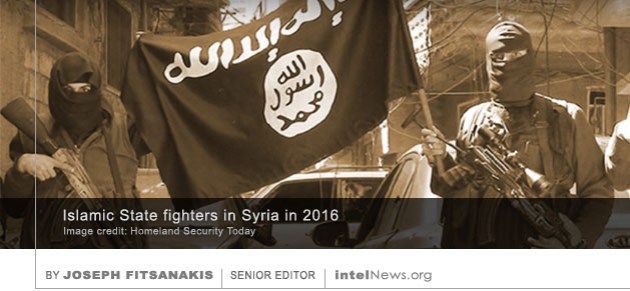 Extremist groups around the world are capitalizing on the novel coronavirus pandemic to rally their members around a common cause and spread chaos and violence, according to a new report. In an article published on Tuesday, veteran reporter Bridget Johnson, currently the managing editor for Homeland Security Today, writes that the world’s most active militant groups have issued numerous edicts and proclamations about COVID-19.
Johnson explains that most militant groups “have shown some concern” about their members’ health and wellbeing amidst the pandemic. The Islamic State was arguably the first Islamist group to instruct its members to take precautions against COVID-19. Johnson writes that the group began highlighting the threat of the virus in January, when an article in Al-Naba, the Islamic State’s weekly newsletter, expressed “growing concern about the spread of the infectious virus”. The militant group has since prescribed that “the healthy should not enter the land of the epidemic and the afflicted should not exit from it”, and has advised its members to wash their hands and “cover the mouth when yawning and sneezing”.
In the past month, the Afghan Taliban have been carrying a “COVID-19 awareness campaign” in areas under their control. The campaign centers on community events that feature the distribution of masks, soap and informational pamphlets to families, writes Johnson. Taliban commanders have also been issuing regular warnings and threats against those who are caught resorting to price gouging or hoarding food and supplies. In recent communiques, the Taliban have called the coronavirus “a decree of Allah” and have urged their followers to respond to it “in accordance with the teachings of the Holy Prophet”, including daily readings of the Quran, repenting and reciting prayers.
Al-Qaeda publications have described COVID-19’s spread in Muslim communities as “a consequence of our own sins and our distance from the divine methodology, [our widespread] obscenity and moral corruption”. The group has also instructed its followers to view the coronavirus as “a powerful tsunami” that has the potential to ruin the American economy. A recent article by al-Qaeda propagandists stressed that the group’s co-founder, Osama bin Laden, “would often inquire about the economic impact of the [September 11] attacks, unlike most others who would limit the discussion to casualties”, according to Johnson. She adds that al-Qaeda has called on its members to “turn this calamity into a cause for uniting our ranks, [because] now is the time to spread the correct Aqeedah [creed], call people to jihad in the Way of Allah, and revolt against oppression and oppressors”.
Meanwhile, Islamic State publications in countries such as India have been pointing out that, with soldiers and police officers “deployed in streets and alleys” during the coronavirus pandemic, jihadists have “easy targets”. Islamic State members are also being urged to “intensify the pressure” while national governments around the world are “preoccupied with protecting their countries”, something that will inevitably distract them in the coming weeks and months, writes Johnson.
In the United States the Department of Homeland Security, the Federal Bureau of Investigation and the National Counterterrorism Center have issued several warnings regarding threats made by racially motivated violent extremists (RMVEs) in connection with the pandemic. The warnings state that RMVEs have discussed weaponizing the virus and using it to infect members of racial or ethnic minorities. Some white supremacist theorists have utilized online forums to discuss their hope that the responses to the pandemic by governments around the world “could crash the global economy, hasten societal collapse, and lead to a race war”. Other RMVE groups have been promoting conspiracy theories blaming ethnic and religious minorities —primarily Jews— for the coronavirus pandemic, writes Johnson.
► Author: Joseph Fitsanakis | Date: 16 April 2020 | Permalink
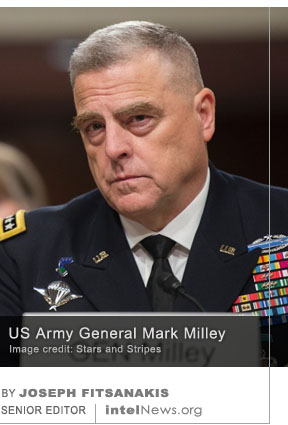 The United States Department of Defense’s top general has said that “the weight of evidence” gathered by Western spy agencies points to COVID-19 having “natural” origins, but this is not yet conclusive. Ever since the emergence of the novel coronavirus, prominent scientists have
  The United States Department of Defense has barred its employees from using Zoom, a popular video teleconferencing application, due to concerns that foreign spies may be using the software to collect intelligence. The Pentagon made the announcement less than a day after the US Senate advised its members to refrain from using Zoom. The video teleconferencing software is owned by Zoom Video Communications, Inc., a NASDAQ-trading software firm headquartered in Jan Jose, California. It has become popular in recent weeks, due to the increasing reliance on telework resulting from the effects of the COVID-19 pandemic.
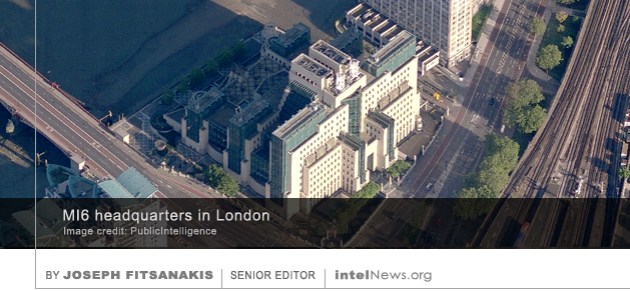 British intelligence agencies are advising policymakers that China will become “more assertive” after the world emerges from the coronavirus pandemic, while some government officials are urging a re-examination of London’s relationship with Beijing.
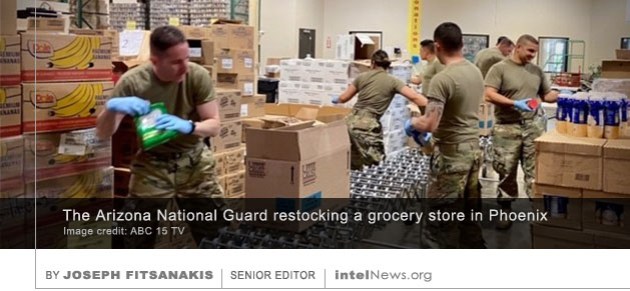 The food supply chain in the United States has so far been able to endure the pressures caused by SARS-CoV-2. Grocery stores across the nation remain generally well-stocked, even if in some cases (like in Nevada and Arizona), the National Guard has been
  COVID-19 outbreaks have been occurring in densely populated urban centers. But as the disease continues to spread, it is only a matter of time before the virus reaches rural farming areas and enters farms, which are
  e begun
 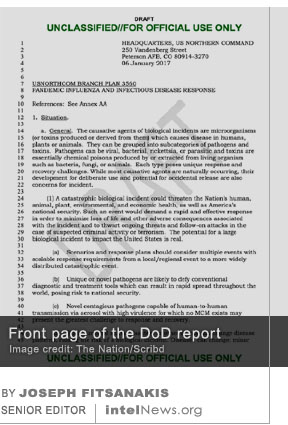 A United States Department of Defense report warned about the danger of a global crisis caused by a “novel respiratory disease”. The existence of the 2017 study adds to the mounting skepticism about President Donald Trump’s
  The intelligence agencies of Israel are playing an increasingly important role in the Jewish state’s effort to combat the effects of the novel coronavirus pandemic in its territory. Israel’s intelligence agencies are known to be very secretive, but the government has gone out of its way to
  The National Operations Center of the United States Department of Homeland Security (DHS) is relocating to an emergency facility after a member of its staff tested positive for COVID-19, the illness caused by the novel coronavirus. The information was
  The administration of United States President Donald Trump is considering the possibility of expelling from the country dozens of Chinese diplomats, journalists, and others, who are believed to be undercover spies. The expulsions relate to a spiraling information war between Washington and Beijing, which has erupted in recent weeks as a result of the COVID-19 pandemic.
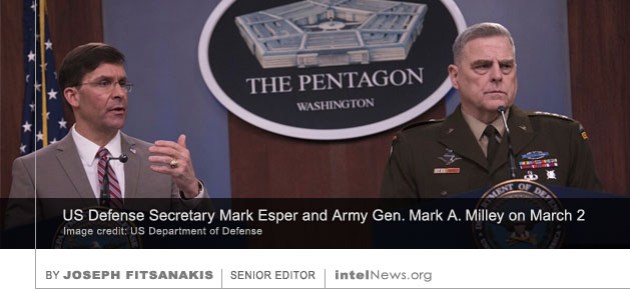 The United States Department of Defense is working under the assumption that the COVID-19 epidemic will seriously affect the life of the country for “at least several months”, and might cause “political chaos” in parts of the world. This was stated during a virtual town hall for members of the US Armed Forces, which was hosted on Tuesday by Defense Secretary Mark Esper and Joint Chiefs of Staff Chairman General Mark Milley.
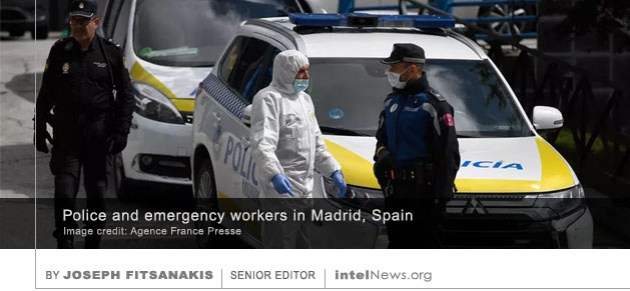 The government of Spain said on Tuesday it had begun to shift to “a war economy”, as the Spanish Ministry of Defense called on the North Atlantic Treaty Organization for assistance to fight the coronavirus pandemic. The term war economy is used to describe the rapid reorganization of a nation’s production and distribution capacity in response to a direct military threat to its existence.
 The United States Intelligence Community issued “ominous classified warnings” in January and February about the global danger posed by the coronavirus, but the White House failed to take timely action, according to an investigative
  America’s Intelligence Community is facing unprecedented challenges as it tries to adjust to the coronavirus pandemic. These challenges are affecting every aspect of the intelligence cycle, including collection and dissemination functions. Moreover, spy agencies are hurriedly redirecting their analytical resources to combating COVID-19, thus slowing the pace of work on other areas of national security, according to Time magazine.
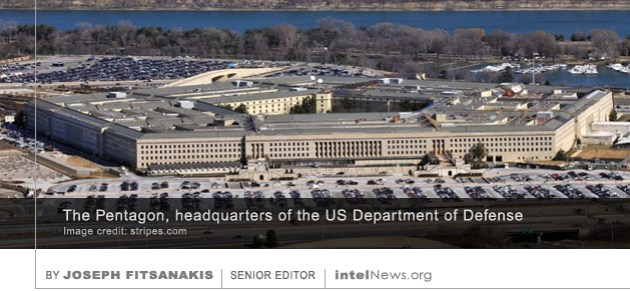 For the first time in the modern history of the United States, the Department of Defense has been given standby orders to ensure the “continuity of government”, in response to the COVID-19 pandemic. These extraordinary measures, which include evacuating White House officials to remote quarantined locations, and devolving the nation’s leadership to “second-tier officials”, were originally meant for the aftermath of a nuclear war.








US considers pulling CIA from Afghan front lines to help salvage Taliban peace deal
April 20, 2020 1 Comment
But armed violence between the two sides has since peaked, prompting many to question the viability of planned peace deal. In response to this development, the White House is now reported to be considering a plan to limit the CIA’s presence in the Central Asian country. This was demanded by the Taliban early on in the negotiations, alongside the planned withdrawal of American troops from the country. In return the Taliban had pledged no break all ties with international terrorist groups, including al-Qaeda.
The US had previously agreed to withdraw its troops from the country, but had ruled out pulling back CIA personnel —which are believed to number in the several hundreds in Afghanistan. A major reason for rejecting the Taliban demand is that the CIA supports, arms and trains several proxy forces throughout the country. These include the Khost Protection Force (KPF), a 6,500-strong unit of elite Afghan soldiers, which has a strong presence in Taliban strongholds like Ghazni, Paktia and Khost. These forces do not operate under the command of the Afghan government, but are instead directly controlled by the CIA.
Reports in August of 2019 claimed that the CIA would retain “a strong presence on the ground in Afghanistan”, even if American troops were to leave the country following a peace deal with the Taliban. But this is now under review, according to US officials who spoke anonymously to The New York Times. The paper said on Sunday that “the deliberations over the CIA presence” were now “part of larger discussions about pulling back international forces” from the country. One possible course of action revolves around a plan to limit the presence of the CIA to the grounds of the US embassy in Kabul, said The Times.
► Author: Joseph Fitsanakis | Date: 20 April 2020 | Permalink
Filed under Expert news and commentary on intelligence, espionage, spies and spying Tagged with Afghanistan, CIA, News, Taliban, United States