India expels Pakistan embassy officials for allegedly carrying out espionage
June 1, 2020 2 Comments
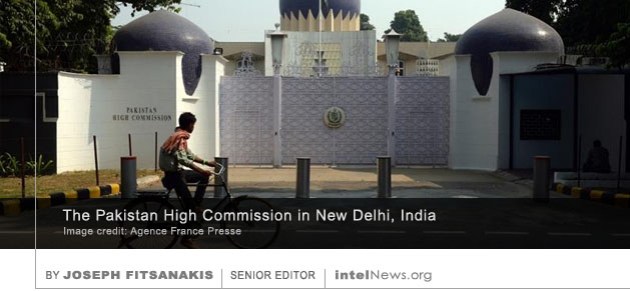 India has expelled two officials at the High Commission of Pakistan in New Delhi, after they were allegedly caught with fake Indian identity papers while trying to acquire classified documents. But the Pakistani government has rejected the allegations and subsequent expulsions as “a part of persistent anti-Pakistan propaganda” from India, and said the two officials were tortured while under detention by Indian authorities.
The expulsion orders followed the arrest of three Pakistani citizens, who were identified as Abid Hussain, 42, Tahir Khan, 44, and Javed Hussain. The Times of India said Abid Hussain had been working at the Pakistani embassy’s visa issuance department since late 2018. Khan was “an upper division clerk” at the embassy and arrived in India at around the same time Abid Hussain did, said the paper. Javed Hussain has been working as a driver at the embassy since 2015, and was reportedly released by the Indian authorities after he was found not to have been implicated in the alleged espionage.
The Times cited unnamed sources in New Delhi in claiming that the three Pakistanis had been arrested by Indian police at an undisclosed location in the Indian capital’s centrally located Karol Bagh neighborhood. The men were reportedly there to receive “highly sensitive information” by unnamed Indian “defense personnel”. Javed Hussain and Khan were reportedly found to be carrying Indian identification cards bearing fake names. They also had in their possession what the newspaper called “incriminating documents”, two smartphones and 15,000 rupees, which equal to around $200.
On Sunday, India’s Ministry of Foreign Affairs said that Javed Hussain and Khan had been declared “persona non grata” and had been ordered to leave the country within 24 hours. The reason for their expulsion was “indulging in activities incompatible with their status as members of a diplomatic mission”. The phrase is used in the international legal vernacular to describe an accredited diplomat engaging in intelligence operations abroad without the consent of his or her host nation. The Ministry also said that it had summoned the Pakistani ambassador and issued him with a “strong protest” about the incident.
The Indian government said late on Sunday that it was investigating whether other Pakistani embassy officials had been engaging in espionage. Diplomatic observers expressed certainty last night that Islamabad would expel at least two Indian diplomats from the country in a tit-for-tat response to India’s move.
► Author: Joseph Fitsanakis | Date: 01 June 2020 | Permalink
 •
•  •
• 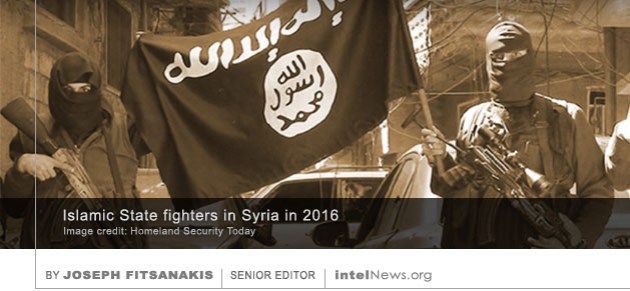 As the Islamic State continues to transfer its activities online due to the coronavirus pandemic, the group has published the first issue of a new cybersecurity magazine, aimed at helping its members evade surveillance. The Islamic State, known previously as the Islamic State of Iraq and Syria, has always been active online. But the COVID-19 pandemic has prompted it to
  The United States has alleged that the Russian military flew over a dozen unmarked aircraft to Libya, in an attempt to provide air support for Russian mercenaries who are fighting in Tripoli. If true, this development marks a major escalation of Russia’s military intervention in the Libyan civil war.
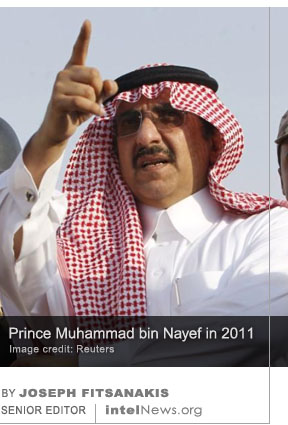 A Saudi government official, who served as a senior advisor to the oil kingdom’s former Crown Prince, has accused the Saudi monarchy of abducting his children in order to force him to end his self-exile in Canada. With a doctorate in artificial intelligence from the University of Edinburgh, Dr. Saad al-Jabri was until 2015 a rare example of a highly educated government administrator among Saudi Arabia’s ruling elite. Dr. al-Jabri rose in the ranks of the Saudi aristocracy in the 1990s under the tutelage of his patron, Crown Prince Muhammad bin Nayef (pictured). Prince bin Nayef is the grandson of Saudi Arabia’s founding monarch, King Abdulaziz, and until 2015 was destined to succeed King Abdullah and occupy the kingdom’s throne. Eventually, bin Nayef appointed Dr. al-Jabri as Minister of State and made him his most senior and trusted adviser on matters of security and intelligence.
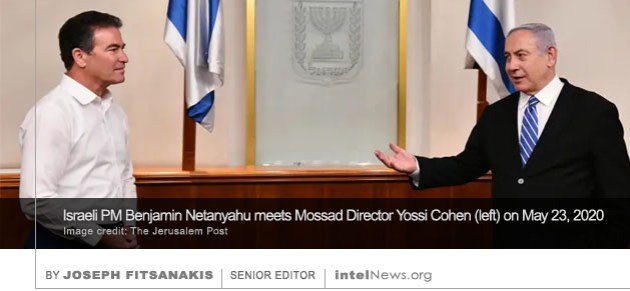 The embattled Prime Minister of Israel, Benjamin Netanyahu, met publicly with the Director of the Mossad, Yossi Cohen, and thanked him for leading the country’s procurement efforts during the COVID-19 crisis. The meeting was a rare public acknowledgement of the central role that the secretive spy agency played during the pandemic.
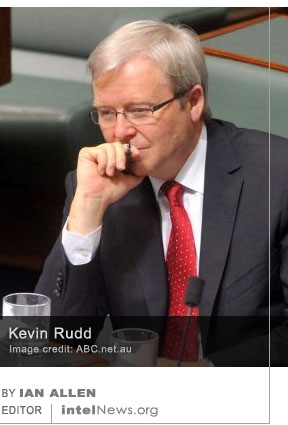
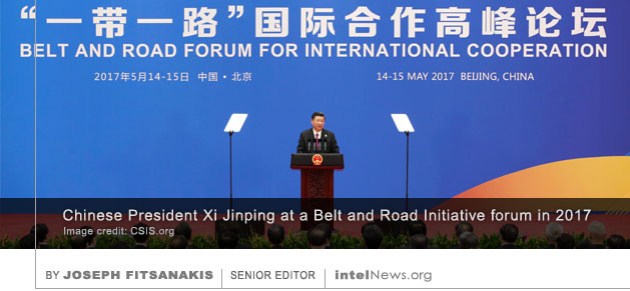 The United States has warned that it might be forced to stop sharing intelligence with Australia if the country’s second most populous state enters into a much-heralded investment agreement with China. The Australian state of Victoria has said it intends to join Beijing’s Belt and Road Initiative, a worldwide investment venture that was announced with much fanfare by Chinese President Xi Jinping in 2013.
 •
•  •
• 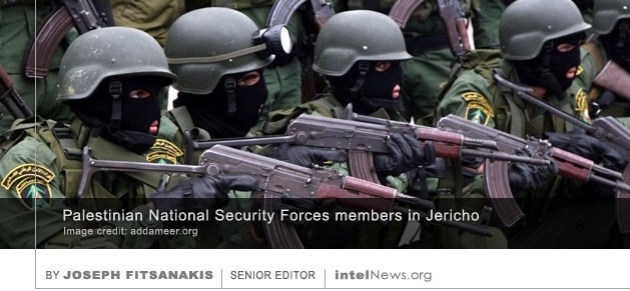 The Palestinian Authority has announced an immediate cessation to all intelligence and security ties with Israel and the United States. The announcement, made on Thursday by Palestinian Authority President Mahmoud Abbas, marks the strongest response so far by the Fatah-dominated administration to the Israeli government’s plan to annex large parts of the occupied West Bank.
 Researchers have been able to uncover the identities and track the movements of military and intelligence personnel by using visual and geo-locational information found on a popular smartphone application for beer aficionados. The information uncovered included the home addresses of United States government personnel, some of whom were found to be working at a secret Central Intelligence Agency (CIA) facility.
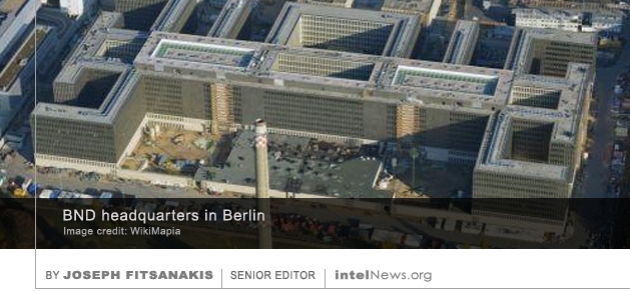 Germany’s Federal Court of Justice has ruled that the country’s intelligence agencies are not entitled to spy en masse on the telecommunications exchanges of foreign citizens. The ruling comes in response to a lawsuit filed by several journalist groups, including the German chapter of Reporters Without Borders. The groups partnered with the German-based Society for Civil Rights and argued in their lawsuit that existing law did not prevent German spy agencies from spying at will on the communications of journalists. This could potentially allow the intelligence agencies to identify trusted sources that journalists use in their work, and even share that information with intelligence agencies of other countries, they argued.
 The United Arab Emirates is behind a “covert air bridge” to supply weapons to Libyan warlord Khalifa Haftar, according to a leaked report by a United Nations investigative panel. A war has been raging in Libya since 2011, when a popular uprising backed by the West and its allies led to the demise of the country’s dictator, Muammar Gaddafi. Much of the east of the country is controlled by the United States-backed Tobruk-led Government, which is affiliated with the Libyan National Army (LNA) and its commander, Field Marshal Khalifa Haftar (pictured). The LNA is fighting against the UN-recognized Libyan Government of National Accord.






 intelNews.org
Argentine former president and spy agency director indicted in wiretapping probe
June 2, 2020 by Joseph Fitsanakis Leave a comment
In 2015, Macri, a successful businessman and former mayor of Buenos Aires, became the first democratically-elected president of Argentina in 100 years that came from a party other than the populist brand described as ‘Peronist’ in the post-war era. His presidency was marked by a turn to the right, as well as numerous investigations into allegations of corruption against prior heads of state, notably Cristina Fernández de Kirchner, whom Macri succeeded in the presidency.
But Kirchner is now back, serving as vice-president under Argentina’s new president, Alberto Fernández. Fernández, a Peronist, took office in December of 2019, after defeating Macri in a hotly contested race. Among Fernández’s top agenda items is the reform of the country’s Federal Intelligence Agency (AFI). The agency used to be known as the Secretaría de Inteligencia del Estado (SIDE) until 2015, when then-President Kirchner dissolved the organization and replaced it with the AFI, in order to combat alleged human-rights abuses by SIDE agents. But Kirchner has always said that her work in reforming the old SIDE was left incomplete. Her running mate, Fernández, promised to complete her work if elected. In his first post-election speech, President Fernández said that the SIDE/AFI would be reformed. He famously told his jubilant supporters: “Never again, the secret state. Never again, the cellars of democracy”. Soon afterwards, Fernández appointed Cristina Caamaño, an attorney and government administrator with experience in the area of civil liberties, to lead the AFI.
Last week, Caamaño gave a federal court in Buenos Aires a deposition containing list of over 80 names of Argentine citizens, who were allegedly spied on by the AFI without a warrant during Macri’s administration. In her deposition, Caamaño alleges that the individuals had their emails “spied on without any court order”, from as early as June 2016 until the final days of Macri’s presidency. According to local media reports, the list of alleged victims includes political opponents of Macri, as well as investigative journalists, government officials, and notable members of Argentina’s business community. There are also police and military officers on the list as well as artists, intellectuals, and trade unionists. Caamaño asked the court to investigate, aside for Macri, Gustavo Arribas, who served as AFI director under the previous president, as well as his deputy director in the spy agency, Silvia Majdalani, and her brother-in-law, Darío Biorci. The names of other alleged culprits in Caamaño’s deposition remain secret, reportedly because these individuals are still serving as undercover agents in the AFI.
On Wednesday, Caamaño’s deposition was shared with the Argentine Congress, and are now being debated in various committees, including the intelligence committee. Congress members from President Fernández’s Partido Justicialista have expressed strong support for the probe. But the opposition is highly skeptical and has asked for more information from Caamaño’s office.
► Author: Joseph Fitsanakis | Date: 02 June 2020 | Permalink
Filed under Expert news and commentary on intelligence, espionage, spies and spying Tagged with AFI (Argentina), Alberto Fernández, Argentina, civil liberties, Cristina Caamaño, intelligence reform, Mauricio Macri, News, SIDE (Argentina), warrantless communications interception