March 30, 2026
by Joseph Fitsanakis
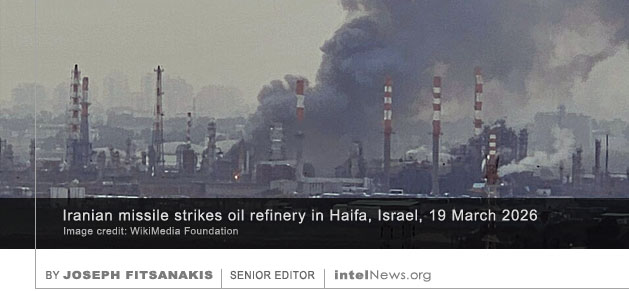 THE IRAN WAR OPENED with a shock. In minutes, the United States and Israel struck deep into Iran’s command structure, killing nearly fifty senior figures—among them the Supreme Leader and much of the military high command. It was a ruthless display of intelligence, surveillance, and targeting at a level rarely seen in modern warfare. Russian forces only wish they could have achieved even a fraction of this effect in Ukraine in 2022. Had they done so, the war’s trajectory might have unfolded very differently. But this kind of operational success is exceptionally hard to deliver in warfare.
And yet, as Carl von Clausewitz cautioned centuries ago, the outcome of war is not governed by formulaic calculus. Operational sophistication and technological prowess—no matter how astounding—do not guarantee success. Instead of an immediate collapse, the decapitation of the Iranian regime appears to have produced an unpredictable constellation of second-order effects. At the very least, it physically eliminated Iran’s few pragmatic leaders who in the past favored restraint. It thus handed over power to the hardliners of the Islamic Revolutionary Guard Corps. Moreover, the war appears to have paralyzed Iran’s domestic opposition, whose adherents may despise the regime but—unlike the U.S. and Israel—do not want to see their country break up into ethnic statelets.
Most importantly, the February 28 decapitation strike convinced Iran’s remaining leadership that this is an existential war—not a limited confrontation like the Twelve-Day War. Today’s ruling Principalists in Iran differ sharply from the cosmopolitan, Western-educated elite of the 1960s and 1970s. They are largely provincial in origin, domestically rooted, and lack the international ties that once offered pathways of exit. They do not hold dual citizenships, do not maintain  foreign residences, and few of them possess the linguistic or social capital to relocate abroad. Simply put, they have no viable exit. For them, defeat is not exile—it is annihilation. Under such conditions, the expectation is not capitulation, but resistance to the very end.
Activating the Iranian Asymmetric Doctrine
Starting in 2001, the campaigns in Afghanistan and Iraq offered Iranian war planners a prolonged and unusually comprehensive vantage point from which to study the American way of war in their immediate neighborhood. For over two decades, the Iranians analyzed these methods, learned from them, and internalized their logic into their own asymmetric warfare doctrine. And now, having survived the February 28 decapitation attack, the Iranian regime has put that doctrine into operation. Iran’s asymmetric doctrine channels the state’s military, civilian, economic, and informational assets into a multi-domain, protracted insurgency campaign designed to inflict maximum pain on its enemies. In doing so, it rests on what is perhaps the Islamic Republic’s greatest asset: its asymmetric patience—i.e., its capacity to endure more physical and emotional torment than its Western or Western-backed opponents.
The Iranians refined that skill during what they refer to as the “War of Holly Defense” (1980-1988), one of the 20th century’s longest conflicts and the deadliest conventional war ever fought in the developing world. The then-newly formed Islamic Republic suffered over 500,000 casualties—many of those due to exposure to chemical warfare—but managed to bring Saddam Hussein’s Western-backed Iraq into a standstill and force it into a truce. To do so, they even resorted to so-called “human wave assaults”, large masses of mostly unarmed youth who swarmed enemy positions and overwhelmed them by the sheer power of their number. That was largely how the Basij, the Iranian regime’s paramilitary street gangs that continue to operate in modern-day Iran, were initially formed.
Iran’s “Economy of Resistance”
On March 28, the Telegram channel belonging to the Iranian Supreme Leader Mojtaba Khamenei issued an infographic titled “The Path to Defeating the Enemy in the Economic War”. The information in the infographic reflects the Islamic Republic’s concept of “economy of resistance”, which was first developed in 2014 by Mojtaba Khamenei’s father, the late Supreme Leader Ali Khamenei. The central idea behind this concept is restructuring the Iranian economy, not simply to reduce its susceptibility to Western-imposed sanctions, but to also allow it to become stable and develop. The goal of the economy of resistance is to prevent the destruction of the Islamic Republic and the Westernization of Iranian society. Through the economy of resistance doctrine, and with crucial help by China and Russia, Iran has largely managed to insulate its economy from the global economic system that is now reeling under Iran’s asymmetric attacks. Read more of this post








 intelNews.org
The Real War Is About To Begin: Iran Enters Full-Scale Insurgency
March 30, 2026 by Joseph Fitsanakis Leave a comment
And yet, as Carl von Clausewitz cautioned centuries ago, the outcome of war is not governed by formulaic calculus. Operational sophistication and technological prowess—no matter how astounding—do not guarantee success. Instead of an immediate collapse, the decapitation of the Iranian regime appears to have produced an unpredictable constellation of second-order effects. At the very least, it physically eliminated Iran’s few pragmatic leaders who in the past favored restraint. It thus handed over power to the hardliners of the Islamic Revolutionary Guard Corps. Moreover, the war appears to have paralyzed Iran’s domestic opposition, whose adherents may despise the regime but—unlike the U.S. and Israel—do not want to see their country break up into ethnic statelets.
Most importantly, the February 28 decapitation strike convinced Iran’s remaining leadership that this is an existential war—not a limited confrontation like the Twelve-Day War. Today’s ruling Principalists in Iran differ sharply from the cosmopolitan, Western-educated elite of the 1960s and 1970s. They are largely provincial in origin, domestically rooted, and lack the international ties that once offered pathways of exit. They do not hold dual citizenships, do not maintain foreign residences, and few of them possess the linguistic or social capital to relocate abroad. Simply put, they have no viable exit. For them, defeat is not exile—it is annihilation. Under such conditions, the expectation is not capitulation, but resistance to the very end.
Activating the Iranian Asymmetric Doctrine
Starting in 2001, the campaigns in Afghanistan and Iraq offered Iranian war planners a prolonged and unusually comprehensive vantage point from which to study the American way of war in their immediate neighborhood. For over two decades, the Iranians analyzed these methods, learned from them, and internalized their logic into their own asymmetric warfare doctrine. And now, having survived the February 28 decapitation attack, the Iranian regime has put that doctrine into operation. Iran’s asymmetric doctrine channels the state’s military, civilian, economic, and informational assets into a multi-domain, protracted insurgency campaign designed to inflict maximum pain on its enemies. In doing so, it rests on what is perhaps the Islamic Republic’s greatest asset: its asymmetric patience—i.e., its capacity to endure more physical and emotional torment than its Western or Western-backed opponents.
The Iranians refined that skill during what they refer to as the “War of Holly Defense” (1980-1988), one of the 20th century’s longest conflicts and the deadliest conventional war ever fought in the developing world. The then-newly formed Islamic Republic suffered over 500,000 casualties—many of those due to exposure to chemical warfare—but managed to bring Saddam Hussein’s Western-backed Iraq into a standstill and force it into a truce. To do so, they even resorted to so-called “human wave assaults”, large masses of mostly unarmed youth who swarmed enemy positions and overwhelmed them by the sheer power of their number. That was largely how the Basij, the Iranian regime’s paramilitary street gangs that continue to operate in modern-day Iran, were initially formed.
Iran’s “Economy of Resistance”
On March 28, the Telegram channel belonging to the Iranian Supreme Leader Mojtaba Khamenei issued an infographic titled “The Path to Defeating the Enemy in the Economic War”. The information in the infographic reflects the Islamic Republic’s concept of “economy of resistance”, which was first developed in 2014 by Mojtaba Khamenei’s father, the late Supreme Leader Ali Khamenei. The central idea behind this concept is restructuring the Iranian economy, not simply to reduce its susceptibility to Western-imposed sanctions, but to also allow it to become stable and develop. The goal of the economy of resistance is to prevent the destruction of the Islamic Republic and the Westernization of Iranian society. Through the economy of resistance doctrine, and with crucial help by China and Russia, Iran has largely managed to insulate its economy from the global economic system that is now reeling under Iran’s asymmetric attacks. Read more of this post
Filed under Expert news and commentary on intelligence, espionage, spies and spying Tagged with 2026 Iran War, Analysis, Iran, Joseph Fitsanakis, Newstex