Afghanistan chaos could revive CIA’s counterterrorism mission, say observers
August 30, 2021 Leave a comment
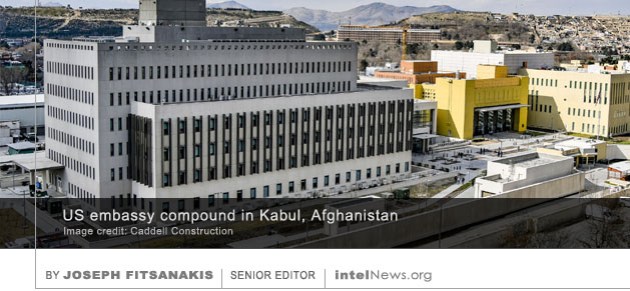
THE RAPID TAKEOVER OF Afghanistan by the Taliban, and the potential descent of that country into an even deeper chaos, could force the United States Central Intelligence Agency to revive its counterterrorism mission, which it has been trying to put on the back-burner in recent years. This is discussed in an insightful article published last Friday in The New York Times by Julian Barnes, Adam Goldman and Mark Mazzetti (author of The Way of the Knife: The CIA, a Secret Army, and a War at the Ends of the Earth).
The three reporters cite anonymous “current and former officials” who claim that the spiraling instability of Afghanistan “could draw the CIA back into a complex counterterrorism mission for years to come”. This comes as American officials are “reworking plans to counter threats that could emerge from Afghanistan’s chaos”, according to the report. Their ultimate fear is that Afghanistan could emerge as a beehive for militants of all backgrounds and stripes, just as Syria did in the 2010s, and before it Afghanistan in the 1990s. Even if the Taliban want to stop this from happening, the CIA has no faith in their ability to do so, the authors note.
But what can the CIA do in that regard? The spy agency has lost its extensive system of stations and outposts throughout Afghanistan. Its networks of agents inside the war-torn country have crumbled, and it doesn’t even have access to a US or other Western diplomatic facility from which to operate in-country. It will therefore need to negotiate with neighboring countries in order to establish facilities that can allow it to run agents and operations inside Afghanistan. This will not be easy, given the influence of Pakistan, Russia and China in the broader region.
The article cites a number of “senior US officials” who argue that the CIA’s priorities will not necessarily change after what happened in recent weeks in Afghanistan. Yes, there may be more urgency on counterterrorism following the victory of the Taliban, they say. They note, however, that US intelligence agencies are perfectly capable of handling “multiple priorities at once”. But the article also quotes Don Hepburn, who served both in the CIA and the Federal Bureau of Investigation, who says that focusing on both state and non-state actors with the same intensity is not necessarily as simple as it sounds: “The agency is being drawn in many, many directions”, he cautions.
► Author: Joseph Fitsanakis | Date: 30 August 2021 | Permalink
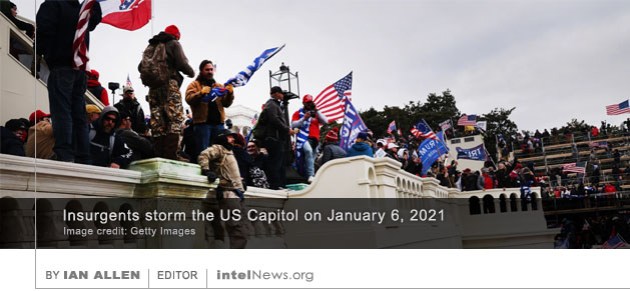 DOMESTIC EXTREMISTS, MOTIVATED BY conspiracy theories and opposed to mitigation measures against the coronavirus, pose “the greatest domestic terrorism threats” against the United States in 2021, according to a new government report. The report, dated January 13, is contained in a Joint Intelligence Bulletin, which is produced jointly by the Federal Bureau of Investigation, the Department of Homeland Security, and the National Counterterrorism Center. It was
 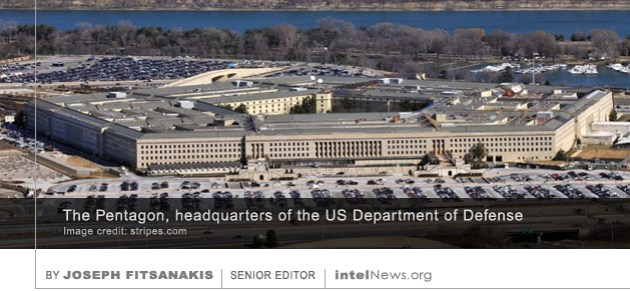 THE UNITED STATES DEPARTMENT of Defense has reportedly notified the Central Intelligence Agency that it plans to terminate most of the military support it provides for the spy agency’s counterterrorism operations. Some of these changes may occur as early as January, according to
  AUSTRIAN GOVERNMENT OFFICIALS SIGNALED on Thursday the beginning of a major overhaul of the country’s intelligence community, in response to this week’s terrorist attack in Vienna, which killed four people. Another 20 people were wounded by a lone gunman, who used an automatic weapon to spread panic in the Austrian capital before he was shot dead by Austrian police.
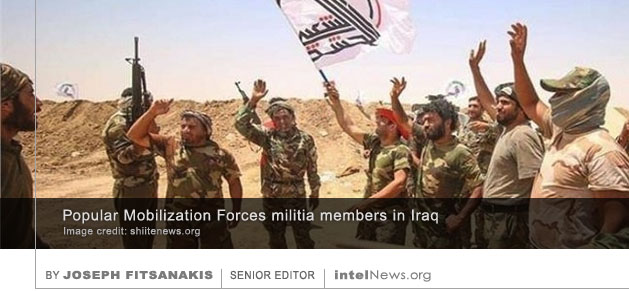 There was growing tension in Iraq over the weekend, as the government in Baghdad announced it had arrested over a dozen members of a powerful Shi’a militia backed by Iran. The arrests marked the first time that the Shi’a dominated Iraqi government moved to curtail the growing power of these heavily armed groups, which some say are threatening the cohesion of the country’s fragile state institutions.
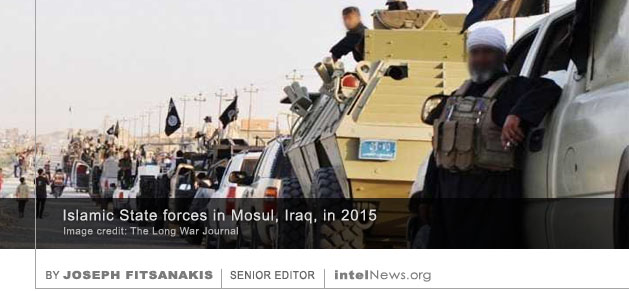 The Islamic State has regrouped, rearmed and refinanced itself, and its forces are now actively patrolling nearly all of northern Iraq, according to a senior intelligence official in Iraq’s Kurdistan region. The Islamic State, which is also known as Islamic State of Iraq and Syria (ISIS), used to control territory in the Levant that equaled the size of Germany. But its forces were pushed back by an international coalition of state armies and militias, a development that prompted several heads of governments, including United States President Donald Trump, to announce that ISIS had been defeated.
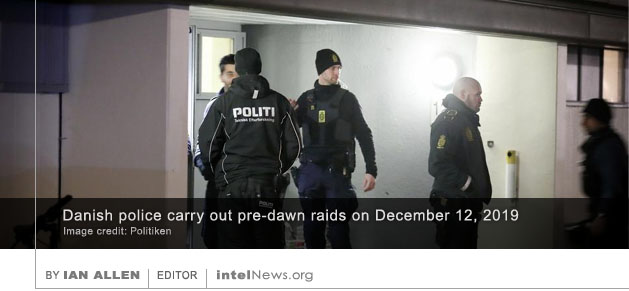 Last Thursday Danish authorities arrested 22 terrorism suspects in early morning raids across the country. Reports from Israel suggest that the raids were carried out following a tip from Israeli intelligence. The 22 suspects include men and women. Danish police said they were involved in the final stages of a plot to carry out attacks “in Denmark or abroad”, but have provided no specific information, except to say that the attacks were “thwarted” while they were well underway.
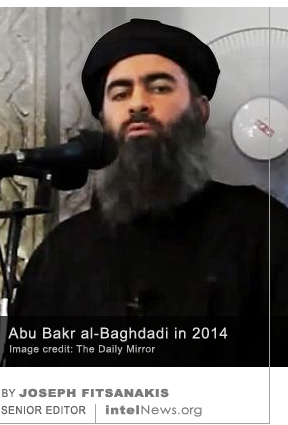 American intelligence agencies are studying up to seven terabytes of data that were captured by Special Operations Forces during last week’s nighttime raid that killed Abu Bakr al-Baghdadi in Syria. Officials in Washington
  Threats posed by white supremacist and other far-right groups are now global in nature and are increasingly backed by state actors, according to a Congressional testimony by an American former counterterrorism official. The testimony was delivered by Joshua Geltzer, former senior director for counterterrorism at the United States National Security Council. Geltzer, who now directs the Institute for Constitutional Advocacy and Protection at Georgetown University in Washington, DC, testified on Friday before two subcommittees of the US House of Representatives. The Subcommittee on National Security and the Subcommittee on Civil Rights and Civil Liberties held a joint hearing entitled “Confronting Violent White Supremacy”.
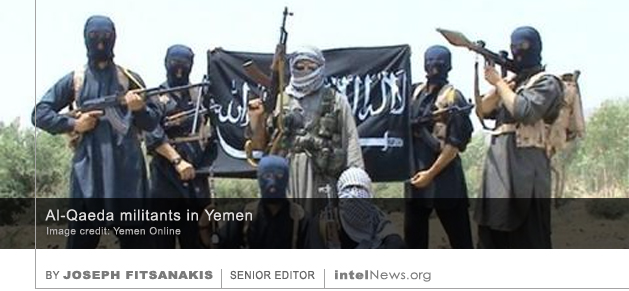 Al-Qaeda and its affiliate groups continue to be the most persistent transnational threats to the security of the West, according to experts who spoke after the alleged death of Osama bin Laden’s son, Hamza. Last week The New York Times
 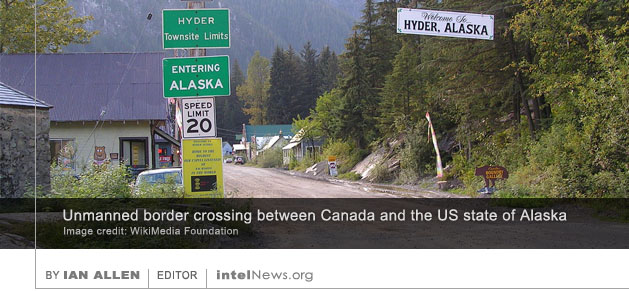 Since the election of President Donald Trump, the issue of border security between the United States and Mexico has been a major topic of national debate. But is the incessant focus on America’s southern border by the news media and politicians ignoring security concerns emanating from the country’s northern neighbor, Canada? In a thought-provoking
  The Islamic State is capable of make a sudden comeback in the Middle East that could be “faster and even more devastating” than 2014, when the group quickly conquered territory the size of Britain, according to a new report from the Institute for the Study of War (ISW). The Washington-based think-tank’s report is based on the most recent data about the presence in the Middle East of the militant Islamist group, which is also known as the Islamic State of Iraq and Syria. The 76-page
 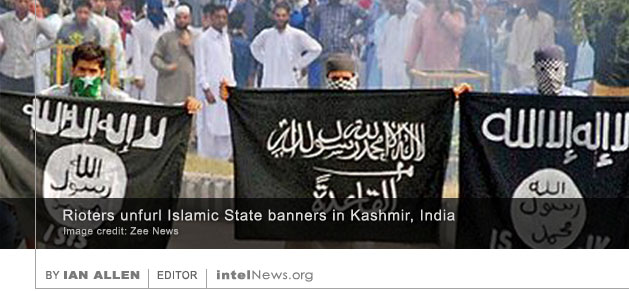 Indian counterterrorism officials have alleged in court that four members of the Islamic State in Indian-administered Kashmir were guided by a handler from Pakistan. The court case involves four young men from Jammu and Kashmir who were arrested last November on terrorism charges. Court documents filed recently identify the four as members of the Islamic State. This development is significant because Indian officials have until recently dismissed as overstated claims that the Islamic State is present in Kashmir. The unfurling of Islamic State banners by anti-government rioters is a regular phenomenon in Indian Kashmir. But government officials dismiss those who wave such banners as impressionable youth who have no access to weaponry or logistical support from the Islamic State. Last November’s arrests, however, highlighted the fact that the Islamic State does in fact have an armed presence on the ground in India.
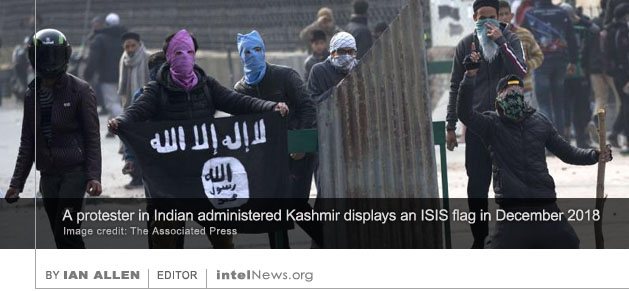 The group calling itself the Islamic State has announced the establishment of a new overseas province in India’s Jammu and Kashmir state. The announcement was made over the weekend by Amaq, which serves as the news agency of the Islamic State. According to the news release, the Islamic State (known also as the Islamic State of Iraq and Syria) has named the new province “wilayah al-Hind” (province of Hind), and said it is based in the Muslim-majority Kashmir Valley, which is located in one of the three administrative divisions of the Indian administered state of Jammu and Kashmir.






 intelNews.org
CIA-JSOC convergence impedes covert action oversight, researcher warns
August 8, 2022 by Joseph Fitsanakis 2 Comments
Today, more than two decades after 9/11, joint activities between the CIA and the Joint Special Operations Command (JSOC) have become customary. JSOC was founded in the aftermath of operation EAGLE CLAW —the failed attempt to free US diplomatic personnel held in Tehran during the Iran hostage crisis. Its mission is to bring together the Special Operations Forces (SOF) elements across the US military. In addition to ensuring inter-operability and standardization between these elements, JSOC oversees the operations of elite joint SOF units that perform highly classified activities around the world.
Increasingly since 9/11, the CIA and JSOC have been launching combined counter-terrorism operations and have learned to compete less and collaborate more —though turf wars between them are not uncommon. Today it is not unusual for CIA civilians to gather intelligence on a particular target before hand it over to JSOC, which in turn tasks its military personnel to use lethal force against the target. This type of collaboration may bear fruits in the counter-terrorism domain, but also makes it difficult for the US political leadership, primarily Congress, to exercise appropriate oversight over covert action.
Partial Oversight
In an article published on Sunday, Dr. Jennifer Kibbe, Professor of Government at Franklin and Marshall College, and a specialist on the oversight of intelligence operations, explores the effects of the CIA-JSOC convergence on democratic accountability. The article, “CIA/SOF Convergence and Congressional Oversight”, appears in the peer-reviewed journal Intelligence and National Security. If features statements from interviews by current and former Congressional staffers with experience in working for the intelligence committees of the US Congress. Read more of this post
Filed under Expert news and commentary on intelligence, espionage, spies and spying Tagged with Analysis, CIA, counterterrorism, intelligence oversight, JSOC