Pakistan will retaliate if Israel attacks Iran, says diplomat
February 7, 2012 5 Comments
 By JOSEPH FITSANAKIS | intelNews.org |
A European diplomat has quoted Pakistani officials as saying that Islamabad will retaliate in kind if the Israeli military attacks Iran. Speaking to the Associated Press, the anonymous diplomat, who is stationed in Pakistan, said Pakistani military leaders have decided that “if Iran is attacked [they] will have no alternative but to launch a reprisal attack”. The warning, which the Associated Press appears to be treating as reliable, implies the involvement of Pakistan —the world’s only predominantly Muslim nuclear power— in a possible war between Iran and Israel. The latter is also widely considered to possess a formidable nuclear weapons arsenal. Other reports quote several international experts who seem to agree that it will be impossible to contain the ramifications of a possible military confrontation between Iran and Israel to a strictly regional level. Nick Witney, former Director of the European Defense Agency, who is currently Senior Fellow at the European Council on Foreign Relations, argues that an Iranian-Israeli war will have immediate effects on the global economy. According to Witney, “the political and economic consequences of an Israeli attack would be catastrophic for Europe”, as the immediate spike in oil prices will cause out-of-control defaults in countries like Italy and Greece. This will eventually push the entire European Union, including economic powerhouse Germany, into a deep and prolonged recession, and may even cause the euro to collapse altogether. Moreover, says Witney, Iran will “probably retaliate against European interests in the region, and conceivably more directly with terrorism aimed at Western countries and societies”. Read more of this post







 intelNews.org
Iran abruptly replaces head of Revolutionary Guard Corps —no reason given
April 24, 2019 by Joseph Fitsanakis Leave a comment
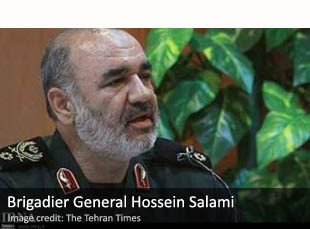
But in a brief report aired on Sunday, Iranian state media announced that Jafari had stepped down from the leadership of the IRGC after 11 years at the helm. The report said that Jafari had been replaced by the IRGC’s deputy commander, Major General, Hossein Salami. Like Jafari, Salami, 59, is believed to be close to the Iranian regime’s hardliners; he is thus critical of the reformers who support President Hassan Rouhani —seen by most as the architect of the Iranian nuclear deal. Moreover, like Jafari, Salami is known for his asymmetrical warfare thinking, which the Iranians employed with considerable success in Iraq following the military invasion of the country by the United States in 2003. The same tactics were utilized by the IRGC in Lebanon during the 2006 conflict between Israel and Iranian ally Hezbollah.
Jafari’s surprise replacement came two weeks after Washington announced that it would designate the IRGC as a foreign terrorist organization —a move that most observers saw as a clear move by the White House to undermine the Iranian government. Explaining the decision, US President Donald Trump said in a statement that the IRGC was the primary vehicle through which the government in Tehran “directed and implemented […] terrorism as a tool of statecraft”. Among other things, the new designation means that the US government is now able to bring criminal charges against any individual or organization that is found to have political or financial dealings with the IRGC.
► Author: Joseph Fitsanakis | Date: 24 April 2019 | Permalink
Filed under Expert news and commentary on intelligence, espionage, spies and spying Tagged with Ali Jafari, Hossein Salami, Iran, Islamic Revolutionary Guard Corps, News