US arrests two over alleged clandestine Chinese police station in New York City
April 18, 2023 2 Comments
 THE UNITED STATES HAS arrested two residents of New York City for allegedly conspiring to create and operate a clandestine police station run by the Chinese government in the borough of Manhattan. The arrests come a month after authorities in Canada launched an investigation into allegations that the Chinese government was running at least two clandestine police stations in Montreal and four more in Toronto.
The allegations first surfaced in a 2022 report by Safeguard Defenders, a Spanish-based non-government organization that focuses on the state of human rights in China. The report, titled “110 Overseas: Chinese Transnational Policing Gone Wild”, claimed that China’s Ministry of Public Security, in association with Chinese diplomatic facilities around the world, operated dozens of clandestine police stations in over 50 countries. Their official mission, according to the report, was to service the needs of Chinese citizens living abroad, as well as visitors from China. However, these clandestine police stations were “actively […] engaging in covert and illegal policing operations” targeting Chinese citizens and expatriates, according to Safeguard Defenders.
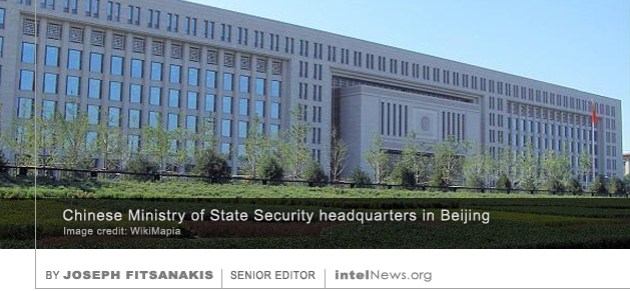
On Monday, two New York City residents, Chen Jinping, 59, and Lu Jianwang, 61, were arrested and charged with conspiring to operate as unregistered agents of the People’s Republic of China. They were also charged with obstruction of justice in connection with the Department of Justice’s investigation into their activities. United States government prosecutors allege that Chen and Lu were behind the establishment of a clandestine police station in Manhattan. According to the indictment, the Manhattan police station —the first of its kind in the United States— was operated by China’s Ministry of State Security (MSS). It is reported that the station was shut down by the MSS in late 2022, soon after Chinese officials became aware of an investigation into the activities of the station by the United States Federal Bureau of Investigation.
A representative of the United States prosecutor accused the Chinese government of engaging in a “flagrant violation” of American sovereignty with “actions that go far beyond the bounds of acceptable nation-state conduct”. Meanwhile, Chen and Lu appeared before a federal judge in Brooklyn on Monday. They face up to 25 years in prison if convicted.
► Author: Joseph Fitsanakis | Date: 18 April 2023 | Permalink








 intelNews.org
China’s intelligence modernization has outpaced military increases: British report
August 9, 2023 by Joseph Fitsanakis 4 Comments
The redacted version of the report was issued last month by the British Parliament’s Intelligence and Security Committee, which monitors the activities of the British intelligence community. It concentrates on China’s domestic and global ambitions and discusses the role of the Chinese intelligence services in these pursuits. A theme that permeates the 222-page report is that China’s domestic and international ambitions are interconnected, as Beijing does not distinguish between its key national interests in the domestic and foreign domains. Moreover, the report notes that the Chinese intelligence community plays a central role in both facets.
The report notes that China “almost certainly maintains the largest state intelligence apparatus in the world”, dwarfing those of its Western rivals. The latter are forced to concentrate their counterintelligence work “on those aspects that are most demanding”. The official Chinese intelligence agencies are three, the report notes; they consist of the Ministry of State Security and the Ministry of Pubic Security —both of which are civilian— as well as the Strategic Support Force of the Chinese People’s Liberation Army. The latter provides signals intelligence support, whereas the two civilian agencies carry out a host of intelligence and counterintelligence duties.
Nevertheless, the Chinese state’s “whole-of-government” approach on matters of security means that almost every government agency fulfils some type of intelligence-related role. This makes it difficult to calculate with accuracy the full extent of the Chinese intelligence apparatus, the report notes.
Notably, Chinese intelligence agencies are focused primarily on what the Chinese government perceives as domestic threats to its rule, which Beijing has termed “the five poisons”. According to the report, these consist of: the Taiwanese independence movement; the separatist movements in Tibet and Xinjiang; the Falun Gong religious movement; and pro-democracy activism inside China. Intelligence collection and other operations that relate to the so-called “five poisons” include intelligence activities that take place abroad and target Chinese expatriate communities.
It is also worth noting that, according to the report, Beijing spends “almost 20% more on domestic security than on external defence”. Moreover, the rise in expenditures for intelligence infrastructure and operations is impressive by any standards of assessment and “has outpaced even China’s recent dramatic military modernization” of recent years, the report notes. The increase in spending “appears to have led to an improvement in capability”, the report concludes.
► Author: Joseph Fitsanakis | Date: 09 August 2023 | Permalink
Filed under Expert news and commentary on intelligence, espionage, spies and spying Tagged with China, Chinese Ministry of State Security, intelligence funding, Ministry of Public Security (China), Strategic Support Force (China)