South Korea announces most high-profile defection from North since Korean War
April 18, 2016 Leave a comment
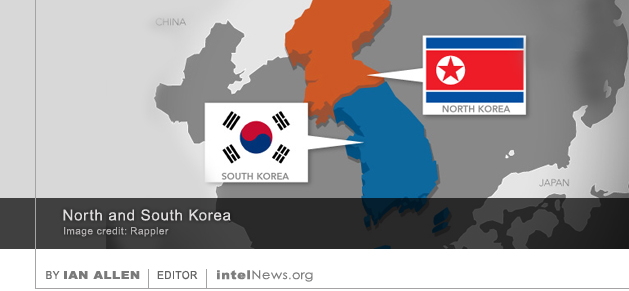 A North Korean intelligence official who sought refuge in South Korea last year is the most high profile defector to the South since the end of the Korean War in 1953, according to authorities in Seoul. An announcement issued by the South Korean government last week said the defector is a colonel in the Korean People’s Army who worked for the Reconnaissance General Bureau, a military-intelligence agency that resembles the United States Central Intelligence Agency’s Special Activities Division.
The initial announcement was made by a spokesman representing South Korea’s Ministry of Unification, which is the department of the government that is responsible for working towards the reunification of Korea. He said that the agency could not find any records of defectors that were of a more senior rank since the end of all-out hostilities in the Korean War. However, he declined to provide further details about the identity of the colonel and the details of his defection. Another spokesman, from South Korea’s Ministry of National Defense, confirmed the high-profile defection but said he had not been authorized to release further information on the case. But he said that the Reconnaissance General Bureau had defected to the South “last year”, without giving a precise timeline. He added that the North Korean colonel was providing South Korea with details about Pyongyang’s intelligence operations against the South.
Prior to this latest case, the most high-profile defection to the South of a North Korean government figure was that of Hwang Jang-yop, a senior Pyongyang official who was seen as the architect of ‘juche’, the official state ideology of North Korea. During a visit to Beijing, China, in 1997, Hwang entered the embassy of South Korea and asked for political asylum. He died in South Korea in 2010.
It is extremely rare for Seoul to acknowledge defections from North Korea; the South Korean government typically cites privacy and security concerns in response to questions about defectors. The unusual step of announcing the defection of the North Korean colonel several months after the fact led some opposition liberal figures in South Korea to accuse the conservative government of trying to use the case in order to win votes in last Wednesday’s legislative elections. The election was an upset victory for the liberal Minjoo party, which managed to deny the conservative Saenuri Party a majority in the parliament.
► Author: Ian Allen | Date: 17 April 2016 | Permalink
 Two high-profile North Korean defectors, who used to work for the country’s spy agencies, have spoken publicly about the use of espionage by one of the world’s most impenetrable intelligence communities.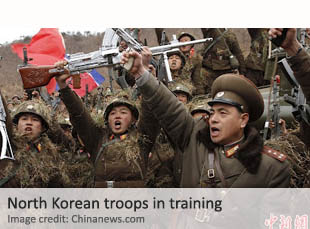







 intelNews.org
In historic first, alleged North Korean spy to face trial in the United States
March 29, 2021 by Joseph Fitsanakis 1 Comment
FOR THE FIRST TIME in history, an alleged intelligence officer of North Korea is going to be tried in a United States court, according to American government officials. In a surprise move last week, Malaysia extradited to the US an export-finance trader named Mun Chol-myong. Aged 55, Mun is a North Korean citizen based in Singapore, where until 2019 he worked for a company called Sinsar Trading Pte. Ltd. The Malaysians arrested him in May 2019 and charged him with using his position to defraud a number of international banks and launder money though the US financial system.
Responding to a US request to have Mun tried in a US court, Malaysia announced his extradition last week, angering Pyongyang. Shortly following Mun’s extradition to the US, North Korea shut down its embassy in Kuala Lumpur, one of only 46 embassies maintained by Pyongyang across the world. Then last Wednesday North Korea fired two ballistic missiles in violation of United Nations sanctions designed to restrict the country’s nuclear weapons program. North Korea’s fury at Mun’s extradition can perhaps be explained by information contained in the newly unsealed indictment [pdf], which dates to 2018. The indictment accuses Mun and a number of other unnamed suspects of being North Korean “intelligence operatives”.
Specifically, the indictment accuses Mun of being an undercover employee of the Reconnaissance General Bureau (RGB), North Korea’s primary foreign-intelligence agency. The RGB operates under the supervision of the General Staff Department of the Korean People’s Army and the Central Committee of the ruling Workers’ Party of Korea. According to the indictment, Mun utilized shell companies set up by Pyongyang in order to hide his connections with the RGB. His primary mission was allegedly to gain access to international banking institutions and wire services, with the aim of laundering illicit North Korean cash and breaking sanctions imposed on Pyongyang by the United Nations and the United States. The indictment accuses Mun of having personally participated in the laundering of $1.5 million in funds in recent years.
In a statement released last week, John Demers, assistant attorney general for the National Security Division of the US Department of Justice, described Mun as “the first North Korean intelligence operative —and the second ever foreign intelligence operative— to have been extradited to the United States”. Meanwhile, the administration of US President Joe Biden said last week it was still reviewing “in depth” the state of US-North Korean relations following the administration of Biden’s predecessor, Donald Trump.
► Author: Joseph Fitsanakis | Date: 29 March 2021 | Permalink
Filed under Expert news and commentary on intelligence, espionage, spies and spying Tagged with extraditions, lawsuits, Malaysia, money laundering, Mun Chol-myong, Mun Cholmyong, News, North Korea, North Korean Reconnaissance General Bureau, United States