Russian dissident sues US government to force release of records on alleged poisoning
October 1, 2020 Leave a comment
 A United States-based Russian opposition activist, who claims he was poisoned twice by the Kremlin, is suing the United States government to force the release of records about his case, but is being met with resistance. The plaintiff is Vladimir Kara-Murza, 38, a senior figure in the Open Russia Foundation, a political pressure group founded by Mikhail Khodorkovsky. Khodorkovsky, an ultra-wealthy Russian businessman living in self-exile in Switzerland, is one of Vladimir Putin’s arch-enemies.
Kara-Murza rose to prominence in 2013, when he became a member of a network of Putin critics who helped organize opposition protests in Moscow and Saint Petersburg. He also co-authored a number of reports accusing the administration of Russian President Vladimir Putin of corruption. For several years now, Kara-Murza, his wife and three children have been living in the United States. But he frequently travels back to Russia to meet with opposition activists and other organizers. During one of those visits in 2015, he was hospitalized with acute respiratory symptoms and was diagnosed with “kidney failure in connection with poisoning”. He claimed that his hospitalization resulted from an assassination attempt against him by people in power who wanted to silence him. He was also hospitalized in 2017 in Moscow with similar symptoms.
Earlier this year Kara-Murza filed a Freedom of Information Act (FOIA) request, seeking access to all documents held by the Federal Bureau of Investigation relating to his alleged poisonings. After six months, the Russian dissident sued the Department of Justice, arguing that the Department was in violation of law by withholding documents about his case. On August 10, the court handling Kara-Murza’s case received a notice from the Department of Justice, stating that 400 pages would be released within a month, and another 1,100 pages would be released by October 15.
The 400 pages released earlier this month show that the FBI monitored Kara-Murza’s case closely, and that it sought the assistance of toxicologists and other experts to determine whether the Russian dissident had been the target of assassination attempts. The documents also show that FBI Director Christopher Wray was personally involved in the investigation and that, according to the Voice of America, the Bureau’s findings “reached the top levels of the White House”.
However, the Department of Justice recently communicated with the court handling Kara-Murza’s lawsuit, to announce that it would be unable to release the remaining 1,100 pages by October 15. Instead, it said it would do so by November 15 instead. Kara-Murza’s lawyer, Stephen Rademaker, said his client will challenge the Department of Justice’s request. The Department of Justice, the White House and the FBI have not issued any statements about Kara-Murza’s case.
► Author: Joseph Fitsanakis | Date: 01 October 2020 | Permalink
 Moscow has reacted angrily to the Czech government’s decision to expel two Russian diplomats from the country, in response to allegations that the Kremlin plotted to assassinate three outspoken Czech politicians using a deadly poison. Russian officials pledged to respond in kind to Prague’s “indecent and unworthy deed”.
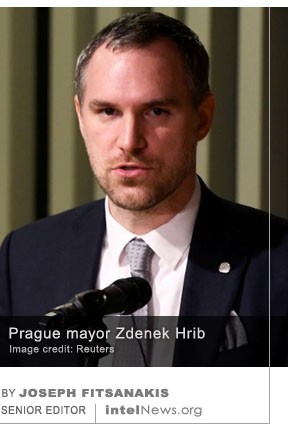 The Russian government has strongly denied accusations in the Czech media that it dispatched an assassin to Prague to kill two leading Czech politicians. The denial was issued by the Kremlin a day after Prague mayor Zdeněk Hřib said he had been placed under 24/7 police protection because of fears his life could be in danger.
 The chemical structure and action mechanism of a top-secret family of nerve agents known as novichoks may soon be available to a wider pool of researchers through its inclusion into the Chemical Weapons Convention (CWC) list of the Organization for the Prohibition of Chemical Weapons (OPCW). The term novichok (meaning ‘newbie’ in Russian) was given by Western scientists to a class of rarely used nerve agents that were developed in the Soviet Union and Russia between 1971 and the early 1990s.
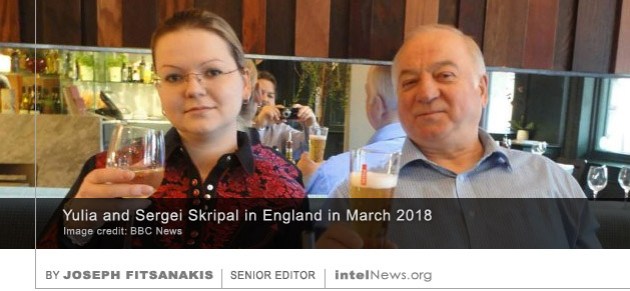 New reports from Russian investigative sites claim that a third man using a fake name was involved in the attempted assassination of former double spy Sergei Skripal in England last year. Skripal, a former military intelligence officer, was resettled in the English town of Salisbury in 2010, after spending several years in a Russian prison for spying on behalf of Britain. But he and his daughter Yulia almost died in March 2018, after they were
 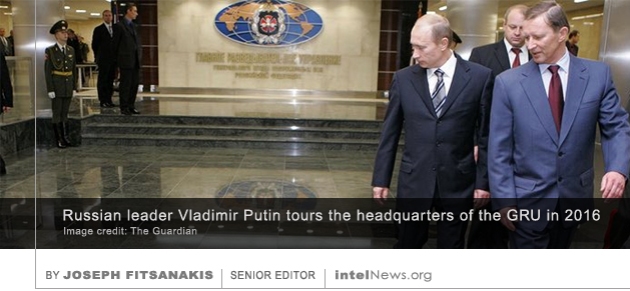 The amount of poison smuggled into Britain for a near-fatal attack on Russian former spy Sergei Skripal was powerful enough to kill “thousands of people”, according those leading the investigation into the incident. Skripal, a former military intelligence officer, was resettled in the English town of Salisbury in 2010, after spending several years in a Russian prison for spying for Britain. But he and his daughter Yulia almost died in March of this year, after being
 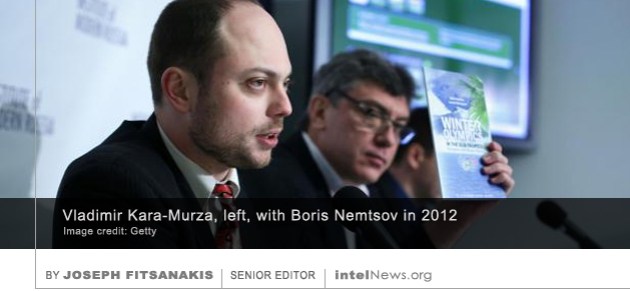 A prominent member of the Russian opposition and vocal critic of the Kremlin, is fighting for his life in a Moscow hospital as a result of “acute poisoning from an undefined substance”, according to his doctors. Vladimir Kara-Murza, 35, is a senior figure in the Open Russia Foundation, a political pressure group founded by Mikhail Khodorkovsky. Khodorkovsky, an ultra-wealthy Russian businessman who was once estimated to be worth over $15 billion, has been living in Switzerland since 2013. Immediately prior to that, he served a 10-year prison sentence in Russia for tax evasion. In 2013, Kara-Murza was a member of a network of Putin critics who helped organize opposition protests in Moscow and Saint Petersburg. He also co-authored a number of reports accusing the administration of Russian President Vladimir Putin of corruption.
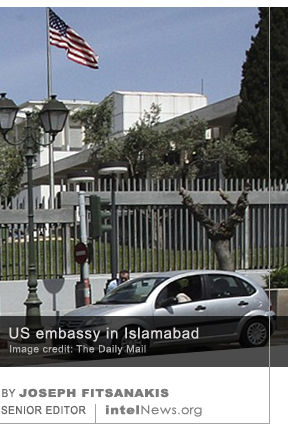 A leading article in The Washington Post suggests that the United States Central Intelligence Agency suspected that its most senior officer in Pakistan was poisoned by the host country’s intelligence services, in an attempt to kill him. The CIA pulled its station chief from Islamabad in the summer of 2011, two months after Operation NEPTUNE SPEAR, which saw the killing in Abbottabad of al-Qaeda founder Osama bin Laden. The CIA official, who has since been identified as Mark Kelton, acted as the senior US intelligence representative in the Asian country. He had assumed the post, which was supposed to last at least two years, only seven months earlier. His abrupt removal raised questions, which were informally answered by Langley. There were rumors that Kelton’s return to the US was health-related, but that the decision to replace him was also affected by his extremely poor relations with the Inter-Services Intelligence (ISI) directorate, Pakistan’s powerful spy service.
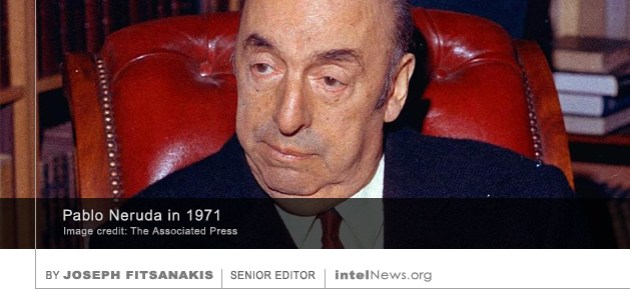 Two teams of international experts will examine the exhumed remains of Chilean Nobel Laureate poet Pablo Neruda, who some say was deliberately injected with poison by the Chilean intelligence services. The literary icon died on September 23, 1973, less than two weeks after a coup d’état, led by General Augusto Pinochet, toppled the democratically elected government of Salvador Allende, a Marxist who was a close friend of Neruda. The death of the internationally acclaimed poet, who was 69 at the time, was officially attributed to prostate cancer and the effects of acute mental stress caused by the military coup. In 2013, however, an
  A Russian former intelligence officer, who is accused by the British government of having killed another Russian former spy in London, said the British intelligence services tried to recruit him in 2006. British government prosecutors have charged Andrei Lugovoi with the killing of Alexander Litvinenko, a former employee of the Soviet KGB and one of its successor agencies, the FSB. In 2006, Litvinenko died in London, where he had defected with his family in 2000, following exposure to the highly radioactive substance Polonium-210. In July of 2007, the British government charged Lugovoi and another Russian, Dmitri Kovtun, with the murder of Litvinenko, and expelled four Russian diplomats from London. Last week, following the conclusion of an official inquest into the former KGB spy’s death, the British government took the unusual step of summoning the Russian ambassador to London, to file an official complaint about Moscow’s refusal to extradite Lugovoi and Kovtun to the United Kingdom.
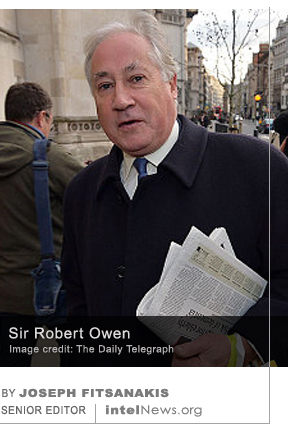 The British government has taken the unusual step of summoning the Russian ambassador to London, following the conclusion of an official inquest into the death of a former KGB officer who is believed to have been killed on the orders of Moscow. Alexander Litvinenko, an employee of the Soviet KGB and one of its successor organizations, the FSB, defected with his family to the United Kingdom in 2000. But in 2006, he died of radioactive poisoning after meeting two former KGB/FSB colleagues, Dmitri Kovtun and Andrey Lugovoy, in London. A public inquiry into the death of Litvinenko, ordered by the British state,
 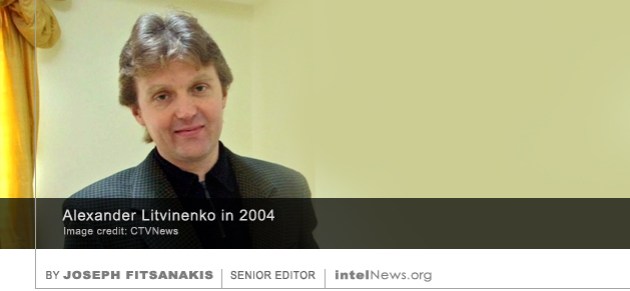 The long-awaited concluding report of a public inquiry into the death of a former Soviet spy in London in 2006, is expected to finger the Russian state as the perpetrator of the murder. Alexander Litvinenko was an employee of the Soviet KGB and one of its successor organizations, the FSB, until 2000, when he defected with his family to the United Kingdom. He soon became known as a vocal critic of the administration of Russian President Vladimir Putin. In 2006, Litvinenko came down with radioactive poisoning after meeting two former KGB/FSB colleagues, Dmitri Kovtun and Andrey Lugovoy, at a London restaurant. In July of 2007, after establishing the cause of Litvinenko’s death, which is attributed to the highly radioactive substance Polonium-210, the British government officially charged the two Russians with murder and issued international warrants for their arrest. Whitehall also announced the expulsion of four Russian diplomats from London. The episode, which was the first public expulsion of Russian envoys from Britain since end of the Cold War, is often cited as marking the beginning of the worsening of relations between the West and post-Soviet Russia.
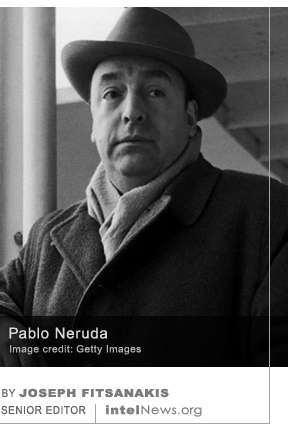 A report prepared by the Chilean government considers it “highly likely” that Chile’s Nobel laureate poet, Pablo Neruda, died as a result of deliberate poisoning. The literary icon, who was awarded the Nobel Prize in Literature in 1971, died on September 23, 1973. His death occurred less than two weeks after a coup d’état, led by General Augusto Pinochet, toppled the democratically elected government of Salvador Allende, a Marxist who was a close friend of Neruda.






 intelNews.org
UK names Russian intelligence operatives who allegedly poisoned Alexei Navalny
August 23, 2021 by Joseph Fitsanakis Leave a comment
THE BRITISH GOVERNMENT HAS announced sanctions against seven Russian intelligence operatives who, according to London, participated in the poisoning of the Russian blogger and political activist Alexei Navalny. Navalny, 45, remains in prison after being arrested last year by Russian authorities, who accused him of violating his parole. His arrest occurred as soon as he arrived in Russia from Germany. He had gone there to receive emergency treatment after he was allegedly poisoned during a domestic Russian flight that originated from Siberia.
While in Germany, Navalny was in a comatose condition for over three weeks, and then spent a further 32 days recovering in hospital. Medical examiners concluded that he was most likely poisoned with a military-grade nerve agent. Many Western biomedical experts believe that Navalny, a vocal critic of Russian President Vladimir Putin, was poisoned with a so-called Novichok substance —a technical term that describes a category of nerve agents developed by the Soviet Union during the Cold War. Novichok agents are typically designed to asphyxiate their host by paralyzing the muscles they come in contact with.
On Friday —the day that marked the first anniversary of Navalny’s alleged poisoning— the British Foreign and Commonwealth Office announced that it would impose sanctions against seven Russian citizens. They were named as: Ivan Osipov, Alexei Sedov, Vladimir Panyaev, Kirill Vasilyev, Vladimir Bogdanov, Alexey Alexandrov and Stanislav Makshakov. All are believed to be employees of the Russian Federal Security Service (FSB), which operates as the country’s primary counterterrorism and counterintelligence agency.
British authorities released a statement to explain their decision to impose the sanctions against the seven Russians. The statement notes that the seven alleged FSB officers were identified using “phone and travel records”. These suggest that they were “involved in the use of a chemical weapon in the attempted assassination of Russian opposition leader Alexey Navalny during his August 2020 visit to Siberia”, the statement said. In an accompanying statement, Britain’s Foreign Secretary, Dominic Raab, urged Moscow “to declare its full stock of Novichok nerve agents”. The Russian government has dismissed all allegations that it tried to kill Navalny.
► Author: Joseph Fitsanakis | Date: 23 August 2021 | Permalink
Filed under Expert news and commentary on intelligence, espionage, spies and spying Tagged with Alexei Navalny, Alexei Sedov, Alexey Alexandrov, FSB, Ivan Osipov, Kirill Vasilyev, poisoning, Russia, Stanislav Makshakov, UK, Vladimir Bogdanov, Vladimir Panyaev