October 9, 2026
by intelNews
 JAPAN HAS HELD THE first meeting of an expert panel to discuss strengthening intelligence capabilities and anti-espionage measures. The agenda included weighing proposals for establishing a new foreign-oriented intelligence agency, as the Japanese government seeks to address long-standing gaps in its counterespionage posture and laws.
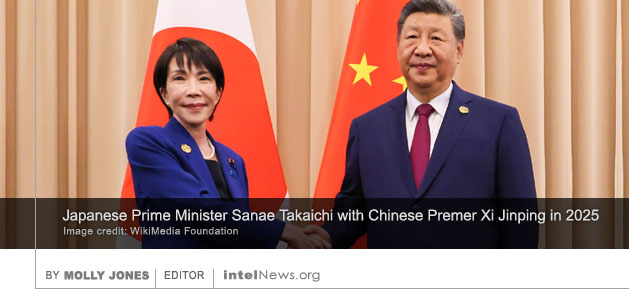
The closed-door session took place in late September. It was joined by Japanese Prime Minister Sanae Takaichi, who led a 17-member panel of officials. The session reportedly focused on strengthening Japan’s intelligence capabilities and planned the drafting of a formal medium and long-term national intelligence-strategy document.
The panel reviewed counter-espionage legalization through establishing a new foreign interference prevention law, among other legal innovations. Japan has lacked a comprehensive anti-espionage law since Allied occupation authorities dismantled most of its intelligence-gathering apparatus following World War II. The lack of an anti-espionage law has limited the nation’s ability to prosecute spies and negotiate exchanges for Japanese nationals detained abroad.
The panel also discussed the creation of an external intelligence agency, comparable to the United States Central Intelligence Agency. Such a body was affirmed as a priority in the October 2025 coalition agreement between Takaichi’s Liberal Democratic Party and the Japan Innovation Party, with the new agency reportedly set to be established by early 2028. If realized, such a move would represent a significant shift in Japan’s intelligence infrastructure.
Following the meeting, Prime Minister Takaichi held a press conference in which she expressed her concerns over what she referred to as the increasing threats to Japan’s advanced technology, cyberattacks targeting both public and private sectors, and the challenge of foreign disinformation campaigns. She highlighted the need to expand Japan’s foreign intelligence capabilities to prevent “undue interference from abroad”, referring to increased cooperation between China, North Korea and Russia, and the threats it presents.
Since taking office in October 2025, Takaichi has made intelligence and security reform a top policy priority of her government. She has repeatedly stated her intention to increase Japan’s intelligence and counterespionage capabilities, with the aim of addressing growing security threats. TextIn March 2026, Takaichi’s administration adopted a bill to establish the Japanese equivalent of the Committee on Foreign Investment in the United States (CFIUS), aimed at tightening scrutiny of foreign investment in sensitive sectors. In July 2026, the Japanese government launched the National Intelligence Council—chaired by Takaichi herself—and the National Intelligence Bureau, both of which are tasked with collecting intelligence related to national security and public safety.
► Author: Molly Jones | Date: 9 October 2026 | Permalink









Japan officials discuss strengthening counterespionage, establishing CIA-like agency
October 9, 2026 by intelNews Leave a comment
The closed-door session took place in late September. It was joined by Japanese Prime Minister Sanae Takaichi, who led a 17-member panel of officials. The session reportedly focused on strengthening Japan’s intelligence capabilities and planned the drafting of a formal medium and long-term national intelligence-strategy document.
The panel reviewed counter-espionage legalization through establishing a new foreign interference prevention law, among other legal innovations. Japan has lacked a comprehensive anti-espionage law since Allied occupation authorities dismantled most of its intelligence-gathering apparatus following World War II. The lack of an anti-espionage law has limited the nation’s ability to prosecute spies and negotiate exchanges for Japanese nationals detained abroad.
The panel also discussed the creation of an external intelligence agency, comparable to the United States Central Intelligence Agency. Such a body was affirmed as a priority in the October 2025 coalition agreement between Takaichi’s Liberal Democratic Party and the Japan Innovation Party, with the new agency reportedly set to be established by early 2028. If realized, such a move would represent a significant shift in Japan’s intelligence infrastructure.
Following the meeting, Prime Minister Takaichi held a press conference in which she expressed her concerns over what she referred to as the increasing threats to Japan’s advanced technology, cyberattacks targeting both public and private sectors, and the challenge of foreign disinformation campaigns. She highlighted the need to expand Japan’s foreign intelligence capabilities to prevent “undue interference from abroad”, referring to increased cooperation between China, North Korea and Russia, and the threats it presents.
Since taking office in October 2025, Takaichi has made intelligence and security reform a top policy priority of her government. She has repeatedly stated her intention to increase Japan’s intelligence and counterespionage capabilities, with the aim of addressing growing security threats. TextIn March 2026, Takaichi’s administration adopted a bill to establish the Japanese equivalent of the Committee on Foreign Investment in the United States (CFIUS), aimed at tightening scrutiny of foreign investment in sensitive sectors. In July 2026, the Japanese government launched the National Intelligence Council—chaired by Takaichi herself—and the National Intelligence Bureau, both of which are tasked with collecting intelligence related to national security and public safety.
► Author: Molly Jones | Date: 9 October 2026 | Permalink
Filed under Expert news and commentary on intelligence, espionage, spies and spying Tagged with counterintelligence, intelligence reform, Japan, News, Sanae Takaichi