CIA has maintained secret communication with North Korea for 10 years
January 22, 2019 4 Comments
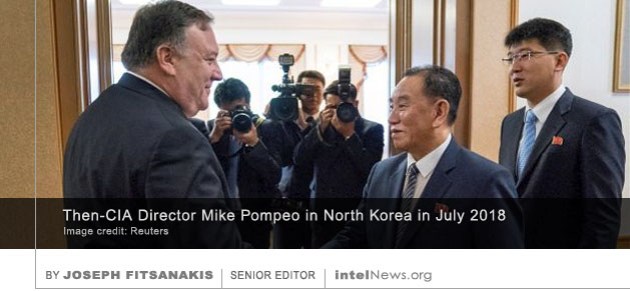 With presidential approval, the United States Central Intelligence Agency has maintained a secret channel of communication with North Korea since at least 2009, according to The Wall Street Journal. Many were surprised in 2018, when the then CIA director Mike Pompeo made a sudden visit to Pyongyang to speak with senior North Korean officials. But according to The Wall Street Journal, the CIA channel with the North Koreans had been there since at least 2009 and Pompeo simply “re-energized it” after being instructed to do so by the White House.
The United States and North Korea have never had official diplomatic relations, nor have they ever maintained embassies at each other’s capitals. In rare instances, the North Korean Permanent Mission to the United Nations in New York has been utilized to pass messages from the White House to the communist country’s Ministry of Foreign Affairs. No other systematic diplomatic activity between the two sides has ever been reported.
But an article published in The Wall Street Journal on Monday claims that an intelligence channel between the CIA and unspecified North Korean intelligence officials has been active —with some periods of dormancy— for at least a decade. The previously unreported channel has led to a number of public meetings, such as the 2014 visit to Pyongyang by James Clapper, the then US Director of National Intelligence, as well as an earlier visit to the North Korean capital by former US President Bill Clinton in 2009. But, says the paper citing “current and former US officials”, most of the contacts have been secret. They include several visits to North Korea by CIA official Joseph DeTrani before and after Clinton’s visit, as well as two trips to Pyongyang by CIA Deputy Director Michael Morell, in 2012 and 2013. His successor, Avril Haines, also visited North Korea, says The Journal, but notes that the channel went “dormant late in the Obama administration”.
Upon becoming CIA director following the election of Donald Trump to the presidency, Mike Pompeo was briefed about the secret channel’s existence and decided to resume it, with Trump’s agreement. That led to his eventual visit to North Korea along with Andrew Kim, who at the time headed the CIA’s Korea Mission Center. Eventually, this channel of communication facilitated the high-level summit between President Trump and Supreme leader Kim Jong-un in June 2018 in Singapore. The Wall Street Journal said it reached out to the CIA, the Department of State and the White House about this story, but received no responses. The North Korean mission in the United Nations in New York also declined to comment.
► Author: Joseph Fitsanakis | Date: 22 January 2019 | Permalink
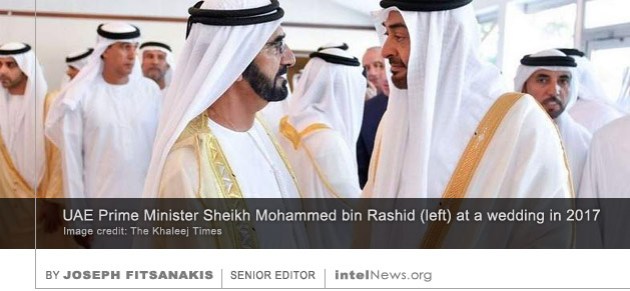 A lengthy exposé by a leading American newsmagazine has claimed that Israel and the United Arab Emirates, two countries that officially have no relations, have been secretly collaborating for more than two decades. Their secret cooperation has been extremely tight and has included clandestine weapons sales and intelligence-sharing, according to the exposé, which was published on the website of The New Yorker on Monday and will feature in the magazine’s print edition on June 18. The lengthy piece, which deals with the changing geopolitics of the Middle East, is written by Adam Entous, national security correspondent for The Washington Post, who has previously reported for more than two decades for Reuters and The Wall Street Journal.
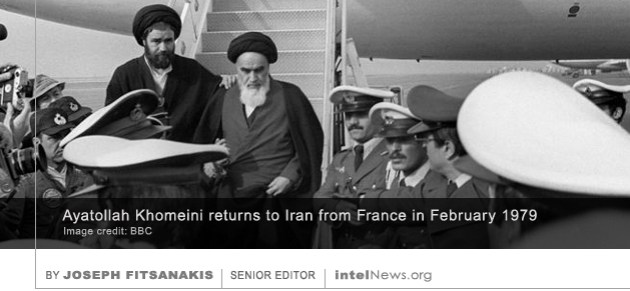 Newly declassified files show that Ayatollah Khomeini, who led Iran after the 1979 Islamic Revolution, had a secret channel of communication with the United States, and even sent a personal letter to US President Jimmy Carter. On January 16, 1979, after nearly a year of street clashes and protests against his leadership, the king of Iran, Mohammad Reza Shah Pahlavi, fled the country for the US. His decision to leave was strongly influenced by his American advisors, who feared that Iran was heading toward a catastrophic civil war. The Shah’s departure did little to calm tensions in the country. Protesters —many of them armed— engaged in daily street battles with members of the police and the military, who remained loyal to Pahlavi. Meanwhile, a national strike had brought the Iranian oil sector to a standstill, thereby threatening to bring about a global energy crisis. Moreover, the country was home to thousands of American military advisors and the Iranian military was almost exclusively funded and supplied by Washington. The Carter administration worried that the weaponry and technical knowledge might fall into the hands of a new, pro-Soviet government in Tehran.
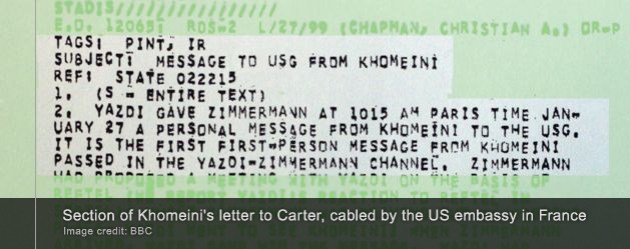 Nine days later, on January 27, Dr. Yazdi gave Zimmerman a letter written by Khomeini and addressed to President Carter. The letter, which addressed Carter in the first person, was cabled to the Department of State from the US embassy in Paris and, according to the BBC, reached the US president. In the letter, Khomeini promises to protect “America’s interests and citizens in Iran” if Washington pressured the Iranian military to stand aside and allow him and his advisers to return to Iran. Khomeini’s fear was that the royalist Iranian military would not allow a new government to take hold in Tehran. But the exiled cleric was aware of America’s influence in Iranian military circles, which at the time were effectively under the command of General Robert Huyser, Deputy Commander of US Forces in Europe, who had been dispatched to Tehran by President Carter. Before answering Khomeini’s letter, the White House sent a draft response to the embassy in Tehran for input and advice. But Khomeini did not wait for Washington’s response. On February 1, he returned to Iran, where he was greeted by millions of people in the streets and welcomed as the next leader of the country. Meanwhile, Washington had already instructed General Huyser to rule out the so-called “option C”, namely a military coup carried out by the Iranian armed forces.
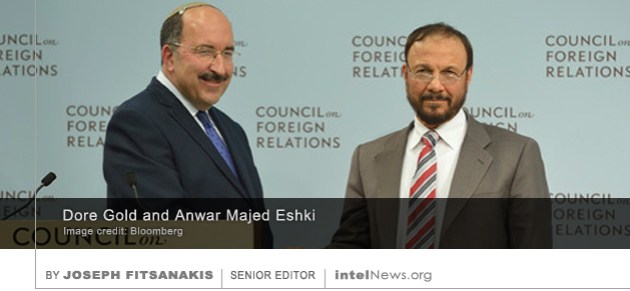 Representatives from Israel and Saudi Arabia have publicly admitted for the first time that they met secretly to discuss their common foe Iran, even though Saudi Arabia does not officially acknowledge Israel’s existence. The admission was made at a symposium held on Thursday at the Council on Foreign Relations, a foreign-policy think tank based in Washington, DC.






 intelNews.org
Israel intel official says Bahrain and Oman could follow UAE in normalizing relations
August 17, 2020 by Joseph Fitsanakis Leave a comment
The announcement was greeted with enthusiasm and skepticism, with some observers claiming it could reshape Middle East politics, and others warning it could bring Palestinian factions closer to Iran. But on Sunday, Eli Cohen, Israel’s Minister of Intelligence and member of the country’s Security Cabinet, said the agreement between Israel and the UAE was likely to be the first of several similar deals. Speaking on Israel Army Radio, Cohen said that “additional agreements” would follow “in the wake of this agreement”, and that “Bahrain and Oman are definitely on the agenda”. The two Gulf countries are close allies of the United States and Saudi Arabia, which is one of Iran’s strongest regional rivals. In official statements issued on Thursday, Bahrain and Oman praised the normalization of relations between the UAE and Iran, but did not speak to whether they were contemplating following in the UAE’s footsteps. Meanwhile, the government of Kuwait said in an official statement last week that its position toward Israel remained unchanged, signaling that a change of status in its treatment of the Jewish state was not on the horizon.
Cohen also told Israel Army Radio that, in his assessment, “there is a chance that already in the coming year there will be [agreements between Israel and] Muslim countries in Africa […] chief among them Sudan”. In recent years, Israeli Prime Minister Benjamin Netanyahu has met with Omani and Sudanese leaders. The Israeli prime minister said last week he expected “more countries will be joining us in the peace circle”, adding that the Israel-UAE agreement signaled “a historic change which advances peace with the Arab world and will eventually advance a real, sober and secure peace with the Palestinians”. There are many critics of this view, especially among Netanyahu’s own voter base, which was highly supportive of his prior pledges that Israel would annex parts of the West Bank.
► Author: Joseph Fitsanakis | Date: 17 August 2020 | Permalink
Filed under Expert news and commentary on intelligence, espionage, spies and spying Tagged with Bahrain, diplomacy, Eli Cohen, Israel, News, Oman, secret diplomacy, United Arab Emirates