US Pentagon hires private intelligence contractor for Syria operations

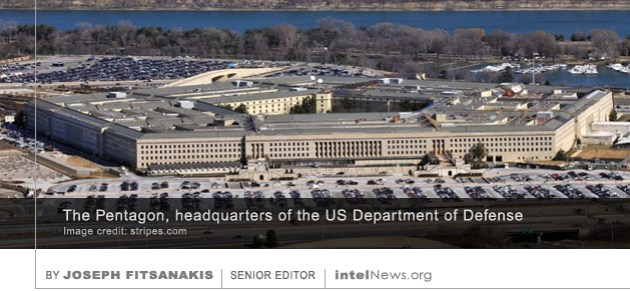
PentagonThe United States Department of Defense has released details of an agreement with a private intelligence contractor, which experts believe involves the provision of services to American Special Forces working clandestinely inside Syria. The announcement, made on the Pentagon’s website, is believed to be the first public admission of the use of a private intelligence contractor by the US government in Syria. In the brief press release, the DoD identifies the contractor as Six3 Intelligence Solutions, a McLean, Virginia-headquartered company that specializes in intelligence, biometrics and security.

Six3 Intelligence Solutions is a subsidiary of CACI International Inc., one of the largest defense, security and intelligence contractors in the US. According to The Daily Beast, CACI purchased Six3 Intelligence Solutions in 2013 for $820 million, in what a CACI media statement said was “the biggest deal” in the company’s 50-year history. Public records indicate that Six3 Intelligence Solutions is already fulfilling a $30 million contract with the Pentagon, involving the provision of nondescript “intelligence services” to American troops stationed in Afghanistan. The latest contract, worth $9.5 million, was announced on July 27. It is a no-bid contract, otherwise known as a ‘sole source contract’, which means that the government believes that only one company can provide the services required. Thus, the process by which a no-bid contract is awarded is non-competitive.

The Pentagon’s July 27 announcement states that, under the contract, work by Six3 Intelligence Solutions personnel “will be performed in Germany, Italy, and Syria”. There is no mention of the precise nature of the work, though it is generally assumed that it will support the operations of US Special Forces troops that are currently stationed in Syria. American troops have been active in Syria for at least a year. Nearly 300 US Special Forces members are believed to be presently operational in the war-torn country, working with officers of the Central Intelligence Agency. The Daily Beast said it contacted CACI and the DoD about the recently announced contract, but received no responses.

Author: Joseph Fitsanakis | Date: 15 August 2016 | Permalink

Turkey arrests nine Caribbean islanders attempting to join ISIS in Syria

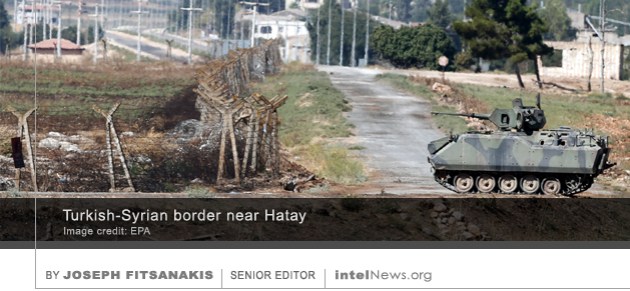
Turkey Syria borderTurkish police have detained nine citizens of Trinidad and Tobago who were on their way to Syria, allegedly to join the Islamic State. They are believed to have traveled from Trinidad and Tobago to Caracas in Venezuela, and from there to Amsterdam, Holland, before flying to Turkey. Turkey’s Daily Sabah newspaper said on Monday that the nine men were captured on July 27, after a police roadblock in south-central Turkey’s Adana province stopped a truck heading toward the Syrian border. Upon searching the vehicle, police officers found a Syrian driver and nine passengers, all of whom were Trinidad and Tobago passport holders. All ten men were arrested. The truck’s driver has been charged with attempting to smuggle the nine Caribbean islanders to Syria, where, according to Turkish authorities, they were planning to join the Islamic State. Over 30,000 foreign nationals are estimated to have joined the militant Sunni group, which was previously known as the Islamic State of Iraq and Syria (ISIS).

Turkish police said on Tuesday that the nine Trinidadians have been transferred to the Provisional Migration Management authority in Adana and will be deported back to the Caribbean later this week. Negotiations are currently underway between the government in Ankara and authorities in Holland and London, to arrange flight stopovers en route to Trinidad. Meanwhile, speaking in Port of Spain, the Trinidadian capital, the Caribbean country’s Attorney General, Faris al-Rawi, said that the nine soon-to-be deportees would be kept under strict surveillance once back in Trinidad. He added that investigators would determine any charges that the men might face, and called for “an intelligence-based approach” to the problem of ISIS recruits in the country.

Al-Rawi was referring to dozens of prior instances of Trinidad and Tobago citizens who have joined ISIS in Syria. Last January, Turkish authorities arrested four more Trinidadian nationals who were allegedly on their way to Syria. The Caribbean country’s Ministry of National Security has identified 105 men, women and children who left for Syria after ISIS pronounced the establishment of an Islamic caliphate. But nongovernmental sources claim that the actual number of ISIS recruits from Trinidad is closer to 400.

Author: Joseph Fitsanakis | Date: 03 August 2016 | Permalink
Countries using Eastern Europe to flood Syria with weapons, study finds

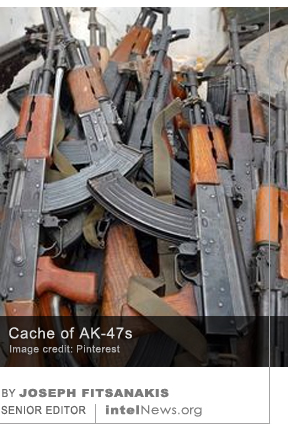
AK-47Unprecedented quantities of weapons and ammunition worth in nearly $1.5 billion have been procured from Eastern Europe and sent to Syria to arm nearly every side in the ongoing civil war, a study has found. The weapons are transported through the Balkans and sold legally to countries bordering Syria, including Jordan, Saudi Arabia and Turkey. Once there, they are secretly transported to Syria for use in the bloody five-year civil war, which has so far killed or displaced millions. The revelation resulted from a year-long investigative project by the Serbia-based Balkan Investigative Reporting Network (BIRN) in the Organised Crime and Corruption Reporting Project (OCCRP) in Bosnia.
The probe found that the weapons transferred to the Middle East include heavy machine guns, rocket and mortar launchers and shells, anti-tank weapons, as well as thousands of assault rifles and rounds of ammunition. Many originate from Ukraine, Belarus and the former Yugoslavia and are procured by companies in eight Eastern European countries including Bulgaria, Slovakia, Romania, the Czech Republic, Montenegro, and Bosnia. The governments of these countries give the companies permission to sell weapons to Middle Eastern countries, even though it is informally understood that they will eventually end up in Syria, in contravention of international agreements.

Investigators say the smuggled weapons have been traced to various factions fighting in Syria, primarily the Free Syrian Army, which is fighting against the government of Syrian President Bashar al-Assad. But many have ended up in the hands of Islamist militias, including the Islamic State, Ansar al-Islam, and the group formerly known as Jabhat al-Nusra. Some of the weapons have also surfaced in Yemen, in the hands of Sunni fighters there. According to the probe’s findings, Middle Eastern countries like Turkey, Jordan or Saudi Arabia, whose militaries use Western-made weaponry, were never large purchasers of Eastern European weapons. But that quickly changed in 2012, as the Syrian Civil War picked up pace.

According to British newspaper The Guardian, which published some of the findings of the BIRN-OCCRP report, the United States has used this weapons-smuggling channel as a way to arm Syrian opposition forces. The study found that, since December of last year, the US military’s Joint Special Operations Command has commissioned at least three cargo ships that left ports in the Black Sea for the Middle East carrying weapons for Syria. Regular intelNews readers will remember a report from November 2013, according to which the Greek authorities seized a ship that had left Ukraine heading for Syria or Libya, carrying 20,000 AK-47s, as well as explosives and ammunition. Two years later, in November 2015, we reported on allegations that Ukraine may be secretly arming the Islamic State in an effort to impair its regional foe, Russia.

Author: Joseph Fitsanakis | Date: 29 July 2016 | Permalink

Italian spy chief paid secret visit to Syria: news reports

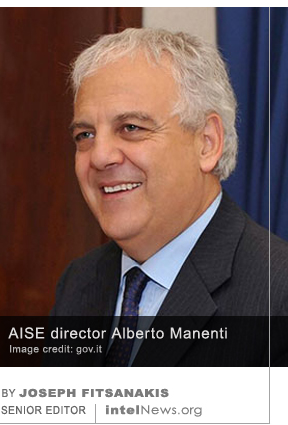
Alberto ManentiThe head of Italian intelligence paid a secret visit to Syria earlier this month, a week after his Syrian counterpart visited Rome, according to reports from the Middle East. The Dubai-based newspaper Gulf News, which first reported the alleged behind-the-scenes exchange, said the visits focused on counter-terrorism cooperation between Syria and the European Union. The paper said that the initial contact was made in late June by Major General Deeb Zeitoun, head of Syria’s General Intelligence Directorate, who paid a secret visit to Rome. General Zeitoun’s visit was allegedly in response to an official invitation issued by the Italian government. The general is believed to have stayed in a secluded private villa, which was provided by the Italian External Intelligence and Security Agency, known as AISE. He subsequently met with several Italian intelligence officials, including AISE Director, General Alberto Manenti.

A week later, Manenti secretly traveled to Syrian capital Damascus, where he stayed for several days. According to Gulf News, General Manenti met with his Syrian counterpart and other senior intelligence officials, as well as with Syrian President Bashar al-Assad. The main purpose of the secret meetings was to explore the potential for enhanced collaboration between Syria and the European Union on counter-terrorism issues. It appears that the Syrian government is willing to share intelligence on citizens of the EU who have traveled to Syria and have joined the ranks of the Islamic State, as well as other al-Qaeda-inspired groups in the country. Damascus is even willing to give EU intelligence personnel access to captured Islamist fighters that are being held in Syrian government facilities.

In return, however, the Syrians are asking that the EU enters negotiations on possibly normalizing diplomatic relations with Damascus. Contacts between the EU and Syria were severely disrupted at the outbreak of the Syrian Civil War and remain officially non-existent to this day. According to Gulf News, the Syrians told General Manenti that full intelligence cooperation in the area of counter-terrorism will ensue as soon as the EU normalizes diplomatic relations with the government in Damascus. The Italian intelligence official is believed to have told the Syrians that Rome will press the EU to move toward re-establishing relations with Damascus, in return for concrete steps taken in Syria toward “political transition” in the war-torn country.

Author: Joseph Fitsanakis | Date: 18 July 2016 | Permalink

Recent gains against ISIS are not enough, may actually backfire, say experts

First Post HWestern experts and intelligence officials are warning that the recent military gains made against the Islamic State of Iraq and Syria (ISIS) are not enough to damage it, and may in fact make the group stronger in the long run. Undoubtedly, the impressive momentum of ISIS, which calls itself the Islamic State, has been curtailed, and the image of invincibility that it once projected is no longer there. Observers estimate that the Sunni militant group has lost nearly a fifth of its territory in Syria, while it is no longer in control of about half of the land it used to occupy in Iraq. As a result of these territorial defeats, ISIS has lost a third of its oil production, which is believed to account for half of its overall revenue. Earlier this month, US President Barack Obama said that, as ISIS continues to concede territory, it is “losing the money that is its livelihood”.
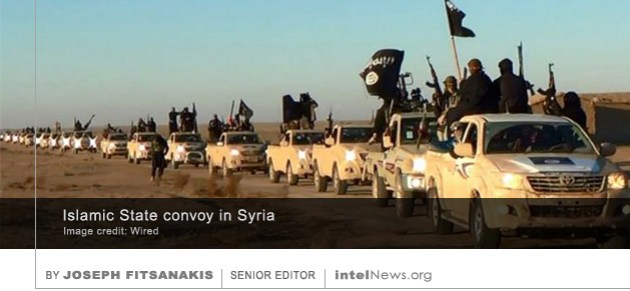
But US intelligence officials do not seem to agree. Speaking on June 16 before the US Senate’s Select Committee on Intelligence, John Brennan, Director of the Central Intelligence Agency, cautioned against triumphalism. He told senators that the efforts of the international military coalition against ISIS “have not reduced the group’s terrorism capability and global reach”, adding that ISIS would “have to suffer even heavier losses of territory, manpower, and money for its terrorist capacity to decline significantly”. According to Reuters, a number of US intelligence officials and counterterrorism experts support Brennan’s views. The news agency said on Wednesday that many experts are warning that the military campaign on the ground was “far from eradicating [ISIS] and could even backfire”.

The fact that local troops fighting ISIS are almost completely composed of Shiite Arabs from Iraq and Iran, or are Kurdish Peshmerga, could add legitimacy to ISIS as the protector of the Sunni Arab minority in the region. There are also reports of human rights violations against Sunnis by the advancing Shiite forces, including an unconfirmed allegation that 49 Sunni men of fighting age were executed after surrendering to the anti-ISIS coalition in Falluja. Additionally, if ISIS loses much more territory, it will be tempted to simply abandon conventional fighting tactics and turn into a guerrilla group. Reuters quotes RAND Corporation analyst Seth Jones, who argues: “It looks like the areas that the Islamic State has lost, they are generally abandoning, and that would mean preparing to fight another way”. That could mean that ISIS fighters intend to blend in with the urban population and launch a campaign of sabotage, assassination and disruption of government services.

As ISIS has lost ground in Iraq and Syria, the flow of foreign fighters intending to join the organization has dropped significantly. But that is not necessarily a good thing, says Reuters. These fighters, who in the past were instructed to join ISIS in the Middle East, may now be told to launch lone-wolf terrorist attacks abroad. The Reuters report cites one terrorism expert, Hassan Hassan, of the Royal Institute of International Affairs in London, who argues that the international appeal of the Islamic State is not connected to the group’s military performance in the Middle East. In other words, its popularity among its Western followers will persist even if all of the group’s territorial strongholds are lost to its adversaries.

Author: Ian Allen | Date: 23 June 2016 | Permalink

Islamic State has regular contact with Syrian government, files show

ISIS - JFThe two main warring parties in the Syrian Civil War, the government of Syria and the Islamic State, frequently contact one another in pursuit of commercial and military deals, according to internal Islamic State documents. British-based news agency Sky News said on Monday that it had acquired “secret Islamic State files”, which included handwritten orders to operatives sent directly from officials at the organization’s headquarters in Raqqa, Syria. The group said it received the documents from a regional branch of the Free Syrian Army (FSA), a largely secular armed opposition group that was formed in 2011 by defectors from the Syrian Armed Forces. The FSA unit in Raqqa left the Syrian city once it was occupied by the Islamic State, and is currently based in Turkey. One of the group’s core preoccupations is assisting Islamic State defectors in their efforts to escape from Raqqa and reach Turkey. It was through these defectors, according to Sky News, that the secret Islamic State documents were acquired.
Among the revelations, said the British news agency, is that the militant Islamist group has been actively training foreign recruits to attack targets in the West “for much longer than security services had suspected”. The plan of the Islamic State seems to be to set up “sleeper cells” in what the group calls “specialized areas” across Europe, in order to carry out armed attacks. Another alleged revelation from the documents is that the Islamic State has operated “in direct coordination with the Syrian Armed Forces and even the Russian Airforce, which has been operating in Syria since September 2015. One of the documents appears to show that Syrian government forces allowed Islamic State troops to evacuate Palmyra along with their weapons, before Syrian and Russian troops entered the city. Yet another document describes a trade exchange between the Islamic State and the government of Syria, under which the Islamist militants gave Damascus oil in exchange for fertilizer.

When Sky News reporters asked Islamic State defectors in Turkey whether these exchanges between the Islamic State and the Syrian government were genuine, they replied “of course”, and added that such trade agreements between the two parties had “been going on for years”. Sky News has not yet released copies of the leased documents.

Author: Joseph Fitsanakis | Date: 04 May 2016 | Permalink

British, Irish citizens who fought the Islamic State are released from prison

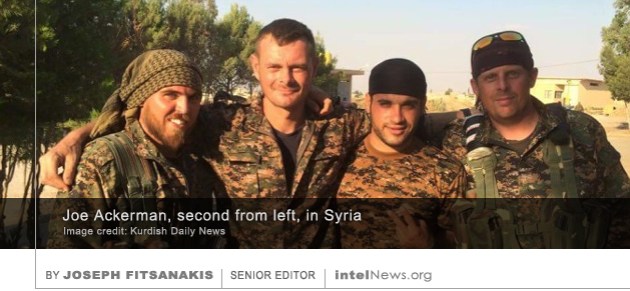
Joe AckermanTwo British and one Irish citizen, who fought with Kurdish units against the Islamic State in Iraq and Syria, but were imprisoned in Iraqi Kurdistan while they were trying to return to Europe, have been freed. The three men are Joshua Molloy, from County Laois in the Republic of Ireland, Jac Holmes from Bournemouth, England, and Joe Ackerman (pictured), from the West Yorkshire city of Halifax in England’s northern region. All three joined Kurdish militias and saw action in Syria and Iraq in recent months.

Holmes, a former information technology manager, had no military experience when, in early 2015, aged 22, he entered Syria, aiming to join Kurdish forces. He soon enlisted in the Kurdish People’s Protection Unit (YPG), a Kurdish group that serves as the armed wing of the Kurdistan Workers’ Party (PKK) in northern Syria. The Englishman from Bournemouth participated in several battles, but returned to the United Kingdom in June 2015, in order to recover from a bullet wound to the shoulder, which he suffered while in the battlefield. As soon as he was cured, he returned to Syria and rejoined the YPG. His compatriot, Joe Ackerman, is a former member of the British armed forces who traveled to Kurdistan last year and joined the YPG after entering Syria illegally. He too was eventually injured when his patrol was struck by a roadside bomb. The third man, Irishman Joshua Molloy, is also a former soldier, having served in the British Royal Irish Regiment, an infantry regiment of the British Army.

Many Western governments, including the British and Irish governments, maintain that their citizens who fight in the Syrian civil war may be prosecuted under counterterrorism legislation, even if they have fought against the Islamic State. But that has not stopped hundreds of Westerners from traveling to Syria and Iraq to join mostly Kurdish, Assyrian and other forces. Last December, intelNews reported on a study that identified over 108 American citizens who had enlisted in the various militias and armed groups fighting against the Islamic State. Nearly half of them had joined the YPG in Syria, while others had enlisted in the peshmerga forces of the Patriotic Union of Kurdistan (PUK) in Iraq, as well as in an assortment of Christian militias, including the Nineveh Plains Protection Units and the Dwekh Nawsha.

According to reports, Holmes, Ackerman and Molloy were on their way back to Europe and trying to cross from Syria into northern Iraq, when they were captured by Iraqi Kurdish government forces. They were jailed for over a week in the Kurdish city of Irbil while their captors tried to verify that they were not Islamic State volunteers. They were released on Sunday. In a statement issued last weekend, the British Foreign Office said it was helping its two citizens return to England as soon as possible.

Author: Joseph Fitsanakis | Date: 25 April 2016 | Permalink

Defector reveals thousands of Islamic State internal documents

ISIS - JFTens of thousands of classified documents belonging to the Islamic State have been released by a disillusioned former member of the organization, who says that the group has been taken over by secularists. According to British-based agency Sky News, the documents were provided on a memory stick stolen from the Islamic State by a Syrian former member of the organization, who goes by the name “Abu Hamed”. Hamed allegedly stole the documents from the Islamic State’s “internal security police”, which Sky News also refers to as “the group’s Security Service”. He took it with him when he defected from the organization, which he says he joined as a convert from the non-Islamist Free Syrian Army. He told Sky News’ Stuart Ramsay that he left the group after concluding that it had been “taken over” by former Iraqi soldiers belonging to Ba’ath, the secularist party that was at the heart of the regime led by the late Iraqi President Saddam Hussein. As a result, “Islamic rules […] have totally collapsed” inside the Islamic State, said Hamed.

The documents that Hamed gave Sky News are said to number in the “tens of thousands” and reportedly identify nationals from over 50 countries who are members of the Islamic State. Many of the documents contain the 23-question form that all prospective members of the Islamic State have to complete before being admitted into the organization. The questionnaires contain the prospective members’ names and aliases, contact information and family background, among other identifying data. Ramsay said he met Hamed “in a secret location in Turkey”, where the former Free Syrian Army soldier is now living after defecting from the Islamic State. According to the Sky News reporter, Hamed said he abandoned the Islamist organization because its current leadership consists almost exclusively of Ba’athists, who are not known for their religious views or lifestyle.

Ramsay reports that many of the names of Islamic State members that are contained in the documents are already “well-known” to Western and Middle Eastern intelligence agencies. But the collection of members’ names contains several individuals from the Middle East, Northern Africa, Europe, as well as North America, who were allegedly not included in intelligence agencies’ lists. One file surrendered by Hamed is headlined “Martyrs”, and allegedly features the names of members of a brigade that consists “entirely of fighters who wanted to carry out suicide attacks and were trained to do so”. Hamed is also reported to have told Sky News that the Islamic State is gradually abandoning its self-described state capital of Raqqa in Syria and relocating to Iraq. Sky News said it had informed Western government agencies about the documents.

Author: Joseph Fitsanakis | Date: 14 March 2016 | Permalink

Are Russian engineers working at an ISIS-controlled gas facility?

Tuweinan SyriaSyrian and American media are reporting that Russian engineers, employed by a Moscow-based contractor with close ties to Russian President Vladimir Putin, are working at a Syrian gas plant under the control of the Islamic State. The facility in question is the so-called Tuweinan gas plant, which is located in central Syria, approximately 60 miles (40 kilometers) southwest of the city of Raqqa. The Islamic State declared Raqqa its capital shortly after occupying it, in June 2013, and the city has since served as the militant group’s administrative headquarters. The nearby Tuweinan gas plant is believed to be the largest of its kind in Syria. In 2013, it was occupied by an alliance of factions operating under the banner of the Al-Nusra Front, the primary al-Qaeda affiliate in Syria. But in early 2014, Islamic State forces took control of the plant following a military offensive against Al-Nusra.
The plant was built by Russian construction company Stroytransgaz, which was awarded the contract in 2007 by the government of Syrian president Bashar al-Assad. It is important to note that Stroytransgaz is owned by Gennady Timchenko, a Russian oligarch who is believed to have close ties to President Putin. Following Russia’s involvement in Ukraine, the United States Department of the Treasury imposed sanctions on the construction company, accusing it of having “direct links” with the inner circle of the Russian government. Since that time, a subcontractor of Stroytransgaz, known as Hesco, which is owned by George Haswani, a Russian national of Syrian descent, has been employed by the parent company to help in the completion of the Tuweinan plant. Haswani, who holds dual Russian and Syrian nationality, was recently singled out by the US Tresury for allegedly “brokering the transfer of oil” between the Assad regime in Damascus and the Islamic State.

In October 2014, the anti-Islamic State website Raqqa Is Being Slaughtered Silently reported that a group of Russian engineers employed by Stroytransgaz subcontractor Hesco had been given permission by the Islamic State to continue working at the plant. On Tuesday, US-based review Foreign Policy said it had spoken to “Turkish officials and Syrian rebels”, who claimed that the Russian engineers were still at the Tuweinan plant. The sources told Foreign Policy that the Russian engineers had been tasked with completing the construction of the facility, as promised in 2007, but this time with the permission of the Islamic State. The latter needs the plant to remain operational. Both Stroytransgaz and Hesco have denied the allegations. The Russian government has not commented on the case.

Author: Joseph Fitsanakis | Date: 11 February 2016 | Permalink

Spy charges for journalists who claimed Turkey arms Syrian Islamists

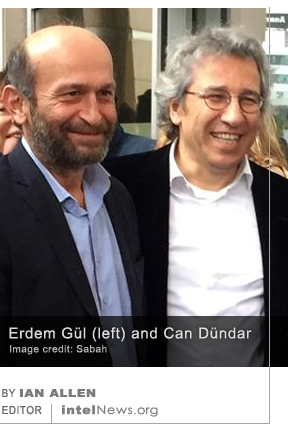
Can Dündar Erdem GülTwo leading Turkish journalists, who claimed in a series of articles that Ankara has been arming militant Islamists in Syria, are facing espionage charges for “airing Turkish state secrets”. The two, Can Dündar and Erdem Gül, work for Cumhuriyet, (The Republic), Turkey’s oldest newspaper, which typically voices staunchly secularist views representing the center-left of the political spectrum. Last year Dündar, who is the paper’s editor, and Gül, who serves as the paper’s bureau chief in Ankara, published a series of articles claiming that the Turkish government was secretly supporting Salafi Jihadist groups in Syria.
In the articles, Dündar and Gül alleged that a convoy of trucks had been intercepted on its way from Turkey to Syria. According to the two reporters, the trucks were transporting large quantities of weapons and ammunition to Syrian rebels as part of a secret operation conducted by the National Intelligence Organization (MİT), Turkey’s main spy agency. But the MİT had not shared details of the operation with Turkish police, which promptly stopped the vehicles, searched them and found them to be “loaded with weapons” and ammunition, according to Cumhuriyet. The paper also published video footage showing the alleged MİT trucks.

When the story was published, it caused major ripples in Turkish political life and prompted the government of President Recep Tayyip Erdoğan to issue official denials directed against the paper’s accusations. Government spokespeople claimed that the captured trucks contained humanitarian assistance, and not weapons. Later, however, Turkish officials admitted that the trucks were indeed carrying weapons, but that they were destined for Turkmen guerrillas operating in Syrian territory. President Erdoğan, however, was furious with Cumhuriyet and warned the paper’s investigative reporters that they would “pay a heavy price” for revealing state secrets.

The two reporters were arrested in November of last year and have since been held in detention. On Wednesday, state prosecutors charged Dündar and Gül with espionage, attempting to topple the Turkish government by force, and supporting terrorism. Interestingly, the main plaintiffs in the case are President Erdogan and Hakan Fidan, the director of MİT. If found guilty, the two Cumhuriyet journalists will face up to life in prison.

Author: Ian Allen | Date: 28 January 2016 | Permalink

Study: Who are the Americans fighting against ISIS in Iraq and Syria?

ISIS - JFMuch emphasis has been given to the Islamic State’s Western recruits, but there is almost nothing known about Westerners fighting against the Islamic State in Iraq and Syria. Last week, an investigative website published the first substantial study on the subject, focusing on volunteers who are citizens of the United States. Entitled “The Other Foreign Fighters”, the study focuses on those Americans who have voluntarily traveled to the Middle East to take up arms against the group, which is also known as the Islamic State in Iraq and Syria (ISIS). It was authored by Nathan Patin, an independent researcher who often publishes his work through Bellingcat, a website specializing in open-source investigations.

Patin reports that there are roughly 200 Americans who have either entered or attempted to enter Syria and Iraq in efforts to battle ISIS. Of those, at least 108 have spent time the region and enlisted in the various militias and armed groups that are fighting ISIS. Based on open sources, Patin claims that at least two thirds of the Americans fighting ISIS have previously served in the US Armed Forces, mostly in the Marine Corps and Army. Almost all of them are in their 20s and 30s and one of them is female. The majority have spent between one and four months on the battlefield in Iraq, Syria, or both. However, almost a third had little or no military experience prior to joining the war against ISIS. They included Keith Broomfield, 36, who died earlier this year while fighting ISIS in Kobani, Syria.

Almost half of the Americans tracked by Patin have fought for the People’s Protection Units (YPG), a Kurdish group that serves as the armed wing of the Kurdistan Workers’ Party (PKK) in northern Syria. Others have enlisted in the peshmerga forces of the Patriotic Union of Kurdistan (PUK) in Iraq, as well as in an assortment of Christian militias, including the Nineveh Plains Protection Units and the Dwekh Nawsha. There are major questions about the legality of the American volunteers’ actions, according to American law. The US Department of State does not include the YPG or the PUK in its official list of foreign terrorist organizations. But the PKK, which cooperates with both groups, is designated by Washington as a terrorist outfit. It is important to note, however that the Bellingcat study does not cover the legality of the American volunteers’ actions in Iraq and Syria. Finally, it is worth pointing out that almost nothing is known about several hundred Westerners from countries other than the US, who are also fighting against ISIS in the region. They include citizens of Finland, Greece, Italy, Spain, Sweden, Switzerland, and many other countries.

Author: Joseph Fitsanakis | Date: 28 December 2015 | Permalink

US Pentagon is secretly giving intelligence to Syria, claims journalist

PentagonThe United States Department of Defense has been secretly sharing intelligence with the Syrian government of President Bashar al-Assad without authorization by the White House, according to an American journalist. Officially, the US government is opposed to the Assad regime in Damascus and has repeatedly stated that peace in Syria can only be achieved if the Assad family leaves power. But in a report published yesterday in The London Review of Books, the veteran American investigative journalist Seymour Hersh claims that America’s military leadership has been secretly aiding the Assad family’s efforts to defeat Islamist groups in Syria.
Citing “a former senior adviser to the Joint Chiefs” of Staff (JCS), which comprises of the senior leadership of the Pentagon, Hersh says that the Pentagon is sharing intelligence with Damascus through “third nations”. These include Israel, Germany and even Russia, claims Hersh. The secret agreement is allegedly aimed at defeating the Islamic State and Jabhat al-Nusra, one of the al-Qaeda affiliates operating in Syria. It is important to note that Hersh claims that the White House, including US President Barack Obama, has not authorized the intelligence sharing and is not aware of the secret arrangement. However, the former JSC senior adviser said that was not surprising and that the Executive did not have to authorize every tactical decision made by the leadership of the Pentagon.

However, Hersh points out that if President Obama is indeed being kept in the dark about the Pentagon’s intelligence relationship with Damascus, the secret arrangement would amount to deliberate undermining of the Executive by the US military’s policies. It would also indicate a growing gap between the White House and the Pentagon in regards to America’s position toward the Syrian Civil War. Neither the Pentagon nor the White House responded to media inquiries about Hersh’s report.

Author: Joseph Fitsanakis | Date: 23 December 2015 | Permalink

Israel silent after assassination of key Hezbollah figure in Damascus

Samir Kuntar Israel has refused comment following the death of a senior official of Lebanese militant group Hezbollah, who was killed on Saturday in a missile strike in Syria. Samir Kuntar (also spelled Qantar) was a Druze who joined the Syrian-backed, Lebanese-based, Palestine Liberation Front (later Popular Front for the Liberation of Palestine – General Command) at a young age. In 1979, Kuntar was jailed for an attack on an apartment block in Israel’s northern coastal town of Nahariya, which resulted in the death of four Israeli civilians and two of the attackers. However, he was freed after nearly three decades in prison in exchange for the bodies of two Israel Defense Force soldiers, who had been captured and executed by Hezbollah in 2006.
Since his high-profile release, Kuntar was believed to have risen in the ranks of Hezbollah, and to have become a major operational figure in the Lebanese militant group. In September of this year, the United States Department of State officially designated Kuntar a Specially Designated Global Terrorist. This designation, under US Executive Order 13224, denoted that Kuntar posed a significant and immediate terrorist threat to American interests. A statement issued by the US State Department at the time described Kuntar as one of Hezbollah’s “most visible and popular spokesmen”, and said he also had an operational role in the organization.

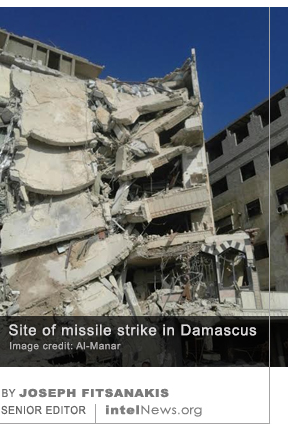
Kuntar was reportedly killed alongside eight other people when a barrage of missiles hit a residential building in the Damascus suburb of Jaramana. A statement by Hezbollah-controlled television station Al-Manar said four long-range missiles were fired by two “Israeli warplanes” that appeared to target the residential building. Based on footage aired by Al-Manar, the multi-story building appears completely destroyed. Moreover, at least one other Hezbollah senior commander, Farhan al-Shaalan, is said to have died in the strike.

Although Hezbollah officially accused “the Zionist entity” for the missile strikes, Israel has refused comment on Kuntar’s killing. When asked for a response by reporters on Sunday morning, Israeli Minister for Construction and Housing Yoav Gallant said he was happy that Kuntar was dead, but stopped short of confirming that Israel was behind the killing.

Author: Joseph Fitsanakis | Date: 21 December 2015 | Permalink

ISIS now has the ability to issue official-looking Syrian passports

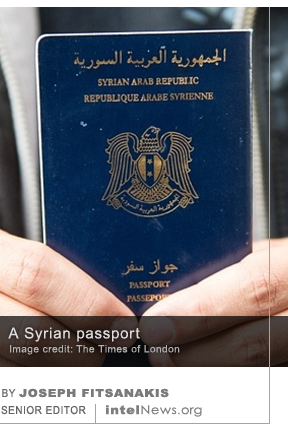
Syrian passportThe Islamic State in Iraq and Syria (ISIS) is now able to produce authentic-looking Syrian passports using machines that are typically available only to governments, according to an American intelligence report. The report was accessed by the New York-based station ABC News, which said it was issued by Homeland Security Investigations (HSI), the investigative wing of the United States Department of Homeland Security. According to ABC News, the 17-page report was issued in early December to law enforcement departments across the US. It warns that ISIS is most likely able to print government-quality travel documents using Syrian passport templates.

According HSI, the militant group was first able to access passport-issuing technology when it conquered Raqqa, the Syrian city that today serves as the capital of the so-called Islamic State. The city has a passport office with at least one passport-issuing machine, said the report. A few months later, ISIS came in possession of a second passport-issuing machine when it captured the eastern Syrian city of Deir al-Zour. The HSI report states that the city’s passport office, which contained “boxes of blank passports” and at least one passport-printing machine, came into the hands of ISIS militants undamaged. Currently, the whereabouts of the Raqqa and Deir al-Zour passport machines “remain fluid”, says the report, pointing out that both machines are believed to be portable.

The intelligence report goes on to state “with moderate confidence” that ISIS has issued authentic-looking Syrian passports to individuals, and that some of them may have traveled to Europe and the US. Further on, the report says that Syria is virtually awash with fake documents; it cites an unnamed source who says that high-quality fake Syrian passports can be purchased in the black market in Syria for less than $400, and that some government employees will backdate passport stamps in exchange for a fee. IntelNews readers will recall that two of the suicide bombers who attacked Paris in November were carrying fake Syrian passports.

Author: Joseph Fitsanakis | Date: 14 December 2015 | Permalink

US intel report says ISIS will spread worldwide unless defeated in Syria

ISIS - JFA report compiled by senior analysts in the United States Intelligence Community warns that the Islamic State will spread around the world unless it suffers significant territorial losses in Syria and Iraq. The eight-page report was commissioned by the White House and represents the combined views of analysts from the Central Intelligence Agency, the Defense Intelligence Agency, the National Security Agency, and other members of the US Intelligence Community. According to The Daily Beast, which revealed the existence of the repot on Sunday, the document is “already spurring changes” in how Washington is responding to the growth of the Islamic State. The group is also known as the Islamic State of Iraq and Syria (ISIS).

The Daily Beast’s Kim Dozier said the report, which was commissioned prior to the Paris and San Bernardino attacks, offered “a tacit admission” that efforts by the US, Russia, and other countries to thwart the growth of ISIS have failed. Over 60 nations are so far involved in broad efforts to destroy the Islamist group, mostly through air raids and material support for local militaries and militias. The US has also deployed 3,500 troops —including Special Forces— in the area. But this has done little to stop ISIS, which is believed to have attracted over 30,000 foreign recruits in the last 18 months alone.

Dozier said that, after US President Barack Obama was given the intelligence report by the Office of the Director of National Intelligence (ODNI), he asked his senior advisors to come up with “new options” to defeat ISIS. These efforts are currently being led by Secretary of Defense Ash Carter and Marine General Joseph Dunford, who is Chairman of the Joint Chiefs of Staff. One of the first decisions taken by the White House in response to the ODNI report was the deployment of a 200-strong Special Forces group on the ground in Iraq and Syria. The group is believed to be conducting raids in association with local militias that are fighting ISIS.

The Daily Beast said it spoke to a spokesman from the ODNI, who confirmed the existence of the intelligence report, but refused to elaborate. Representatives from the White House and the US Department of Defense refused to comment on the subject.

Author: Joseph Fitsanakis | Date: 01 December 2015 | Permalink