Concerns about mass breakouts of jailed ISIS fighters if Turkey invades northern Syria
October 8, 2019 1 Comment
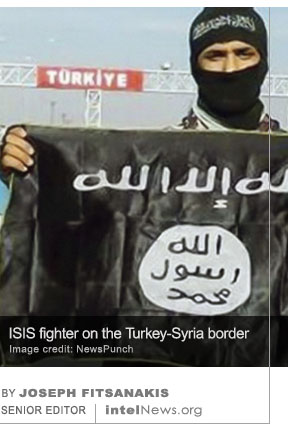 Officials in the United States, Europe and the Middle East have warned that thousands of jailed members of the Islamic State could escape from Kurdish-controlled prisons in northern Syria if Turkey invades the region. For more than two years, the area has been controlled by American-supported Kurdish militias, who were instrumental in helping Washington defeat the Islamic State —also known as Islamic State of Iraq and Syria, or ISIS. But the growing strength of the Kurdish forces has alarmed Turkey, which views Kurdish nationalism in the region as a bigger threat than Salafi jihadism. Ankara has repeatedly threatened to invade northern Syria and disarm the Kurdish groups, which it sees as terrorist.
The continuous presence of American troops in northern Syria has served to dissuade Turkey from invading. Yesterday, however, the White House surprised observers by announcing its sudden decision to pull its troops from northern Syria. Washington’s unexpected move drew criticism from Kurdish commanders who spoke of betrayal, as well as by members of both political parties in Congress. Security officials also expressed fears that Turkey’s focus on the Kurds could allow ISIS to regroup in northern Syria. A statement issued by the White House on Monday said that Turkey would assume control of over 10,000 captured ISIS fighters who are currently being held in Kurdish-administered prison camps in northern Syria. But experts said that the wider Kurdish-controlled region of northern Syria, which Turkey intends to capture, is home to dozens of prisons with over 60,000 captured ISIS supporters in them. What will be the fate of these prisoners under Turkish control?
Security observers have repeatedly accused Turkey in the past of turning a blind eye to ISIS, whose members fought a prolonged and bloody war against Iraqi and Syrian Kurds from 2016 to 2018. There are no guarantees that the Turks will not utilize a resurgent ISIS to suppress Kurdish nationalism in the region. In fact, some experts, including retired American generals, warned on Monday that a Turkish invasion of northern Syria would give ISIS “a golden chance to regroup”. There are concerns of mass breakouts of ISIS members from Kurdish-controlled prisons in Syria, amidst the widespread chaos caused by a Turkish military onslaught. Such breakouts have been encouraged by ISIS leaders, including Abu Bakr al-Baghdadi himself. Escaped prisoners would most likely join the nearly 20,000 estimated ISIS fighters who are still at large in Iraq and Syria, thus contributing to a potentially catastrophic regeneration of the militant Sunni group, according to experts.
► Author: Joseph Fitsanakis | Date: 08 October 2019 | Permalink
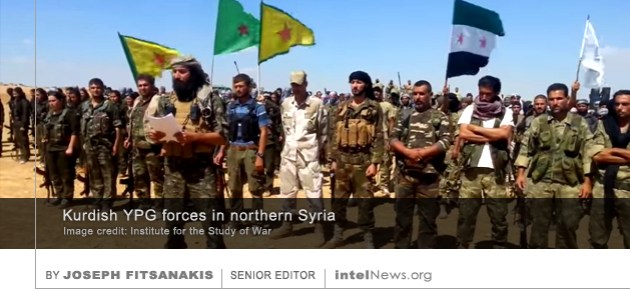 Dozens of Western European and American citizens are participating in the ongoing takeover of Raqqa, the de facto capital of the Islamic State in Syria, despite being prohibited from doing so by their own governments, according to recent news reports. Much has been written about foreign fighters who enter Iraq and Syria in order to join the ranks of the Islamic State, the Sunni militant group that previously went by the name Islamic State of Iraq and Syria (ISIS). But relatively little attention has been paid to the thousands of foreign fighters who have traveled to the region to join the war against ISIS.
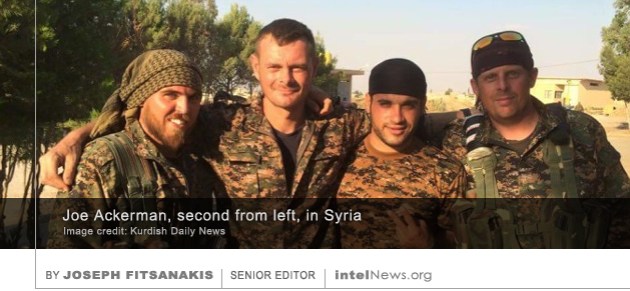 Two British and one Irish citizen, who fought with Kurdish units against the Islamic State in Iraq and Syria, but were imprisoned in Iraqi Kurdistan while they were trying to return to Europe, have been freed. The three men are Joshua Molloy, from County Laois in the Republic of Ireland, Jac Holmes from Bournemouth, England, and Joe Ackerman (pictured), from the West Yorkshire city of Halifax in England’s northern region. All three joined Kurdish militias and saw action in Syria and Iraq in recent months.
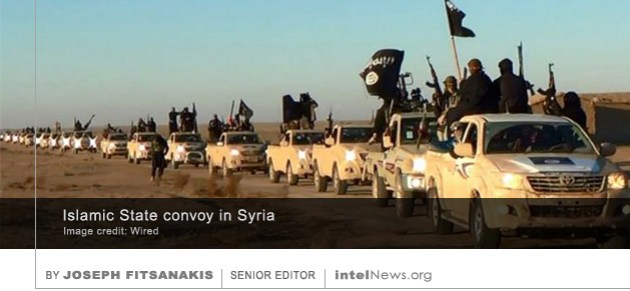 Much emphasis has been given to the Islamic State’s Western recruits, but there is almost nothing known about Westerners fighting against the Islamic State in Iraq and Syria. Last week, an investigative website published the first substantial study on the subject, focusing on volunteers who are citizens of the United States. Entitled “The Other Foreign Fighters”, the study focuses on those Americans who have voluntarily traveled to the Middle East to take up arms against the group, which is also known as the Islamic State in Iraq and Syria (ISIS). It was authored by Nathan Patin, an independent researcher who often publishes his work through Bellingcat, a website specializing in open-source investigations.






 intelNews.org
US Special Forces secrets could fall into hands of Russians as Kurds side with Syria
October 16, 2019 by Joseph Fitsanakis 4 Comments
Throughout that time, US Special Operations Forces have trained members of the Syrian Democratic Forces (SDF), a political and military umbrella of anti-government Syrian groups, which is led by the Kurdish-dominated People’s Protection Unit (YPG) militias. Until recently, the SDF and the YPG were almost exclusively funded, trained and armed by the US through its Special Operations Forces units on the ground in northern Syria. US Special Operations Forces were also behind the creation in 2014 of the SDF’s most feared force, the Anti-Terror Units. Known in Kurdish as Yekîneyên Antî Teror, these units have been trained by the US in paramilitary operations and are tasked with targeting Islamic State sleeper cells.
As of this week, however, the SDF and all of its US-trained militias have switched their allegiance to the Russia-backed government of Syrian President Bashar al-Assad. The dramatic move followed the decision of the White House earlier this month to pull its Special Operations Forces troops from norther Syria, effectively allowing the Turkish military to invade the region. According to the American defense news website Military Times, US Pentagon officials are now worried that the SDF may surrender to the Russians a long list of secrets relating to US Special Operations Forces’ “tactics, techniques, procedures, equipment, intelligence gathering and even potentially names of operators”.
One former US defense official told The Military Times that SDF “may be in survival mode and will need to cut deals with bad actors” by surrendering US secrets. Another source described this scenario as “super problematic” and a symptom of the absence of a genuine American strategy in the wider Middle East region. The website also cited US Marines Major Fred Galvin (ret.), who said that Special Operations Forces tend to reveal little about themselves and their capabilities when working with non-US actors. However, this is uncharted territory for them, said Galvin, since “we’ve never had a force completely defect to an opposition like this before”.
► Author: Joseph Fitsanakis | Date: 16 October 2019 | Permalink
Filed under Expert news and commentary on intelligence, espionage, spies and spying Tagged with News, Russia, Syria, Syrian Democratic Forces, United States, US Special Forces, YPG (Syria)