CIA believed Yugoslavia was on the brink of going nuclear in 1975
November 23, 2017 1 Comment
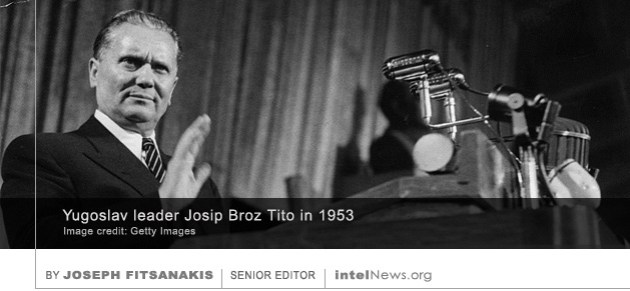 The United States Central Intelligence Agency believed that Yugoslavia was on the brink of becoming a nuclear-armed state in 1975, due partly to assistance from Washington, according to newly declassified documents. The documents, which date from 1957 to 1986, were unearthed by Dr Filip Kovacevic, a Montenegrin expert on American foreign policy who teaches at the University of San Francisco in California. He accessed the documents in October of this year, after filing a Freedom of Information Act request with the CIA in 2016. In response, the spy agency sent Dr Kovacevic eight different files consisting of 84 pages of formerly classified scientific studies, analytical estimates and other reports.
The documents show that the CIA placed the beginning of the Yugoslav nuclear program at the end of World War II. At that time, the multi-ethnic Balkan country became the focus of an intense campaign for influence by the two emerging superpowers, the United States and the Soviet Union. But Yugoslavia’s communist leader, Josip Broz Tito, opted for a policy of nonalignment, refusing to side with Washington or Moscow. It was at that time that Tito began to explore the creation of a nuclear arsenal, which he hoped would enable Yugoslavia to remain independent amidst the pressures of the Cold War. Interestingly, his plans were quietly supported by the US, which invited Yugoslav physicists and engineers to study and conduct research at American universities. Washington also sent teams of geologists to conduct surveys across Yugoslavia in 1952. These and subsequent surveys detected substantial uranium deposits in northern and southern Yugoslavia, which were deemed sufficient to fuel several nuclear bombs. Two decades later, an American manufacturing company, Westinghouse Nuclear, was contracted by Belgrade to build Yugoslavia’s first nuclear power plant in Slovenia.
The papers unearthed by Dr Kovacevic suggest that in 1975 the CIA was convinced that Yugoslavia was technically and financially capable of building an atomic weapon within four years. In a study entitled “Prospects for Further Proliferation of Nuclear Weapons”, the spy agency said that Belgrade had made remarkable technical strides in the area of nuclear research and production in 15 years, partly with America’s support. The only question was whether the Yugoslav leadership would decide to go nuclear, something that the CIA’s analysts warned that it would be difficult to ascertain, as President Tito was unpredictable in his decision-making. Eventually, the Yugoslav leader opted to beef up his country’s conventional forces instead of going nuclear. As Tito’s health worsened in the latter half of the 1970s, ethnic rivalries between competing officials took center stage, and the nuclear weapons question lost its immediacy. Tito died in 1980, and almost immediately the country began to sink under the weight of deepening ethnic tensions.
According to Dr Kovacevic, the CIA documents show that the agency kept close tabs on Yugoslavia’s nuclear ambitions throughout the Cold War. Moreover, CIA analysts appeared to have detailed, accurate and up-to-date information about the Yugoslav nuclear program, on which they based their —broadly accurate— estimates. Crucial pieces of information came from the CIA’s “well-organized network of informants” who were placed “across the country’s institutions” and provided the US with highly dependable intelligence on Tito’s nuclear plans, said Dr Kovacevic.
► Author: Joseph Fitsanakis | Date: 23 November 2017 | Permalink
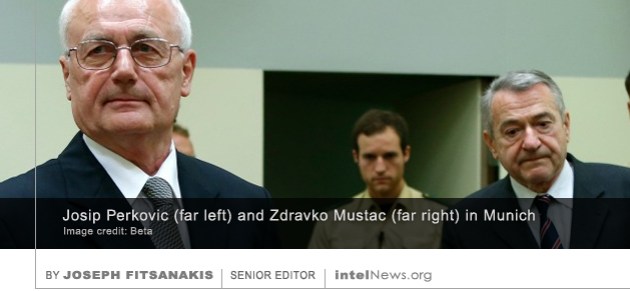
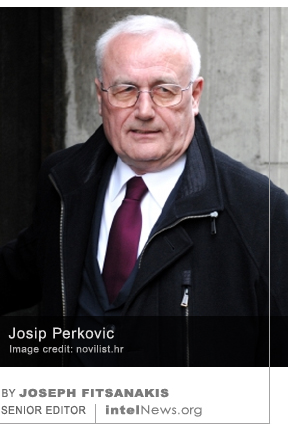 A German court has given life sentences to two senior intelligence officers in Cold-War-era Yugoslavia, who masterminded the murder of a Croat dissident in 1983. Josip Perković and Zdravko Mustać, both former senior officials in the Yugoslav State Security Service, known as UDBA, were
  A former officer in the Cold-War-era Yugoslav intelligence service has begun testifying at a trial concerning the 1983 murder in Germany of a Yugoslav dissident by assassins sent by authorities in Belgrade. Stjepan Đureković, who was of Croatian nationality, defected from Yugoslavia to Germany in 1982, while he was director of Yugoslavia’s state-owned INA oil company. Upon his arrival in Germany, he was granted political asylum and began associating with Croatian nationalist émigré groups that were active in the country. He was killed on July 28, 1983, in Wolfratshausen, Bavaria. His killing was part of an operation codenamed DUNAV, which was conducted by the Yugoslav State Security Service, known by its Serbo-Croatian acronym, UDBA.








 intelNews.org
Germany extradites spy to Croatia to serve 30-year sentence for role in assassination
July 12, 2019 by Joseph Fitsanakis Leave a comment
In 2016, both men were found guilty of organizing Đureković’s murder and were sentenced to life imprisonment, a sentence that was upheld by Germany’s Supreme Court in May. Last year, a court in the Croatian capital Zagreb commuted Perković’s prison sentence to 30 years so that he could be extradited there, since the Croatian justice system does not recognize life prison sentences. A statement from the German Interior Ministry said on Thursday that Perković had been transported to Zagreb on a regular flight from Munich “without incident”. Perković’s extradition to Croatia also concluded a long-standing bureaucratic battle between the former Yugoslav Republic and the European Union. In 2013, shortly before joining the EU, Croatia made it illegal to extradite individuals abroad for crimes committed before 2002. It is believed that Croatian officials changed the law in an attempt to protect armed Croatian nationalists who engaged in criminal activity during the Yugoslav Wars of the 1990s from being tried in European courts. Following systematic pressure from the EU, Croatia scrapped the extradition restriction and sent Perković and Mustać to Germany.
Legal proceedings to extradite Mustać to Croatia to serve his sentence there are continuing. Meanwhile, the two former spies have sued the German state at the European Court of Human Rights, arguing that they were not given a fair trial in Munich. Anto Nobilo, who represented Perković in court, said that the European Court of Human Rights is likely to rule in favor of his client and that he will be “released in a year or two”. If this happens, Croatia will have to re-extradite Perković to Germany to face a new trial.
► Author: Joseph Fitsanakis | Date: 12 July 2019 | Permalink
Filed under Expert news and commentary on intelligence, espionage, spies and spying Tagged with assassinations, Cold War, Croatia, extraditions, Federal Republic of Germany, Germany, history, Josip Perković, News, Operation DUNAV, Stjepan Đureković, Yugoslav State Security Service, Yugoslavia, Zdravko Mustać