Analysis: Prigozhin’s goal was to survive, not to remove Putin from power
June 26, 2023 8 Comments
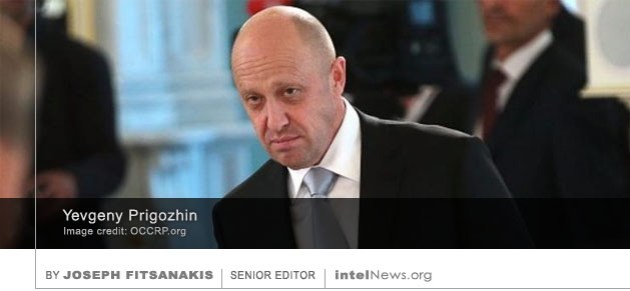 IN THE EARLY HOURS of June 23, PMC Wagner leader Yevgeny Prigozhin declared the launch of an armed campaign against the Ministry of Defense of the Russian Federation. Within hours, several thousand soldiers belonging to Wagner, one of the world’s largest private military companies, had abandoned their positions in eastern Ukraine and were en route to Moscow. Their mission, according to Prigozhin, was to arrest Minister of Defense Sergei Shoigu and Chief of the General Staff Valery Gerasimov, and try them for mismanagement and corruption.
In the ensuing hours, National Guard units along the M-4, a 1,100-mile-long expressway that connects the northeastern shores of the Black Sea to Moscow, began blocking or destroying critical junctures across that vast road network, in an attempt to obstruct the Wagner convoy. In a televised nationwide address, a visibly shaken Vladimir Putin accused Prigozhin of leading an armed insurrection, and warned those who followed him that they would be treated as traitors. Meanwhile, tickets on flights from Moscow to several visa-free international destinations were sold out within hours, as Muscovites braced for the outbreak of civil war.
Yet, within fewer than 24 hours, Prigozhin, who had repeatedly vowed to reach Moscow or die trying, was on his way to Belarus. He had seemingly accepted a deal to abandon his loyal troops in exchange for amnesty and a life in exile. Prigozhin’s sudden about-face surprised many observers, who had expected to see firefights between Spetsnaz units and Wagner forces in Moscow’s southern districts by Sunday afternoon. Even some of Prigozhin’s own troops took to social media to openly accuse their former leader of betrayal, and vow revenge.
PRIGOZHIN: A RATIONAL AND CALCULATED ACTOR
How are we to explain this unexpected turn of events? The difficulty of such a task is amplified by the lack of reliable reporting from Russia, along with the inherent chaos of war and the rapidly changing nature of events. It must be stressed, however, that Prigozhin is neither impulsive nor irrational. His maneuvers over the past week were calculated and almost certainly pre-planned and choreographed —most likely long in advance. His ultimate decision to seek political asylum in Belarus —one of the few countries in the world that is unlikely to turn him over to the United States— makes sense under one premise: that the motive behind his “justice march” to Moscow was not to challenge Putin, but to save his life.
To begin with, the bitter feud between Prigozhin and the Russian Ministry of Defense is not new. It has been raging for years. It both precedes and exceeds Russia’s ongoing military campaign in Ukraine. The  Wagner leader has repeatedly expressed his dismay at being viewed as an outsider by the Ministry of Defense, which it views as an elitist and incompetent bureaucracy. His experience in Ukraine, where Wagner’s forces faced stiff resistance from the local population and the Ukrainian military alike, added fuel to his rage against a host of Russian defense officials. Prigozhin has been voicing his denunciations of the way these officials have managed the war since March of 2022, just two weeks into the invasion of Ukraine.
PRIGOZHIN’S DISILLUSIONMENT
The disastrous Russian military campaign in Ukraine only served to sharpen Prigozhin’s criticism of his country’s defense establishment. One can observe this in the evolution of his critiques over time. In recent months, the Wagner leader has not only criticized the Ministry of Defense, accusing his leadership of corruption, but he has increasingly directed his ire against broad segments of Russian society. In his video tirades, he often decries what he describes as “the Russian elite” and the “oligarchy”, whom it accuses of living in luxury, while Russia’s working class fights and dies in Ukraine, Syria, Libya, and elsewhere.
By the time the Wagner chief launched his march to Moscow, he had dismissed, not simply the way the Ukraine campaign was being fought, but the very reasoning behind the military campaign. In the video address in which he declared war on the Russian state, he claimed there was no reason for Russia to invade Ukraine: “On 24 February [2022] there was nothing extraordinary happening [in Ukraine]”, he said. “Now the Ministry of Defense is trying to deceive the public, deceive the president and tell a story that there was some crazy aggression by Ukraine, that —together with the whole NATO bloc— Ukraine was planning to attack us. The war was needed […] so that Shoigu could become a Marshal, so that he could get a second Hero Star; […] the war wasn’t for demilitarizing or de-nazifying Ukraine. It was needed for an extra star”, said Prigozhin.
The Wagner chief went on to accuse Russia’s military leaders of colluding with wealthy oligarchs to launch a needless war in Ukraine for financial profit. It may surprise Western readers to know that such views are not absent from the highly influential Russian military blogging community, which is popular among Russia’s ultranationalists. The latter view Putin as a useful ally, but not as a genuine Russian nationalist leader. In contrast, many ultranationalists idolize Prigozhin and his Wagner fighters, who are viewed as representing the pure values of Russian working-class conservatism. The Kremlin is acutely aware of  Prigozhin’s popularity in the military blogosphere. It is also aware that, in the absence of in-depth reporting from the Ukrainian warfront in the Kremlin-controlled mainstream media, millions of young Russian voters rely on military bloggers for updates about the war.
THE KREMLIN MOVES AGANST WAGNER
In late 2022, Putin decided that Prigozhin, his once-trusted confidant, had become too influential among the ultranationalist base of the Russian population. He took a series of concerted steps aimed at limiting the growth of Wagner, which by that time had surpassed 30,000 armed men across the entirety of eastern Ukraine. The Russian president instituted a new rule that forbade prison convicts to sign service contacts with private military companies, such as Wagner. Instead, prison convicts were encouraged to join the Russian Army’s Storm-Z Unit, which was essentially created to replace Wagner in Ukraine, and began to legally accept prisoners in its ranks.
At the same time, the Russian Ministry of Defense began to systematically under-supply Wagner formations stationed on the Ukrainian front. It was then that Prigozhin began to issue almost daily video tirades against the senior military brass, accusing them of deliberately starving his troops from desperately needed supplies, including ammunition, clothing, helmets, health provisions and even water and food rations. But the undersupply problem continued and even intensified. The resulting loss of life among Wagner conscripts cannot be overestimated. By the beginning of June 2023, over 50 percent of all Russian casualties in the battle for the city of Bakhmut were Wagner fighters —by some estimates over 10,000 of them.
PRIGOZHIN FIGHTS FOR HIS SURVIVAL
By May, Prigozhin had realized that the Ministry of Defense had made a conscious decision to effectively liquidate Wagner as an organization. He was also convinced that Putin had decided to defang him, if not physically exterminate him. It was clear that Prigozhin’s persistent and increasingly vocal criticism of the way the war was being fought had prompted no reaction by the Kremlin. That, in Prigozhin’s mind, proved that Putin had actively colluded with his senior defense officials in order to destroy Wagner and its command structure. On June 23, Prigozhin decided to gamble it all in a desperate attempt to escape virtual annihilation at the hands of the Kremlin. He went on the attack.
In a video statement issued on June 23, Prigozhin said he was ordering his “tens of thousands” of armed men to march to Moscow and arrest his nemeses, General Shoigu and General Gerasimov. Had he believed that Putin would side with him, he would have simply called on the Russian president to have the two generals arrested, in Stalinist fashion. But Putin had clearly sided with the Ministry of Defense, and therefore Prigozhin’s threat was ultimately against the Kremlin, not solely against a few key officials of the Putin administration. Predictably, Putin went on television and openly dismissed Prigozhin and his troops as traitors, while also giving orders to his lieutenants to defend the capital.
PRIGOZHIN KNEW HE COULD NOT WIN
It has been reported that the United States intelligence community was aware of Prigozhin’s intentions to launch an armed assault against the Kremlin. By June 21, American intelligence officials had briefed the White House and key members of Congress of an impending putsch by Wagner. The briefings almost certainly made clear that Prigozhin’s troops, though battle-hardened and well-armed, were unlikely to pose a major military threat to Putin. The reason is that the Russian president had at his disposal one critical element that the Wagner military convoy lacked: airpower. The Kremlin would be able to wipe out the  majority of Prigozhin’s troops well before they reached Moscow —unless the senior military leadership refused to comply with Putin’s orders to strike. But there were no indications of that. Prigozhin would certainly lose in a military confrontation, and the insurrection would be over quickly.
Prigozhin and his senior Wagner commanders are not known for being romantics. While on their way to Moscow, they were fully cognizant of their fatal vulnerability to air attacks. They knew that they stood no chance against an air campaign by the Russian military. Initially, they had questioned whether Putin would dare to open fire on a convoy of Russian troops. But the Russian president’s televised address of June 24 made it clear in no uncertain terms that he would do whatever it took to stop the convoy from reaching Moscow, including ordering a combined-arms kinetic assault on the mutineers. There was only one thing to do: escape. As soon as the Belarussian President, Alexander Lukashenko, reached out to Prigozhin with a deal, promising him amnesty and asylum in exchange for terminating his mutiny, the Wagner leader took it.
WHAT NOW?
It is impossible to overstate the shockwaves that this dramatic series of events has caused among Russians. Even Putin’s strongest supporters are dismayed and astonished that someone they consider a traitor to the motherland was allowed to escape, essentially without punishment. The Kremlin’s ultranationalist supporters are devastated by this turn of events, which transformed their hero into a villain overnight and shattered the illusion of unity on the warfront. Mutual accusations among prominent ultranationalists have already begun to fragment an already disjointed online milieu.
More importantly, Russian troops on the front lines in Ukraine, as well as young people at home who are in line to be conscripted, are experiencing a deep sense of disillusionment, which they will carry with them to the front. Lastly, Putin himself is now fully cognizant of the profound crisis that he brought upon his country when he launched a full military invasion of Ukraine. Unquestionably, he would turn back the clock if he could. Unfortunately for all of us, he cannot. Now the world braces before the unknown, as the Russian state and civil society begin to unravel before our very eyes.
► Author: Joseph Fitsanakis | Date: 26 June 2023 | Permalink







 intelNews.org
Excellent concise article by IntelNews in summarizing the events to date in Russia as they unfolded. May I suggest that ‘krysha’ was not mentioned, which means ‘roof protection’ in Russian mafia terminology, something that Putin offered Prigozhn from day one, a staple in Russian daily culture not unlike variations of the same in Italy and many other countries. After all they are from the same home town and have personally known each other for decades. Hence, accusations of betrayal by Putin and concluding in this deal for Prigozhn to go to Belarus. If I may humbly make an admitted wild stab in the dark at a future reason as to why there: It is that the 60-mile as the crow flies NATO Achilles’ heel stretch between Kaliningrad and Belarus, if taken by say Wagner’s forces or any new name, would severely cutoff access to and from Lithuania, Latvia and Estonia from their allies in the West. That would really put the cat among the pigeons!
What of Prigozhin’s wife and immediate family, currently living in Moscow? Were they guaranteed some sort of deal as well? If not, that seems like a huge risk to them.
Joseph
I believe the alledged insurrection was a false flag, something the US is well- versed utilizing.
Prighozin and Putin go a long way back. Way before the spat with Shoigu and Gerasimov.
Some of my connections in Russia have set forth 4 postulations with regards to the event. They are intriguing as they are hallmarks of geopolitical mastery.
As no one in the West can maintain connections with Russians ( partly due to Russia itself closing off access) and from the very ineffective sanctions that have taken the BRICS concept from thought to hardened concrete and turned the majority of the world away from US influence, for folks to assume what the real motive and geopolitical strategy is, leaves the western coalition pushing a narrative that continues to steer the US and EU into global economic isolation and strategic impotence.
The enormus magnitude of money that Putin and his allies have taken is the main thing, Shoigu is a part of that and not Prigozhin. Prigozhin probably know some but it’s a secret that people jump from windows for and that is what keeping Kremlin elit and Putin in power. It’s always about the money.
I suspect Prigozhin’s clogs will be proverbially popped, especially if he’s in Belarus. Belarus is but a Putin puppet state. The Belarusian security service is so reliant on Russian tradition that its still called the KGB https://en.wikipedia.org/wiki/State_Security_Committee_of_the_Republic_of_Belarus .
An order from Putin will trigger a joint FSB-KGB operation to shoot, bomb or poison Prigozhin within 12 months, methinks.
As thought experience, Mr. Putin was already dead when the invasion of Ukraine by Russia started. Maybe his now different parts are made up by different organs of the Russian state.
Reuters reported that Wagner troops would be stationed at a military range near the town of Osipovichi, about 90 km (56 miles) southeast of the capital Minsk. Which is only 266 miles from Kyiv.
Just hypothetically speaking if you were tasked to move a large amount of soldiers for a strategic advantage against your enemy how would do it? What would your cover story be?
I’m a retired Sovbloc intelligence officer. A cold war warrior to some. I’m always very surprised how much ignorance the global general public and the media today has about the history, actual events and politics leading up to the mess of the war between Russia and Ukraine. As a published author now I hope IntelNews allows me to recommend a book that will explain in 185 pages in-depth details all the facts you need to know about how and why it happened: ‘War in Ukraine’ by Medea Benjamin & Nicholas JS Davies on OR Books.