Analysis: Escalation Without Endgame and the Limits of Defeating Iran
March 3, 2026 5 Comments
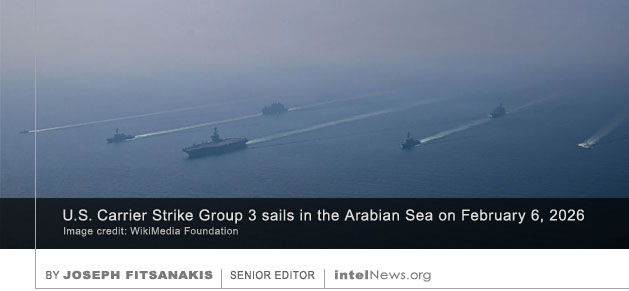 THE ONGOING CONFRONTATION BETWEEN Iran and its adversaries unfolds against the backdrop of a regime that is strategically depleted yet politically combustible. Yet strategic exhaustion does not equate to imminent collapse. Indeed, the potential degradation of Iran’s coercive institutions raises a more complex question: what follows tactical success? Thus, while Iran appears weakened and vulnerable, the longer-term trajectory of the conflict remains uncertain, fraught with the risk of protracted instability and regional spillover at a level that could make Libya and Syria seem mild by comparison.
Iran is Strategically Depleted and Vulnerable
Decades of crippling sanctions have ruined Iran’s economy and demoralized its population, causing an already polarized society to further-disintegrate. Outside of a small population of religious zealots, Iranians have little interest in martyrdom, and very few are willing to die for a regime that most see as politically and ideologically bankrupt. The stunning degree of the regime’s penetration by Israeli and American intelligence agencies is indicative of the disillusionment of ruling elites, let alone rank-and-file functionaries.
Militarily, this is hardly a war between equals. Even before bombs started falling in Tehran on February 28, Iran’s armed forces and its elite Islamic Revolutionary Guard Corps (IRGC) had been severely degraded by prior military engagements with the U.S. and Israel. Even with the assistance of its proxies and allies, Iran is demonstrably unable to match the military and intelligence resources of its opponents. As many have noted, Tehran’s retaliatory strikes appear to emphasize economic disruption and psychological pressure on civilian populations. But the marked inconsistency in the scale and delivery of Iran’s retaliatory attacks suggests that it is struggling to respond in a coherent fashion.
Russia, meanwhile, is nowhere to be seen. As in the cases of Venezuela and Cuba, Moscow has restricted its response to this crisis to diplomatic condemnations and offers to mediate, rather than offering military assistance to its Middle Eastern ally. This is hardly surprising, given Russia’s broader strategic priorities and its desire to further its ongoing expansionist goals in Europe by avoid overextension elsewhere.
Iran is weak, exhausted, alone. It is teetering on the edge. Yet, instead of cheering, this appears to trouble even seasoned Iran hawks like John Bolton, Trump’s onetime national security adviser. A veteran Republican, Bolton is probably the most consistent and vociferous Iran critic in the Western Hemisphere. The Iranian government has actively planned to assassinate him in recent years. But in a recent interview, Bolton cautioned about the lack of planning behind Washington’s latest adventurism in the Middle East and waned that the current situation may “deepen conflict, create a dangerous power vacuum, and purge the [entire Middle East] into turmoil”. What is Bolton seeing that Trump’s inner circle is not?
This War Will Not End Soon
American air campaigns have a demonstrated history of obliterating Washington’s tactical targets and severely disrupting its adversaries. Iran is unlikely to prove an exception to this rule. However, air campaigns—no matter how sophisticated—cannot by themselves reorder domestic politics and build long-lasting political outcomes. It follows that, despite delivering a series of indisputable tactical successes, including the assassination of Iran’s supreme leader and senior members of his inner circle, American and Israeli airpower cannot by itself ensure a pro-Western outcome in Iran.
Obliterating the Iranian regime’s military capabilities and degrading its ability to dispense violence against its own population is likely to create a power vacuum. But that is not the same as managing the ensuing political fallout. Even if the regime falls—which is not the likeliest scenario—its successor is unlikely to be friendly to the U.S. or Israel. For over a century, Iran has been permeated by a political culture shaped by fervent nationalism, revolutionary narratives and resistance against foreign intervention. This has been particularly so since 1979, with the theocratic regime building the nation’s identity around the idea of its resistance to the “Great Satan” and its regional allies, including Israel and Saudi Arabia. This identity permeates Iran’s security apparatus, its state institutions and its education system. Even anti-regime Iranians—including the student demonstrators who cheered Ayatollah Khamenei’s demise—espouse core elements of that narrative.
The Iranian regime is now fighting in an existential war for its very survival. It is also led by religious zealots who truly believe in the idea of martyrdom. They are therefore unlikely to capitulate, as they have little to no incentive to restrain themselves. They are likely to face increasing pressure in big cities, as well as in areas dominated by ethnic minorities, like Kurdistan and Baluchistan. The latter may descent into armed confrontations, which could turn extremely bloody.  Even if it comes to fruition, such a project will not last four or five weeks, as U.S. President Donald Trump opined recently. It will last years.
The Iran Paradox
Iran’s current predicament thus presents a paradox. On the one hand, the regime is strategically strained, militarily outmatched, and increasingly isolated. Its economic base has been hollowed out, its conventional deterrent degraded, and its reliance on asymmetric retaliation betrays structural weakness rather than strength. The absence of meaningful Russian military support further underscores Tehran’s limited strategic depth. From a purely operational perspective, its adversaries should be easily able to retain escalation dominance.
On the other hand, strategic fragility does not automatically translate into political transformation. Regimes under existential threat often radicalize rather than capitulate, particularly when animated by ideological commitments that valorize sacrifice and resistance. The Islamic Republic’s institutional architecture—spanning the security services, clerical networks, and ideological apparatus—remains capable of mobilizing coercion and nationalist sentiment even amid acute crisis. Moreover, the dismantling of centralized authority risks unleashing a host of centrifugal forces, including ethnic unrest and factional conflict, that could destabilize not only Iran, but the wider region.
The decisive question, therefore, is not whether Iran is weakened—it clearly is—but whether external military pressure can produce a stable and strategically favorable outcome. Tactical success is achievable; sustainable political resolution is far less certain. Without a coherent post-conflict strategy, the result may not be strategic victory but prolonged disorder.
► Author: Joseph Fitsanakis | Date: 03 March 2025 | Permalink








Well, what if the intent is simply to degrade/eliminate, for some reasonable amount if time, the ability and inclination of Iran to threaten its neighbors and support terrorism in the world. To do that, we don’t need a “plan” for Iran’s future- its up to them- and if they don’t get it right, we come back and bomb them into the Stone Age. Once we “break it”, that is the current regime and its capabilities, we don’t “own it”, they do, the Iranians. The problem with new-Cons, God bless them, is that they always want to “fix” or reform cultures that are inbred, tribal, religious zealots, often incapable of reform or democratization. Iran as a gravel pit, unless the Iranians themselves are capable of making less so, is not a bad outcome.
Seems like POTUS is setting a dangerous precedent by assassinating a foreign leader, catching them off guard during nuklear talks.
Both controlled every facet of the Iranian power structure: head of state, religion, morality, highest courts, judiciary, parliament, regular armed forces, Revolutionary Guards, the economy and foreign affairs, etc.
This suggests an absolute theocracy under an Ayatollah will likely continue.
Backing him (or even alternatives for power) will be the Revolutionary Guards (combining military and political power) and/or the regular armed forces. Both forces are likely to fight off protester challenges, in part because no opposition figure has emerged (yet). That includes the Crown Prince (son of the Shah) – nice Western suit (worthy of a US appointed Chalabi [B]), but with little obvious following in Iran.[C]
2. The mayhem in Iran presents a challenge for what I call the Intelligence-Political complex (particularly SVR-GRU, MSS, MI6 and the CIA) that benefit from military disruption previously previously centralised societies once the aerial bombing stops. Mossad is different in being in a legitimate battle with a potentially nuclear armed Iran.
The fragmentation of Iraq, Syria and Libya are examples that have boosted (still boost) the intelligence careers of the ambitious.
[A] https://en.wikipedia.org/wiki/Supreme_Leader_of_Iran#List_of_supreme_leaders
[B] https://en.wikipedia.org/wiki/Ahmed_Chalabi
[C] https://en.wikipedia.org/wiki/Reza_Pahlavi
It is as if president Trump is being paid and/or forced by kompromat to destroy USA from the inside and from the outside. Entering US into a Vietnam-like quagmire of a war could be part of that.
Regarding recent changes to US trade and defense relationship with especially Canada but also Mexico, EU and Japan: If a foreign intelligence service has caused that in part or full it will in future be considered a major achievement to be mentioned in history books.