Analysis: Europe’s Intelligence Challenge in an Era of Strategic Bipolarity
May 5, 2026 9 Comments
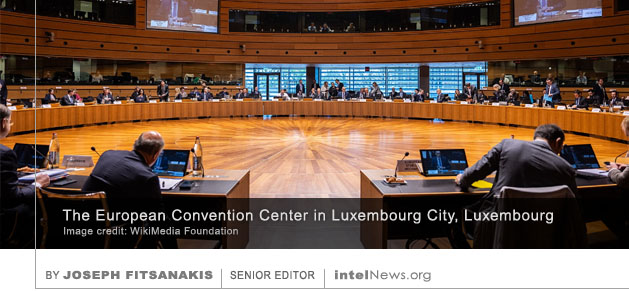 The United States remains the most powerful military actor in the Western alliance system, but recent conflicts have exposed serious limits in American strategic capacity. For Europe, this lesson is no longer speculative. It must now shape the intelligence planning, defense preparedness, and executive decision-making across NATO’s European pillar. This requires a major shift in how European intelligence communities define their mission and operational priorities.
For decades, European intelligence services operated within a strategic environment shaped by American primacy. Their task was often to complement U.S. intelligence collection, support NATO operations, monitor regional threats, and provide national-level warning. That model is no longer sufficient. In an emerging bipolar order dominated by U.S.-China competition, Europe must develop intelligence structures capable of supporting greater strategic autonomy, faster defense mobilization, and more sophisticated political warfare responses—especially in the cognitive domain.
THE U.S. IS FINDING IT DIFFICULT TO WIN WARS
The U.S. appears increasingly ill-prepared for the demands of modern warfare. This is not a realization born solely of the present war in Iran. Rather, Iran represents the latest data point in a longer pattern of strategic underperformance that includes Iraq, Afghanistan, and Ukraine. The current war in Iran further reinforces concerns about coherence and strategic direction. Public messaging by the administration of President Donald Trump has emphasized kinetic successes—such as the degradation of Iran’s naval and air capabilities. But it has offered limited clarity on broader strategic objectives. This mirrors earlier patterns in Afghanistan, where overwhelming tactical superiority failed to produce durable political outcomes. It is worth noting that the Taliban did not require a navy and air force in order to defeat American forces; if that is so, then why would the Iranians require them? For intelligence professionals, the lesson is clear: battlefield metrics must be analytically divorced from strategic indicators. This means that intelligence support to policymakers must explicitly distinguish between momentary tactical achievements and their long-term strategic significance.
The historical record suggests that such misalignment between tactics and strategy is not easily concealed from domestic audiences. After more than two decades of sustained conflict, the American electorate has shown clear signs of fatigue, frustration, and declining confidence in ruling elites. This sentiment has contributed the rise populism and of polarizing political figures, which has in turn led to the erosion of bipartisan consensus on foreign policy in Washington. One is understandably surprised by how long it has taken European planners to incorporate this domestic dynamic into their assessments of America’s reliability as a strategic ally. The fact is that the element of continuity in American foreign policy is nowhere near guaranteed—and the sooner European leaders understand that, the better.
TRUMP DID NOT CAUSE THIS PROBLEM
Importantly, the element of unreliability in U.S. posture should not be interpreted as a sudden retreat driven by any single administration. It reflects a broader, long-term contraction of America’s strategic bandwidth. While President Donald Trump’s rhetoric may emphasize disengagement from allies, the underlying reality is more structural: the U.S. faces growing constraints in its ability to project power globally. President Trump is not the cause of this phenomenon. On the contrary, he is desperately trying to address it—albeit in a haphazard and crude manner.
The most immediate constraint in American strategy is material. The U.S. is facing a significant shortage of critical weapons systems. Evidence of this has emerged during the current war with Iran, where munitions limitations have become acutely apparent. An even starker illustration occurred during the 12-day war this past June, when the U.S. expended nearly a quarter of its high-altitude missile interceptor stockpile in just 12 days to defend Israel  against Iranian ballistic missile attacks. Similarly, in Ukraine, the U.S. has struggled to meet Kyiv’s Patriot missile requirements more than four years into the conflict, highlighting persistent production and supply constraints.
This is not a marginal detail—it is a strategic indicator that should be incorporated into threat and readiness assessments. For European intelligence agencies in particular, these figures must be translated into planning assumptions. What would European air and missile defense look like under similar consumption rates? How quickly could stockpiles be replenished? What degree of reliance on U.S. resupply remains realistic under conditions of simultaneous global demand? Intelligence must provide quantitative answers to these questions that European decision-makers must be made cognizant of with urgency.
These constraints are compounded by structural weaknesses in American industrial capacity. The U.S. economy is currently unable to produce the volume of military hardware—ships, aircraft, munitions—required for sustained high-intensity conflict. In contrast, China has undergone a dramatic industrial expansion, increasing its share of global manufacturing output to approximately 30 percent, compared to the U.S.’ 16 percent. This disparity translates directly into military capability. China is now able to produce advanced weapons systems at a rate estimated to be up to six times faster than the U.S.
A FUNDAMENTAL SHIFT IN MINDSET
European intelligence services must incorporate this dynamic as a core indicator of America’s military readiness, while also viewing it as an opportunity for Europe. This is because, while the U.S. cannot match China’s industrial capacity alone, it can do so in combination with its allies. This places Europe at the center of this emerging strategic equation. However, this role requires a fundamental change in mindset.
First, European governments must abandon the assumption that the U.S. will automatically intervene to resolve major conflicts on the continent—with Ukraine serving as a prime example of this stark realization. Intelligence services should reinforce this shift by providing scenario-based assessments that model outcomes under conditions of delayed, limited, or absent U.S. support—as in the case of Ukraine.
Second, Europe must understand how Russia and China perceive the balance of power. From their perspective, the U.S. must clearly appear militarily stretched, politically divided, and constrained by domestic pressures. European intelligence services must therefore prioritize adversary perception  analysis, identifying how observable indicators—such as munitions shortages or delayed support to allies—shape strategic calculations in Moscow and Beijing about America’s deterrent capabilities and about Europe’s ability to defend itself.
Third, Europe must confront the ongoing gray-zone conflict on the continent. As articulated by British Secret Intelligence Service (MI6) Director Blaise Metreweli, Europe is now operating “in the space between peace and war”. This environment includes sabotage, airspace incursions, cyber operations, and influence campaigns. Intelligence services must treat these activities as components of a prelude to all-out war. At the same time, European leaders face a difficult calibration problem. Responding forcefully to gray-zone aggression risks escalation, while inaction signals weakness. Intelligence must support this decision-making process. The goal is not to eliminate uncertainty, but to reduce it to a manageable level.
Fourth, Europe must accelerate its rearmament efforts—not only for its own defense, but to contribute meaningfully to the broader balance of power. Intelligence services have a direct role to play here by identifying priority gaps in military capability, assessing vulnerabilities in critical infrastructure, and supporting procurement decisions with detailed threat analysis. Rearmament must be informed by intelligence planning, not driven solely by political urgency.
Finally, Europe must recognize its role in preventing a catastrophic conflict between the U.S. and China. Such a war would not be geographically contained. It would disrupt global trade, destabilize economies, and potentially escalate to the nuclear level. Intelligence services must therefore support diplomatic efforts by providing early warning of escalation, identifying points of friction, and assessing opportunities for de-escalation.
In this emerging bipolar world, Europe’s security will depend not only on its military capabilities, but on the quality of its intelligence. The task is not simply to monitor threats, but to provide decision-makers with the analytical clarity needed to navigate a far more constrained and competitive strategic environment. Intelligence must bridge the gap between data and decision, ensuring that Europe is not only informed, but prepared to act.
*This article is based on a panel presentation titled: “The New Bipolar Tension: Europe’s Position in the Emerging US–China Strategic Rivalry”, hosted by the Institute for National and International Security on May 5, 2026.
► Author: Joseph Fitsanakis | Date: 05 May 2026 | Permalink









An excellent deeply thought piece, Mr Fitsanakis. May I offer that national culture was largely omitted. Generally speaking Americans like to crow from the rooftops about their achievements and plans while the Chinese and Russians remain stoic on those subjects. Europeans are somewhere in-between these two ends. MI6’s “P” (production) intel officers spent much time in the field trying to figure out what it was that wasn’t said or implied to then understand where and what they were likely coming from and going to. Different ball game altogether, like ingrained capitalism and embedded communism. – Nicholas Anderson
A very timely warning Joseph.
And Europe’s position is declining rapidly with the US withdrawing substantial troop numbers from Europe. The UK Guardian reported May 3, 2026 https://www.theguardian.com/us-news/2026/may/03/trump-threats-withdraw-troops-from-germany
“Republicans ‘concerned’ after Trump threatens to withdraw more US troops from Germany: US announced withdrawal of 5,000 soldiers last week after German chancellor said US was being ‘humiliated’ by Iran…
The move left 30,000 US troops still in the country, according to CNN. But Trump threatened on [May 2, 2026] that more cuts were coming. “We are going to cut way down, and we’re cutting a lot further than 5,000,” he told reporters….
[The Pentagon announced it was withdrawing the 5,000 troops]…after a “thorough review of the Department’s force posture in Europe and is in recognition of theater requirements and conditions on the ground”, a spokesman said.
…The Republicans who chair the armed services committees in Congress, Senator Roger Wicker of Mississippi and Representative Mike Rogers of Alabama, released a joint statement on Saturday saying they were “very concerned” by the possibility of reducing troops in Germany.
[Wicker and Rogers said] “Germany has stepped up in response to President Trump’s call for greater burden sharing, significantly increasing defense spending and providing seamless access, basing, and overflight for US forces in support of Operation Epic Fury,”
[…they added.] “Those allies there have made substantial investments to host US troops, reducing costs for the US taxpayer while strengthening Nato’s front line to help deter a far more costly conflict from ever beginning.”
MORE
Well said Anonymous :) at May 6, 2026 at 08:58
The weakened NATO alliance, without an enthusiastic USA to lead it, is vulnerable against a Russia strongly led by Putin – a Russia now tooled up to produce weapons at “war economy” levels. Furthermore Trump is apparently accepting policy suggestions from Putin on how the US should treat the rest of NATO.
Russia earlier was in a similarly weakened state by the late 1980s against a resurgent Reagan led NATO. Russia itself was ailing while leading a reluctant Warsaw Pact. The main military constituents of the Warsaw Pact [1] chiefly being the more substantial Soviet Republics [2] (Russia itself, Belarus and Ukraine) as well as efficient militaries in East Germany (I lived at a UK tank base in W Germany 1966-67) Poland, Hungary and Czechoslovakia).
So Putin is now the most influential figure in the Western Alliance, but for all the wrong reasons.
[1] https://en.wikipedia.org/wiki/Warsaw_Pact#Members
[2] https://en.wikipedia.org/wiki/Republics_of_the_Soviet_Union#Union_Republics_of_the_Soviet_Union
This assumes Europe is better of with USA than Chine. Why would that be so? Where is the proof of that? Especially in light of recent insults from the moron now president of US? Why would China be a worse partner than US? USA so called democracy is today ruled by the most wealthy. Why is Chinas meritocracy a worse fit?
Why would that be, ask Anonymous May 12?
US has more troops stationed in Europe than any other nation… The vast majority of NATO firepower comes from the US tax payer, Sparkie… As our national debt nears 30 trillion, it is way past time Europe stand on her own, than the backs of the US tax payer.
Moron? That’s how the US tax payer feels…
When you allow China to crawl in bed with you, you may want to educate yourself in how China deals with those who do not walk the line, or their line…
The Moron is attempting to clean up a mess that has been going on for nearly 50 years, after Carter turned his back on the Shaw of Iran… How much damage would the world economy receive if a nuclear explosion goes off in the US or Israel?
There is an old saying: “Careful in what you say, before proving to the world your an idiot…”
Jimmy Gilbert: Yes I know, this was provocative of me to post this. But like e.g. Bolton has noted, the Moron has no plan or strategy, he thinks he can do geo politics like he handled real estate deals.
Certainly Putin’s advice to Trump that NATO is against US interests is in Russia’s interests.
The agents of influence of Russia’s anti-Western propaganda agency remain active in an anonymous capacity exploiting the freedom of Western websites.
See Russia’s propaganda agency https://en.wikipedia.org/wiki/Internet_Research_Agency
and Russia’s payment of the Trump family https://en.wikipedia.org/wiki/The_Trump_Organization#Financing
Sorry Jimmy
Here’s the current Russian gray-zone conflict structure, known as “Storm-1516” https://en.wikipedia.org/wiki/Storm-1516
“Storm-1516 is a Russian propagandist group which creates and spreads online disinformation to further the interests of the Russian government. They have posted negative stories about American aid to Ukraine during the Russian invasion of Ukraine…
Storm-1516…have a team which produces social media videos featuring paid actors as well as fake people generated through artificial intelligence. [spreading] narratives were a part of a Russian government effort to support the Republican presidential campaign of presidential nominee Donald Trump and vice presidential nominee JD Vance.
Storm-1516 has been linked to the website Nova Resistência…
https://en.wikipedia.org/wiki/Storm-1516#2026_False_claims_targeting_Germany
“On 19 January 2026, [Storm’s] Nova Resistência published a claim alleging that Germany would invest €1.4 billion in the construction of a football stadium in the Brazilian city of Belém as an act of reparation by Chancellor Friedrich Merz. The report asserted that the alleged payment was linked to remarks Merz was said to have made during the November 2025 climate summit, in which he purportedly described Belém as “not a beautiful place.”[29]
“Peter Magyar campaign in 2026
In April 2026 an obscure website created on 6 April published a story about Peter Magyar, Hungarian prime minister candidate, “cooking his children’s puppy in a microwave” and other rather disturbing behaviors. The story referred to a non-existent autobiography of his ex-wife Judith Varga and was promptly debunked by her. Techniques used by the campaign were identified as matching Storm-1516 by a Polish fact-checking portal Demagog.[32][33] The “microwaved pet” story is a popular urban legend.”
Pete Comment: Apologists for Moscow are weird.
Cheers Pete
Jimmy, did you mean to quote Lisa Simpson: “It is better to remain silent and be thought a fool than to open your mouth and remove all doubt” (Simpsons, season 4, episode 10: https://www.youtube.com/watch?v=URWLnOJ25uA&t=10s)