Coalition requests disbarment of government lawyers behind CIA torture

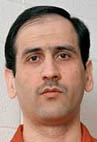
John Rizzo

John Rizzo

By JOSEPH FITSANAKIS | intelNews.org |
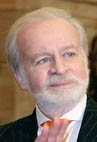
Yesterday I wrote about John A. Rizzo, the CIA Acting General Counsel who is preparing to step down from his post despite being termed “the most influential career lawyer in CIA history”, according to The Los Angeles Times. The reason behind his sudden early retirement is the discovery earlier this month by several anti-torture critics in Congress that he gave the CIA legal advice in support of the Agency’s “enhanced interrogation” program. But the controversy over Rizzo’s role in the torture scheme is likely to stay with him even after he leaves Langley. Yesterday, the Velvet Revolution, an activist network of over 120 groups, issued formal requests with the New York and DC bar associations to disbar Rizzo and two other government lawyers behind the CIA torture program. Read more of this post

Canadian intelligence agency admits withholding evidence in terrorism case

Hassan Almrei

Hassan Almrei

By IAN ALLEN | intelNews.org |
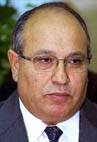
Less than a month after the Canadian Security Intelligence Service (CSIS) was found to have omitted polygraph evidence in an alleged terrorism case, the scandal-prone agency has admitted even worse shortcomings in a second investigation. Specifically, it has acknowledged that it “failed to disclose evidence” in the case of Hassan Almrei, a Syrian immigrant who was arrested in Canada in 2001 on suspicion of belonging to an Islamist-tied forgery group. Almrei was the first terrorism suspect to be arrested under Canada’s security certificate provision, which allows the government to use secret evidence in order to detain and deport foreigners living in Canada and deemed dangerous for national security. Security certificates prevent even the suspects themselves from being exposed to the secret evidence against them. Read more of this post
News you may have missed #0013

  • CIA report on detention, interrogation to be released later today. We were expecting this internal CIA report, on the Agency’s secret detention and interrogation practices under the Bush administration, to come out a fortnight ago, but it was delayed “over debates about how much of it should be censored”. An earlier version of the report was “published” late last year, but was over 90% redacted.  Watch this space for more information.
  • Retired Romanian football star denies being a spy. Gheorghe Popescu, whose international career included playing for British teams, has denied reports (here and here) in Romanian daily Adevarul that he was an informer for Romania’s Securitate, the secret service of communist Romania. () 
  • Ex-CIA chief in Algiers formally charged with sexual abuse. Back in February, intelNews reported on the Agency’s station chief in Algiers, who was unceremoniously recalled to Washington after being accused of drugging and raping two Algerian women at his official residence. He has now been “indicted in Washington on a charge of sexual abuse involving an alleged sexual assault of an unidentified Algerian woman”. He could face a life sentence, if convicted.

Australian espionage convict leaving US for home

By IAN ALLEN | intelNews.org |
An Australian former intelligence officer who was arrested by the FBI for trying to sell classified US defense documents will be allowed to serve the remaining of his prison sentence in Victoria, Australia. Jean-Philippe Wispelaere was an employee of Australia’s Defence Intelligence Organisation, the agency responsible for assessing and relaying intelligence information to Australian government officials. In 1999, he resigned from his job and flew to Bangkok, Thailand, where he contacted embassy officials of a third country (rumored to be Singapore) and offered to sell them over 700 pages of classified US documents. Read more of this post

Most influential CIA lawyer in history “retires” over torture

John Rizzo

John Rizzo

By JOSEPH FITSANAKIS | intelNews.org |
Finally, someone’s paying attention to John A. Rizzo, the CIA Acting General Counsel who is preparing to step down from his post despite being termed “the most influential career lawyer in CIA history”. In a well-researched article for The Los Angeles Times, Greg Miller explains the reasons behind Rizzo’s sudden departure from the Agency. Remember those internal CIA memos the US Justice Department released last April? Among other interesting facts, the memos revealed the names of government lawyers behind the Agency’s secret detention and torture program. Along other, more publicly known names, such as those of “aggressive interrogation” advocates John Yoo and Jay Bybee, several of the memos contained legal advice by Rizzo, who acted as what one CIA official described the Agency’s “legal enabler”. Read more of this post

News you may have missed #0012

  • New book on KGB activities in the United States. Based on archival material, authors John Earl Haynes and Harvey Klehr estimate that from the early 1920s more than 500 Americans, including many Ivy League graduates and Oxford Rhodes Scholars, were recruited to assist Soviet intelligence agencies, particularly in the State Department and America’s first intelligence agency, the OSS (forerunner of the CIA). 
  • South Korean spy agency launches video game. “Spot the Spy” video game is offered online by the National Intelligence Service (NIS) “to promote public awareness about security”. But pro-unification activists complain the game demonizes them. 
  • 2006 spy satellite failure a mystery, says NRO. The secretive US National Reconnaissance Office claims it still doesn’t know what caused the 2006 failure of one of its most expensive spy satellites, despite “an exhaustive formal failure investigation and three different independent review team investigations”. 
  • Memoir of fourth Cambridge spy soon to be unsealed. In early July the British Library will permit public access to the 30,000-word unfinished autobiographical manuscript of Anthony Blunt, Surveyor of Pictures for Queen Elizabeth II, and a member of the Cambridge Five, a group of spies working for the Soviet Union from the 1930s to the early 1950s.

Mossad deputy chief resigns amid internal strife

Meir Dagan

Meir Dagan

By IAN ALLEN | intelNews.org |
It emerged yesterday that the deputy director of the Mossad, Israel’s premier external intelligence agency, has stepped down. The official, known only as “T.”, appears to have resigned in protest over the Israeli government’s decision to extend the Mossad director’s tenure for an unprecedented eighth year. It has also emerged that  “T.” first warned the government two months ago that he would resign if the decision was made to retain Meir Dagan as Mossad director for yet another year. “T’s” resignation marks the fourth resignation of a Mossad deputy chief during Dagan’s directorship. There are rumors that Dagan refuses to leave his post until he agrees to a successor, which according to Israeli daily Ha’aretz, “will come neither from the ranks of the Israel Defense Forces nor Mossad”. Read more of this post

News you may have missed #0011

  • Honduran coup a blow for Latin American leftist alliance. The Honduran coup is seen as a “regional test” for Washington’s post-Bush influence in Latin America, as Venezuelan President Hugo Chavez appears to be losing a political ally with the military ouster of Honduran President Manuel Zelaya. Interestingly, Zelaya took control of foreign-owned oil storage terminals in Honduras in 2007, thus effectively sidelining the traditional control of Honduran oil imports by Exxon Mobil and Chevron. 
  • Bulgaria chief spy’s car raided by thieves. The thieves apparently knew the car belonged to Petko Sertov, director of Bulgaria’s State National Security Agency (DANS), “since they managed to unlock it with a special key”. Note that the car was equipped with specially authorized fake license plates designed to prevent identification of the car’s owner. 
  • FBI refuses to reveal contents of wiretap gag order. The FBI had been ordered by a US federal court to justify the gag order it had placed on the telecommunication service provider (TSP) of “John Doe” in the Doe v. Holder. The FBI has now cooperated by justifying the gag order, but it’s done so in secret, because it maintains that revealing the TSP’s identity would result in various harms.

Breaking news: CIA has no clue about what’s going on in Iran

Jeff Stein

Jeff Stein

By JOSEPH FITSANAKIS | intelNews.org |
Amidst all the furor about CIA meddling in the Iranian anti-government demonstrations, an informed voice of reasoning comes from intelligence veteran and current GQ intelligence and security correspondent Jeff Stein. Stein, who does not rule out attempts by the CIA to promote the demonstrators’ agenda in Tehran, wisely cautions pundits that Iran is currently “nearly impervious to Western intelligence –and Israeli intelligence, too”. Consequently, despite allegations to the contrary, “there can be little confidence that [anyone at the CIA] really knows what’s going on in Iran”, says Stein. Read more of this post

Danish Commission absolves secret services of Cold War violations

Leif Aamand

Leif Aamand

By IAN ALLEN | intelNews.org |
Something is rotten in the state of Denmark. In 1999, the Danish government set up the Police Intelligence Service (PET) Commission to review PET’s practice of keeping files on Danish citizens during the Cold War. After ten years, 4,600 pages and $13 million in public funds, the Commission has announced that PET’s activities during the Cold War largely fell within its mandate and that the organization was “never […] a state [with]in a state that acted according to its own norms”. The Commission concluded this despite discovering that PET systematically violated a September 1968 government decree preventing government departments from keeping files on Danish citizens based on their legal political activities. The Commission’s report reveals that the violation was authorized by a secret memorandum from the Danish Ministry of Justice, which allowed PET to continue its political vetting of Danish citizens. As a result, PET amassed detailed files on approximately 300,000 Danes, targeting mostly “Trotskyists, anarchists and left-wing revolutionary groups”, as well as members of Denmark’s Left Socialist Party. Read more of this post

Former CIA analyst issues critique of Panetta record

Goodman

Goodman

By JOSEPH FITSANAKIS | intelNews.org |
Former CIA analyst Melvin Goodman, currently senior fellow at the Center for International Policy and adjunct professor at Johns Hopkins University, has issued a scathing critique of the CIA leadership record of Leon Panetta. In an article published in The Public Record, Goodman, who supported Panetta during his confirmation hearings, accused the Agency director of letting down “[t]hose of us who […] were hopeful that he would bring a much-needed era of openness, accountability and credibility to an Agency that has lost its moral compass”. Goodman takes issue with New Yorker writer Jane Mayer’s recent article on the CIA under the Obama administration, in which she referred to Panetta’s “great judgment, [reputation for integrity, and his ability to] restore the integrity of the intelligence process”. Instead, the former Agency analyst accuses Panetta of actively working to block the release of further documentary evidence of torture of terrorism detainees by CIA interrogators, and of retaining “all the senior [CIA] officials […] who were the ideological drivers for the creation of secret prisons and the use [of torture]”. Read more of this post

Kremlin dismayed after US retains Kyrgyz air base

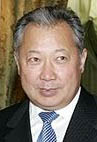
Bakiyev

Bakiyev

By JOSEPH FITSANAKIS | intelNews.org |
The recent decision by the Kyrgyz government to halt the eviction of US forces from the Manas air base has been hailed as a foreign policy success for the US government, and a rare defeat for Russia’s resurgence. Russian foreign ministry officials admitted earlier this week that the Kyrgyz reversal was a setback for Moscow’s plans and hinted that the Kremlin had been deceived by the government of Kyrgyz President Kurmanbek Bakiyev. As intelNews reported last February, Kyrgyzstan had announced that it would expel US forces from Manas, which experts have described as the “primary logistics hub” for the US military’s operations in Afghanistan. The decision of the Kyrgyz government came soon after it received an unprecedented $2.2 billion in Russian loans and aid. But President Bakiyev changed his mind after the US government agreed to “triple its rent for Manas”, and –it appears— cease its criticism of Kyrgyzstan’s rapidly deteriorating human rights record. Read more of this post

News you may have missed #0010

  • Kim Jong Il’s son to head North Korea secret police. Since 1987, Kim Jong Il has been the official leader of the State Security Department of North Korea. However, South Korea’s Dong-a Ilbo reports that Kim Jong Un, Kim Jong Il’s third son, has now been named as the agency’s head. There are rumors in South Korea that the move could signify that a handover of power in Pyongyang may be imminent.
  • First US economic espionage trial winds down. A US court is preparing to sentence Dongfan “Greg” Chung, a Chinese-born engineer accused of passing critical trade secrets on the US space program to China for three decades. 
  • US and Venezuela to restore expelled ambassadors. The move appears to be a thawing gesture toward the new leadership in Washington by Venezuelan President Hugo Chavez. The Latin American leader has toned down his criticism of US foreign policy since Barack Obama took office in January, partly because the US president is popular in Latin America in contrast to his predecessor George W. Bush. 
  • US to send ambassador to Damascus. Washington has confirmed it is to send an ambassador to Damascus, ending a four-year diplomatic absence in Syria. The US envoy in Syria was withdrawn in 2005, following the assassination of Lebanon’s former PM Rafiq Hariri. 
  • Cuban Five spy case an obstacle to US-Cuban thaw, says Havana. The Cuban Five were arrested in 1998 and convicted of spying on anti-Castro exile groups on behalf of Havana. Cuba regards them as political prisoners and has lobbied intensively for their release. Cuban President Raúl Castro has said he would be willing to swap jailed political dissidents for the Five, but the US government has rejected the idea.

News you may have missed #0009

  • Head of Spain’s secret service accused of misuse of public funds. The Spanish Ministry of Defense says it has requested “complete” information on allegations concerning secret service chief Alberto Saiz, who has been accused by the daily newspaper El Mundo of using public money for diving and hunting trips in Mexico, Senegal, Mali and Morocco. Saiz, who heads Spain’s National Intelligence Center, denies the accusations. 
  • No Obama apology for CIA in Latin America. US President Barack Obama declined to apologize on Tuesday for past CIA interventions and coup attempts in Latin America, after talks with Chilean leader Michele Bachelet. Obama was asked by a Chilean journalist whether he would apologize for past CIA operations in the region, like the US-backed coup attempt in Chile in 1973. “I’m interested in going forward, not looking backward”, replied the US President. 
  • Consumers boycott Nokia, Siemens for selling to Iran. As intelNews has been reporting since April, The Wall Street Journal has disclosed that the Iranian government has acquired some of the world’s most sophisticated communications surveillance mechanisms with the help of some of Europe’s leading telecommunications hardware and software manufacturers. The latter appear to have been all too happy to supply Tehran with advanced means to spy on its own people. Now Western consumers are calling for a boycott of Nokia and Siemens, whose Nokia Siemens Networks collaboration is a key supplier of Iran’s extensive surveillance system. 
  • Ex-CIA columnist claims CIA “harrassment”. Former CIA operations manager, Stephen Lee, who now blogs for The Washington Examiner, says he is “being subjected to a campaign of low-level harrassment” by the Agency.

How many spy drones did Russia purchase from Israel?

MK II UAV

MK II UAV

By IAN ALLEN | intelNews.org |
Back in April, intelNews reported on a $53 million agreement between Russia and Israel to provide Moscow with three Israeli-made intelligence-gathering drones. Much was made at the time of the purchase of those unmanned aerial vehicles (UAVs), which was interpreted as an indirect admission by Moscow that its armed forces severely lacked aerial intelligence. The purchase of the three Israel-made drones was reportedly designed to cover immediate needs, while the Russians were working on a plan to start building their own UAVs. It turns out, however, that neither the Israelis nor the Russians were quite upfront in their public announcement of the deal. Last April the two sides said that Russia would receive “three unmanned aircraft” from Israel Aerospace Industries (IAI). In reality, $53 million is much too high a fee to purchase just three UAVs. This puzzled Washington, which does not want to see Russia improve its aerial reconnaissance capabilities. The US Pentagon thus sought –and subsequently received– assurances from Israel that it was not planning to sell Moscow its state-of-the art, super-expensive Heron UAV model. But the Americans were correct to be suspicious of the high cost of the deal. Russian media now reports that the Russians will be receiving, not three, but twelve UAVs for their $53 million. Read more of this post