Japanese police investigate online sale of uranium on Yahoo! auction website

Uranium yellow cakePolice in Japan are investigating how a man was able to offer uranium for sale through an online auction website operated by Yahoo!, a California-based provider of Internet services. Japanese news agencies reported on Friday that the alleged product was displayed packed inside a transparent glass tube on the online auctions site. It was advertised as “Uranium 99.9%”. There was no information about the sale’s starting price on Yahoo! Auctions. The website, Yahoo! Kantan Kessai, is a rare remnant of the California-based company’s worldwide auction service, which terminated its operations in most countries between 2002 and 2008. But smaller segments survive in Taiwan, Japan and Hong Kong.

In November 2017, Japan’s Nuclear Regulation Authority was notified by a user that a product described as “Uranium 99.9%” was on offer on the auction website. After investigating the case, the agency notified the police in January of the following year, which in turn contacted Yahoo! and brought the auction to its attention. The incident was not disclosed to the media at the time, so that the police and intelligence services could investigate whether a network of individuals was involved in the case. Meanwhile, the seller and several individuals who had made bids on the product were arrested and questioned. The substance was confiscated and given to the Japan Atomic Energy Agency for tests. According to local media reports, initial tests conducted by the Japan Atomic Energy Agency showed that the substance is indeed radioactive. Further tests showed that the material is uranium, as advertised, though a question remains as to whether it is depleted uranium or uranium concentrate. It is not known whether the uranium is enriched (thus having an increased percent composition of uranium-235 through isotope separation) or depleted (the less radioactive byproduct of the process of isotope separation).

Reports also suggest that the main suspect in the case told authorities that he acquired the uranium from a seller located outside Japan, who sold it on an international auction website. Reports suggest that, depending on the outcome of ongoing laboratory results, the seller of the substance faces imprisonment of up to a year and a fine of up to ¥1 million (less than $10,000).

Author: Ian Allen | Date: 04 February 2019 | Permalink

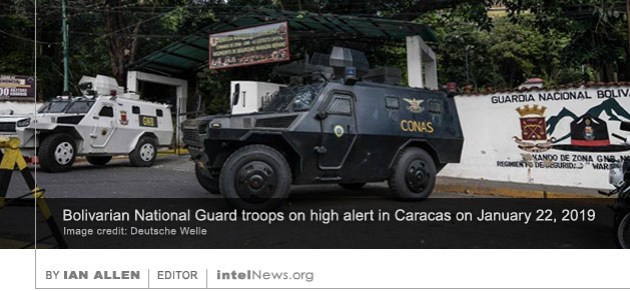
Venezuelan government quells armed uprising by National Guard troops in Caracas

Bolivarian National GuardThe government of Venezuela said on Tuesday that it had quelled an armed uprising by nearly 30 members of the Bolivarian National Guard (GNB) in Caracas, which sparked an all-night riot in the Venezuelan capital. On Tuesday government officials announced the arrest of 27 members of the GNB who allegedly revolted against the government of President Nicolás Maduro. Several videos were posted in pro-opposition social media accounts the night before. They showed young men in military uniforms brandishing weapons and calling on all Venezuelans to rise up against the country’s government. In one video posted on Twitter, a man wearing a GNB uniform said that he and his comrades in arms were speaking out “on behalf of the people of Venezuela”. He then urged viewers to “take to the streets” and bring down the government.

Early on Tuesday, officials in the Venezuelan Ministry of People’s Defense said that the officers had raided a GNB command post in Petare, a neighborhood in northwestern Caracas. They allegedly immobilized the command post guards and stole several weapons. The rebels then made their way to Cotiza, a neighborhood that is adjacent to Petare, and is considered a stronghold of anti-government sentiment. Late on Monday a number of videos emerged on social media that showed young men clashing with riot police in Cotiza. Police forces were seen using tear gas and noise grenades, while some of the rioters built makeshift barricades using cars, dumpsters and other large objects. However, no gunshots were heard coming from either side.

By noon on Tuesday the riot had ended and it appeared that all GNB rebels had been neutralized or gone into hiding. Government sources said that all 27 rebels had been arrested and were alive, but shared no information about the precise circumstances of their capture. It is not known whether they voluntarily surrendered to the police or whether they were somehow overpowered. Defense Ministry officials said that all stolen weapons had been retrieved and described the rebels as people representing “the shadowy interests of the far right”. All 27 GNB rebels were being questioned on Tuesday and Venezuelan officials said that they would be subjected to “the full force of the law”.

Author: Ian Allen | Date: 23 January 2019 | Permalink
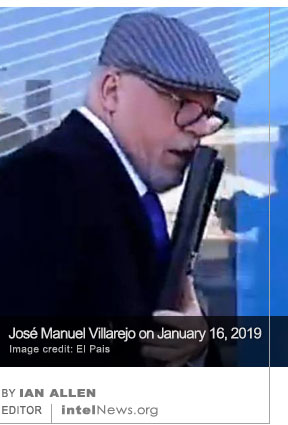
Spanish judge broadens probe into 20-year illegal wiretap network

José Manuel VillarejoA judge in Spain has widened an investigation into an illegal network that spied on scores of politicians, business executives, journalists and judges for over 20 years, in return for payments by wealthy clients. At the center of the case is José Manuel Villarejo, a 67-year-old former police chief, who was arrested in November of 2017 for carrying out illegal wiretaps and remains in pre-trial custody. State prosecutors accuse Villarejo of running an illicit information-collection enterprise that violated the privacy of hundreds of unsuspecting citizens. The latter were targeted by corporate competitors and individual wealthy clients. Many of Villarejo’s targets were eventually blackmailed by the recipients of information collected by the former police chief and his network.
The court heard this week that the accused maintained an extensive network of informants with whom he had worked during his time in the police force. These informants worked for telecommunications service providers, the banking sector, and even at Agencia Tributaria, Spain’s tax revenue service. They are accused of providing Villarejo’s network with information that helped him zero in on his targets, such as confidential tax returns, subscriber records of personal telephone calls, bank account numbers, and asset ownership lists. It is believed that several Spanish politicians were among Villarejo’s clients, as was the Banco Bilbao Vizcaya Argentaria, one of Spain’s largest banks.

On Wednesday, the court heard from five active police officers and an employee of the Agencia Tributaria, who testified about having worked for Villarejo’s network. The six men testified about so-called Operation KITCHEN, which targeted Luis Bárcenas, a senator and party treasurer of Spain’s conservative Partido Popular —known as PP, or the People’s Party. The purpose of Operation KITCHEN was to wiretap Bárcenas’ communications without acquiring a court warrant, said the witnesses. In 2018 Bárcenas was jailed for 33 years for his role in the so-called Gürtel case, the largest corruption scandal in modern Spanish history, which brought down the conservative government of Prime Minister Mariano Rajoy in July of last year. The trial continues.

Author: Ian Allen | Date: 18 January 2019 | Permalink

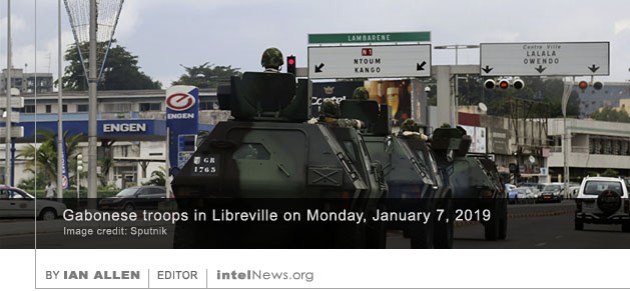
US sent troops to OPEC member Gabon just days before military coup

Libreville, GabonThe United States deployed troops to the Central African nation of Gabon just days before a group of military officers staged tried to take over power in the oil-rich nation on Monday. Situated on the Atlantic coastline of Central Africa, Gabon is a member of the Organization of Petroleum Exporting Countries (OPEC). However, despite producing of 176,000 barrels of oil per day, making it one of Africa’s most significant oil producers, over a third of its 2 million inhabitants live below the official poverty line. The country has been ruled by the Bongo family for over a century with its current President, Ali Bongo Ondimba, having led the country since his father’s death a decade ago. In October of last year, however, Bongo went to Saudi Arabia for medical treatment after suffering a stroke, and has yet to return. In a televised message aired on New Year’s Day, Bongo told the citizens of Gabon that he was recovering and would soon be returning to his duties.
But in the early hours of Monday gun shots were reported in the vicinity of the studios of Radio Télévision Gabonaise (RTG), the country’s state-owned national broadcaster in the capital city, Libreville. A few hours later, regular broadcasting was suspended. A message was transmitted on the national radio station frequency by troops claiming to be members of a group calling itself the Patriotic Movement of the Defense and Security Forces of Gabon. Its leader, a man identifying himself as Lieutenant Kelly Ondo Obiang, said that the armed forces had “doubts” about President Bongo’s “ability to perform the responsibilities of his office”. He also announced the formation of a “Council of National Restoration” that would “ensure the smooth operation of the state and guarantee a transition to democracy”. However, a few hours later a government spokesman told international media that the coup had been defeated and that Lieutenant Obiang was under arrest. Two of his co-conspirators had been killed, said the spokesman.

Interestingly, the US deployed 80 American soldiers to Gabon on January 2, less than a week before the coup unfolded. In a letter sent to Congress on January 4, US President Donald Trump said that the troops would be stationed in Libreville and would carry with them “appropriate combat equipment”. Their purpose, said President Trump, would be to provide security protection for US “citizens, personnel and diplomatic facilities” in Kinshasa, capital of the neighboring Democratic Republic of the Congo (DRC). Security analysts fear that the pending announcement of the delayed election results in the DRC may spark widespread riots in the country of 81 million people. On Monday, a spokesman for the United States Africa Command (AFRICOM) told reporters that there was “no change in the status of our forces in Gabon” and that they would not be involved in the domestic political situation. The US troops were “not currently tasked with securing [US] diplomatic assets [in Gabon]”, added the AFRICOM spokesman. However, AFRICOM said that additional US troops may deploy to Gabon, the DRC or the Republic of the Congo, should the need arise.

It is not known whether the coup plotters were aware of the presence of the 80 US troops in Libreville when they tried to take over power on Monday.

Author: Ian Allen | Date: 08 January 2019 | Permalink

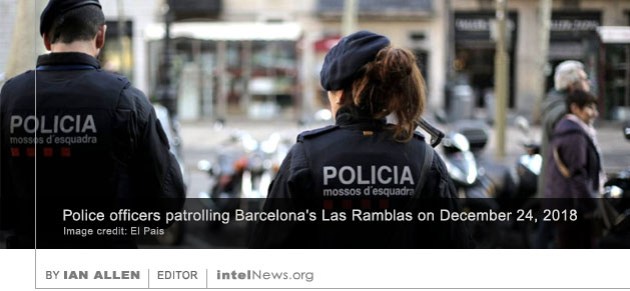
Barcelona on high alert after US State Department terrorism warning

Las Ramblas BarcelonaPolice in Barcelona have intensified security checks in some of the Spanish city’s most recognizable landmarks, following a security warning from the United States Department of State. The surprise warning came in the form of a post on the popular social networking site Twitter on Sunday, December 23. In the tweet, the Department of State advised travelers to “exercise heightened caution around areas of vehicle movement, including buses”. It added that terrorists could “attack with little or no warning, targeting tourist locations, transportation hubs, and other public areas”. It is rare for the Department of State to issue warnings for specific locations, unless the US government is in possession of critical intelligence pointing to the possibility of a terrorist attack.
Hours after the Department of State’s warning, Miquel Buch, Minister of the Interior for Spain’s Catalonia region, told a radio station in Barcelona that local authorities were “engaged in assessing the warning” by the US authorities. Local media reported that increased police presence was visible around bus, minibus, train and metro stations throughout the Catalonian capital. Heavily armed police presence was also notable in Barcelona’s most popular tourist landmarks, including the Sagrada Familia Cathedral, the Gothic Quarter, and the mile-long Las Ramblas pedestrian Boulevard at the city’s center. There was no information about the precise nature of the US warning, but there were reports in Catalonian media on Tuesday that the alert notice involved the possibility of a vehicular attack by Islamists during the Christmas holiday season.

In August of 2017, Younes Abouyaaqoub, a 22-year-old Moroccan-born Islamist drove a van into large crowds of tourists at Las Ramblas, killing 14 and injuring nearly 150 people. Abouyaaqoub’s attack was followed by another assault by five men in Cambrils, a small seaside town south of Barcelona, who drove a car into a crowd of pedestrians, killing one and injuring six more. All six men were members of the Islamic State. They were shot and killed by police and security forces.

Author: Ian Allen | Date: 26 December 2018 | Permalink

China seeks clarification over alleged spy equipment ordered by US embassies

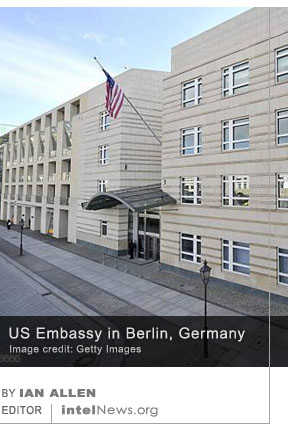
US embassy Berlin GermanyThe Chinese government says it is seeking explanations from Washington after a leaked procurement database showed that American embassies purchased data forensics software and various tactical spy equipment. The purported database was published on December 21 by the international anti-secrecy website WikiLeaks, founded by Julian Assange, who is accused by some in the United States of having violated its espionage laws. WikiLeaks has dubbed the database the “US Embassy Shopping List” and says that it contains over 16,000 procurement requests from officials at American embassies located all over the world.
Most procurement requests included in the WikiLeaks database appear to be for commonplace items or services, such as passenger transportation, heating oil, outdoor freezers, or garage gates maintenance and repair. But there are some requests for so-called “tactical spy equipment”, such as those ordered by the US embassies in Colombia and El Salvador. These appear to be for miniature surveillance cameras hidden into everyday objects, such as buttons, baseball caps, watches and ties. Nearly 100 such items were requested for procurement by the US embassy in San Salvador. Several embassies ordered hardware and software for forensic examination of mobile phones. For example, the US embassy in Yerevan, Armenia, ordered a “Cell Phone Analyzer”, which allows users to access data from cell phones while bypassing security measures such as passwords. Similar devices were ordered by the US embassies in Berlin (pictured), and Kiev, capital of Ukraine, where fears were expressed on Monday about a possible military action by Russian troops during the holidays.

On Monday, China’s Ministry of Foreign Affairs said it was seeking “clarifications” from Washington about the documents made public by WikiLeaks. Speaking to reporters in Beijing, Ministry spokesman Hua Chunying said that the US owed “the rest of the world an explanation […] for what has recently been revealed by WikiLeaks”. Chunying also spoke about prior WikiLeaks revelations, including the so-called “PRISM-gate” in 2013, which revealed extensive intelligence-collection activities by the US on numerous countries, including some if its allies, such as Germany and France. She went on to ask, “why do American embassies buy so much secret surveillance equipment?”. Authorities in Washington had made no comment on the WikiLeaks revelation as of Tuesday morning.

Author: Ian Allen | Date: 25 December 2018 | Permalink

Cyber spies accessed thousands of European Union diplomatic cables

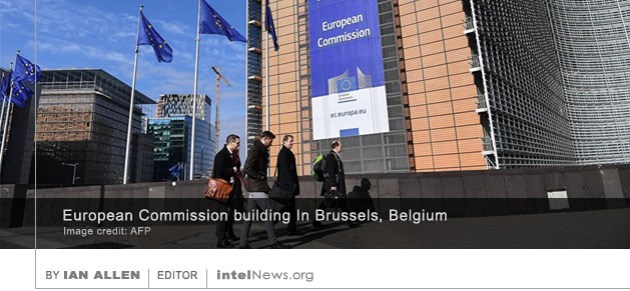
European Commission buildingA group of hackers, allegedly working for the Chinese military, accessed thousands of classified diplomatic cables from the European Union during a protracted cyber-espionage operation, a report has revealed. Over 100 organizations are believed to have been targeted in the multi-year cyber-espionage campaign, including the United Nations, international labor groups, as well as government ministries from dozens of countries. The operation was revealed on Tuesday by Area 1, a cyber-security company founded by former officials of the United States National Security Agency, and reported by The New York Times.
The compromised cables come primarily from the European Union’s COREU communication network, a Telex-based network that uses teleprinters to exchange text-based messages. The European Union uses the COREU network to transmit information that is classified “limited” or “restricted” between officials representing the executive governments of the European Union’s member states, members of the European Commission, foreign-ministry officials, and other approved parties. Top-secret information (“tres secret” in European Union parlance) is typically not shared on the COREU network. Consequently, the hacked cables contain mostly low-level information. That does not mean, however, that their access by at least one adversary power does not represent a serious security breach. Area 1 said that its forensic examination of the method used by the hackers reveals a set of cyber-espionage techniques that are closely associated with the Chinese People’s Liberation Army (PLA). These clues, in association with the PLA’s long history of attacking Western diplomatic targets, point to Beijing as a very likely culprit behind the attacks, according to Area 1.

The American cyber-security firm said it was able to access the compromised European Union cables and made over 1,100 of them available to The New York Times. The paper reported on Tuesday that the cables reflect increasing tension between Brussels and Washington, as European Union diplomats attempt to get a handle on the unpredictability of United States President Donald Trump. A series of diplomatic cables discusses the whether the European Union should bypass the White House and work directly with the Republican-controlled US Congress, which is viewed as more reliable and responsible. Another set of diplomatic exchanges describes the frustration of the Beijing’s leadership with Trump, which Chinese President Xi Jinping is said to have described to European Union officials as “a bully [engaged in a] no-rules freestyle boxing match”.

The Times said that it notified the European Union of the breach of its diplomatic cables and was told that officials were “aware of allegations regarding a potential leak of sensitive information and [were] actively investigating the issue”. The paper also contacted the White House National Security Council but did not get a response.

Author: Ian Allen | Date: 20 December 2018 | Permalink

Wave of bomb threats prompts hundreds of evacuations in four countries

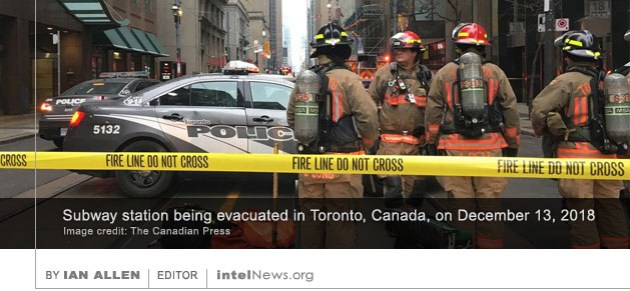
Toronto subway evacuationAn unprecedented “flood of bomb threats” prompted hundreds of evacuations and closures of private buildings, transport hubs and offices in four countries on Thursday, causing confusion and in some cases panic. The threats —which numbered in the hundreds— were issued throughout the day Thursday against businesses, schools, hospitals and media companies in the United States, Canada, New Zealand and the United Kingdom. It is the first time in history that such a large wave of bomb threats was issued against so many targets internationally.
Police agencies in the United States and Canada said that most of the threats were emailed, but some were phoned in by unknown individuals. They warned that devices containing explosive compounds such as tetryl or trinitrotoluene would be detonated unless funds were deposited into an international account using the virtual currency bitcoin. The messages also warned that the alleged devices would be detonated if “any police activity or unusual behavior” were detected. A deadline of one business day was given to deposit the funds. Throughout the day, police agencies across three continents issued notices cautioning people to remain aware of their surroundings and report suspicious messages or behavior. It was eventually determined that virtually all bomb threats were not credible.

However, it was the sheer number and geographical extent of the threats that shocked law enforcement agencies across four countries. In the United States, threats were reported in cities such as Boston, Philadelphia, San Francisco and Oklahoma City, where over dozens of specific addresses were targeted. Nearly 30 schools were placed on lockout in the state of Colorado, while numerous buildings were evacuated in Los Angeles, Chicago, Washington, Cincinnati and Seattle. Smaller cities were also affected, including South Bend, Indiana, Grand Rapids, Iowa, Charlotte, North Carolina, Norfolk, Virginia, and Park City, Utah. In Canada dozens of bomb threats were issued in Montreal, Ottawa, Winnipeg, Calgary, and Toronto, where five of the city’s subway stations were shut down for several hours. Media reports late on Thursday said it was unclear how many —if any— of those targeted paid the bitcoin ransoms demanded by the hoaxers.

Author: Ian Allen | Date: 14 December 2018 | Permalink

Israeli team spotted in Gaza was installing advanced surveillance system, says Hamas

IDF Gaza Strip HamasAn undercover Israeli team that clashed with Hamas in Gaza on November 11 —an incident that brought the region to the brink of war— was installing an advanced surveillance system, according to Palestinian sources. Local media reports said that the Israeli undercover team —believed to be members of the Israel Defense Forces (IDF)— killed seven members of Izz ad-Din al-Qassam Brigades, the military arm of Hamas’ armed wing. The IDF troops eventually escaped into Israel with the help of air support, having lost one team member. The incident was followed by a barrage of nearly 500 rockets and mortars fired from the Gaza Strip into Israel. The Israelis responded by firing more than 160 missiles that fell throughout the Palestinian enclave. Hostilities were halted on November 13, when Hamas declared a unilateral ceasefire brokered by Egypt. The incident prompted the resignation of Israel’s Defense Minister, Avigdor Liberman, and may bring about early parliamentary elections in the Jewish state.

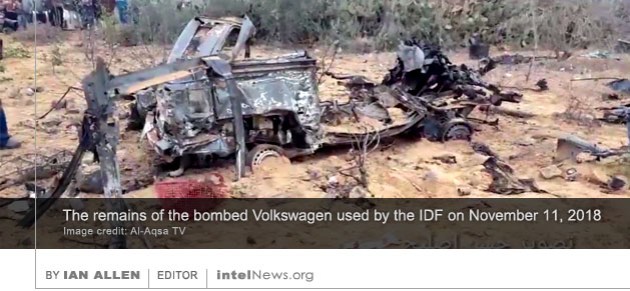
In the ensuing political crisis, little has been said about the reason for the Israeli undercover incursion into Gaza. The IDF has refused to comment on the team’s mission, admitting only that its troops “operated […] in the Gaza Strip”. It is believed that the members of the undercover team were dressed in civilian clothes and that at least two of them were disguised as women. After entering Gaza in a civilian Volkswagen vehicle, they drove to Khan Yunis, a city in the south of the Strip, near the Egyptian border. It was there that they were discovered by the al-Qassam Brigades, who stopped them at a checkpoint, asking for identification. The Israeli team killed at least one Palestinian at the checkpoint by shooting him with a silenced gun. Following a high-speed car chase, they left via helicopter after their pursuers were killed by Israeli tank and aircraft fire. Their abandoned Volkswagen car was then blown up by an Israeli fighter jet.

Speaking on Saturday at a media conference held in Gaza City, and aired live on the Hamas-affiliated Al-Aqsa TV, Hamas’ Gaza City Deputy Chief Khalil al-Hayya claimed that the Israeli undercover incursion was significant. Had it been successful, said al-Hayya, the IDF would have “achieved a major security breakthrough” by installing a new, state-of-the-art surveillance system. Had it been able to “install the surveillance equipment”, the undercover team would have given Israel the ability “to kill, hack and abduct”, and it would have “possibly made it easy for [Israel] to discover tunnels and other” activities pursued by Hamas, according to the Palestinian side. Video footage aired by Al-Aqsa TV on Sunday showed what the television station said was remnants of “surveillance devices” left behind by the IDF undercover team. Al-Hayya finished his statement on Saturday with a warning, saying that “penetrating the security of the Gaza Strip will not be an easy task”.

Author: Ian Allen | Date: 19 November 2018 | Permalink

Australian police offer reward for information about murder of ex-KGB colonel

Gennadi BernovskiPolice in the Australian state of Queensland have offered a $250,000 (US $182,000) reward for information that can help solve the murder of a former Soviet KGB colonel 18 years ago. The victim, Gennadi Bernovski, worked in the domestic wing of the Soviet KGB, until his retirement, which coincided with the dissolution of the USSR. In 1996, he moved to Australia with his family and bought a house in Benowa Waters, a luxury suburb of Gold Coast, a city located south of Brisbane on the country’s east coast. But on the evening of July 24, 2000, Bernovski was shot to death outside his home by what witnesses said were two men in combat diver suits. They reportedly opened fire on Bernovski with a semi-automatic weapon, wounding him fatally in the stomach. He was dead within a few minutes. It is believed that the assailants sailed to Bernovski’s waterfront property on an inflatable boat, or swam there, having first sailed to the nearby seaside.
Since Bernovski’s murder, Australian authorities have refused to answer questions about how the former KGB colonel came to settle in the country, and whether he was given political asylum by the Australian government. They have also refused to answer questions relating to Bernovski’s citizenship at the time of his murder. Some reports have pointed out that he was an Australian citizen when he was murdered. Furthermore, little is known about his financial status or sources of income, though it is believed that he had access to “multiple bank accounts in Russia and Australia”. On Thursday, spokespersons for the Australian Federal Police and the Queensland Police Department refused to provide information on the investigators’ current working hypothesis about who might have been responsible for Bernovski’s murder. They were also asked whether some family members of the late former KGB officer continue to reside in Australia under assumed names, but declined to comment.

A spokeswoman for the Federal Department of the Australian Attorney-General said that the new reward offer was aimed at “cracking a cold case”, which is a routine police practice for unsolved crimes. She did not comment, however, on media speculation that police sought to interview another Russian national, Oleg Kouzmine, who was living in Gold Coast during the time of Bernovski’s murder. According to reports, Kouzmine is now living in another country, which means that Australian authorities would need to seek the cooperation of a foreign law enforcement agency in order to gain access to him. However, the Attorney-General Department spokeswoman told reporters on Thursday that, “as a matter of longstanding practice, the Australian government does not confirm whether it has made a request for assistance to a foreign country in a criminal matter”.

Author: Ian Allen | Date: 16 November 2018 | Permalink

ISIS fighters might declare new caliphate in Philippines, experts warn

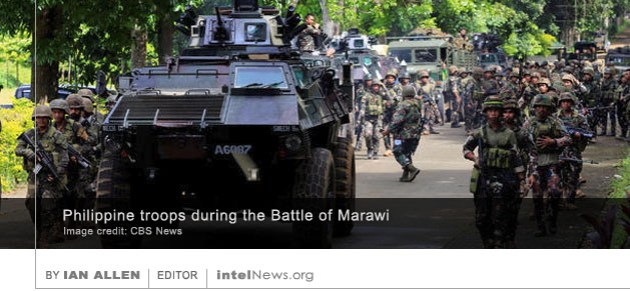
Battle of MarawiThe number of foreign Islamic State fighters entering the Philippines is growing, and the momentum they generate among local Islamist groups may prompt them to declare a new caliphate, according to experts. British newspaper The Guardian cited “a high-ranking intelligence officer” who said that between 40 and 100 foreign fighters have joined the Islamic State in the southern Philippines in the past 12 months. Most of them come from neighboring countries, such as Indonesia, Malaysia and Singapore. But there are also fighters from Pakistan, Bangladesh and several Middle Eastern countries, said the intelligence officer. One of them, a Moroccan militant, carried out a suicide bombing in Lamitan City, located on Basilan Island south of Mindanao, in July of this year, killing 11 other people. There are fears among experts that the Islamic State might declare a new caliphate there soon, as local support for militant Islamism is growing.

Such a declaration has been made before. Following the rise of the Islamic State of Iraq and Syria (ISIS, later renamed Islamic State) in 2014 in the Middle East, several Islamist groups in the Philippines declared allegiance to the Islamic State’s emir, Abu Bakr al-Baghdadi. They included fighters from Abu Sayyaf, Ansar al-Khilafah, the Maute Group, the Bangsamoro Islamic Freedom Fighters, and other smaller factions active in the southern Philippines’ island of Mindanao. In May 2017, these fighters launched a joint attack on Marawi, the capital city of Mindanao’s Lanao del Sur province. Within 48 hours, they had occupied the entire city of 200,000 people and declared it the capital of the “East Asia Wilayah”, an overseas province of the Islamic State. Among them were an estimated 80 foreign fighters from dozens of countries. Upon the declaration of the caliphate, the insurgents issued several calls on social media for foreign Islamists to join them. Many dozens from the Muslim world and from Western Europe attempted to do so, according to Philippines police.

The violent takeover of Marawi prompted a counter-attack by the Philippine Armed Forces, which launched a large-scale urban-warfare operation on May 23, 2017. Hostilities ended on October 17, 2017, when the Philippine government declared victory against the Islamic State. The military operation became known as “the battle of Marawi” and is believed to have been the longest urban battle in the post-World War II history of the Philippines. More than 1,200 people died in the five-month battle, most of them civilians. Hundreds of thousands remain displaced to this day as a result of the fighting.

According to The Guardian, intelligence gathered from local and foreign Islamist fighters in the country suggests that support for the Islamic State among local Muslims is growing, as a result of three factors: first, the arrival of dozens of battle-hardened foreign fighters who urge the locals to fight. Second, the disaffection of the local Muslim population as a result of the harsh economic conditions in the Philippines’ depressed southern regions. Third, widespread dissatisfaction with the increasing levels of corruption among government officials in the southern provinces. One expert, Zachary Abuza, south-east Asia analyst at the United States National War College, told The Guardian that southern Philippines is an important sanctuary for the Islamic State, because “there is enough ungoverned or very poorly governed space” there. In the next few months, another declaration of a caliphate may be issued, he added.

Author: Ian Allen | Date: 14 November 2018 | Permalink

Islamic State’s online footprint declines drastically, experts say

Islamic State - IAThe online arm of the Islamic State, which was once one of the organization’s most noticeable trademarks, has declined markedly in 2018, according to expert observers in the United States and elsewhere. This is especially applicable to the militant group’s online propaganda and recruitment campaign, which appears to have effectively ceased, say experts.
According to The Washington Times newspaper, most information warfare experts at the United States Department of Defense believe that very little is left of the Islamic State’s once sizeable Web and social-media presence. The paper said that, according to the US Pentagon, the total media footprint of the group —which is also known as the Islamic State of Iraq and Syria (ISIS)— has diminished by as much as 83 percent since its peak in 2015. Online activity measured by the US Pentagon includes posts on social media by Islamic State members and commanders, as well as professionally produced pro-ISIS images and videos aired on YouTube and other image- and video-based online platforms. It also includes material from the Islamic State’s press bureau, the Amaq News Agency, which in previous years produced hundreds of pro-ISIS videos.

Experts told The Washington Times that the Islamic State’s online footprint has shrunk as a result of the group’s loss of its territory. The loss of ISIS’ physical bases in the Middle East has resulted in the death of many of the group’s online propagandists. Those who survived are currently hiding or fleeing from the authorities, fearing arrest or death. This has “crushed [the militant Sunni group’s] ability to mount a coordinated Web-based strategy”, said The Washington Times. The military attacks against ISIS continue to take place alongside an “aggressive counterstrategy in cyberspace”, said the paper, which is being led by the US Pentagon and its allies. This has included the successful targeting of thousands of social media accounts belonging to ISIS members and supporters, as well as complex hacking operations. The US Pentagon also coordinates the delivery of online content that counters the Islamic State’s narrative and messages.

But some experts warned the paper that the Islamic State continues to recruit members online and that the group’s online recruitment efforts are not completely a thing of the past. In fact, new ISIS-sponsored content continues to appear online regularly, they said. In September of this year alone, the Islamic State released 12 different videos, mostly aimed at recruiting new members. Additionally, the militant group continues to use Facebook, YouTube, and other popular online social media platforms, experts warned.

Author: Ian Allen | Date: 26 October 2018 | Permalink

Hardline military official to take command of Pakistan’s powerful spy agency

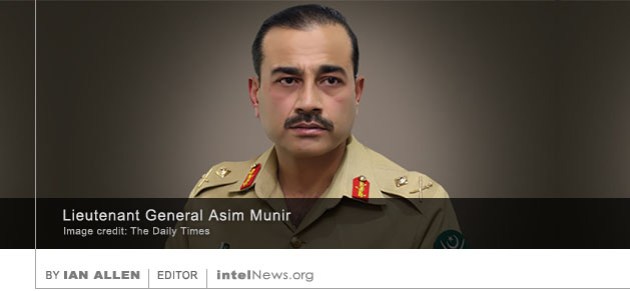
Lieutenant General Asim MunirThe hardline former director of Pakistan’s military intelligence agency is preparing to take the helm of the country’s powerful spy agency, the Inter-Services Intelligence directorate (ISI). Lieutenant General Asim Munir, who has spent more than two decades as a career military officer, has been officially appointed as director-general of ISI. In one of his first notable assignments, Munir served as a military attaché in Pakistan’s embassy in Saudi Arabia. After being promoted to a two-star general, he was appointed commander of Force Command Northern Areas in Gilgit-Baltistan, Pakistan’s northernmost region. The area borders Jammu and Kashmir, an autonomous Indian-administered region, which the Pakistanis claim belongs to them. Gilgit-Baltistan is also a strategic geopolitical corridor that connects Pakistan with one of its major regional allies, China.
In late 2016, after concluding his service in Gilgit-Baltistan, Munir was appointed by Chief of the Pakistan Army Staff General Qamar Javed Bajwa to serve as director-general of Military Intelligence, the spy wing of the Pakistan Army. In September of this year, Munir was promoted to lieutenant general, a move that prompted rumors that he would soon become head of ISI. According to The Asia Times, which published a summary analysis of Munir’s career, his recent promotion confirmed that he was “the army chief [General Bajwa]’s guy” and that he was favored to lead the ISI. Technically it is Pakistan’s prime minister who appoints the head of ISI. But in reality the chief of the Army is the one who selects the spy agency’s director. The past four directors of the ISI have all been handpicked by Pakistan’s military leadership.

Munir’s appointment as head of Pakistan’s most powerful spy agency was due to his experience in working closely with Pakistan’s most important strategic partners, China and Saudi Arabia, said The Asia Times. The career military officer is known within army ranks as a nationalist hardliner who views the army as a central guarantor of political stability in Pakistan. He is also a practicing Muslim and has sought to strengthen the ties between Islam and the Pakistani armed forces. According to The Asia Times, Munir is expected to deepen the ISI’s involvement in Pakistan’s domestic political affairs. This is something that concerns pro-democracy and other opposition activists in the country, who have been alarmed by the recent rise to power of /Imran Khan, a former cricket player and Pakistan’s newly elected prime minister. Munir will be formally sworn in his new position on October 25, when the current director-general of ISI, Lieutenant General Naveed Mukhtar, is expected to announce his retirement.

Author: Ian Allen | Date: 19 October 2018 | Permalink

Britain sees Russian government hackers behind Islamic State cyber group

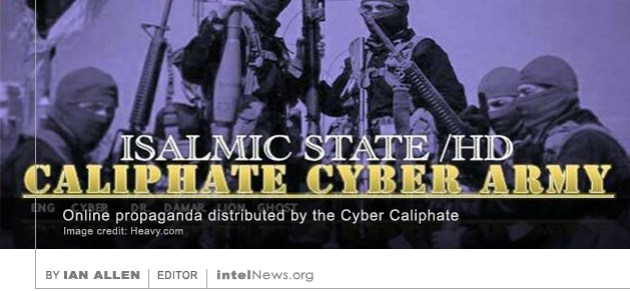
Cyber CaliphateA new report by the British government alleges that the so-called ‘Cyber Caliphate’, the online hacker wing of the Islamic State, is one of several supposedly non-state groups that are in fact operated by the Russian state. The group calling itself Cyber Caliphate first appeared in early 2014, purporting to operate as the online wing of the Islamic State of Iraq and Syria (ISIS), which was later renamed Islamic State. Today the Cyber Caliphate boasts a virtual army of hackers from dozens of countries, who are ostensibly operating as the online arm of the Islamic State. Their known activities include a strong and often concentrated social media presence, as well as computer hacking, primarily in the form of cyber espionage and cyber sabotage.

But an increasing number of reports, primarily by Western government agencies, have claimed in recent years that the Cyber Caliphate is in fact part of a Russian state-sponsored operation, ingeniously conceived to permit Moscow to hack Western targets without retaliation. On Wednesday, a new report by Britain’s National Cyber Security Centre (NCSC) described the Cyber Caliphate and other similar hacker groups as “flags of convenience” for the Kremlin. The report was authored by the NCSC in association with several British and European intelligence agencies. American spy agencies, including the National Security Agency and the Federal Bureau of Investigation, also helped compile the report, according to the NCSC. The report names several hacker groups that have been implicated in high-profile attacks in recent years, including Sofacy, Pawnstorm, Sednit, Cyber Berkut, Voodoo Bear, BlackEnergy Actors, Strontium, Tsar Team, and Sandworm. Each of these, claims the NCSC report, is “an alias of the Main Directorate of the General Staff of Russia’s Armed Forces”, more commonly known as the GRU. The report concludes that Cyber Caliphate is the same hacker group as APT 28, Fancy Bear, and Pawn Storm, three cyber espionage outfits that are believed to be online arms of the GRU.

The NCSC report echoes the conclusion of a German government report that was leaked to the media in June of 2016, which argued that the Cyber Caliphate was a fictitious front group created by Russia. In 2015, a security report by the US State Department concluded that despite the Cyber Caliphate’s proclamations of connections to the Islamic State, there were “no indications —technical or otherwise— that the groups are tied”. In a statement issued alongside the NCSC report on Wednesday, Britain’s Secretary of State for Foreign and Commonwealth Affairs, Jeremy Hunt, described the GRU as Moscow’s “chosen clandestine weapon in pursuing its geopolitical goals”. The Russian government has denied these allegations.

Author: Ian Allen | Date: 05 October 2018 | Permalink

Envelopes containing deadly ricin poison intercepted at US Pentagon

PentagonAn investigation was opened in the United States on Tuesday, after two envelopes containing the deadly poison ricin were intercepted at the Pentagon. The envelopes were reportedly intercepted at a mail screening facility located in the vicinity of the headquarters of the US Department of Defense in Washington, DC. One of the envelopes was addressed to US Secretary of Defense James Mattis, while the other was addressed to Admiral John Richardson, who serves as Chief of Naval Operations. According to US news media, the envelopes were found to contain a powder-like substance. Upon discovery, the envelopes were secured by members of the Pentagon Force Protection Agency, the US Department of Defense’s law enforcement body that is responsible for safeguarding the Pentagon complex.

On Tuesday, the Federal Bureau of Investigation announced that the substance inside the envelopes had been examined by its technicians and had tested positive for the deadly poison ricin. Ricin is a naturally occurring toxin found inside the seeds of castor oil plants, known commonly as castor beans. Though mostly harmless in its natural state, the toxin can be processed and effectively weaponized in the form of pellets, liquid acid, mist or powder. If it finds its way into the human body, through ingestion, inhalation or injection, it can kill in fewer than 48 hours. Death usually occurs as a result of organ failure and internal bleeding, which lead to a collapse of the circulatory system. There is no known antidote for ricin poisoning.

On Tuesday afternoon, parts of the Republican Senator Ted Cruz’s campaign office in Houston, Texas, were shut down, after two staff members came in contact with what was described as a “white powdery substance” inside an envelope. The staff members were rushed to the hospital, but tests carried out later that day showed that the substance was non-toxic.

The FBI said on Tuesday that its technicians would carry out further tests on the substances found at the Pentagon and at Senator Cruz’s office, in order to confirm the initial findings. It also said that there would be no further announcements until the tests are completed. Meanwhile, the Pentagon’s mail screening facility remains under quarantine.

Author: Ian Allen | Date: 03 October 2018 | Permalink