Australia concerned about Chinese firm’s involvement in undersea cable project
August 21, 2017 5 Comments
 Australia has expressed concern about a plan by a Chinese telecommunications company to provide high-speed Internet to the Solomon Islands, a small Pacific island nation with which Australia shares Internet resources. The company, Huawei Technologies, a private Chinese venture, is one of the world’s leading telecommunications hardware manufacturers. In recent years, however, it has come under scrutiny by Western intelligence agencies, who view it as being too close to the Communist Party of China.
One of Huawei’s most recent large-scale projects involves the Solomon Islands, a former British overseas territory that became independent in 1978 and is today a sovereign nation. The Pacific country consist of a complex of nearly 1,000 islands of different sizes, scattered over a distance of 11,000 square miles. It lies northeast of Australia and directly east of Papua New Guinea. In 2014, the government of the Solomon Islands began an ambitious project to connect its Internet servers to those of Australia via a 2,700-mile undersea fiber optic cable. The ultimate goal of the project is to provide Solomon Islands inhabitants with reliable high-speed Internet. The project was approved by Canberra (Australian government) and Sydney (Australian private sector) and given the green light by the Asian Development Bank, which promised to fund it. But in 2016 the Solomon Islands government suddenly named Huawei Marine as the project’s main contractor. Huawei Marine, a subsidiary of Huawei Technologies, is a joint venture between the Chinese firm and Global Marine Systems, a British-headquartered company that installs undersea telecommunications cables.
The news was greeted with concern in Canberra. The Australian intelligence community has previously warned that Huawei operates as an arm of the Chinese spy services. Intelligence agencies in the United Kingdom and the United States have issued similar warnings. In 2011, a report by a research unit of the US Office of the Director of National Intelligence concluded that Huawei Technologies relied on a series of formal and informal contacts with the Chinese People’s Liberation Army and the Ministry of State Security. But a subsequent 18-month review commissioned by the White House found no evidence that Huawei spied for the Chinese government.
Canberra is concerned that, by constructing the Solomon Islands undersea cable, Huawei would be “plugging into Australia’s telecommunications infrastructure backbone”, something that, according to some intelligence officials, “presents a fundamental security issue”. To further-complicate things, opposition officials in the Solomon Islands allege that the country’s government contracted the services of Huawei after the Chinese company promised to make a multi-million dollar donation to the ruling political party. Last June, the director of the Australian Secret Intelligence Service (ASIS), Nick Warner, visited the Solomon Islands and tried to convince the country’s Prime Minister, Manasseh Sogavare, to drop Huawei from the project. The topic was also discussed in a meeting between Mr. Sogavare and his Australian counterpart, Malcolm Turnbull, in Canberra last week. Following the meeting, the Solomon Islands leader said that his government would “continue to have discussions with the Australian government to see how we can solve that […] security issue”.
► Author: Ian Allen | Date: 21 August 2017 | Permalink
 Russian intelligence services say they have foiled a large-scale bomb plot, after raiding an explosives laboratory belonging to the Islamic State and arresting four suspects. The four men were allegedly planning to target the Moscow Metro transit system and a busy shopping center in the Russian capital. In a statement released to the media this morning, the Russian Federal Security Service (FSB) did not specify the intended targets of the plotters. But it said it had arrested four people during an early morning raid at an explosives laboratory located in the Moscow suburbs. The FSB said that its officers
 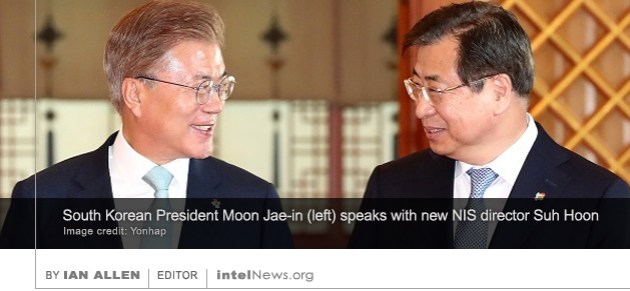 An internal investigation has found that the intelligence agency of South Korea tried to steer the result of the 2012 presidential election in favor of the conservative candidate, and placed liberal politicians under surveillance in the run-up to the election. South Korea’s intelligence agency, the National Intelligence Service (NIS) has fallen into disrepute in recent years, after it was found to have secretly sided with conservative political candidates for public office.
 The decision by the White House to terminate American support for rebels in war-torn Syria could backfire by causing the suddenly unemployed fighters to join jihadist organizations, according to experts. The United States’ support for the rebels began in secret in early 2013, after the then US President, Barack Obama, instructed the Central Intelligence Agency to provide covert support to fighters in Syria. The CIA then joined forces with spy agencies from Britain, France, Saudi Arabia and the United Arab Emirates, to assist fighters affiliated with the Free Syrian Army. At that time, Washington saw the Free Syrian Army and forces affiliated with it as ideologically moderate. It also agreed with the group’s main aim, which was to topple the regime of Syrian President Bashar al-Assad.
 Nearly half a billion of American taxpayers’ funds were wasted by contractors hired by the United States government to train Afghan intelligence personnel, according to a scathing report by a Congressional body. The funds were spent between 2010 and 2013 by the US Department of Defense, in order to train several thousand members and a few dozen aspiring trainees of the Afghanistan National Defense and Security Forces (ANDSF). Two companies, Legacy Afghanistan R&D and Afghanistan Source Operations Management, oversaw the training program. It was primarily executed by a contractor, Imperatis Corporation, and a subcontractor, New Century Consulting, at a total cost of $457 million to the US taxpayer.
 A cyber espionage group that has alarmed security researchers by its careful targeting of government agencies has links to the Iranian state, according to a new report. The existence of the group calling itself CopyKittens was first confirmed publicly in November of 2015. Since that time, forensic analyses of cyber attacks against various targets have indicated that the group has been active since at least early 2013. During that time, CopyKittens has carefully targeted agencies or officials working for Jordan, Saudi Arabia, Turkey, Israel, the United States, and Germany, among other countries. It has also targeted specific offices and officials working for the United Nations.
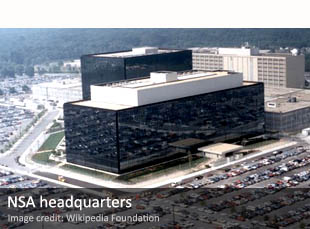 The director of the United States National Security Agency appears to have backed away from a proposal to set up a joint American-Russian cyber security working group, with the aim of defending both countries from hackers. Earlier in July, US President Donald Trump said he was considering the establishment of what he described as “an impenetrable cyber security unit” that would be a joint project between the United States and Russia. The unit would have the task of defending both countries from cyber attacks aimed at hacking their election systems and other vital state functions. The US president said he had discussed the idea with his Russian counterpart, President Vladimir Putin, during the G20 summit in German city of Hamburg. Last week, a Russian official confirmed that Moscow and Washington were considering the creation of a working group that would examine the creation of a joint cyber defense force.
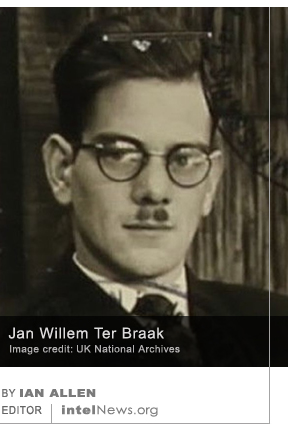 The unmarked grave of a Dutch-born Nazi spy, who killed himself after spending several months working undercover in wartime Britain, will be marked with a headstone, 76 years after his death by suicide. Born in 1914 in The Hague, Holland, Englebertus Fukken joined the National Socialist Movement in the Netherlands, the Dutch affiliate of the National Socialist German Workers’ Party led by Adolf Hitler, in 1933. In 1940, shortly after the German invasion of Holland, Fukken, who had been trained as a journalist, was recruited by the Abwehr, Nazi Germany’s military intelligence. Abwehr’s leadership decided to include Fukken in the ranks of undercover agents sent to Britain in preparation for Operation SEA LION, Germany’s plan to invade Britain.
 A British court has convicted a lone-wolf female dissident Irish republican, who plotted attacks against police officers after using Facebook to lure two men into joining a fictitious militant organization. Her two male accomplices took their own lives in recent months. The rare case centers on Christine Connor, a 31-year-old resident of Northern Ireland and self-described dissident republican.
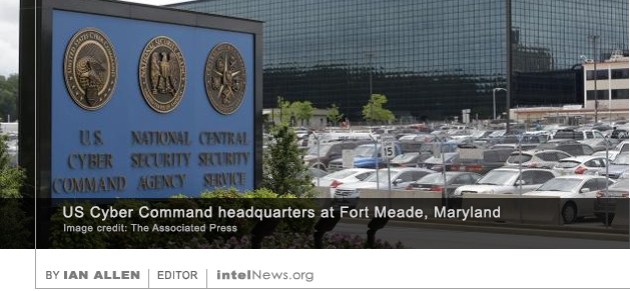 The global reach of the Islamic State through the use of the internet remains “largely intact” despite relentless efforts by some of America’s most advanced cyber warfare experts to neutralize the group’s online presence. It is now over a year since the United States Department of Defense announced that it had launched a cyber war against the Islamic State —the militant Sunni Muslim group that today controls large parts of Syria and Iraq.
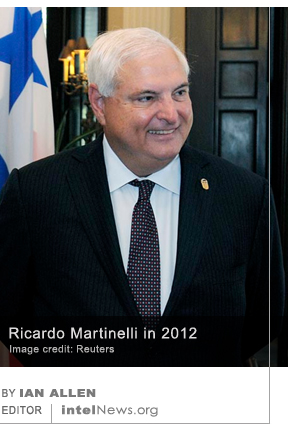 Police in the United States have arrested Panama’s former president Ricardo Martinelli, who is wanted in the Central American country on charges of using state resources to spy on his political opponents and business rivals. The center-right US-educated businessman won the 2009 presidential election in the country with a landslide, receiving over 60 percent of the national vote. His election prompted positive comments from Washington, because it marked a rare ascent to power of a conservative Latin American leader in a sea of socialist heads of state. But the euphoria did not last long. In 2014, Martinelli was succeeded in the presidency by his Vice President, Juan Carlos Varela. Varela promptly launched nearly 200 criminal investigations against his former political partner on issues ranging from embezzlement of state funds to political espionage.
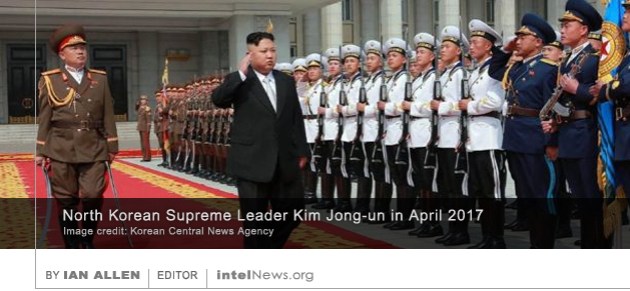 The United States Central Intelligence Agency has announced the establishment of a new center focusing on North Korea, shortly after Pyongyang accused Washington of plotting to assassinate its supreme leader. Last week, the regime’s Vice Minister of Foreign Affairs, Han Song Ryol, said the CIA tried to kill North Korean Supreme Leader Kim Jong-un. He was speaking during a meeting with foreign diplomats in the North Korean capital, where he
 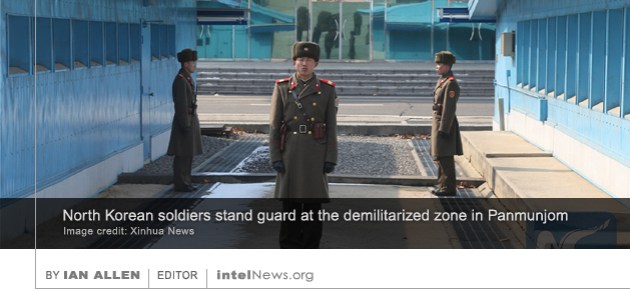 The director of the United States Central Intelligence Agency made an unannounced visit to South Korea over the weekend, to discuss the rising tensions in the Korean Peninsula with his South Korean counterpart and other senior officials. A spokesperson from the US embassy in Seoul made an official






 intelNews.org
Serbia recalls all staff from embassy in Macedonia, alleges espionage
August 22, 2017 1 Comment
Some reports in Macedonia media suggested that Serbia’s move was related to rumors in Skopje that the Macedonian government plans to support an expected attempt by the Republic of Kosovo to join the United Nations Educational, Scientific and Cultural Organization (UNESCO). Kosovo was a province of Serbia until 2008, when it proclaimed its independence, a move that was backed by many Western powers, including the United States. However, Serbia has not recognized Kosovo’s independence and has actively opposed Kosovo’s attempts to become a full member of international bodies. Belgrade successfully blocked Kosovo’s entry into UNESCO in 2015. At that time, the former Serbian province country did not receive enough votes to join the organization. But there are concerns in Serbia that, Kosovo might apply again this year and that this time it may be successful.
Serbia has kept a cautionary stance on the current political crisis in Macedonia, which began in 2015 when thousands of people took to the streets in Macedonian capital Skopje to protest against the conservative government of Prime Minister Nikola Gruevski. The crisis deepened in late 2016, when many intelligence officers, including a former director of the national spy service, were accused of illegally wiretapping thousands of people on orders of the government. Under growing pressure, Gruevski stepped down and was eventually replaced by the leader of the center-left opposition, Zoran Zaev, who is now prime minister. During his election campaign last spring, Zaev was critical of Serbia, which he accused of behaving nationalistically against other former Yugoslav republics.
Speaking to reporters in Belgrade on Monday, Serbia’s Minister of Foreign Affairs, Ivica Dačić, said he believed Serbian diplomatic staff would be back in Skopje by the end of August. Mr. Vucic simply commented that there was a “different, new atmosphere” in the Macedonian capital and said he hoped that the situation would become clearer in the coming days.
► Author: Ian Allen | Date: 22 August 2017 | Permalink
Filed under Expert news and commentary on intelligence, espionage, spies and spying Tagged with Aleksandar Vučić, Balkans, diplomatic recalls, Ivica Dačić, Macedonia, News, Serbia, Serbian embassy in Macedonia