Belgian spy agencies say radical groups trying to exploit COVID-19 to sow chaos

VSSE GISS BelgiumThe two main intelligence agencies of Belgium have published a declassified report in which they warn that domestic groups on the far left and far right of the political spectrum are using the COVID-19 pandemic to destabilize society. Among other things, these groups are spreading disinformation in order to incite violence and spread disillusionment with the Belgian authorities’ response to the coronavirus, according to the report.

The report (pdf) was published on Wednesday on the website of the State Security Service (VSSE), Belgium’s primary civilian intelligence agency. The agency said it co-authored the report with the General Intelligence and Security Service (GISS), which is the main military intelligence service of Belgium. The document warns that political extremists are spreading disinformation —some of it produced and distributed online by foreign intelligence agencies— that propagates unfounded conspiracy theories. The disinformation is designed to turn groups of people against each other, undermine the state and spread hatred against medical experts.

Among the most active distributors of disinformation is the Brussels page of the worldwide anarchist website Indymedia, says the report. Earlier this month, posts on the page urged Belgians to commit acts of violence targeting police officers, and to sabotage infrastructure such as telecommunications, which can disrupt the work of first responders and other emergency workers. Posts on the page also urged readers to act quickly “while law enforcement is busy” with the pandemic.

Groups from the far-right are also active in spreading race-themed disinformation online, according to the VSSE/GISS report. For example, a white nationalist group calling itself the Knights of Flanders has been promoting conspiracy theories that connect COVID-19 with flu vaccines. Other groups have posted information claiming that Muslims have been instructed by religious figures to “cough in the faces of infidels”. Some far-right groups are claiming that personal protective equipment is deliberately being made scarce as part of a secret government plan to intimidate the population and exterminate elderly people.

Finally, a small number of —mostly far-right— groups is spreading messages that criticize Western responses to the coronavirus pandemic and praise the Russian government’s efforts to combat the disease. Among them is a new organization known as “Squadra Europa”, which has branches in several European countries, including Belgium, said the report.

Author: Joseph Fitsanakis | Date: 23 April 2020 | Permalink

US considers pulling CIA from Afghan front lines to help salvage Taliban peace deal

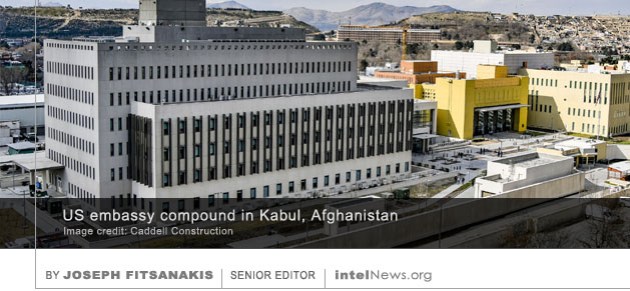
US embassy in AfghanistanThe White House is considering a plan to pull back Central Intelligence Agency officers from stations across Afghanistan, in a last-ditch effort to boost prospects for a peace deal with the Taliban. Plans for the peace deal were announced in February by representatives of the US and the Pashtun-based Sunni group, which has waged an Islamist insurgency against the US-supported government in Kabul since 2001.

But armed violence between the two sides has since peaked, prompting many to question the viability of planned peace deal. In response to this development, the White House is now reported to be considering a plan to limit the CIA’s presence in the Central Asian country. This was demanded by the Taliban early on in the negotiations, alongside the planned withdrawal of American troops from the country. In return the Taliban had pledged no break all ties with international terrorist groups, including al-Qaeda.

The US had previously agreed to withdraw its troops from the country, but had ruled out pulling back CIA personnel —which are believed to number in the several hundreds in Afghanistan. A major reason for rejecting the Taliban demand is that the CIA supports, arms and trains several proxy forces throughout the country. These include the Khost Protection Force (KPF), a 6,500-strong unit of elite Afghan soldiers, which has a strong presence in Taliban strongholds like Ghazni, Paktia and Khost. These forces do not operate under the command of the Afghan government, but are instead directly controlled by the CIA.

Reports in August of 2019 claimed that the CIA would retain “a strong presence on the ground in Afghanistan”, even if American troops were to leave the country following a peace deal with the Taliban. But this is now under review, according to US officials who spoke anonymously to The New York Times. The paper said on Sunday that “the deliberations over the CIA presence” were now “part of larger discussions about pulling back international forces” from the country. One possible course of action revolves around a plan to limit the presence of the CIA to the grounds of the US embassy in Kabul, said The Times.

Author: Joseph Fitsanakis | Date: 20 April 2020 | Permalink

Extremist groups see coronavirus pandemic as opportunity to spread chaos: report

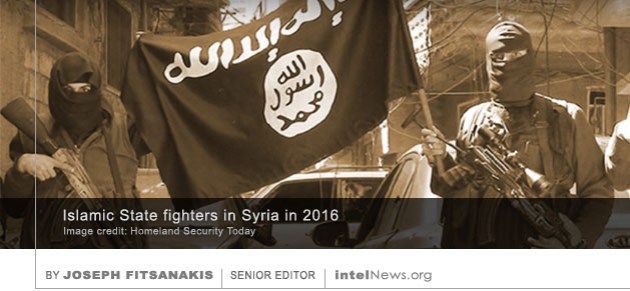
Islamic StateExtremist groups around the world are capitalizing on the novel coronavirus pandemic to rally their members around a common cause and spread chaos and violence, according to a new report. In an article published on Tuesday, veteran reporter Bridget Johnson, currently the managing editor for Homeland Security Today, writes that the world’s most active militant groups have issued numerous edicts and proclamations about COVID-19.

Johnson explains that most militant groups “have shown some concern” about their members’ health and wellbeing amidst the pandemic. The Islamic State was arguably the first Islamist group to instruct its members to take precautions against COVID-19. Johnson writes that the group began highlighting the threat of the virus in January, when an article in Al-Naba­, the Islamic State’s weekly newsletter, expressed “growing concern about the spread of the infectious virus”. The militant group has since prescribed that “the healthy should not enter the land of the epidemic and the afflicted should not exit from it”, and has advised its members to wash their hands and “cover the mouth when yawning and sneezing”.

In the past month, the Afghan Taliban have been carrying a “COVID-19 awareness campaign” in areas under their control. The campaign centers on community events that feature the distribution of masks, soap and informational pamphlets to families, writes Johnson. Taliban commanders have also been issuing regular warnings and threats against those who are caught resorting to price gouging or hoarding food and supplies. In recent communiques, the Taliban have called the coronavirus “a decree of Allah” and have urged their followers to respond to it “in accordance with the teachings of the Holy Prophet”, including daily readings of the Quran, repenting and reciting prayers.

Al-Qaeda publications have described COVID-19’s spread in Muslim communities as “a consequence of our own sins and our distance from the divine methodology, [our widespread] obscenity and moral corruption”. The group has also instructed its followers to view the coronavirus as “a powerful tsunami” that has the potential to ruin the American economy. A recent article by al-Qaeda propagandists stressed that the group’s co-founder, Osama bin Laden, “would often inquire about the economic impact of the [September 11] attacks, unlike most others who would limit the discussion to casualties”, according to Johnson. She adds that al-Qaeda has called on its members to “turn this calamity into a cause for uniting our ranks, [because] now is the time to spread the correct Aqeedah [creed], call people to jihad in the Way of Allah, and revolt against oppression and oppressors”.

Meanwhile, Islamic State publications in countries such as India have been pointing out that, with soldiers and police officers “deployed in streets and alleys” during the coronavirus pandemic, jihadists have “easy targets”. Islamic State members are also being urged to “intensify the pressure” while national governments around the world are “preoccupied with protecting their countries”, something that will inevitably distract them in the coming weeks and months, writes Johnson.

In the United States the Department of Homeland Security, the Federal Bureau of Investigation and the National Counterterrorism Center have issued several warnings regarding threats made by racially motivated violent extremists (RMVEs) in connection with the pandemic. The warnings state that RMVEs have discussed weaponizing the virus and using it to infect members of racial or ethnic minorities. Some white supremacist theorists have utilized online forums to discuss their hope that the responses to the pandemic by governments around the world “could crash the global economy, hasten societal collapse, and lead to a race war”. Other RMVE groups have been promoting conspiracy theories blaming ethnic and religious minorities —primarily Jews— for the coronavirus pandemic, writes Johnson.

Author: Joseph Fitsanakis | Date: 16 April 2020 | Permalink

US Pentagon’s top general says COVID-19 has natural origins, but questions remain

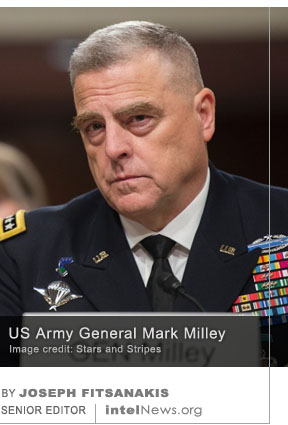
Mark MilleyThe United States Department of Defense’s top general has said that “the weight of evidence” gathered by Western spy agencies points to COVID-19 having “natural” origins, but this is not yet conclusive. Ever since the emergence of the novel coronavirus, prominent scientists have dismissed rumors that it could be a synthesized bioweapon. According to reports, this question is being carefully examined by Western intelligence agencies.

At a press conference on Tuesday, US Army General Mark Milley, Chairman of the Joint Chiefs of Staff, was asked by a reporter whether the Pentagon had “any evidence that the [novel corona]virus began in a Chinese lab and maybe was released accidentally”. General Milley response was as follows: “There’s a lot of rumor and speculation in a wide variety of media, blog sites, etc. It should be no surprise to you that we’ve taken a keen interest in that and we’ve had a lot of intelligence [experts] take a hard look at that. At this point it’s inconclusive, although the weight of evidence seems to indicate natural. But”, added the general, “we don’t know for certain”.

On the same day General Milley made these comments, an extensive report on the subject by Yahoo News’ National Security and Investigations Reporter Jenna McLaughlin said that the US Intelligence Community continued to actively gather information on the outbreak. Citing “nine current and former intelligence and national security officials familiar with ongoing investigations” on the novel coronavirus, McLaughlin said that American intelligence agencies had been gathering information on the outbreak “as early as November” of last year. Scientists working for US spy agencies had quickly dismissed the theory that the virus had been deliberately weaponized. A consensus appears to be forming that the virus is “of natural origin”, according to the report.

However, American and other Western spy agencies are “still weighing the possibility” that the virus may have escaped from a government laboratory in Wuhan, where it was being studied by scientists. McLaughlin quotes one American intelligence official who says: “we are actively and vigorously tracking down every piece of information we get on this topic [and] are writing frequently to update policymakers”. At this point, adds the official, the US Intelligence Community “has not come down on any one theory”.

Author: Joseph Fitsanakis | Date: 15 April 2020 | Permalink

US Pentagon bans use of Zoom teleconferencing app due to espionage concerns

Zoom softwareThe United States Department of Defense has barred its employees from using Zoom, a popular video teleconferencing application, due to concerns that foreign spies may be using the software to collect intelligence. The Pentagon made the announcement less than a day after the US Senate advised its members to refrain from using Zoom. The video teleconferencing software is owned by Zoom Video Communications, Inc., a NASDAQ-trading software firm headquartered in Jan Jose, California. It has become popular in recent weeks, due to the increasing reliance on telework resulting from the effects of the COVID-19 pandemic.

But security experts have raised concerns about the privacy and security of Zoom users. On March 30, the Federal Bureau of Investigation issued a warning stating that hackers could exploit a number of security weaknesses in Zoom’s software. The following day, the FBI warned that malicious users could use Zoom to “steal sensitive information, target individuals and businesses performing financial transactions, and engage in extortion”. On April 9, Time magazine cited “three US intelligence officials” in claiming that American counterintelligence agencies had “observed the espionage services of Russia, Iran, and North Korea attempting to spy on Americans’ video chats” on Zoom. Their aim was to acquire “financial, personal, product development, research, and intellectual property information and leads” on US government and corporate targets, said Time. On the same day, a memo by the Sergeant-at-Arms of the US Senate advised senators and their staff members to refrain from using Zoom for congressional business.

Finally, on April 10, Pentagon spokesman Lt. Col. Robert Carver (US Air Force) issued an official statement prohibiting the use of Zoom software by the Department of Defense’s military and civilian employees, including contractors. Carver said Pentagon employees could still make use of the Zoom for Business application, because it had been issued a provisional authorization under the US Federal Risk and Authorization Management Program. He added that Pentagon employees could still utilize Zoom for their personal use.

Author: Joseph Fitsanakis | Date: 14 April 2020 | Permalink

British spy agencies foresee a more assertive China after COVID-19 pandemic

MI6British intelligence agencies are advising policymakers that China will become “more assertive” after the world emerges from the coronavirus pandemic, while some government officials are urging a re-examination of London’s relationship with Beijing.

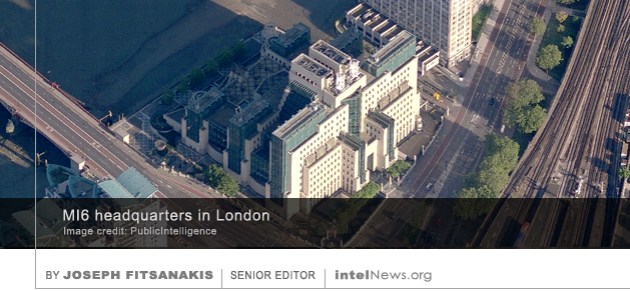
According to The Guardian newspaper, analysts from Britain’s external and domestic spy agencies, the Secret Intelligence Service (MI6) and the Security Service (MI5), expect that the Chinese government will aggressively promote a narrative that favorably compares its response to COVID-19 to that of Western nations. The goal of this narrative, according to British intelligence officials, will be to demonstrate the alleged superiority of China’s centralized one-party state over the pluralistic decision-making system that is prevalent in Western nations.

In response to this narrative by Beijing, the British government should adopt a more “realistic view” of its relationship with China and re-examine its dependency on the Chinese industry, especially in strategic areas of the economy, such as hi-tech research and production, as well as digital telecommunications and artificial intelligence. The Guardian said that the consensus in the British intelligence community continues to be that London acted wisely by giving the Chinese telecommunications hardware firm Huawei a 35 percent share in the construction of Britain’s 5G telecommunications network earlier this year, as the move does not compromise British strategic interests. Additionally, London should be careful not to criticize Beijing at the moment, given that much of the medical supplies that the country needs to defend itself the coronavirus are produced in China.

However, after the COVID-19 crisis, Britain is likely to re-examine its relationship —economic and political— with China, with the help of its intelligence agencies, said The Guardian. The paper reported that a group of conservative members of parliament have already formed a semi-official ‘China-skeptics block’. These parliamentarians reportedly wrote a letter to British Prime Minister Boris Johnson last week, urging him to “rethink [Britain’s] relationship with China”, taking “a strategic view of Britain’s long-term economic, technical and security needs”.

Author: Joseph Fitsanakis | Date: 13 April 2020 | Permalink

Analysis: Will COVID-19 cause food shortages in the United States?

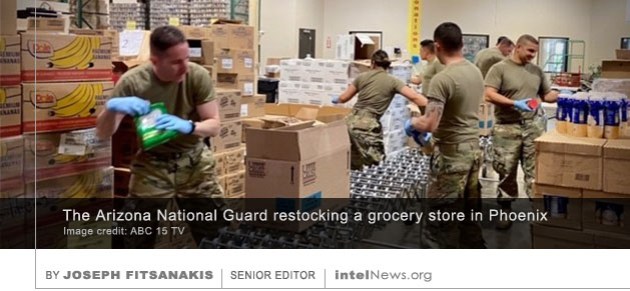
National Guard COVID-19The food supply chain in the United States has so far been able to endure the pressures caused by SARS-CoV-2. Grocery stores across the nation remain generally well-stocked, even if in some cases (like in Nevada and Arizona), the National Guard has been brought in to help with restocking. Shortages in certain types of foods, such as canned soup or pasta, are the result of unprecedented demand, rather than a breakdown in the food supply chain. Overall, therefore, there are no signs of systematic food shortages across the nation. However, disruptions —some of them severe— are likely to be experienced in the coming weeks.

COVID-19 IMPACT ON FARMS

Disruptions are likely to be felt first in the area of fresh produce, for two reasons. First, because large agricultural facilities are beginning to experience major shortages in personnel, as seasonal farmworkers —most of them from Central and South America— are unable to travel north due to the cessation of international travel in the Americas. Second, because —just like medical personnel across the country— agricultural workers are facing severe shortages in personal protective equipment (PPE), which is essential for keeping them healthy in a pandemic. Until now, major Q QuoteCOVID-19 outbreaks have been occurring in densely populated urban centers. But as the disease continues to spread, it is only a matter of time before the virus reaches rural farming areas and enters farms, which are the beginning of the food supply chain. Many automated agricultural facilities, such as grain and soybean operations in the American Midwest, do not require large numbers of human laborers, and will thus suffer little disruption from the spread of the pandemic. However, this is not the case with fruits and vegetables, such as tomatoes or grapes, which require human pickers to extract them. The progression of the disease in rural regions of Florida and California, which produce over 20% of total US agricultural value, will be a critical factor. As an illustration, is worth pointing out that two farms in California supply over 85% of all carrots in the US market. If COVID-19 affects the production and distribution capacity of global producers of fresh fruits and vegetables, like the Florida-based Fresh Del Monte Produce, the ramifications are likely to be felt across the world for more than a year.
AGRICULTURAL DISRUPTIONS IN WESTERN EUROPE

Western Europe, which is ahead of the US in the spread of the disease, is already experiencing unprecedented disruptions in agricultural production. The closing of international borders has prevented millions of seasonal farmworkers from Eastern Europe, whom agricultural facilities in Western Europe rely on to pick fruits and vegetables each year, from traveling west. Italy and Britain havQ Quotee begun issuing calls for unemployed workers to form “land armies” and volunteer to pick produce in farms. The French government has called “for hairdressers, waiters, florists and others temporarily unable to work” due to the pandemic “to head to the nation’s fields and start picking”. And in Germany, the authorities have launched a website that solicits volunteers to work in farms across the nation. However, as only 16,000 have volunteered so far, the German government is now working on a plan to allow undocumented immigrants to make up the remaining 284,000 farmworkers that are needed to salvage this year’s crop.
DISRUPTION IN THE GLOBAL FOOD EXPORT SYSTEM

It is unrealistic to expect that these glitches will not eventually make their way to the US. Moreover, just like Western Europe, the US relies heavily on imported foods. The global nature of the pandemic is also beginning to cause major disruptions in food exports, as air and ship cargo dwindles dramatically. Already, the shortage of refrigerated containers used to transport meat and other food supplies from China to North America has prompted a drop in imports of over 25%. Meanwhile, India, which is the world’s largest exporter of rice, has completely halted exports due to logistical problems and labor shortages caused by the pandemic. The world’s second and third largest exporters of rice, Thailand and Vietnam, are likely to soon follow suit. Kazakhstan, which is among the world’s largest exporters of wheat flour, has now banned all exports of that product. Brazil, the largest exporter of coffee, sugar and soybeans in the world, has warned that it is facing an unprecedented shortage of farmworkers, truck drivers, and even spare parts for farm equipment. And Russia, which is the world’s largest exporter of wheat, has said that it will soon be forced to severely restrict exports for the same reasons as Brazil. These developments prompted the United Nations Food and Agriculture Organization to warn last week that food shortages, coupled with growing trade barriers between nations, “will create extreme volatility” in global food supply. Read more of this post
Pentagon study warned about global crisis caused by ‘novel respiratory disease’

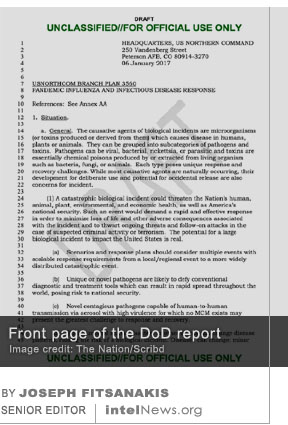
DoD Pandemic reportA United States Department of Defense report warned about the danger of a global crisis caused by a “novel respiratory disease”. The existence of the 2017 study adds to the mounting skepticism about President Donald Trump’s repeated assertions that the coronavirus pandemic “blind- sided the world” and “came out of nowhere”.

The 103-page report is titled USNORTHCOM Branch Plan 3560: Pandemic Influenza and Infectious Disease Response, and was presented to the leadership of the US Northern Command headquarters in January 2017. It discusses the possible causes of a “clinically severe pandemic” and outlines the complications that it is likely to cause around the world. It also proposes an array of possible responses to such a crisis by the US military. A draft of the report was published online by The Nation earlier this month. The American newsmagazine said that it obtained the report from “a Pentagon official who requested anonymity to avoid professional reprisal”.

The Department of Defense study bases its analysis on data acquired from recent pandemics, such as the 2012 Middle Eastern Respiratory Syndrome Coronavirus (MERS coronavirus) and others. It discusses “coronavirus infections” and warns that “[t]he most likely and significant [pandemic] threat is a novel respiratory disease, particularly a novel influenza disease”. The report then goes on to describe the medical supply shortages that would be caused by a coronavirus pandemic. It does so with a stunning degree of accuracy that mirrors the situation that the US is currently experiencing due to COVID-19. For instance it states that global “[c]ompetition for, and scarcity of, resources will include […] non-pharmaceutical Medical Countermeasures”, namely medical masks, gloves and other personal protective equipment needed by healthcare workers.

It also warns that dire shortages in medical equipment will be hampered by inadequate logistical support and will have “a significant impact on the global workforce”. Furthermore, the Pentagon study appears to anticipate a “worldwide competition” for ventilators and other hi-tech medical devices associated with intensive care units, as well as a scarcity of hospital beds. It ominously states that “even the most industrialized countries will have insufficient hospital beds” to accommodate the numbers of those who will need to be hospitalized due to having been infected by the virus.

Two weeks ago, The Washington Post reported that, starting in January of this year, the US Intelligence Community repeatedly warned the White House about “a virus that showed the characteristics of a globe-encircling pandemic” requiring “swift action to contain it”. The paper cited “a US official who had access to intelligence reporting” about the coronavirus, who said that “the system was blinking red” in January.

Author: Joseph Fitsanakis | Date: 06 April 2020 | Permalink

Israel mobilizes its intelligence machinery to combat COVID-19

Israel COVID-19The intelligence agencies of Israel are playing an increasingly important role in the Jewish state’s effort to combat the effects of the novel coronavirus pandemic in its territory. Israel’s intelligence agencies are known to be very secretive, but the government has gone out of its way to advertise their participation in the national effort to limit the spread of the virus.
Earlier this week, an Israeli television station aired an interview with an individual whose face was hidden, and was only identified as the director of technology for the Israeli external intelligence agency Mossad. He said that the secretive spy agency had managed to secure 100,000 coronavirus testing kits, 25,000 N-95 masks and 100 ventilators. The material had been acquired “from unnamed countries” by Mossad officers, he said. The officers had to “race to [foreign] factories” and secure these critical supplies after they had been “ordered by other countries”, he added. The agents then had to coordinate secret airlifts so that the medical material could be transported to Israel in time.

It has also been disclosed by the Office of the Prime Minister that the Israel Institute for Biological Research, which works closely with the Mossad and other Israeli intelligence agencies, has been making “significant progress” in developing a vaccine against COVID-19. One of the institute’s mission is to develop and produce defenses against biological and chemical threats. However, it has been alleged that it also produces chemical and biological weapons, as well as poisons and antidotes for use by the Mossad.

Meanwhile, several units of the Israel Defense Forces are helping to retrofit CPAP and BiPAP machines, which are designed to help treat sleep apnea, so that they can be used as ventilators. They include Unit 81, which is the technology unit of Israel’s Military Intelligence Directorate (AMAN). Additionally, state-owned defense contractors, such as Israel Aerospace Industries, are re-purposing production lines for weapons systems so that they can be used to manufacture ventilators.

As of Friday morning, nearly 7,000 Israelis had tested positive for COVID-19. It was reported that 36 Israelis had died and 338 were believed to have recovered from the disease.

Author: Joseph Fitsanakis | Date: 03 April 2020 | Permalink

US Department of Homeland Security operations center relocates due to COVID-19

DHSThe National Operations Center of the United States Department of Homeland Security (DHS) is relocating to an emergency facility after a member of its staff tested positive for COVID-19, the illness caused by the novel coronavirus. The information was revealed on Monday by Yahoo News, which said it obtained the information in an internal DHS document.

The DHS National Operations Center facility is housed in the west campus of St. Elizabeths Hospital, a National Historic Landmark built in 1855, which is currently being redeveloped as the new headquarters of the DHS. It operates as the DHS’ main coordination hub for managing and sharing local- and national-level information relating to terrorist threats and other emergency incidents.

For a number of days now, the DHS has placed restrictions on access to the National Operations Center, in an attempt to limit the spread of COVID-19. However, according to Yahoo News, a member of staff who works at the National Operations Center facility has now been diagnosed with having the virus. The news website said it found the information in “an internal DHS document” that it obtained, which is dated March 30. The document is entitled “COVID-19 Placemat” and contains a daily amalgamation of data points relating to if and how various US government agencies have been affected by the pandemic.

Yahoo News said a DHS official confirmed that the National Operations Center would be relocating “to an alternate facility […] as a precaution”. In the meantime the St. Elizabeths Hospital facility would be cleaned and sanitized, said the official, and added that the relocation would “not impact operations”. The “COVID-19 Placemat” did not identify the emergency facility that the National Operations Center personnel will be relocating to, said Yahoo News. But the news website noted that all US government agencies have remote facilities for use in a national emergency, “ranging from nuclear attack to pandemic”.

Author: Joseph Fitsanakis | Date: 31 March 2020 | Permalink

Trump administration considering mass expulsions of alleged Chinese spies

United States ChinaThe administration of United States President Donald Trump is considering the possibility of expelling from the country dozens of Chinese diplomats, journalists, and others, who are believed to be undercover spies. The expulsions relate to a spiraling information war between Washington and Beijing, which has erupted in recent weeks as a result of the COVID-19 pandemic.
Earlier this month, the Chinese government announced that it would expel 13 American journalists from three major newspapers, The Wall Street Journal, The New York Times and The Washington Post. Beijing also stipulated that all American news organizations operating in China had to provide its government with detailed information about their financial assets, employee structure and other organizational information. The journalists claimed that they were expelled for trying to report about the status of the COVID-19 pandemic inside China.

Around the same time, President Trump and senior members of his administration, including Secretary of State Mike Pompeo, began referring to the severe acute respiratory syndrome coronavirus 2 (SARS-CoV-2, known as novel coronavirus) as “the Chinese virus” or “the Wuhan virus”. The term refers to the Chinese province where the virus is believed to have originated. President Trump claims that he decided to use the term “Chinese virus” in response to unsubstantiated claims by government officials in Beijing that the novel coronavirus was brought to China by members of the US military.

On Thursday The New York Times reported that the Trump administration was considering expelling from the US a large number of Chinese citizens who work as diplomats or journalists. In some cases, the White House is reportedly considering shutting down the bureaus of some Chinese media outlets in the US. According to a number of administration officials, many Chinese journalists based in the US are in reality undercover intelligence officers, who regularly report to the Ministry of State Security —China’s primary external intelligence agency. Some of these alleged undercover intelligence officers —known in the world of intelligence as ‘non-official cover’— are allegedly embedded with China Global Television Network, the foreign-language arm of the state-owned China Central Television (CCTV), according to some American officials.

On March 2, the Trump administration abruptly imposed quotas on the number of foreign citizens who are permitted to work for Chinese media organizations in the US. The Chinese media groups complied with the new directive in a timely manner, by recalling over 60 of their staff members to China. However, the White House now believes that a significant number of the 100 Chinese journalists who continue to operate in the US are undercover intelligence officers.

Meanwhile, on March 25, China’s English-language government-owned newspaper The Global Times raised eyebrows by repeating allegations that the novel coronavirus was brought to China by an American cyclist, who visited Wuhan in October of last year to compete in the Military World Games. Such allegations, which propagate the view that the novel coronavirus originated in the US, are quickly growing in popularity in Chinese social media platforms.

Author: Joseph Fitsanakis | Date: 27 March 2020 | Permalink

Pentagon leaders see COVID-19 crisis lasting months, destabilizing regions

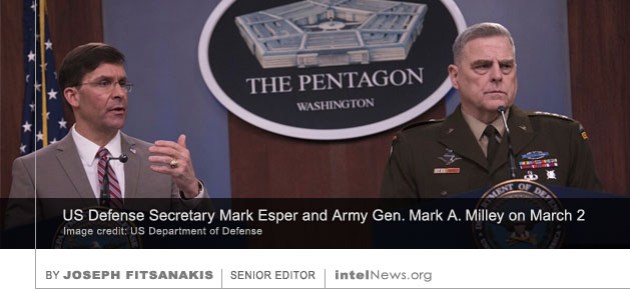
Mark Esper MilleyThe United States Department of Defense is working under the assumption that the COVID-19 epidemic will seriously affect the life of the country for “at least several months”, and might cause “political chaos” in parts of the world. This was stated during a virtual town hall for members of the US Armed Forces, which was hosted on Tuesday by Defense Secretary Mark Esper and Joint Chiefs of Staff Chairman General Mark Milley.
General Milley told participants that the Pentagon was planning “for this to be a few months at least”. He added that, according to all indications, the US was looking at “eight to 10, maybe 12 weeks —something like three months” of confronting serious disruptions caused by the COVID-19 pandemic. It could be “as late as July”, said Milley, and assured the audience that the Department of Defense was “taking all precautionary measures to be in it for the long-haul”.

Both speakers speculated that the pandemic could destabilize a number of countries around the world, and that the ensuing lack of security could pose threats to US interests. Milley pointed out that acute shortages of critical medical equipment, such as respirators, gloves, masks and ventilators, could cause certain countries to spiral into instability that will “go well beyond the immediate medical issues” and “lead to political chaos”.

On Wednesday, Brigadier General Dr. Paul Friedrichs, who serves as the Joint Chiefs of Staff Joint Staff Surgeon (the Pentagon’s most senior medical professional), said that COVID-19 was spreading too quickly for experts to determine how many troops would eventually end up contracting the disease. However, Dr. Friedrichs cautioned against lightening any restrictions on social distancing before sufficient time passes to “make a dent” on infection rates. Doing so “could be disastrous”, he warned.

Author: Joseph Fitsanakis | Date: 26 March 2020 | Permalink

Spain ‘shifts to a war economy’ and calls on NATO for help with COVID-19

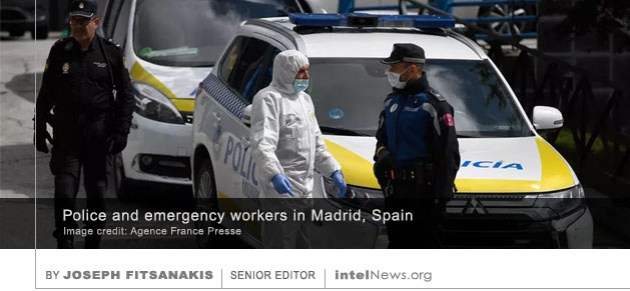
COVID-19 SpainThe government of Spain said on Tuesday it had begun to shift to “a war economy”, as the Spanish Ministry of Defense called on the North Atlantic Treaty Organization for assistance to fight the coronavirus pandemic. The term war economy is used to describe the rapid reorganization of a nation’s production and distribution capacity in response to a direct military threat to its existence.

Spanish officials announced on Tuesday that the rate of COVID-19 illness in the country was growing faster than in Italy. Despite a nationally mandated lockdown, which began on March 14, coronavirus infections exceeded 42,000 yesterday, up from 25,000 on Saturday. Spanish medical facilities announced 514 new deaths in a 24-hour period, bringing the total number of COVID-19-related deaths to 2696. The deaths are reflective of Spain’s desperate struggle to provide sufficient medical supplies for its healthcare workers, or treatment hardware for patients.

On Tuesday afternoon, NATO’s Euro-Atlantic Disaster Response Coordination Center (EADRCC) said it had received “a request for international assistance from the Armed Forces of Spain in their response to the global pandemic”. The EADRCC said in a press statement that the Spanish military had asked its “international partners […] to provide assistance to the Ministry of Defense of Spain”. Spanish media reported that the request included “450,000 respirators, 500,000 rapid testing kits, 500 ventilators and 1.5 million surgical masks”.

Meanwhile the Spanish military helped convert an ice ring in Madrid’s popular Palacio de Hielo mall into a makeshift morgue, in order to accommodate the projected surge in deaths due to COVID-19 in the coming days. The Spanish capital has suffered over 30 percent of all coronavirus-related deaths in the past week. Over the weekend, a nearby convention center was converted into a hospital that can accommodate 5,500 patients.

In neighboring France, the army set up a field hospital on French territory for the first time in the country’s peacetime history. Field hospitals are temporary tent structures designed to provide medical services to wounded soldiers and civilians in a warzone. The erection of field hospital tents in the eastern city of Mulhouse, close to the Swiss and German borders, was described by the French media as an unprecedented sight.

Author: Joseph Fitsanakis | Date: 25 March 2020 | Permalink

US intelligence warned White House about COVID-19 threat in January, report claims

Coronavirus Task ForceThe United States Intelligence Community issued “ominous classified warnings” in January and February about the global danger posed by the coronavirus, but the White House failed to take timely action, according to an investigative report published on Friday in The Washington Post. The paper said that, in their totality, the Intelligence Community’s reports warned about “a virus that showed the characteristics of a globe-encircling pandemic” requiring the US government to take “swift action to contain it”.

The paper cited “a US official who had access to intelligence reporting” about the virus, who said that “the system was blinking red” in January. The “ominous” reports were disseminated to members of Congress and to senior officials in the administration of US President Donald Trump. Sources told The Washington Post that the reports did not attempt to forecast when the virus might begin to spread in the US, or what public health measures should be taken to prevent a possible outbreak. Such policy-related decisions are usually “outside the purview of the [intelligence] agencies”, said the US official.

However, the warnings were frequent and began to increase in volume by the last week of January, according to the article. By early February, the majority of the intelligence reports that were disseminated to the White House concerned COVID-19, sources said. Among other warnings, the reports cautioned President Trump that Chinese government officials were deliberately minimizing the extent and seriousness of the coronavirus outbreak.

The Washington Post cites “two senior administration officials” who claim that the president’s advisers found it difficult to draw his attention to the intelligence reports about COVID-19. It was only on January 18, less than a week before China began to place millions of its citizens on lockdown, that Health and Human Services (HHS) Secretary Alex Azar was able to secure access to the Oval Office and speak directly with President Trump about the virus. Soon afterwards, Dr. Robert Kadlec, HHS Assistant Secretary for Preparedness and Response, briefed the Senate Select Committee on Intelligence in a classified meeting. The Post cites four anonymous US officials, who said that Dr. Kadlec gave his presentation jointly with members of the Central Intelligence Agency (CIA). They discussed the global health implications of COVID-19 and warned it was a “serious” threat that would require Americans “to take actions that could disrupt their daily lives”.

But the president was “dismissive”, said administration officials, allegedly refusing to believe that the virus posed a major threat to the country. On February 24, when, according to the Centers for Disease Control and Prevention (CDC), there were 53 confirmed COVID-19 cases in the US, President Trump tweeted: “The Coronavirus is very much under control in the USA”. In the weeks that followed, said the administration officials, the White House “failed to take action that might have slowed the spread of the pathogen”. Currently there are in excess of 20,000 COVID-19 cases in the US, a number that appears to double every 48 hours. Read more of this post

COVID-19 poses unprecedented operational challenges for America’s spy agencies

ODNI DNIAmerica’s Intelligence Community is facing unprecedented challenges as it tries to adjust to the coronavirus pandemic. These challenges are affecting every aspect of the intelligence cycle, including collection and dissemination functions. Moreover, spy agencies are hurriedly redirecting their analytical resources to combating COVID-19, thus slowing the pace of work on other areas of national security, according to Time magazine.


Recently the Office of the Director of National Intelligence (ODNI), the central coordinating authority of the United States Intelligence Community, said that it was adjusting its focus in order to monitor the COVID-19 pandemic, in accordance with guidance from the Centers for Disease Control and Prevention (CDC) and the Office of Personnel Management (OPM). At the same time, however, the ODNI said it had reduced the physical contact between its staff members, through various methods including “staggered shifts, flexible schedules and social distancing practices”. Similar methods are being followed by other agencies, including the Central Intelligence Agency, said Time.

On Thursday, the newsmagazine cited three anonymous intelligence officials who said that the Intelligence Community is quickly learning how to operate under conditions deemed unprecedented. Ideally, intelligence employees would work remotely. However, the classified digital communications networks of the Intelligence Community are not readily operational from remote locations. These include the Secret Internet Protocol Router Network (SIPRN) for secret-level information, and the Joint Worldwide Intelligence Communications System (JWICS) for top-secret-level information. Remote stations can be installed, but it costs between $50,000 and $70,000 per station to do so, said Time.

Additionally, top secret intelligence that is designated as Sensitive Compartmented Information (TS/SCI) must remain inside specially designated physical spaces known as Sensitive Compartmented Information Facilities (SCIF). This poses problems, not only for remote operations, but also for social-distancing, as SCIFs tend to be relatively small in size. Many agencies are addressing the problem by “moving to split shifts to reduce the number of people at the office at given times” and separating personnel into “essential” and “non-essential”, but these definitions are still in the process of being determined.

Finally, the COVID-19 pandemic is affecting human intelligence collection, which involves the use of case officers to recruit foreign assets in order to extract information in accordance with national security directives. Countless case officers stationed around the world are currently finding it difficult to operate in cities that are either empty or under lock-down mandates. Their assets are also limited in the work that they can do, while it is expected that many will be infected by the coronavirus. One consolation to American intelligence agencies, said Time, is that their adversaries’ operations are also being hampered by the same pandemic.

Author: Joseph Fitsanakis | Date: 20 March 2020 | Research credit: J.M. | Permalink