German police caught Anders Breivik with weapons prior to Norway massacre

Anders BreivikPolice in Germany caught Anders Breivik with ammunition and weapon parts in 2009, two years before he killed nearly 80 people in Norway, but did not arrest him and failed to notify Norwegian police, according to a new documentary. Breivik is a jailed far-right terrorist, who in 2011 single-handedly perpetrated two terrorist attacks that killed 8 people in Norwegian capital Oslo and another 69 on the island of Utøya. During his trial, he said he killed his victims, most of whom were participants at a Norwegian Labor Party summer camp, in order to protest against “multi-culturalism” and “Islamization” in Norway. The attack, which included the use of a car bomb and semi-automatic weapons, is considered the deadliest terrorist incident in Norway’s history since World War II.

Last week, however, a new documentary aired on Franco-German television station ARTE claimed that German police could have helped stop Breivik’s deadly plans, when it caught the far-right militant with weapons parts and ammunition in 2009. The documentary, entitled Waffen für den Terror (Weapons for Terror) was directed by Daniel Harrich, a German documentary filmmaker who specializes in the international illicit weapons trade. Harrich alleges in his documentary that Breivik was stopped “in early 2009” by German police during a routine check in Wetzlar, a city of 60,000 located just north of Frankfurt.

Citing three unnamed sources, who allegedly verified the claims independently of each other, Harrich said that Breivik was found to be in possession of ammunition and was also carrying some weapons parts. But instead of detaining Breivik, who was carrying a Norwegian passport, and notifying the authorities in Oslo, the German police officers simply confiscated the ammunition and some weapons parts, before allowing him to go. According to Harrich, Breivik was even told he could hold on to a number of parts that German police determined could not be used to build a working weapon. Harrich’s documentary, which is in the German language, can be viewed at ARTE’s website, here.

► Author: Joseph Fitsanakis | Date: 15 January 2016 | Permalink | News tip: C.W.

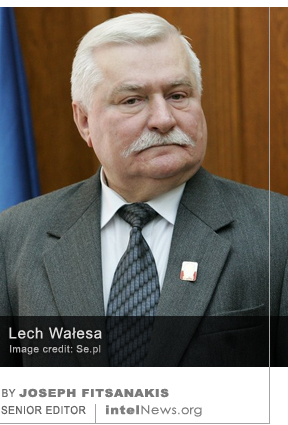
Polish ex-leader Walesa denies he was communist spy, calls for debate

Lech WalesaPoland’s first post-communist president, Lech Wałęsa, has denied allegations that he was secretly a communist spy and has called for a public debate so he can respond to his critics. In 1980, when Poland was still under communist rule, Wałęsa was among the founders of Solidarność (Solidarity), the communist bloc’s first independent trade union. After winning the Nobel Peace Prize in 1983, Wałęsa intensified his criticism of Poland’s communist government. In 1990, following the end of communist rule, Wałęsa, was elected Poland’s president by receiving nearly 75% of the vote in a nationwide election. After stepping down from the presidency, in 1995, Wałęsa officially retired from politics and is today considered a major Polish and Eastern European statesman.

But in 2008, two Polish historians, Sławomir Cenckiewicz and Piotr Gontarczyk, published a book claiming that, before founding Solidarność, Wałęsa was a paid collaborator of the SB, Poland’s communist-era Security Service. In the book, titled Secret services and Lech Walesa: A Contribution to the Biography, the two historians claim there is “compelling evidence” and “positive proof” that Wałęsa worked as a paid informant for the SB between 1970 and 1976, under the cover name “Bolek”. Wałęsa claimed that the documents unearthed by the two historians had been forged by Poland’s communist government in order to discredit him in the eyes of his fellow-workers during his Solidarność campaign. But the critics insisted, and in 2009 a new book, written by Polish historian Paweł Zyzak, echoed Cenckiewicz and Gontarczyk’s allegations. Citing sources “that prefer to remain anonymous”, the book, titled Lech Walesa: Idea and History, claimed that Wałęsa fathered an illegitimate child and collaborated with the SB in the 1970s. Like Cenckiewicz and Gontarczyk, Zyzak worked at the time for the Warsaw-based Polish Institute of National Remembrance (IPN), which also published his book. The IPN is a government-affiliated organization whose main mission is to investigate, expose and indict participants in criminal actions during the Nazi occupation of Poland, as well as during the country’s communist period. It also aims to expose SB clandestine agents and collaborators.

This past Monday, Poland’s former president published an open letter on his personal blog, in which he asked for a “substantive public debate on the Bolek imbroglio”. He said he wanted to end this controversy once and for all, by facing his critics before the public. Wałęsa added he had “had enough” of the “constant stalking” he faced by “both traditional media and Internet publications”. He went on to say that he had already asked the IPN to host a public meeting with authors and historians, including his critics, in which he would participate. Later on Monday, the IPN confirmed it had received a letter from Wałęsa, in which the former president asked for the opportunity to participate in a public meeting about the “Bolek affair”. Cenckiewicz, who co-authored the 2008 book on Wałęsa with Gontarczyk, reportedly wrote on Facebook that he would agree to participate in such a debate. The IPN said it would plan to host the debate in March of this year.

► Author: Joseph Fitsanakis | Date: 12 January 2016 | Permalink
Some cooperation resumes between German and US spy agencies

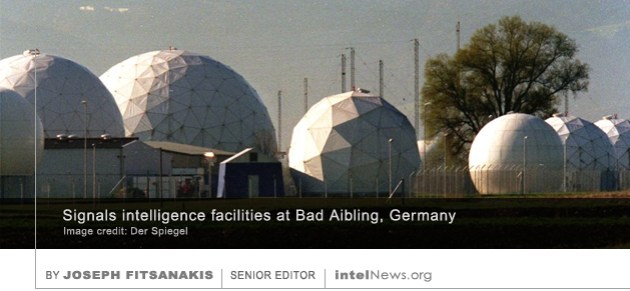
Bad AiblingCooperation on surveillance between German and American intelligence agencies has reportedly resumed following a row between the two countries that was caused by reports that the United States had spied on the German government. In 2014, Berlin expelled from Germany the US Central Intelligence Agency chief of station —essentially the top American intelligence official in the country— after two German government employees, one working for the BND, Germany’s main intelligence organization, were caught spying on Germany for the US. Relations were already tense due to prior revelations that the US National Security Agency, America’s signals intelligence organization, had bugged the personal cell phones of German politicians, including that of Chancellor Angela Merkel. In addition to expelling the CIA chief of station, the German government had reportedly instructed its intelligence agencies to limit their cooperation with their US counterparts “to the bare essentials”.

Last week, however, several German news media, including the respected newspaper Süddeutsche Zeitung claimed that intelligence cooperation between the two North Atlantic Treaty Organization allies had resumed. The Munich-based broadsheet wrote that “now the dispute is settled” and that the BND has begun giving the NSA access to intelligence gathered at its Bad Aibling listening station. The station, located in the small Bavarian town of Bad Aibling in southern Germany, is believed to be a key listening facility that gathers critical intelligence from North Africa, the Middle East and Central Asia. According to the Süddeutsche Zeitung, the BND has been instructed by the Chancellery in Berlin to give the NSA access to raw intelligence from the Bad Aibling station and to invite the American intelligence agency to once again suggest targets for listening operations.

The reported change in the relationship status between the two intelligence organizations comes amid heightened security concerns in Europe following last November’s attacks in Paris, France, which killed 130 and injured hundreds more. Earlier this month, news reports emerged in Germany about an alleged “New Year’s Eve suicide plot” in Munich, which was allegedly averted after a tip-off by a Western intelligence agency. There is speculation that the warning was given to German intelligence by an American agency. Following the news reports, Germany’s Minister of the Interior, Thomas de Maizière, said that current security concerns called for a closer intelligence cooperation between German and foreign intelligence agencies.

The Süddeutsche Zeitung said on Friday that “cooperation between German and US intelligence services is running smoothly again”. However, the change only appears to apply to the electronic surveillance of targets. Relations between German and American intelligence agencies remain tense, and it will take time before intelligence relations between the two NATO allies are completely restored.

► Author: Joseph Fitsanakis | Date: 11 January 2016 | Permalink

Moscow is working with Taliban against ISIS, says Russian envoy

Zamir KabulovRussia’s official envoy to Afghanistan has said that Moscow is now working with the Afghan Taliban in order to stop the growth of the Islamic State in the region. Many Taliban fighters are direct descendants of the Afghan and Pakistani Pashtuns who fought the Soviet Red Army in the 1980s, when the USSR invaded Afghanistan and fought a bloody decade-long war there. But the militant group, which today continues to control much of Afghanistan, despite a prolonged American-led military effort to defeat it, is now being challenged by the Islamic State. Known also as the Islamic State in Iraq and Syria (ISIS), the group enjoys growing popularity in Afghanistan, and some tribal warlords have already declared their allegiance to it. In contrast, the leadership of the Taliban has rejected the legitimacy of ISIS and refused to recognize its leader, Abu Bakr al-Baghdadi, as the caliph of all Sunni Muslims. According to Sunni doctrine, a caliph is the recognized political and religious successor to Muhammad, Islam’s prophet, and thus commands the Muslim ummah, or community.
For the past two years, allegations have surfaced in the world’s media that Russia, fearing the continuing growth of ISIS in Central Asia, has reached out to the Taliban in hopes of halting ISIS’ popularity. Last week, however, Zamir Kabulov, Moscow’s special envoy to Afghanistan, openly admitted that Russia is collaborating with the Taliban against ISIS. “The interests of the Taliban completely coincide with ours”, said Kabulov, and added that Moscow maintains “communication channels with the Taliban to exchange intelligence”. It is important to note that Kabulov, who was born in Soviet Uzbekistan, is arguably the most knowledgeable Russian diplomat on matters relating to Afghanistan. Until 2009, he served as Russia’s ambassador to Afghanistan, having also served in Iran and Pakistan. Western observers believe that Kabulov is not simply a “career diplomat”, as he presents himself, but a former officer in the KGB, the USSR’s foremost intelligence agency. He is also believed to have served as the KGB’s chief of station in Kabul during the Soviet occupation of the 1980s, and to have worked closely with Khad, the intelligence agency of Soviet-dominated Afghanistan.

Kim Sengupta, a defense correspondent of British broadsheet The Independent, argues that Kabulov’s announcement reflects the growing ties between the Federal Security Service (FSB), one of the KGB’s successor agencies, and the National Directorate of Security (NDS), Afghanistan’s current intelligence agency. The latter maintains open lines of communication with the Taliban. There is also a question about the extent of Russia’s collaboration with the Taliban in pursuit of common goals. Kabulov implied last week that the collaboration centers on intelligence-sharing. But Sengupta suggests that Moscow may also be supplying weapons and ammunition to the Taliban, through Russian ally Tajikistan. He also notes that other regional powers, including China and Iran, are warming up to the Taliban, which they increasingly view as a more reasonable alternative to ISIS.

► Author: Joseph Fitsanakis | Date: 08 January 2016 | Permalink

Dutch technical experts helped US bug foreign embassies in Cold War

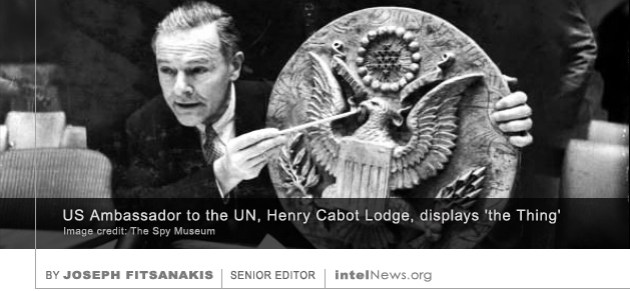
Great Seal bugA tightly knit group of Dutch technical experts helped American spies bug foreign embassies at the height of the Cold War, new research has shown. The research, carried out by Dutch intelligence expert Cees Wiebes and journalist Maurits Martijn, has brought to light a previously unknown operation, codenamed EASY CHAIR. Initiated in secret in 1952, the operation was a collaboration between the United States Central Intelligence Agency and a small Dutch technology company called the Nederlands Radar Proefstation (Dutch Radar Research Station).

According to Dutch website De Correspondent, which published a summary of the research, the secret collaboration was initiated by the CIA. The American intelligence agency reached out to the Dutch technical experts after interception countermeasures specialists discovered a Soviet-made bug inside the US embassy in Moscow. The bug, known as ‘the Thing’, had been hidden inside a carved wooden ornament in the shape of the Great Seal of the United States. It had been presented as a gift to US Ambassador W. Averell Harriman by the Young Pioneer organization of the Soviet Union in 1945, in recognition of the US-Soviet alliance against Nazi Germany in World War II. But in 1952, the ornament, which had been hanging in the ambassador’s office in Moscow for seven years, was found to contain a cleverly designed listening device. The bug had gone undetected for years because it contained no battery and no electronic components. Instead it used what are known as ‘passive techniques’ to emit audio signals using electromagnetic energy fed from an outside source to activate its mechanism.

Wiebes and Martijn say the CIA reached out to the Dutch in 1952, soon after the discovery of ‘the Thing’, in fear that “the Soviets were streets ahead of the Americans when it came to eavesdropping technology”. According to the authors, the approach was facilitated by the BVD, the Cold War predecessor of the AIVD, Holland’s present-day intelligence agency. In the following years, technical specialists in the Netherlands produced the West’s answer to ‘the Thing’ —a device which, like its Soviet equivalent, used ‘passive techniques’ to emit audio signals. Moreover, the Americans are believed to have used the Dutch-made device to but at least two foreign embassies in The Hague, the Soviet Union’s and China’s, in the late 1950s and early 1960s.

The work by Wiebes and Martijn was initially published in Dutch by De Correspondent in September of last year. An English-language version of the article, which was published in December, can be read here.

► Author: Joseph Fitsanakis | Date: 06 January 2016 | Permalink

US ‘spied on Israeli prime minister’ during Iran nuclear talks

Netanyahu and ObamaAmerican intelligence agencies spied on Israeli Prime Minister Benjamin Netanyahu during the negotiations between the United States and Iran over the Islamic Republic’s nuclear program, according to officials. Tehran entered a deal, referred to as ‘the Geneva pact’, following drawn-out negotiations with a group of nations that came to be known as P5+1, representing the five permanent members of the United Nations Security Council plus Germany. The government of Israel, however, strongly criticized the negotiations. Prime Minister Netanyahu called the pact a “historic mistake” that would enable “the most dangerous regime in the world” to get closer to “attaining the most dangerous weapon in the world”. Israel’s strong reaction, which included open criticism of US President Barack Obama, caused some in the US to accuse Tel Aviv of trying to “manipulate American institutions”, while the White House did not hide its frustration with the Israeli leader.
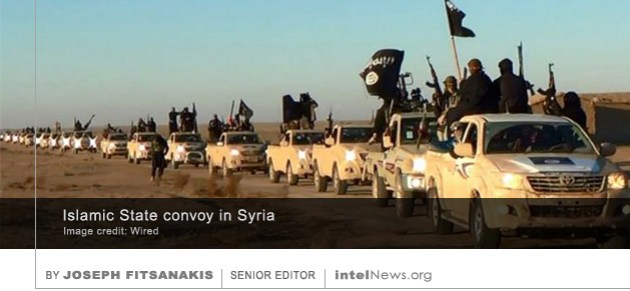
Last week, The Wall Street Journal said in a leading article that the Obama administration spied systematically on Prime Minister Netanyahu, whom it suspected of actively trying to kill the Geneva pact. Citing interviews with “over two dozen past and present US officials”, The Journal claimed that the National Security Agency, America’s leading signals-intelligence collector, intercepted the communications between the Israeli prime minister and his senior advisors. The main purpose of the spy program was to find out whether the government of Israel was considering launching military strikes on Iran without first notifying Washington. Such a possibility was eventually ruled out. But in the process the NSA was able to listen in to private conversations between a number of senior Israeli government officials and American lawmakers. The latter were critical of the White House’s efforts to strike a deal with Iran, and were specifically asked by Israeli officials whether Israel could count on them to vote against the Geneva pact in Congress.

The NSA was also able to intercept conversations between Israeli leaders and American members of pro-Israel groups operating in the US. The newspaper implies that the Israeli leaders coached the Americans on how to campaign against the Geneva pact. Ironically, the NSA intercepts showed that Israel was itself spying on America in an effort to access inside information on the negotiations with Iran. The paper said that the Israelis would then regularly leak the information they acquired through espionage, in an effort to sabotage a possible deal. The Journal said it contacted the US National Security Council for a comment, and was told by a media representative that the US does “not conduct any foreign intelligence surveillance activities unless there is a specific and validated national security purpose. This applies to ordinary citizens and world leaders alike”, said the spokesman, refusing to elaborate.

► Author: Joseph Fitsanakis | Date: 04 January 2016 | Permalink

Study: Who are the Americans fighting against ISIS in Iraq and Syria?

ISIS - JFMuch emphasis has been given to the Islamic State’s Western recruits, but there is almost nothing known about Westerners fighting against the Islamic State in Iraq and Syria. Last week, an investigative website published the first substantial study on the subject, focusing on volunteers who are citizens of the United States. Entitled “The Other Foreign Fighters”, the study focuses on those Americans who have voluntarily traveled to the Middle East to take up arms against the group, which is also known as the Islamic State in Iraq and Syria (ISIS). It was authored by Nathan Patin, an independent researcher who often publishes his work through Bellingcat, a website specializing in open-source investigations.
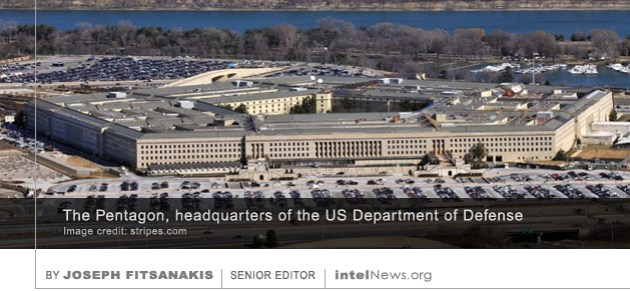
Patin reports that there are roughly 200 Americans who have either entered or attempted to enter Syria and Iraq in efforts to battle ISIS. Of those, at least 108 have spent time the region and enlisted in the various militias and armed groups that are fighting ISIS. Based on open sources, Patin claims that at least two thirds of the Americans fighting ISIS have previously served in the US Armed Forces, mostly in the Marine Corps and Army. Almost all of them are in their 20s and 30s and one of them is female. The majority have spent between one and four months on the battlefield in Iraq, Syria, or both. However, almost a third had little or no military experience prior to joining the war against ISIS. They included Keith Broomfield, 36, who died earlier this year while fighting ISIS in Kobani, Syria.

Almost half of the Americans tracked by Patin have fought for the People’s Protection Units (YPG), a Kurdish group that serves as the armed wing of the Kurdistan Workers’ Party (PKK) in northern Syria. Others have enlisted in the peshmerga forces of the Patriotic Union of Kurdistan (PUK) in Iraq, as well as in an assortment of Christian militias, including the Nineveh Plains Protection Units and the Dwekh Nawsha. There are major questions about the legality of the American volunteers’ actions, according to American law. The US Department of State does not include the YPG or the PUK in its official list of foreign terrorist organizations. But the PKK, which cooperates with both groups, is designated by Washington as a terrorist outfit. It is important to note, however that the Bellingcat study does not cover the legality of the American volunteers’ actions in Iraq and Syria. Finally, it is worth pointing out that almost nothing is known about several hundred Westerners from countries other than the US, who are also fighting against ISIS in the region. They include citizens of Finland, Greece, Italy, Spain, Sweden, Switzerland, and many other countries.

► Author: Joseph Fitsanakis | Date: 28 December 2015 | Permalink

US Pentagon is secretly giving intelligence to Syria, claims journalist

PentagonThe United States Department of Defense has been secretly sharing intelligence with the Syrian government of President Bashar al-Assad without authorization by the White House, according to an American journalist. Officially, the US government is opposed to the Assad regime in Damascus and has repeatedly stated that peace in Syria can only be achieved if the Assad family leaves power. But in a report published yesterday in The London Review of Books, the veteran American investigative journalist Seymour Hersh claims that America’s military leadership has been secretly aiding the Assad family’s efforts to defeat Islamist groups in Syria.
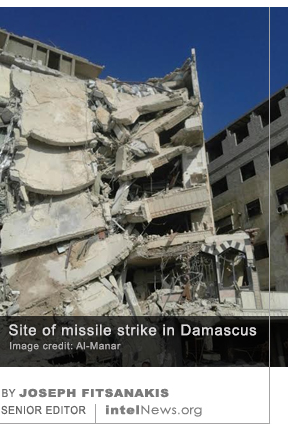
Citing “a former senior adviser to the Joint Chiefs” of Staff (JCS), which comprises of the senior leadership of the Pentagon, Hersh says that the Pentagon is sharing intelligence with Damascus through “third nations”. These include Israel, Germany and even Russia, claims Hersh. The secret agreement is allegedly aimed at defeating the Islamic State and Jabhat al-Nusra, one of the al-Qaeda affiliates operating in Syria. It is important to note that Hersh claims that the White House, including US President Barack Obama, has not authorized the intelligence sharing and is not aware of the secret arrangement. However, the former JSC senior adviser said that was not surprising and that the Executive did not have to authorize every tactical decision made by the leadership of the Pentagon.

However, Hersh points out that if President Obama is indeed being kept in the dark about the Pentagon’s intelligence relationship with Damascus, the secret arrangement would amount to deliberate undermining of the Executive by the US military’s policies. It would also indicate a growing gap between the White House and the Pentagon in regards to America’s position toward the Syrian Civil War. Neither the Pentagon nor the White House responded to media inquiries about Hersh’s report.

► Author: Joseph Fitsanakis | Date: 23 December 2015 | Permalink

Israel silent after assassination of key Hezbollah figure in Damascus

Samir Kuntar Israel has refused comment following the death of a senior official of Lebanese militant group Hezbollah, who was killed on Saturday in a missile strike in Syria. Samir Kuntar (also spelled Qantar) was a Druze who joined the Syrian-backed, Lebanese-based, Palestine Liberation Front (later Popular Front for the Liberation of Palestine – General Command) at a young age. In 1979, Kuntar was jailed for an attack on an apartment block in Israel’s northern coastal town of Nahariya, which resulted in the death of four Israeli civilians and two of the attackers. However, he was freed after nearly three decades in prison in exchange for the bodies of two Israel Defense Force soldiers, who had been captured and executed by Hezbollah in 2006.
Since his high-profile release, Kuntar was believed to have risen in the ranks of Hezbollah, and to have become a major operational figure in the Lebanese militant group. In September of this year, the United States Department of State officially designated Kuntar a Specially Designated Global Terrorist. This designation, under US Executive Order 13224, denoted that Kuntar posed a significant and immediate terrorist threat to American interests. A statement issued by the US State Department at the time described Kuntar as one of Hezbollah’s “most visible and popular spokesmen”, and said he also had an operational role in the organization.

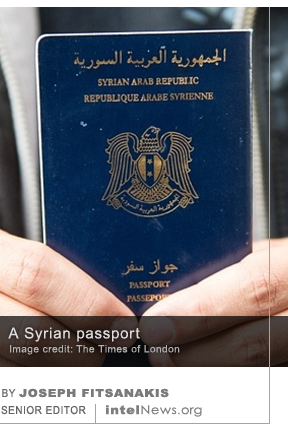
Kuntar was reportedly killed alongside eight other people when a barrage of missiles hit a residential building in the Damascus suburb of Jaramana. A statement by Hezbollah-controlled television station Al-Manar said four long-range missiles were fired by two “Israeli warplanes” that appeared to target the residential building. Based on footage aired by Al-Manar, the multi-story building appears completely destroyed. Moreover, at least one other Hezbollah senior commander, Farhan al-Shaalan, is said to have died in the strike.

Although Hezbollah officially accused “the Zionist entity” for the missile strikes, Israel has refused comment on Kuntar’s killing. When asked for a response by reporters on Sunday morning, Israeli Minister for Construction and Housing Yoav Gallant said he was happy that Kuntar was dead, but stopped short of confirming that Israel was behind the killing.

► Author: Joseph Fitsanakis | Date: 21 December 2015 | Permalink

ISIS now has the ability to issue official-looking Syrian passports

Syrian passportThe Islamic State in Iraq and Syria (ISIS) is now able to produce authentic-looking Syrian passports using machines that are typically available only to governments, according to an American intelligence report. The report was accessed by the New York-based station ABC News, which said it was issued by Homeland Security Investigations (HSI), the investigative wing of the United States Department of Homeland Security. According to ABC News, the 17-page report was issued in early December to law enforcement departments across the US. It warns that ISIS is most likely able to print government-quality travel documents using Syrian passport templates.
According HSI, the militant group was first able to access passport-issuing technology when it conquered Raqqa, the Syrian city that today serves as the capital of the so-called Islamic State. The city has a passport office with at least one passport-issuing machine, said the report. A few months later, ISIS came in possession of a second passport-issuing machine when it captured the eastern Syrian city of Deir al-Zour. The HSI report states that the city’s passport office, which contained “boxes of blank passports” and at least one passport-printing machine, came into the hands of ISIS militants undamaged. Currently, the whereabouts of the Raqqa and Deir al-Zour passport machines “remain fluid”, says the report, pointing out that both machines are believed to be portable.

The intelligence report goes on to state “with moderate confidence” that ISIS has issued authentic-looking Syrian passports to individuals, and that some of them may have traveled to Europe and the US. Further on, the report says that Syria is virtually awash with fake documents; it cites an unnamed source who says that high-quality fake Syrian passports can be purchased in the black market in Syria for less than $400, and that some government employees will backdate passport stamps in exchange for a fee. IntelNews readers will recall that two of the suicide bombers who attacked Paris in November were carrying fake Syrian passports.

► Author: Joseph Fitsanakis | Date: 14 December 2015 | Permalink

Political rift widens in Afghanistan as head of spy service resigns

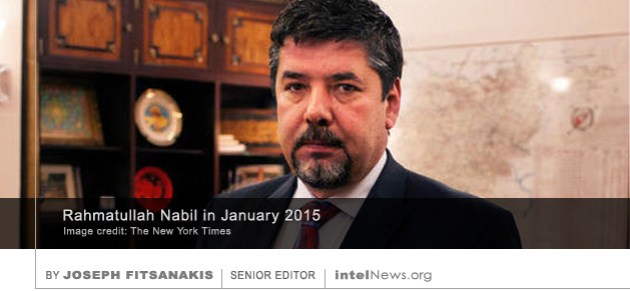
Rahmatullah NabilThe bleak landscape of Afghan national politics became even bleaker on Thursday, after the sudden resignation of the country’s spy chief, allegedly due to “disagreements” with the government in Kabul. Rahmatullah Nabil led Afghanistan’s National Directorate of Security (NDS) from 2010 to 2012 before returning to the post in 2013, while his predecessor, Asadullah Khalid, recovered from injuries suffered from an unsuccessful assassination attempt against him by the Taliban. But on Thursday afternoon, Nabil posted a resignation letter on Facebook, saying that “a lack of agreement on some policy matters” made it impossible for him to continue to lead the NDS.

Nabil’s resignation could not have taken place at a more symbolic moment: it was announced just as Afghan President Ashraf Ghani was returning home from a trip to neighboring Pakistan. The Afghan leader had attended part of the Heart of Asia regional conference, which was held in Pakistani capital Islamabad. But it is common knowledge that President Ghani’s visit was aimed at reinforcing the rapprochement between Kabul and Islamabad, as peace talks with the Taliban are about to restart. Critics of the Pakistani government accuse it of sponsoring the Taliban insurgency and believe that Islamabad’s consent is necessary for peace to prevail in Afghanistan. The Afghan government had entered negotiations with the leadership of the Taliban, but they ended abruptly in July, after it was revealed that Mullah Omar, the longtime leader of the Afghan Taliban, had been killed. Since that time, Taliban forces have taken the northern city of Kunduz, near the Afghan-Tajik border, while at the same time launching surprise raids against other cities, including Kandahar.

However, the NDS under Nabil’s leadership has staunchly opposed attempts by President Ghani to negotiate with the Taliban through the Pakistanis. In the past, Nabil had accused Islamabad of interfering in the domestic affairs of Afghanistan, while at the same time dismissing efforts by the Afghan government to reach out to Pakistan as “ill-fated”. Last week, Nabil accused President Ghani of surrendering Afghanistan’s “5,000-year history [to] Pakistan’s 60-year history”. But the President appeared conciliatory when speaking to reporters on Thursday. He praised Nabil for having done “a lot to improve information technology within NDS” and dismissed accusations that the service had been politicized. Nabil’s resignation would inevitably change the internal structure of the NDS, but such personnel changes were “common occurrences”, said President Ghani.

► Author: Joseph Fitsanakis | Date: 11 December 2015 | Permalink

Paris attack mastermind evaded Athens police raid in January

Abdelhamid AbaaoudThe man who masterminded November’s Islamist attacks in Paris was based in Athens, and last January managed to escape arrest during a joint Greek-Belgian police operation aimed at capturing him. Moroccan-born Abdelhamid Abaaoud, who had lived in Brussels for years, died in a gun battle with French police on November 18, just days after the multiple attacks in Paris that killed 130 people and injured hundreds. It is believed that the perpetrators of the attacks, who were based in Belgium, were guided and directed by Abaaoud. He, however, was not based in Belgium, but in Athens, Greece. It was from there that he directed the Islamist cells, mostly by phone, according to the BBC.
Citing “a Belgian anti-terrorism source” the BBC said on Tuesday that Belgian and Greek authorities were aware of Abaaoud’s general whereabouts and were able to trace some of his phone calls to Islamist militants in Belgium. Eventually, a senior Belgian law enforcement official traveled to Athens to help coordinate a Greek police operation aimed at capturing Abaaoud. By that time, the Moroccan-born militant had been sentenced by a Paris court to 20 years imprisonment in absentia for his role in at least four planned attacks in France —all of which had been foiled by police. Upon capture, Greek authorities planned to extradite Abaaoud to France, where he would serve his sentence. However, the militant was able to get away, though the BBC said that the circumstances of his escape remain unclear. According to the report, an Algerian associate off Abaaoud was arrested during the operation in Athens and was extradited to Belgium.

Abaaoud was not the only Islamic State-linked militant known to have operated in Greece. The two suicide bombers who tried to enter the Stade de France in Paris on November 13 had entered the European Union through the Greek island of Leros, after crossing the Aegean by boat from Turkey. Meanwhile, another of Abaaoud’s associates, Belgian-born Frenchman Salah Abdeslam, whose current whereabouts are unknown, is believed to have traveled by ferry from Italy to Greece in August.

► Author: Joseph Fitsanakis | Date: 10 December 2015 | Permalink

US intel report says ISIS will spread worldwide unless defeated in Syria

ISIS - JFA report compiled by senior analysts in the United States Intelligence Community warns that the Islamic State will spread around the world unless it suffers significant territorial losses in Syria and Iraq. The eight-page report was commissioned by the White House and represents the combined views of analysts from the Central Intelligence Agency, the Defense Intelligence Agency, the National Security Agency, and other members of the US Intelligence Community. According to The Daily Beast, which revealed the existence of the repot on Sunday, the document is “already spurring changes” in how Washington is responding to the growth of the Islamic State. The group is also known as the Islamic State of Iraq and Syria (ISIS).

The Daily Beast’s Kim Dozier said the report, which was commissioned prior to the Paris and San Bernardino attacks, offered “a tacit admission” that efforts by the US, Russia, and other countries to thwart the growth of ISIS have failed. Over 60 nations are so far involved in broad efforts to destroy the Islamist group, mostly through air raids and material support for local militaries and militias. The US has also deployed 3,500 troops —including Special Forces— in the area. But this has done little to stop ISIS, which is believed to have attracted over 30,000 foreign recruits in the last 18 months alone.

Dozier said that, after US President Barack Obama was given the intelligence report by the Office of the Director of National Intelligence (ODNI), he asked his senior advisors to come up with “new options” to defeat ISIS. These efforts are currently being led by Secretary of Defense Ash Carter and Marine General Joseph Dunford, who is Chairman of the Joint Chiefs of Staff. One of the first decisions taken by the White House in response to the ODNI report was the deployment of a 200-strong Special Forces group on the ground in Iraq and Syria. The group is believed to be conducting raids in association with local militias that are fighting ISIS.

The Daily Beast said it spoke to a spokesman from the ODNI, who confirmed the existence of the intelligence report, but refused to elaborate. Representatives from the White House and the US Department of Defense refused to comment on the subject.

► Author: Joseph Fitsanakis | Date: 01 December 2015 | Permalink

Speculation ends as Israeli prime minister appoints new Mossad chief

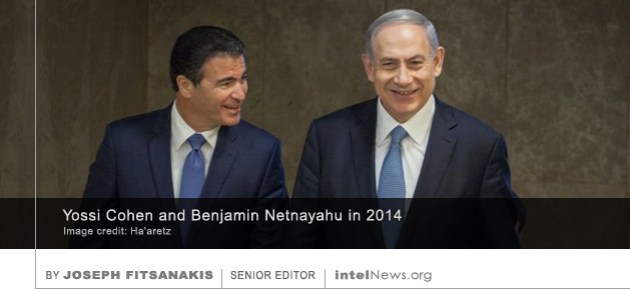
Yossi Cohen and Benjamin NetnayahuMonday brought an end to weeks of speculation in Israel, as Prime Minister Benjamin Netanyahu appointed the new director of the Mossad, the Jewish state’s national intelligence agency. At a hastily announced press conference in Jerusalem, Netanyahu said he had chosen Yossi Cohen for the post. A 30-year veteran of the Mossad, Cohen left the intelligence agency in 2013 to chair Israel’s National Security Council and advise the prime minister. Cohen, 54, who has four children, grew up in Jerusalem and became a fighter pilot before joining the Mossad. He gradually rose through the ranks to become deputy director at the agency. Prior to that, he led for several years the Mossad’s Department of Collections, which handles operations officers around the world.
More recently, Cohen led the agency’s Political Action and Liaison Department, which is tasked with facilitating cooperation between the Mossad and foreign intelligence agencies. From that position, he witnessed the worsening relations between Israel and the United States, as Washington struck closer relations with Iran despite Tel Aviv’s strong objections. That unprecedented development sparked a fierce internal debate between the Israeli intelligence community and the executive. The debate culminated when the Mossad’s outgoing Director, Tamir Pardo, objected to Prime Minister Netanyahu’s hardline stance on Iran. In 2011, Pardo, who will be stepping down from his post in January after 5 years at the helm, opined that the Iranian nuclear program was not an existential threat to Israel and that the Jewish state should concentrate instead on its dispute with the Palestinians.

Cohen, who is one of Netanyahu’s most trusted advisers, is expected to bring the Mossad closer to the prime minister’s office. He was reputedly one several candidates for the post, and was chosen from a list that included the Mossad’s former Deputy Director Rami Ben-Barak —currently at the helm of Israel’s Ministry of Intelligence Affairs— and the agency’s second-in-command, who is known publicly only as “N”. Following Monday’s announcement by Netanyahu, which came after an unexplained hour-long delay, there were rumors of last-minute complications with Cohen’s appointment. But The Times of Israel quoted an unnamed “senior diplomatic official” as saying that there had been “no last minute drama [or] pressures” prior to Netanyahu’s announcement.

► Author: Joseph Fitsanakis | Date: 08 December 2015 | Permalink

German spy agency says Saudi Arabia is ‘source of regional instability’

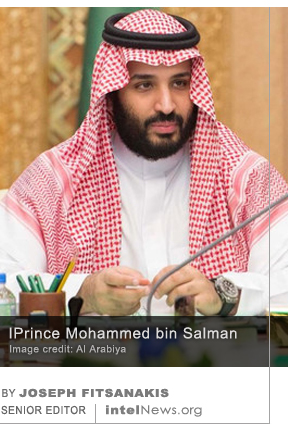
Prince Mohammed bin SalmanA report by Germany’s primary intelligence agency warns that internal power struggles and broader geopolitical changes are turning the Kingdom of Saudi Arabia into a major source of regional instability. The report was produced by the German Federal Intelligence Service, known as BND, and is entitled: “Saudi Arabia: A Sunni Regional Power Torn Between a Paradigm Shift in Foreign Policy and Domestic Power Consolidation”. It explains the energy-rich Kingdom’s new forceful approach to regional problems as an outcome of both domestic and external factors.

On the domestic scene, the BND report connects the changes in Saudi Arabia’s regional stance with an unfolding power-struggle between two factions inside the country’s royal family. On the one side is the ‘traditionalist’ faction led by King Salman, who was enthroned in January of this year following the death of his predecessor, King Abdullah. This faction is being challenged by a group of royal family members led by Deputy Crown Prince Mohammed bin Salman, who currently serves as the country’s minister of defense. According to the BND report, Prince Mohammed, who is second-in-line to the throne, is trying to solidify his position in the royal succession by promoting a more radical and militarized foreign policy. This, says the BND, can be seen in Saudi Arabia’s ongoing military intervention in Yemen, as well as in its highly interventionist policy in support of anti-government rebels in Syria.

The German intelligence report suggests that Prince Mohammed’s policies are also the result of a widespread view among some senior members of the Saudi royal family that the United States is gradually disengaging from the Middle East, and that the country is not any more a strong guarantor of Saudi Arabia’s security. As a result, the Kingdom is “prepared to take unprecedented risks” in the military, diplomatic and financial domains in order to project itself as a strong regional actor and “avoid falling behind in regional affairs” in its struggle for dominance against its neighboring rival, Iran.

But this new policy, says the BND, comes with considerable financial demands, which are challenging the limits of Saudi Arabia’s financial might. This year alone, notes the German report, the Kingdom is expected to announce a budget deficit that will be in the neighborhood of $120 billion. This is angering many senior members of the royal family who are opposed to Prince Mohammed’s aggressive regional stance. These ‘traditionalists’ have repeatedly criticized the prince’s “impulsive policy of intervention”, which they claim is jeopardizing the Kingdom’s relationship with important regional allies, as well as with Washington.

► Author: Joseph Fitsanakis | Date: 4 October 2015 | Permalink