European court of human rights censures Italy over CIA abduction case
February 24, 2016 1 Comment
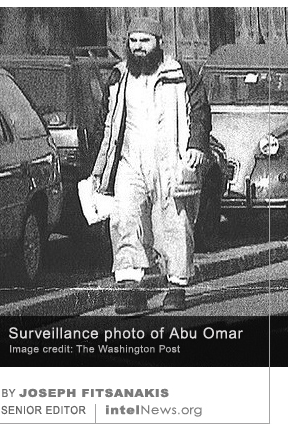 Europe’s highest human rights court has ruled against Italy in the case of an Egyptian man who was abducted from Milan in 2003 by the United States Central Intelligence Agency. Hassan Mustafa Osama Nasr, known as Abu Omar, is a former member of al-Gama’a al-Islamiyya, an Islamist group founded in the 1970s, which aimed to overthrow the Egyptian government and replace it with an Islamic regime. Members of the group have been implicated in the assassination of Egyptian President Anwar Sadat in 1981, as well as in numerous attacks on tourist facilities in Egypt in the 1990s. Once al-Gama’a al-Islamiyya was declared illegal in Egypt, Italian authorities offered Nasr political asylum, after he successfully argued that he would be subject to torture if arrested in Egypt.
But in 2003, the CIA, which believed that Nasr was involved with al-Qaeda-linked groups in Europe, abducted him from Milan in broad daylight. After his abduction, Nasr was delivered by the CIA to Egyptian authorities under Washington’s “extraordinary rendition” program. He was then imprisoned in Egypt for four years without trial. Following his release in 2008, Nasr said he was brutally tortured and raped by his Egyptian captors and was never given access to a lawyer. Regular readers of intelNews will recall that the Nasr abduction prompted international headlines after an Italian court convicted 23 Americans and two Italians for Nasr’s kidnapping. The American defendants, most of whom are believed to be CIA officers, were tried in absentia. Washington has since refused to extradite them to Italy.
On Tuesday, Italy was found guilty of human rights violations in the Nasr case by the European Court of Human Rights, the highest court of justice sanctioned by the Council of Europe. The court said that the Italian state imposed “the principle of state secrecy […] in order to ensure that those responsible [for Nasr’s abduction] did not have to answer for their actions”. Consequently, those responsible for the abduction were “ultimately […] granted immunity”, said the court, implying that the Italian executive sabotaged the Italian trial in order to allow for the alleged CIA officers to escape justice. The court also ordered Italy to pay Nasr €115,000 ($127,000) in restitution.
► Author: Joseph Fitsanakis | Date: 24 February 2016 | Permalink
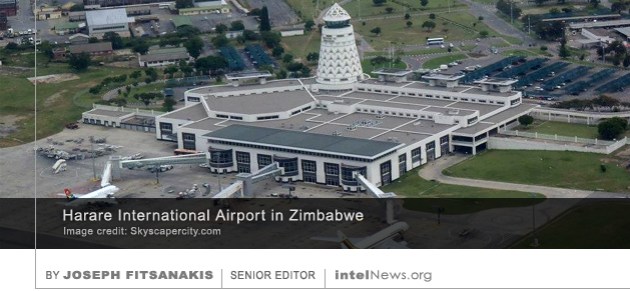 An American-registered airplane carrying large quantities of cash on behalf of a South African bank was impounded by authorities in Zimbabwe after a dead body was found on board. Zimbabwean media said police was notified after human blood was seen dripping from the plane’s cargo area during an emergency refueling stop. Authorities
  Syrian and American media are reporting that Russian engineers, employed by a Moscow-based contractor with close ties to Russian President Vladimir Putin, are working at a Syrian gas plant under the control of the Islamic State. The facility in question is the so-called Tuweinan gas plant, which is located in central Syria, approximately 60 miles (40 kilometers) southwest of the city of Raqqa. The Islamic State declared Raqqa its capital shortly after occupying it, in June 2013, and the city has since served as the militant group’s administrative headquarters. The nearby Tuweinan gas plant is believed to be the largest of its kind in Syria. In 2013, it was occupied by an alliance of factions operating under the banner of the Al-Nusra Front, the primary al-Qaeda affiliate in Syria. But in early 2014, Islamic State forces took control of the plant following a military offensive against Al-Nusra.
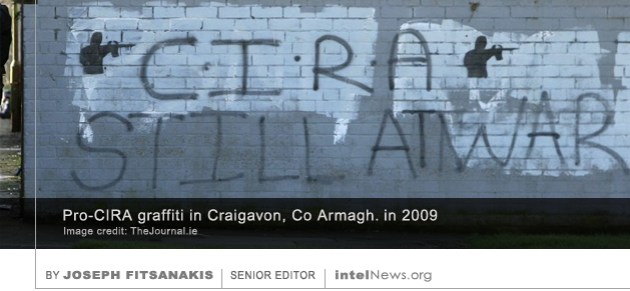 A leading dissident republican group in Ireland has claimed responsibility for a bloody attack in Dublin, which was carried out last week by a group of masked assailants disguised as police and carrying AK-47 assault rifles. Police said that the carefully planned attack involved at least six people wearing SWAT-style police uniforms, at least one of whom was disguised as a woman. The assailants
 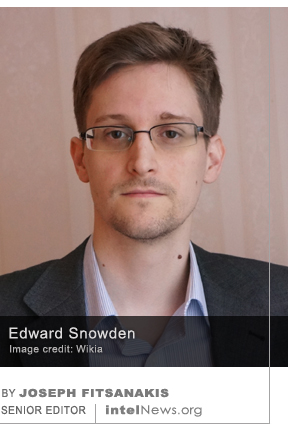 Documents acquired through Denmark’s freedom of information act appear to show that the United States deployed an airplane, which had previously been used to rendition terrorism detainees, in an attempt to capture the American defector Edward Snowden. Snowden, a computer expert for the United States Central Intelligence Agency and the National Security Agency, is currently living in Russia, where he defected in June 2013, after initially fleeing to Hong Kong with millions of stolen US government documents in his possession. A few weeks ago, Danish news website Denfri.dk
 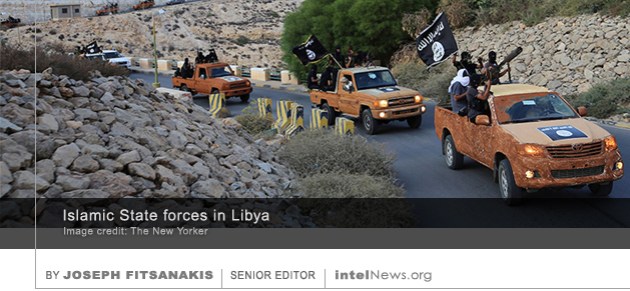 Senior members of the Islamic State are moving from Syria and Iraq to Libya, according to a Libyan intelligence official who spoke to the BBC. Since 2014 and the outbreak of the Second Libyan Civil War, the North African country has been engulfed in a multipolar struggle for dominance between rival armed groups and alliances. Among them is Libya Dawn, a loose coalition of former al-Qaeda-linked militants, ethnic Berbers, members of the pro-Egypt Muslim Brotherhood, as well as the al-Shorooq Force, an Islamist militia from Libya’s northwestern coastal city of Misrata. Libya Dawn troops have been engaged in ground-combat against Islamic State forces, which currently control Libya’s north-central coastal region.
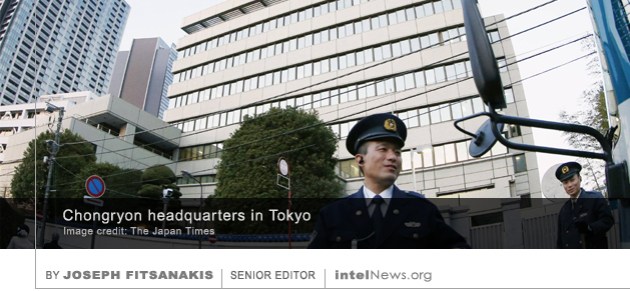 A Korean resident of Japan, who was arrested in South Korea for credit card fraud, was allegedly a handler of North Korean sleeper agents operating in South Korea, Japan and China, according to police in Seoul. Pak Chae Hun, 49, was arrested on Tuesday at his home in Seoul by officers of the Public Security Bureau of the Metropolitan Police Department. A statement issued by South Korean police said Pak was until recently an associate professor at Korea University, a higher-education institution based in the Japanese capital Tokyo. The University is funded directly by the government of North Korea through Chongryon, a pro-Pyongyang organization otherwise known as the General Association of Korean Residents in Japan. The group represents tens of thousands of ethnic Koreans living in Japan, who are ideologically affiliated with Pyongyang.
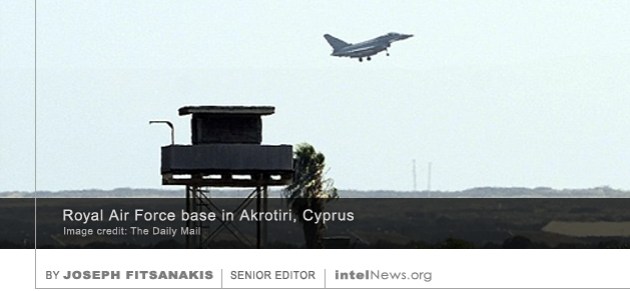 British and American intelligence services worked together to hack Israeli unmanned aerial vehicles in order to acquire information on the Jewish state’s military intentions in the Middle East, according to documents leaked last week. Online publication The Intercept, said the operation was code-named ANARCHIST and was a joint project of Britain’s General Communications Headquarters (GCHQ) and America’s National Security Agency (NSA). The publication said it acquired documents about the operation from former NSA contractor Edward Snowden, who defected to Russia in 2013 and was offered political asylum by Moscow.
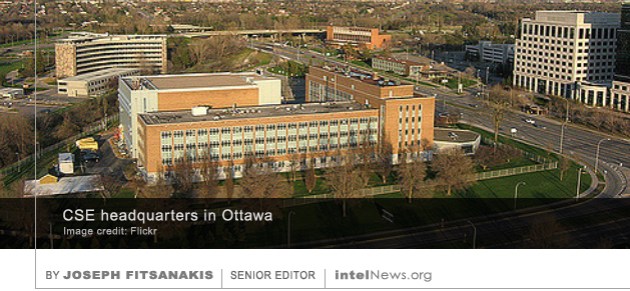 Canada says it will stop sharing certain types of intelligence with some of its closest international allies until it ensures that Canadian citizens’ information is not included in the data given to foreign spy agencies. The announcement follows an official admission, made earlier this week, that a Canadian intelligence agency failed to remove Canadian citizens’ data from information it shared with member-agencies of the so-called Five Eyes Agreement. The pact, which is sometimes referred to as the UK-USA Security Agreement, has been in existence since World War II. It provides a multilateral framework for cooperation in signals intelligence (SIGINT) between the United Kingdom, the United States, Canada, Australia, and New Zealand.
 A Russian former intelligence officer, who is accused by the British government of having killed another Russian former spy in London, said the British intelligence services tried to recruit him in 2006. British government prosecutors have charged Andrei Lugovoi with the killing of Alexander Litvinenko, a former employee of the Soviet KGB and one of its successor agencies, the FSB. In 2006, Litvinenko died in London, where he had defected with his family in 2000, following exposure to the highly radioactive substance Polonium-210. In July of 2007, the British government charged Lugovoi and another Russian, Dmitri Kovtun, with the murder of Litvinenko, and expelled four Russian diplomats from London. Last week, following the conclusion of an official inquest into the former KGB spy’s death, the British government took the unusual step of summoning the Russian ambassador to London, to file an official complaint about Moscow’s refusal to extradite Lugovoi and Kovtun to the United Kingdom.
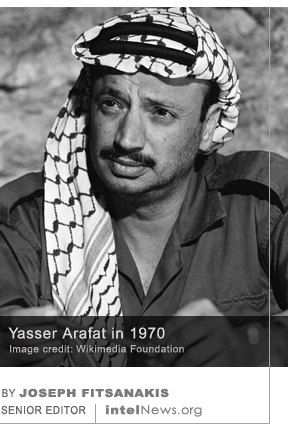 Switzerland secretly agreed in the 1970s to support calls for Palestinian statehood, in return for not being targeted by Palestinian militants, according to a new book. Written by Marcel Gyr, a journalist with the Zurich-based Neue Zürcher Zeitung, the book
 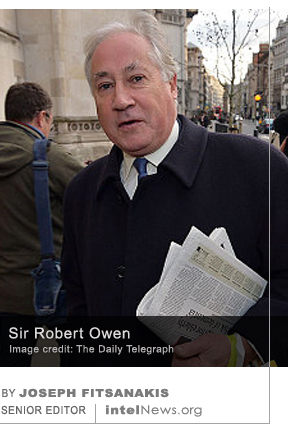 The British government has taken the unusual step of summoning the Russian ambassador to London, following the conclusion of an official inquest into the death of a former KGB officer who is believed to have been killed on the orders of Moscow. Alexander Litvinenko, an employee of the Soviet KGB and one of its successor organizations, the FSB, defected with his family to the United Kingdom in 2000. But in 2006, he died of radioactive poisoning after meeting two former KGB/FSB colleagues, Dmitri Kovtun and Andrey Lugovoy, in London. A public inquiry into the death of Litvinenko, ordered by the British state,
 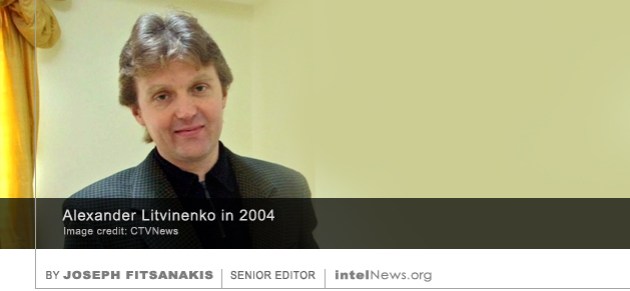 The long-awaited concluding report of a public inquiry into the death of a former Soviet spy in London in 2006, is expected to finger the Russian state as the perpetrator of the murder. Alexander Litvinenko was an employee of the Soviet KGB and one of its successor organizations, the FSB, until 2000, when he defected with his family to the United Kingdom. He soon became known as a vocal critic of the administration of Russian President Vladimir Putin. In 2006, Litvinenko came down with radioactive poisoning after meeting two former KGB/FSB colleagues, Dmitri Kovtun and Andrey Lugovoy, at a London restaurant. In July of 2007, after establishing the cause of Litvinenko’s death, which is attributed to the highly radioactive substance Polonium-210, the British government officially charged the two Russians with murder and issued international warrants for their arrest. Whitehall also announced the expulsion of four Russian diplomats from London. The episode, which was the first public expulsion of Russian envoys from Britain since end of the Cold War, is often cited as marking the beginning of the worsening of relations between the West and post-Soviet Russia.
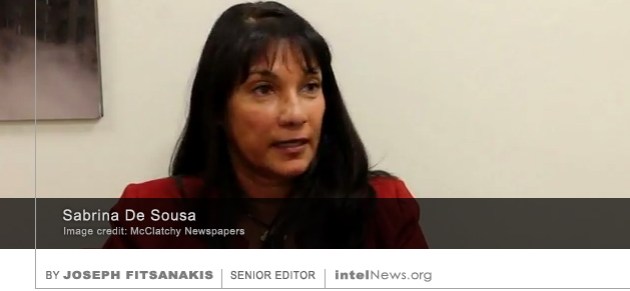 A court in Portugal has ruled to extradite a former officer of the United States Central Intelligence Agency to Italy, where she faces charges of kidnapping a man as part of a secret operation. Sabrina De Sousa, 59, was an accredited diplomat stationed at the US consulate in Milan, Italy, in 2003, when a CIA team kidnapped Hassan Mustafa Osama Nasr from a Milan street in broad daylight. Nasr, who goes by the nickname Abu Omar, is a former member of Egyptian militant group al-Gama’a al-Islamiyya, and was believed by the CIA to have links to al-Qaeda. Soon after his abduction, Nasr was renditioned to Egypt, where he says he was brutally tortured, raped, and held illegally for years before being released without charge.








Forensic experts to probe alleged poisoning of Nobel Laureate poet Neruda
February 25, 2016 Leave a comment
The investigation was sparked by comments made by Neruda’s personal driver, Manuel Araya, who said that the poet had been deliberately injected with poison while receiving treatment for cancer at the Clinica Santa Maria in Chilean capital Santiago. According to Araya, General Pinochet ordered Neruda’s assassination after he was told that the poet was preparing to seek political asylum in Mexico. The Chilean dictatorship allegedly feared that Neruda would seek to form a government-in-exile and oppose the regime of General Pinochet. Last year, Spanish newspaper El País said it had been given access to a report prepared by Chile’s Ministry of the Interior, which allegedly argues that it was unlikely that Neruda’s death was the “consequence of his prostate cancer”. According to the paper, the document states that it was “manifestly possible and highly probable” that the poet’s death was the outcome of “direct intervention by third parties”. The report also explains that Neruda’s alleged murder resulted from a fast-acting substance that was injected into his body or entered it orally.
On Wednesday, it was announced that two teams of genomics and forensic experts, one in Canada and one in Denmark, will examine Neruda’s bones and teeth in an effort to extract fragments of bacterial DNA. According to reports, the experts hope that the extracted DNA will provide them with genomic data that can help identify pathogenic bacteria. That, in turn, could help establish a possible cause of death. The two teams are based at the Ancient DNA Center at McMaster University in Canada and the Department of Forensic Medicine at the University of Copenhagen in Denmark.
► Author: Joseph Fitsanakis | Date: 25 February 2016 | Permalink | News tip: R.W.
Filed under Expert news and commentary on intelligence, espionage, spies and spying Tagged with Chile, Cold War, history, News, Pablo Neruda, poisoning, Salvador Allende, suspicious deaths