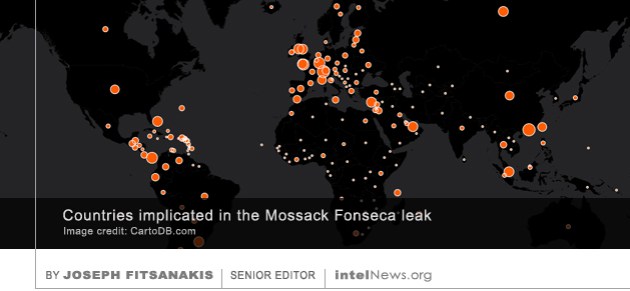
 Aside from their immediate shock value, the Panama Papers reveal the enormous extent of tax evasion on a worldwide scale. This unprecedented phenomenon is inextricably tied with broader trends in globalized finance-capitalism that directly threaten the very survival of the postwar welfare state. National intelligence agencies must begin to view offshore tax evasion as an existential threat to the security of organized government and need to augment their economic role as part of their overall mission to protect and secure law-abiding citizens.
THE BACKGROUND OF THE LEAK
The source of the Panama Papers leak —the largest in history— is apparently a single individual who contacted the widely respected German newspaper Süddeutsche Zeitung over a year ago. After receiving assurances that his or her anonymity would be safeguarded, the source proceeded to provide the paper with what eventually amounted to over 11.5 million files. They include company emails, banking transaction records, and files of clients that span the years 1977 to 2015. The source asked for no financial compensation or other form of reimbursement in return, saying only that he or she wanted to “make these crimes public”.
Faced with the largest data leak in recorded history, the Süddeutsche Zeitung reporters contacted the International Consortium of Investigative Journalists (ICIJ), which is the international arm of the Washington-based Center for Public Integrity. With ICIJ acting as an umbrella group, the German reporters were eventually joined by 370 journalists representing 100 news outlets from 76  countries. On Sunday, following a year-long analysis of the data, the reporting partners began publishing revelations from the Panama Papers, and say they will continue to do so for several days to come.
THE ROLE OF MOSSACK FONSECA
The documents are from the internal records of Mossack Fonseca, a law firm headquartered in Panama City, Panama, with offices in 42 countries. The company is one of the world’s most prolific registrars and administrators of shell companies in offshore locations. It has created more than 300,000 shell companies throughout its history, most of them in offshore tax havens like the British Virgin Islands, Cyprus, or Guernsey. Its clients are offered the ability to incorporate a generic-sounding company and headquarter it in an offshore tax haven. In exchange for an annual fee, Mossack Fonseca provides the company with a sham director and shareholders, thus concealing the true owner and actual beneficiary of the business.
The power of the leaked documents is that they reveal the actual owners of 214,000 offshore shell companies managed by Mossack Fonseca. The long list of names includes dozens of current and former heads of state, as well as hundreds of politicians, public figures and celebrities. Many of these individuals have failed to declare their earnings from their shell companies in their annual tax  statements, which means they have not been paying taxes in their country of citizenship or residency. Thus, there are now thousands of Mossack Fonseca clients in over 100 countries who are preparing to face the legal consequences of tax evasion.
SECURITY IMPLICATIONS
Equally importantly, however, the leaked documents reveal that Mossack Fonseca’s clients appear to include at least 33 individuals and companies that are involved in organized crime or have close contacts with terrorist organizations. This sheds light on the increasingly disappearing line that once separated illicit activities such as tax avoidance and tax evasion, from money laundering, organized crime and terrorism. This phenomenon is assisted by unscrupulous companies like Mossack Fonseca, which act as anonymizing platforms for wealthy celebrities, criminals and terrorists alike.
The leak also shows the extent to which national governments have been unable to stem the tide of unfettered finance-capitalism, which today threatens the stability and cohesion of developed and developing economies alike. Moreover, the sheer scale of offshore capital funds, which, according to one expert, amount to as much as $32 trillion, threaten the economic security of nation states and must be viewed as an existential threat to the ability of states to fund public expenditures though taxation. The political arrangement that led to the creation of the postwar welfare state is today being directly threatened by the inability or unwillingness of organized states to monitor the largely unregulated flow of capital to offshore tax havens.
Today, entire economies, including much of southern Europe, the Balkans, as well as Latin America, are crumbling under the fiscal weight created by mass-scale tax evasion and organized crime. Organized criminals are now actively working closely with the banking sector, thus creating even more opportunities for money laundering and other financial illegality on an unprecedented scale. The Süddeutsche Zeitung revelations demonstrate that the line that separates legitimate economic activity from the rogue underbelly of global capitalism is exceedingly thin. It is high time that Western intelligence agencies viewed this worrying development as an asymmetrical threat against the security of law-abiding societies and began dealing with offshore tax havens with the same intensity that they have displayed against terrorist safe havens since 9/11.
► Author: Joseph Fitsanakis | Date: 04 April 2016 | Permalink
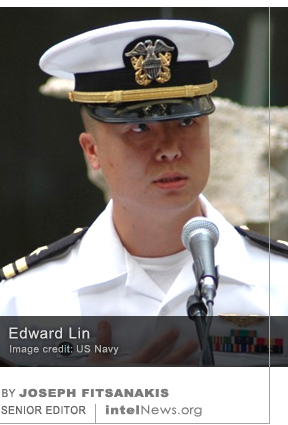 For the first time since 1985, when the Federal Bureau of Investigation broke the John Walker spy ring, an active United States Navy officer has been charged with espionage. On Sunday, the US Navy reported the arrest Lt. Cmdr. Edward C. Lin, who faces two counts of espionage and three counts of attempted espionage, among other charges. Aside from a three-page, heavily redacted charge sheet released by the US Navy, almost nothing is known about this case. However, there are several clues that point to the seriousness of the charges against Lin, and their potential ramifications for US national security, which are likely to be extensive.
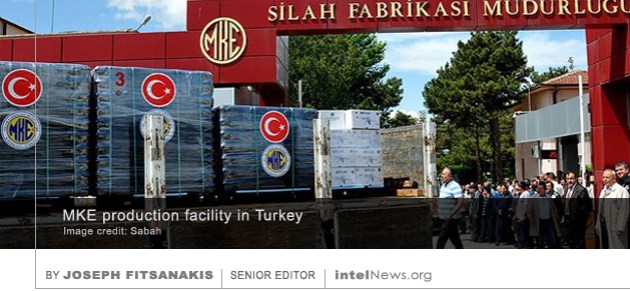 A senior official of Turkey’s state-run weapons manufacturer has been arrested on espionage charges, after he was caught selling weapons blueprints to the employee of an arms firm based in the United States. The official was named by Turkish authorities as Mustafa Tanriverdi, the general manager of one of Turkey’s largest weapons production facilities, located in the town of Kirikkale, 50 miles east of Turkish capital Ankara. Tanriverdi is reportedly employed by the Mechanical and Chemical Industry Corporation (MKE), a government-run manufacturing firm that provides much of the Turkish Armed Forces’ weaponry. The company also has a growing list of international buyers, which includes nearly 30 foreign governments.
 The Russian government says it has arrested a senior Ukrainian intelligence officer, who was allegedly trained by the United States Central Intelligence Agency and tasked with infiltrating the Russian secret services. In a
 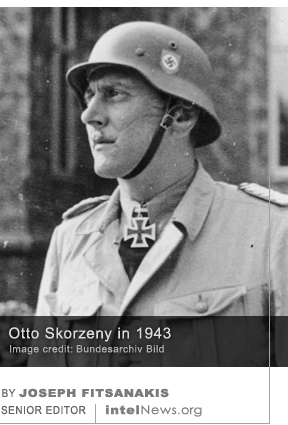 A notorious lieutenant colonel in the Waffen SS, who served in Adolf Hitler’s personal bodyguard unit, worked as a hitman for the Israeli intelligence agency Mossad after World War II, it has been revealed. Austrian-born Otto Skorzeny became known as the most ruthless special-forces commander in the Third Reich. Having joined the Austrian branch of the National Socialist German Workers’ Party at 19, at age 23 Skorzeny began serving in the Waffen SS, Nazi Germany’s conscript army that consisted largely of foreign-born fighters. In 1943, Hitler himself decorated Skorzeny with the Knight’s Cross of the Iron Cross, in recognition of his leadership in Operation EICHE, the rescue by German commandos of Italian fascist dictator Benito Mussolini, who had been imprisoned at a ski resort in the Apennine Mountains following a coup against his government.
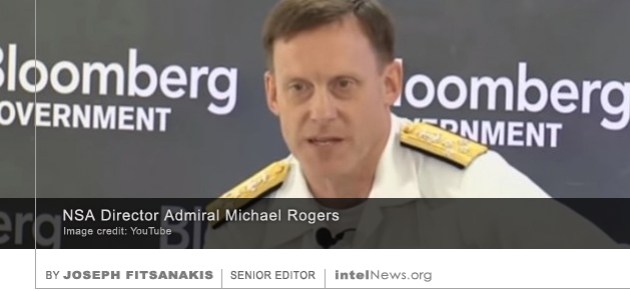 The head of the United States’ largest intelligence agency secretly visited Israel last week, reportedly in order to explore forging closer ties between American and Israeli cyber intelligence experts. Israeli newspaper Ha’aretz
 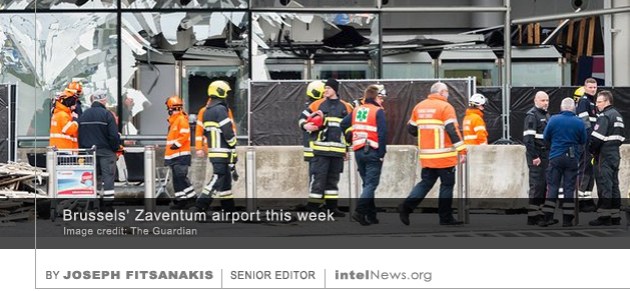 In the past year, the Islamic State has claimed responsibility for at least nine terrorist attacks on foreign capitals. The growing list, which features Jakarta, Tunis, Paris, Beirut, Ankara, and Kuwait City, now includes the Belgian capital, Brussels. At least 34 people died in the attacks that rocked Brussels’ Zaventum airport and Maelbeek metro station on March 22, while another 300 were injured, 60 of them critically. This week’s bombings officially constitute the bloodiest terrorist attacks in Belgium’s history, prompting the country’s government to declare three days of national mourning.
 A court in Germany has sentenced a former officer of the country’s intelligence agency, who spied for the United States and Russia from 2008 to 2014. Regular readers of this website will recall the case of ‘Markus R.’, a clerk at the Bundesnachrichtendienst, or BND, Germany’s external intelligence agency. The 32-year-old was
 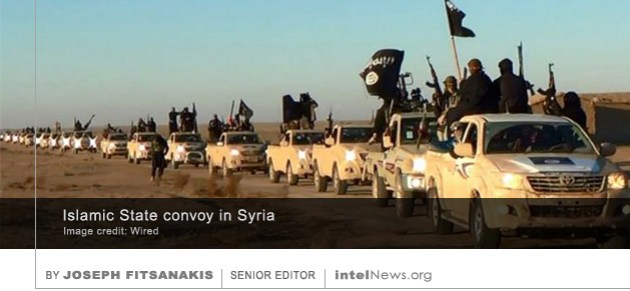 Tens of thousands of classified documents belonging to the Islamic State have been released by a disillusioned former member of the organization, who says that the group has been taken over by secularists.
 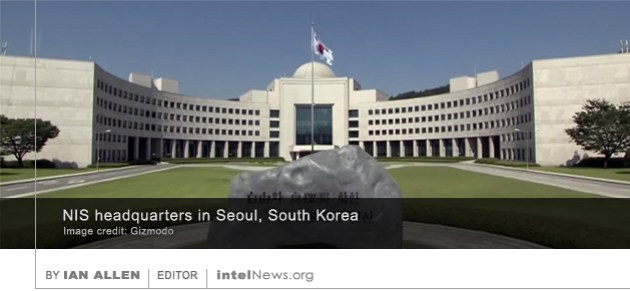 Dozens of cell phones belonging to senior government officials in South Korea were compromised by North Korean hackers who systematically targeted them with texts containing malicious codes, according to reports. The National Intelligence Service (NIS), South Korea’s primary intelligence agency, said the cell phone penetrations were part of a concerted campaign by North Korea to target smart phones belonging to South Korean senior government officials. Once they managed to compromise a cell phone, the hackers were able to access the call history stored on the device, the content of text messages exchanged with other users and, in some cases, the content of telephone calls placed on the compromised device. Moreover, according to the NIS, the hackers were able to access the contact lists stored on compromised cell phones, which means that more attacks may be taking place against cell phones belonging to South Korean government officials.
 Authorities in a northern German town have called on the Israeli embassy in Berlin to pay for the cost of extricating a car belonging to two Israeli spies, which was stuck in a mud pit in a restricted area. According to the Hamburg-based television station NDR, the
 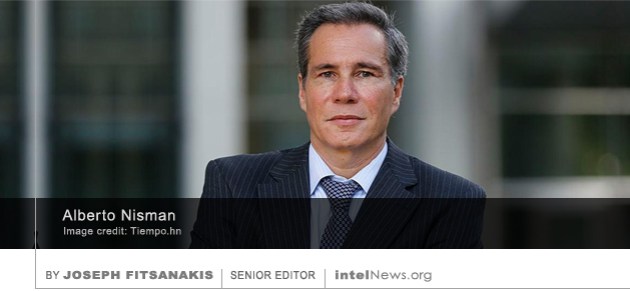 An Argentine former senior intelligence official has claimed in court testimony that the administration of President Cristina Fernández de Kirchner murdered a state prosecutor who had accused senior officials of having colluded with Iran to bomb Israeli targets in Buenos Aires. In January 2015, the prosecutor, Alberto Nisman, prompted international headlines by launching a criminal complaint against President Kirchner and several other notable personalities of Argentine political life. Nisman accused them of having colluded with the government of Iran to obstruct an investigation into the bombings of the Israeli embassy and a Jewish cultural center in Buenos Aires in the mid-1990s. A dozen people died in the bombing of the embassy, while another 85 were killed two years later, when the Asociación Mutual Israelita Argentina community center in the Argentine capital was bombed. Nisman was
 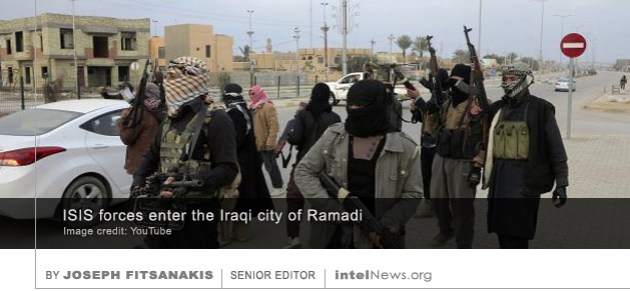 The leading lawmaker in the United States Congressional intelligence committee has accused the Department of Defense of resisting his efforts to investigate claims that intelligence products on the Islamic State were manipulated. Representative Devin Nunes (R-Ca.), who chairs the US House of Representatives Permanent Select Committee on Intelligence, said last week that he and his staffers were experiencing a “lack of cooperation” from the military during the course of an official probe into intelligence products. Nunes was referring to
 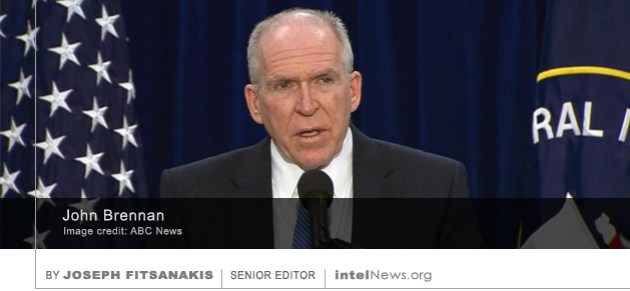 Russia is being “very aggressive” toward the United States, but cooperation on counter-terrorism between Moscow and Washington is “highly active” despite the differences between them, according to the director of the United States Central Intelligence Agency. John Brennan, a longtime CIA career officer, who has led the Agency for nearly three years,








Names of intelligence officials, agents, appear in Panama Papers
April 13, 2016 Leave a comment
Referred to as ‘the Panama Papers’, the massive leak amounts to over 11.5 million internal files from Mossack Fonseca, one of the world’s most prolific registrars and administrators of shell companies in offshore locations. Throughout its history, the company has created more than 300,000 shell companies, most of them in offshore tax havens like the British Virgin Islands, Cyprus, or Guernsey. Its clients are offered the ability to incorporate a generic-sounding company and headquarter it in an offshore tax haven. In exchange for an annual fee, Mossack Fonseca provides the company with a sham director and shareholders, thus concealing the true owner and actual beneficiary of the business.
The Süddeutsche Zeitung said on Monday that senior intelligence officials from Rwanda and Colombia are listed as Mossack Fonseca customers, but did not report the names of the individuals. It did, however, single out the late Sheikh Kamal Adham, who was director of Saudi Arabia’s General Intelligence Directorate in the 1960s and 1970s. During his 14-year directorship of the GID, the agency became a leading intermediary between the CIA and Arab intelligence agencies, notably those of Egypt and Iraq. Sheikh Adham was also a personal friend of CIA Director George Bush, who was later elected US president.
According to the Süddeutsche Zeitung, Sheikh Adham is one of many individuals with close CIA links whose names appear in the Panama Papers. Another is Farhad Azima, an Iranian-born American businessman, who is rumored to have leased aircraft to the CIA in the 1980s. The American intelligence agency is said to have used the aircraft, which belonged to Azima’s Kansas City, Missouri-headquartered Global International Airways, to transport weapons to Iran. The secret transfers were part of what later became known as the Iran-Contra scandal, in which US officials secretly sold weapons to Iran in return for the release of American hostages held by Iran-linked groups in the Middle East. The funds acquired from these weapons sales were then secretly funneled to the Contras, a medley of anti-communist paramilitary groups fighting the Sandinista-led government of Nicaragua.
► Author: Joseph Fitsanakis | Date: 13 April 2016 | Permalink
Filed under Expert news and commentary on intelligence, espionage, spies and spying Tagged with Al-Mukhabarat Al-A'amah (Saudi Arabia), CIA, Farhad Azima, Iran-Contra Scandal, Kamal Adham, Mossack Fonseca, News, Panama Papers