Brazil’s new acting president was US embassy intelligence source in 2006
May 17, 2016 1 Comment
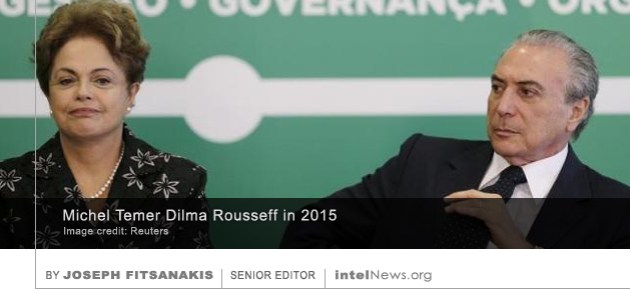 The new acting president of Brazil briefed American diplomats on sensitive political matters in 2006, according to cables published by the international whistleblower website WikiLeaks. Michel Temer is leader of the Brazilian Democratic Movement Party, known as PMDB. Although it is one of Brazil’s largest political parties, the PMDB has been unable to muster enough electoral support to govern the country on its own. As a result, under Temer’s leadership, the PMDB has been a partner of every governing coalition in Brazil since 1995. During the administration of leftwing President Dilma Rousseff, Temer held the post of Vice President.
But in March of this year, the PMDB dropped its support of Rousseff, accusing her of financial irregularities. In April, the speaker of Brazil’s Chamber of Deputies (the lower house of the Brazilian Parliament), Eduardo Cunha, who is himself a PMDB member, spearheaded impeachment proceedings against Rousseff. Eventually, these efforts were successful, leading to the suspension of the president, who is currently undergoing an impeachment trial. In the meantime, Temer assumed the role of president, as stipulated by the Brazilian constitution. This has led Rousseff to denounce the proceedings as a coup orchestrated by the PMDB.
Throughout this process, the United States, which has had a tense relationship with President Rousseff, and her predecessor, the leftwinger Luis Inacio Lula da Silva, has maintained a discrete silence. But two leaked cables produced by the US embassy in Brazil in 2006, show that Temer, who led the impeachment proceedings against Rousseff, was considered an intelligence informant by US diplomats. The cables, which were published on Friday by WikiLeaks, appear to show that Temer briefed US diplomats at length on sensitive matters relating to domestic Brazilian politics on at least two occasions. The cables, dated January 11 and June 21, 2006, are marked “sensitive but unclassified” and “Political Affairs—Intelligence” by their author, Christopher McMullen, who was then US consul general in Brazil. They detail the content of conversations that Temer, who was then a member of Congress, had with McMullen and an unnamed US official in the embassy’s political section.
There is no reason to assume from these cables that Temer was a paid informant, or that he was even a regular source of information for US diplomats. Nor is there any evidence that the US officials who met with Temer worked for US intelligence. However, it is clear in the cables that the Brazilian politician relayed sensitive information about his personal electoral plans, the plans of the PMDB, as well as the domestic politics of his party, which includes an analysis of various factions. Moreover, he appears to discuss matters of political strategy that are not meant for general consumption.
Ironically, the June 21 cable contains McMullen’s unfavorable assessment of Temer and the PMDB, which he describes as a “a group of opportunistic regional leaders” who have “no ideology or policy framework” and thus lack “a coherent national political agenda”. Temer was sworn in as president on May 12 and will remain in the post for no more than 180 days, during which time the outcome of the impeachment proceedings against Rousseff will be determined.
► Author: Joseph Fitsanakis | Date: 17 May 2016 | Permalink
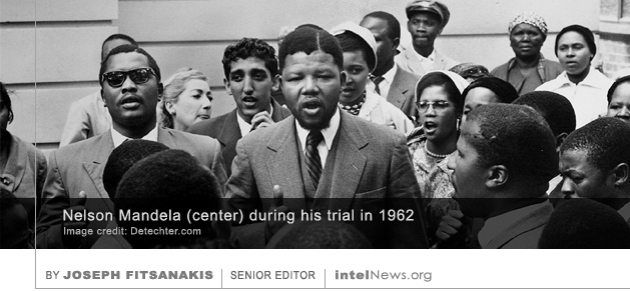 The arrest of Nelson Mandela in 1962, which led to his 28-year incarceration, came after a tip from the United States Central Intelligence Agency, according to an American diplomat who was in South Africa at the time. At the time of his arrest, Mandela was the head of uMkhonto we Sizwe (MK), an organization he founded in 1961 to operate as the armed wing of the anti-apartheid African National Congress (ANC). But the white minority government of South Africa accused Mandela of being a terrorist and an agent of the Soviet Union. The US-Soviet rivalry of that era meant that the ANC and its leader had few supporters in America during the early stages of the Cold War.
 An expanding alliance between two of the most powerful armed groups in Afghanistan, the Taliban and the Haqqani Network, is reshaping regional power dynamics and possibly altering the course of the ongoing Afghan war. It was last summer when it was announced that Sirajuddin Haqqani, the leader of the notorious Haqqani Network based in southeastern Afghanistan, had been appointed deputy leader of the Taliban. The move, which brought together two groups that traditionally acted autonomously, was seen as largely symbolic at the time. But observers are now suggesting that the two groups are actively integrating more than ever before, and that their increasing cooperation is drastically changing the dynamics of the bloody Afghan war.
 tactical priorities.
 system, job centers, taxation offices and community militias. The administrative and military efficiency of the Haqqani Network only adds to the strength of the Taliban and places them in a renewed position of power vis-à-vis Kabul.
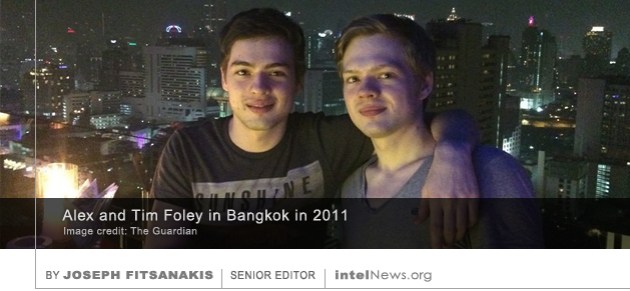 The two sons of a Russian couple, who were among 10 deep-cover spies arrested in the United States, have given an interview about their experience for the first time. Tim and Alex Foley (now Vavilov) are the sons of Donald Heathfield and Tracey Foley, a married couple arrested in 2010 under Operation GHOST STORIES, a counterintelligence program run by the US Federal Bureau of Investigation. Following their arrest, their sons, who had grown up thinking their parents were Canadian, were told that they were in fact Russian citizens and that their real names were Andrei Bezrukov and Elena Vavilova. Their English-sounding names and Canadian passports had been
 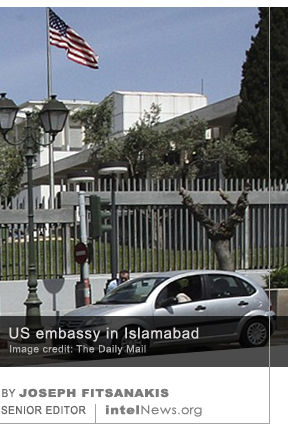 A leading article in The Washington Post suggests that the United States Central Intelligence Agency suspected that its most senior officer in Pakistan was poisoned by the host country’s intelligence services, in an attempt to kill him. The CIA pulled its station chief from Islamabad in the summer of 2011, two months after Operation NEPTUNE SPEAR, which saw the killing in Abbottabad of al-Qaeda founder Osama bin Laden. The CIA official, who has since been identified as Mark Kelton, acted as the senior US intelligence representative in the Asian country. He had assumed the post, which was supposed to last at least two years, only seven months earlier. His abrupt removal raised questions, which were informally answered by Langley. There were rumors that Kelton’s return to the US was health-related, but that the decision to replace him was also affected by his extremely poor relations with the Inter-Services Intelligence (ISI) directorate, Pakistan’s powerful spy service.
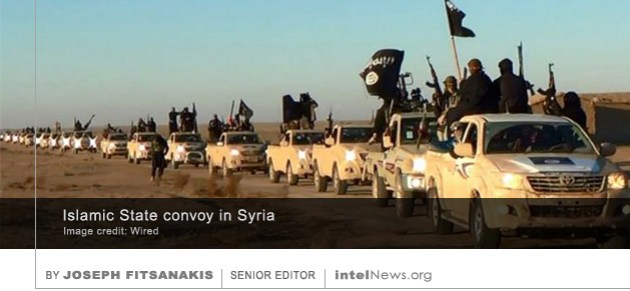 The two main warring parties in the Syrian Civil War, the government of Syria and the Islamic State, frequently contact one another in pursuit of commercial and military deals, according to internal Islamic State documents. British-based news agency Sky News said on Monday that it had acquired “secret Islamic State files”, which included handwritten orders to operatives sent directly from officials at the organization’s headquarters in Raqqa, Syria. The group said it received the documents from a regional branch of the Free Syrian Army (FSA), a largely secular armed opposition group that was formed in 2011 by defectors from the Syrian Armed Forces. The FSA unit in Raqqa left the Syrian city once it was occupied by the Islamic State, and is currently based in Turkey. One of the group’s core preoccupations is assisting Islamic State defectors in their efforts to escape from Raqqa and reach Turkey. It was through these defectors, according to Sky News, that the secret Islamic State documents were acquired.
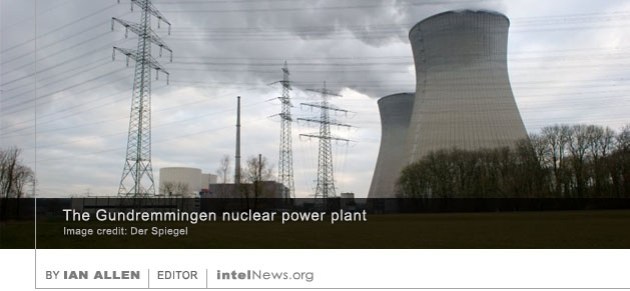 The computers of a nuclear power plant in southern Germany have been found to be infected with computer viruses that are designed to steal files and provide attackers with remote control of the system. The power plant, known as Gundremmingen, is located in Germany’s southern district of Günzburg, about 75 miles northwest of the city of Munich. The facility is owned and operated by RWE AG, Germany’s second-largest electricity producer, which is based in Essen, North Rhine-Westphalia. The company provides energy to over 30 million customers throughout Europe.
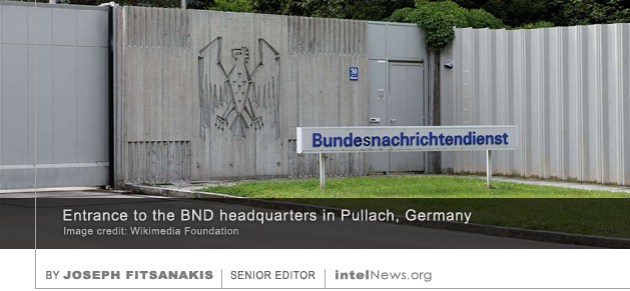 The head of Germany’s foreign intelligence agency has been removed from his post in a move described by observers as surprising. Gerhard Schindler, 63, had led Germany’s Federal Intelligence Service, known as Bundesnachrichtendienst, or BND, since 2012. Founded 60 years ago with direct input from the United States Central Intelligence Agency, the BND is today responsible for collecting intelligence abroad in the service of German national interests. Headquartered in the southern German city of Pullach, near Munich, the BND is directly subordinate to the office of German Chancellor Angela Merkel.
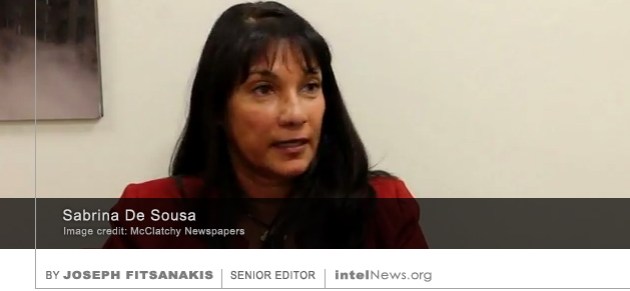 An appeals court in Portugal has ruled that a former officer of the Central Intelligence Agency is to be extradited to Italy, where she faces charges of helping kidnap a man as part of a secret operation sponsored by the United States government. Sabrina De Sousa, 59, was an accredited diplomat stationed at the US consulate in Milan, Italy, in 2003, when a CIA team kidnapped Hassan Mustafa Osama Nasr from a Milan street in broad daylight. Nasr, who goes by the nickname Abu Omar, is a former member of Egyptian militant group al-Gama’a al-Islamiyya, and was believed by the CIA to have links to al-Qaeda. Soon after his abduction, Nasr was renditioned to Egypt, where he says he was brutally tortured, raped, and held illegally for years before being released without charge.
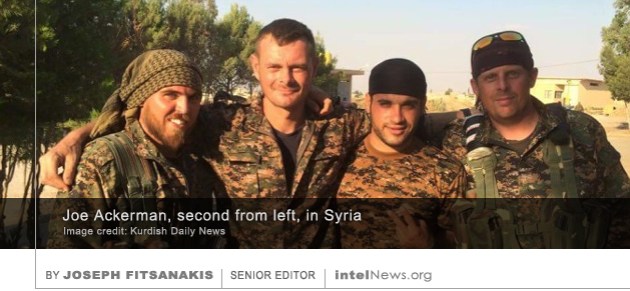 Two British and one Irish citizen, who fought with Kurdish units against the Islamic State in Iraq and Syria, but were imprisoned in Iraqi Kurdistan while they were trying to return to Europe, have been freed. The three men are Joshua Molloy, from County Laois in the Republic of Ireland, Jac Holmes from Bournemouth, England, and Joe Ackerman (pictured), from the West Yorkshire city of Halifax in England’s northern region. All three joined Kurdish militias and saw action in Syria and Iraq in recent months.
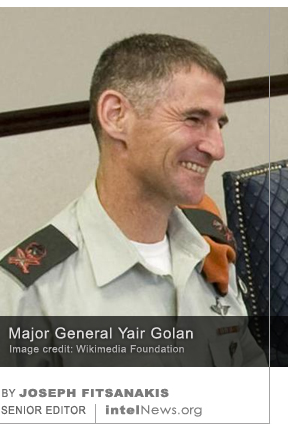 The governments of Israel, Egypt and Jordan have entered an intelligence-sharing agreement aimed at joining forces against the Islamic State, which a senior Israeli military commander has described as “unprecedented”. The comment was made on Wednesday by Major General Yair Golan at a press conference hosted by Israel’s Foreign Press Association. General Golan has been serving as Deputy Chief of the General Staff of the Israel Defense Forces since late 2014.
 A former computer technician who worked on cryptology has been sentenced to death in China after being found guilty in what some describe as one of the country’s most damaging espionage cases in recent years. The man, Huang Yu, is reportedly a 41-year-old computer expert who worked for a government-funded research institute specializing in cryptology —the science of making and breaking secret codes. He was arrested in 2011 in Chengdu, the capital of Sichuan province in southwestern China.
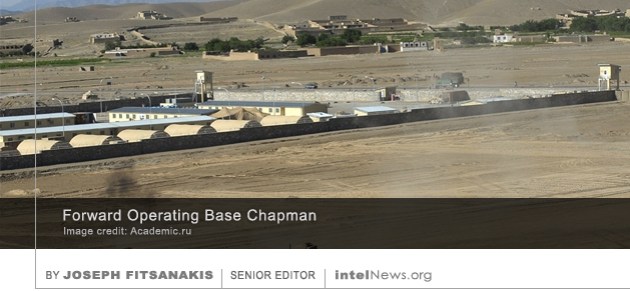 Two recently declassified United States government documents suggest that Pakistani intelligence officers may have been behind a suicide attack that killed seven employees of the Central Intelligence Agency in Afghanistan. The
 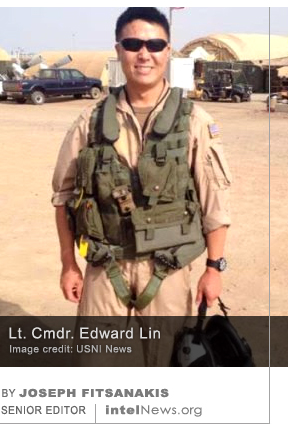 An American official has told Newsweek magazine that the possibility of further arrests in the espionage case of United States Navy flight officer Edward Lin should not be ruled out. Last Sunday, the US Navy reported the arrest Lt. Cmdr. Lin, who faces two counts of espionage and three counts of attempted espionage, among other charges. Aside from a three-page, heavily redacted charge sheet released by the Navy, almost nothing is known about this case. However, as intelNews








Jail for man involved in planned assassination of senior North Korean defector
May 18, 2016 Leave a comment
In October 2010, a few months before Hwang’s death, South Korean authorities revealed that two self-confessed North Korean spies, Tong Myong Kwan and Kim Myung Ho, had allegedly admitted to posing as defectors. Seoul said that Tong and Kim, who were both 36 at the time, were on an assassination mission assigned to them by the intelligence unit of the North Korean Ministry of Defense. The two reportedly stated under interrogation that they were selected for the mission in 2004 and were trained for six years in spy trade craft, as well as techniques of assimilating in life in South Korea, which apparently included “watching South Korean soap operas to gain a better understanding of South Korean society”.
At the time of Tong and Kim’s arrest, South Korean authorities had stated that the two alleged North Korean spies had been assisted by at least two South Korean citizens. One has never been named. The other, Park, was indicted last year of providing logistical support to foreign spies who were plotting to kill Hwang, in return for ₩25 million ($21,000). His legal team appealed the sentence, saying he had been framed by the North Koreans. But on Tuesday, the Seoul High Court rejected the Park’s appeal and upheld his original 3-year jail sentence.
► Author: Joseph Fitsanakis | Date: 18 May 2016 | Permalink
Filed under Expert news and commentary on intelligence, espionage, spies and spying Tagged with assassinations, defectors, Hwang Jang-yop, Kim Myung Ho, News, North Korea, North Korean Ministry of Defense, South Korea, Tong Myong Kwan