October 31, 2019
by Joseph Fitsanakis
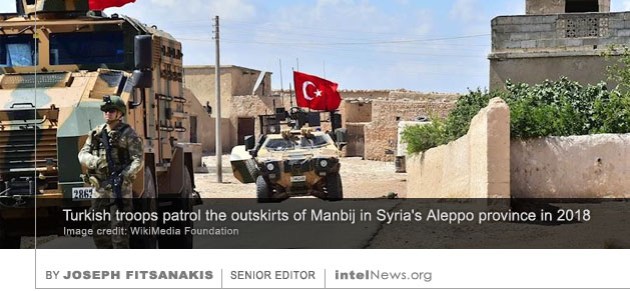 In 2011, the discovery of Osama bin Laden’s hideout in Abbottabad raised questions about Pakistan’s knowledge of his whereabouts. Today it is hardly controversial to suggest that at least some elements in the Pakistani government must have been aware of bin Laden’s location. Last week’s discovery of Abu Bakr al-Baghdadi in a region of Syria controlled by Turkey inevitably raises similar questions about Ankara’s role in the Syrian conflict and its relationship with the Islamic State.
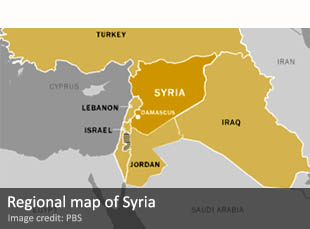
The self-proclaimed caliph of the Islamic State was found hiding in Barisha, a village in the Syrian province of Idlib, which is located just two miles from the Turkish border. The region that surrounds Barisha is under the control of Turkey and can most accurately be described as a Turkish protectorate inside Syria. The area north of Barisha has been under Turkish control since August of 2016, when Ankara launched Operation Euphrates Shield, a cross-border operation conducted by the Turkish Armed Forces in cooperation with Turkish-baked militias in Syria. In early 2018, Turkish and pro-Turkish forces extended their territorial control further south, capturing Barisha and all surrounding regions. They remain in control of the area to this day.
Turkish-occupied northern Syria is often described as a “proto-state”. It is governed by a collection of local councils of Turkmens and Arabs, with some Kurds and Yazidis also present. These councils elect representatives to the self-proclaimed Syrian Interim Government, which was formed in Turkey by Turkish-backed Syrian exiles and is currently headquartered in Azaz, an Arab-majority city of 30,000 that is under direct Turkish military control. Azaz is also the headquarters of the Turkish-backed “Free Police”, a gendarmerie-style militia that is funded, trained and equipped by the Turkish government.
In addition to the Turkish troops, the region is controlled by the Turkish-funded Syrian National Army. The 25,000 troops of the SNA —which is jokingly referred to by the locals as the “Turkish Syrian National Army”— operate completely under Turkish command. A substantial portion of the SNA’s force consists of former Islamic State fighters who switched their allegiance to the SNA once they saw the writing on the wall. Others are former members of the group that used to call itself Jabhat al-Nusra, an al-Qaeda affiliate that has become the most powerful Salafi-jihadist force in Syria after the demise of the Islamic State.
Turkish-occupied northern Syria is also the base of Ahrar al-Sham, a Salafi-jihadist group consisting of over 20,000 fighters, which is not officially aligned with al-Qaeda, but has similar goals. Since at least 2017, Ahrar al-Sham has effectively operated as a Turkish proxy militia and is in charge of dozens of check points and observation posts throughout the region. Lastly, the area is home to Hurras al-Din, yet another Salafi-jihadist group that is affiliated with al-Qaeda —though its leaders deny it. The group is able to operate in Turkish-controlled areas of Syria with suspicious ease. It was this group, Hurras al-Din, that sheltered al-Baghdadi in Barisha in return for cash.
Given Turkey’s military and political control of Idlib province, the question arises of how the world’s most high-profile terrorist leader was able to enter the region and receive protection from a militia that operates there under the watchful eye of the Turkish military. The New York Times reports that al-Baghdadi had been living in Barisha for several months before last week’s raid, and that Washington had been aware of his hideout location since the summer. Was Turkish intelligence also aware of the Islamic State leader’s whereabouts? If not, how could that be? If yes, why did it take a Kurdish spy, handled by Syrian Kurdish intelligence, to locate him and provide information to the Untited States? More importantly, what exactly is the relationship between Turkey and the al-Qaeda-linked Islamists who seem to operate freely in Idlib and provide protection to senior Islamic State officials in exchange for cash?
There are clearly more questions than answers here. If the United States is serious about combating Islamist extremism in the Middle East, it must press Ankara on these questions as a matter of urgency.
► Author: Joseph Fitsanakis | Date: 31 October 2019 | Permalink
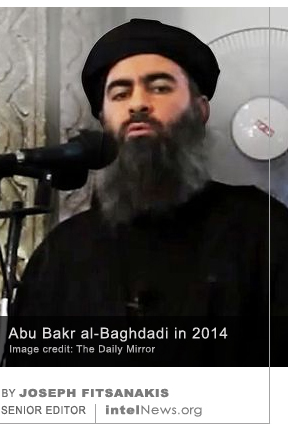 The Islamic State’s Syrian hideout that housed the group’s leader until his demise on October 26, was equipped with a frequently used internet connection, according to Arab media reports. Abu Bakr al-Baghdaid, the self-proclaimed caliph of the Islamic State, was killed by United States soldiers in Barisha, a village in the Syrian province of Idlib, which is located just two miles from the Turkish border.
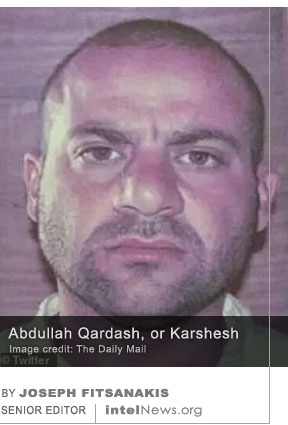 Barely a day after the United States announced the killing of Islamic State leader Abu Bakr al-Baghdadi, the militant Sunni group has replaced him with an Iraqi former military officer, according to sources. US President Donald Trump said on Sunday that al-Baghdadi, the self-styled Caliph of the Islamic State of Iraq and Syria (ISIS), died by detonating an explosive vest. He reportedly did so after being cornered by American Special Operations Forces troops at his hideout in the northwestern village of Barisha, which is located in the Syrian province of Idlib near the border with Turkey.
 The leader of the Islamic State has abandoned the city of Mosul and is hiding in the desert zone of western Iraq, according to intelligence sources. Meanwhile Mosul, once the most populous city under the Islamic State’s control, is now reportedly being defended by a diminishing cadre of fewer than 3,000 Sunni militants, who are facing a 110,000-strong invading army.







 intelNews.org
Western intelligence agencies see non-Arab as new head of ISIS
January 21, 2020 by Joseph Fitsanakis Leave a comment
However, the names reported by Newsweek were not immediately recognizable to Western intelligence officials and other experts who monitor the Islamic State. But now British newspaper The Guardian reports that Western intelligence services have concluded that the man referred to as “Abdullah Qardash” in October is indeed the new leader of ISIS. The paper said on Monday that the new ISIS leader’s birth name is Amir Mohammed Abdul Rahman al-Mawli al-Salbi. He is allegedly not an Arab, but rather an Iraqi Turkman whose family comes from Tal Afar, a northwestern Iraqi city that is close to the borders of Syria and Turkey. In fact, al-Salbi is reported to have a brother in Turkey, who is a prominent member of an ethic political grouping called the Turkmen Iraqi Front.
Al-Salbi, who was allegedly appointed as leader of ISIS just hours after al-Baghdadi’s demise, is believed to be the first non-Arab to ever lead the militant group. Like most of ISIS’ original founders, al-Salbi is believed to have met Baghdadi in 2004 in Camp Bucca, an American-administered prison in Umm Qasr. Similarly to al-Baghadi, al-Salbi’s background is in Islamic education —something that enabled him to quickly rise in the ranks of ISIS ideologues and command significant influence. By 2018, al-Salbi had become a central decision-maker within the group, and was able to shape its activities and policies within its territory in the Middle East and beyond. The Guardian article concludes that al-Salbi is “a hardened veteran in the same vein as al-Baghdadi”, which implies that no major changes in the Islamic State’s strategy are expected to take place under his leadership.
► Author: Joseph Fitsanakis | Date: 21 January 2020 | Permalink
Filed under Expert news and commentary on intelligence, espionage, spies and spying Tagged with Abdullah Qardash, Abu Bakr al-Baghdadi, Amir al-Salbi, Islamic State, News