Opinion: Israel Security Agency should tackle organized crime in the Arab sector
February 11, 2021 Leave a comment
 LAST MONTH I WROTE an article on Ynet, Israel’s most popular news website, calling on the Israel Security Agency (ISA) to prevent organized crime in the Arab sector in Israel, which has reached a level that the police cannot deal with. The article caused a broad public debate in Israel, as it marked the first time that the ISA was urged to take responsibility outside its security jurisdiction. It elicited public support, as well as opposition against perceived further invasion of privacy and granting additional powers to the ISA.
Crime in the Arab sector in Israel —especially murders— has reached record highs and is rising year after year. In 2020, over 100 people were killed in the Arab sector. There are many allegations that the police are failing to stop this murky wave of crime. The police are at a loss. The opening of more police stations in the Arab sector and increases in the forces allocated to the Arab sector have not made an impact on this gloomy picture.
The most serious crime in the Arab sector, especially organized crime, requires making out-of-the-box, inventive decisions. The Israel Police is not succeeding in this for several reasons: it has no quality intelligence; there is public distrust in the police that prevents citizens from cooperating with it; the police are perceived as an unreliable body that cannot maintain the confidentiality of sources; and mainly because the police is not an intelligence-oriented organization. The issue of crime in this sector, much of which is organized, requires advanced intelligence capabilities and only the ISA knows how to deal with organizations and individuals operating in secret. This is because the ISA has gained vast experience in covering the Arab sector in Israel for counterintelligence reasons. Read more of this post

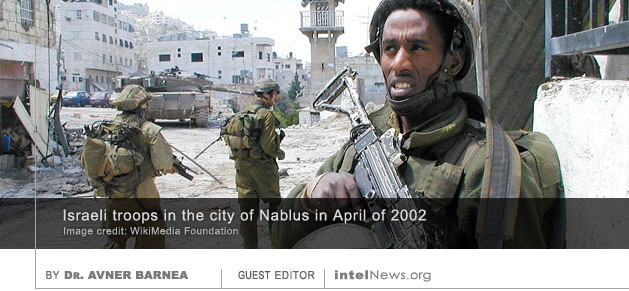 On the 20th anniversary of the outbreak of the second intifada (October 2000), the debate arises again in Israel as to whether the Palestinian move was an initiative of Chairman Arafat and the Palestinian Authority or whether it was a spontaneous evolution on the Palestinian side that largely surprised not only Israel but also the Palestinians.








Operation Guardian of the Walls: Israel’s double intelligence failure
May 14, 2021 by intelNews 4 Comments
For several days now, a war has been going on between the State of Israel and the Hamas organization that controls the Gaza Strip. The confrontation began after unrest broke out among Palestinians in Judea and Samaria, who raised allegations of Israeli damage to the Temple Mount and the Al-Aqsa Mosque. In firing missiles at Israel, Hamas tries to portray itself as protecting the sanctuaries of Islam in Jerusalem. In doing so, it seeks to strengthen its political position in Judea and Samaria against the Palestinian Liberation Organization (PLO), which is leading the Palestinian Authority. Since then, Israel has been using airstrikes against targets in Gaza, while Hamas has been firing hundreds of missiles at Israel daily. Israel is desperately trying to undermine Hamas’ military and operational capabilities, including armaments factories, while also eliminating senior commanders of the organization.
Hamas’ missile attacks managed to surprise Israel. Israeli intelligence (the Israeli Military Intelligence, known as IMI, and the Israeli Security Agency, ISA) previously estimated that Hamas’ goal was to maintain the status quo, and was not ready to initiate attacks against Israel. Not only did Israeli intelligence err in assessing Hamas’ intentions, but Hamas surprised observers with its range of weapons, such as long-range missiles with a reach that is in excess of 150 miles. This constitutes a strategic surprise for Israel. So far (May 13, 2021), Hamas has fired about 1,500 missiles at Israel, most of which have been intercepted by Israel’s air defense system called the Iron Dome.
At the same time, extensive riots broke out within Israel between Palestinian Israeli Arabs and Israeli far-right groups. The attacks have spread throughout the country, and the Israeli police appear unable to control them. The ISA is responsible for monitoring terrorism-related developments in the area of political subversion, including assessing the intentions of Israeli Arabs and the level of threat posed by these intentions. It appears that the ISA, was completely surprised by recent developments. The spontaneous mobilization of Israeli Arabs stems from fears that Israel intends to harm the Temple Mount and the Al-Aqsa Mosque. It is also a form of identification with their brethren in the Gaza Strip. At present, the government of Israel has not managed to restrain the mobilization of the Israeli Arabs.
In conclusion, Israeli intelligence demonstrates two blind spots. One concerns Hamas’ intentions and offensive capabilities. The other concerns misreading the intentions and degree of threat to public order in Israel by Israeli Arabs. This is why the military clash between Israel and Hamas, as well as the riots by Israeli Arabs, have not yet ended.
Dr. Avner Barnea is research fellow at the National Security Studies Center of the University of Haifa in Israel. He served as a senior officer in the Israel Security Agency (ISA).
► Author: Avner Barnea | Date: 14 May 2021 | Permalink
Filed under Expert news and commentary on intelligence, espionage, spies and spying Tagged with 2021 Israel–Palestine crisis, Analysis, Avner Barnea, Hamas