Notes on the assassination of Iranian IRGC Commander Hassan Mahdawi
April 26, 2024 2 Comments
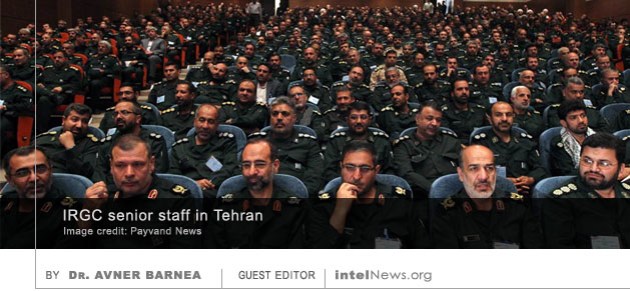 THE TARGETED KILLING OF Hassan Mahdawi, a high-ranking member of Iran’s Islamic Revolutionary Guards Corps (IRGC) and the commander of the Quds Force in Syria and Lebanon, was carried out by Israel on April 1, 2024. The actual assassination was based on precise operational intelligence, while Israel’s assessment of Iran’s response was wrong.
On the day of the attack, a building adjacent to the Iranian Embassy in the Syrian capital of Damascus was attacked with rockets. The attack killed seven IRGC members: General Muhammad Reza Zahedi, also known as Hassan Mahdawi, his deputy, and five additional officers. Mahdawi is the most senior Iranian commander to be killed since the assassination of IRGC Quds Force Commander Qasem Soleimani by the United States in 2020.
Mahdawi had close ties with Hezbollah. He maintained a close relationship with Hezbollah Secretary-General Hassan Nasrallah and was perceived by Israel to be directly coordinating the military attacks on Israel from Lebanon and Syria. In Tehran’s collective memory, Israel’s history of attacks against it includes numerous strikes on Iranian nuclear sites, assassinations of scientists within Iran, and actions against Iranian proxies in Syria, Lebanon, Iraq, and Yemen. Traditionally, these attacks have been invariably met with attacks by Iran’s proxies in the region.
This time, it was different. Iran recognized Mahdawi’s assassination as a direct attack on Iran that it could not tolerate, and had to respond to differently. Just days following Mahdawi’s assassination, Iran attacked Israel. According to the Israel Defense Forces, 99 percent of the more than 330 weapons fired at Israel (including at least 185 drones and 110 surface-to-surface missiles) were intercepted, mostly over the territory of countries adjacent to Israel. Iran’s attack on Israel was unprecedented. It was launched directly from Iranian territory in contrast to prior cases, when Iran has used its proxies, supposedly leaving its hands clean.
Israel could not tolerate such a blatant infringement on its sovereignty. After Israeli officials vowed a response to the Iranian attack, the Jewish State counter-attacked, causing minor damage to the Eighth Shekari Air Base in northwest Esfahan, a dozen kilometers from the Natanz nuclear facility. It was a calculated response designed to deliver a message to Iran that Israel could and would respond to an attack. Following Israel’s counterattack, the tensions between Iran and Israel have subsided for the time being.
While the attack on General Mahdawi was based on excellent operational intelligence, it became evident that the Israeli assessment regarding a possible Iranian response was erroneous. The Israeli assessment was that the Iranian response would be similar to what occurred in the past —namely limited attacks by Hezbollah on northern Israel and attacks on the Golan heights by Iranian proxies in Syria. Israel simply did not anticipate a direct Iranian attack on Israel from Iranian territory.
It seems that Israeli senior analysts were entangled in a conception of Iran’s past behavior and anticipated that Tehran’s response would be similar to prior cases, namely utilizing Iran’s proxies. Israel did not pay enough attention to the difference between Mahdawi’s assassination and previous attacks against Iran. This time, the attack targeted the Iranian embassy in Damascus and the target was a very senior official, who was close to Iran’s Supreme Leader Ali Khamenei.
It appears that Israel’s assessment of the Iranian response to Mahdawi’s assassination was a strategic failure. It appears more likely that the Israeli War Cabinet was provided with an incorrect assessment by the nation’s intelligence community, and less likely that it was provided with an incorrect assessment, which it then decided to ignore. There is concern in Israel that the intelligence assessment was once again wrong, after the colossal failure to anticipate the October 7 attack on Israel by Hamas.
► Author: Avner Barnea | Date: 26 April 2024 | Permalink
Dr. Avner Barnea is research fellow at the National Security Studies Center of the University of Haifa in Israel. He served as a senior officer in the Israel Security Agency (ISA). He is the author of We Never Expected That: A Comparative Study of Failures in National and Business Intelligence (Lexington Books, 2021).
 ON MARCH 23, CHANNEL 12 of Israeli television aired a remarkable interview with Sassi Elya, the former director of technology at the Israel Security Agency (ISA). Better known by the acronyms Shin Bet or Shabak, the ISA is Israel’s domestic security service. The interview had initially been scheduled for broadcast as part of the evening news on October 7, 2023. However, its airing was canceled due to the attack on Israel by Hamas, which occurred that morning.
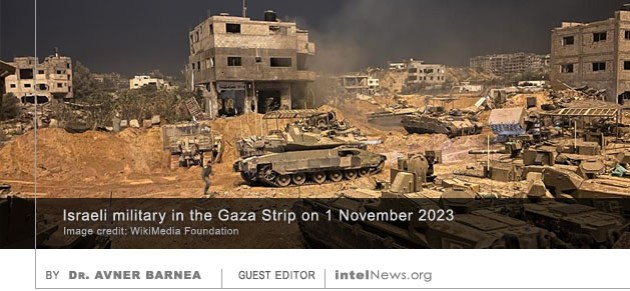 SINCE OCTOBER 7, 2024, when Israel was caught off guard by a sudden and highly damaging attack from Hamas, more information has surfaced regarding why there was no prior warning about the attack and the failures of Israeli intelligence in this regard.
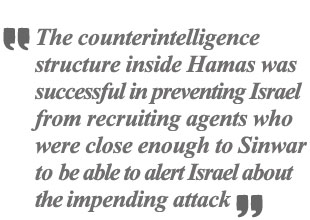 capabilities. Another important insight is that the counterintelligence structures inside Hamas were successful in preventing Israeli intelligence from recruiting agents who were close enough to Sinwar to be able to alert Israel about the impending attack. Furthermore, Israel’s collection and analysis of signals intelligence was unproductive, possibly because Hamas was successful in countering Israel’s ability to produce effective intelligence from signals intercepts.
 THE OCTOBER 7 ATTACK on Israel was a total surprise. There was no warning. There were very few signs of a possible attack. Israeli intelligence evaluated these signs as elements of a routine military exercise by Hamas, and even assessed them as parts of an imaginary scenario. It therefore gave no warning to those Israeli Defense Forces (IDF) units that were stationed on the border with Gaza. Meanwhile, what we know about the intelligence failure of October 7 will likely pale before what the commission of inquiry will reveal once it is established. That was precisely what happened in the case of the Agranat Commission of Inquiry, which made significant revelations while investigating the intelligence failings of the IDF in the run up to the 1973 Yom Kippur War.
 time, in the first two days of the conflict the IDF was confused and acted without direction, in the apparent absence of relevant action plans for what to do in the event of a massive invasion. The IDF was clearly not ready for such a scenario.
 for those conclusions to become public. What is to be done in the meantime? There is public pressure to launch the inquiry soon.
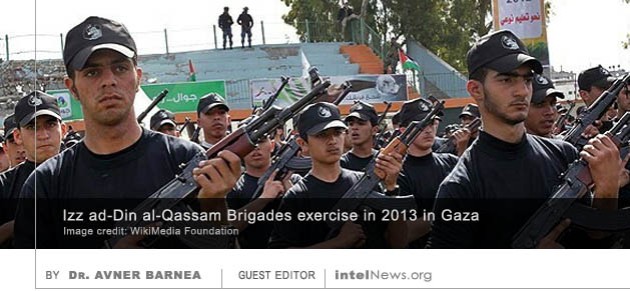 IT HAS BECOME CLEAR that Hamas had up-to-date intelligence on Israeli targets prior to the attack on October 7, 2023, the largest and most devastating terrorist attack in Israel’s history. Hamas did not have access to clandestine information sources but rather relied on open-source intelligence (OSINT) to understand the structure and weaknesses of Israel’s defense system along the border fence. In addition to publicly available maps, Hamas meticulously gathered online intelligence about specific sites within the Israeli communities near the Gaza Strip.
 interests of national security, the public’s ‘right to know’ purview is substantial. Thus, significant amounts of information are available online.
 the Israeli Military Intelligence was dissolved, for reasons that remain to be investigated. CNN was among many news outlets that have
  SINCE OCTOBER 7, WHEN Hamas launched its surprise attack on Israel, many more details about the intelligence failure have emerged. It appears that Israeli intelligence officials have warned for years about military exercises held by Hamas in the Gaza Strip, which have included practice raids on cities deep inside Israel. However, the Israel Military Intelligence (IMI) did not heed to the warnings, because it considered Hamas operationally incapable of carrying out such raids. Instead, the IMI estimated that the Hamas leadership aimed to arrive at a settlement with Israel. That seems like the result of a highly successful disinformation operation, which added significantly to the effectiveness of the sudden attack on Israel on October 7.
 large number of settlements simultaneously. It also believed that such an operation would go against the spirit of Hamas leadership’s spirit intention to settle with Israel.
 Indeed, a preventive course of action should have been in place even in the absence of specific intelligence warnings —if only to enable the IDF to repel a surprise attack by Hamas. There was no need to estimate what Hamas would do in order to prepare for a surprise attack.
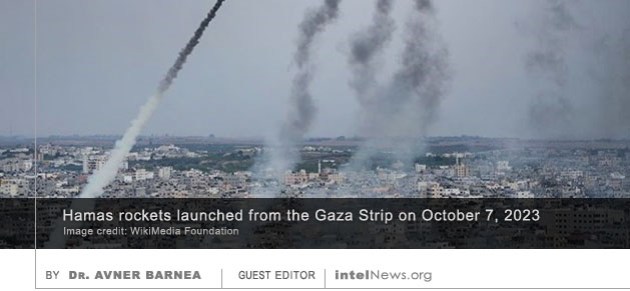 SEVERAL DAYS HAVE PASSED since October 7, the day when Hamas stunned Israel with a surprise attack against several settlements near the Gaza border. It is now clear that Israeli intelligence was in possession of warning indicators about the attack, and that these indicators were misjudged.
 forwarded to Prime Minister Netanyahu’s office. The Israeli newspaper that
  THE COMPARISON BETWEEN THE October 2023 attack on Israel and the Yom Kippur War is reasonable. We still have an obscured perspective on what happened on October 7. But even this partial picture makes it possible to draw a preliminary comparison. Undoubtedly, there is no precedent for such a monumental failure in the history of Israeli intelligence.
 for the professionalism and resilience of the IDF, which was there in 1973, continues to exist.
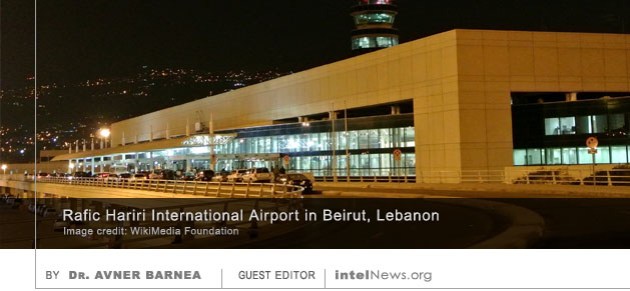 LAST WEEK, LEBANON’S GENERAL Security Directorate
  LAST WEEK, THE CHAIRMAN of the Israeli Religious Zionist Party, Bezalel Smotrich, who will soon be appointed as a cabinet minister, alleged that the Israel Security Agency (ISA) encouraged the killer of the late Israeli Prime Minister, Yitzhak Rabin. Smotrich’s allegation shocked many Israelis, because of the unfortunate timing —it was uttered close to the annual Remembrance Day for Prime Minister Rabin, who was assassinated by radical rightwing activist Yigal Amir 27 years ago. But also because of the unacceptable content, which echoes conspiracy theories that have accompanied Rabin’s assassination for many years. To counter these conspiracy theories, it is fitting to discuss the failure to defend Rabin that did occur under the responsibility of the ISA.
 ISA to infiltrate extreme rightwing groups. The Committee did not ask: could the ISA’s intelligence have prevented the murder?
 IN HIS NEW BOOK, We Never Expected That: A Comparative Study of Failures in National and Business Intelligence (Lexington Books), Dr. Avner Barnea has coined two new terms in the field of strategic surprise. One is diffused surprise and the other is concentrated surprise, two terms that help us to better understand why intelligence failures occur. In a diffused surprise there is difficulty in identifying the intelligence target and therefore the chance of a surprise increases; while in a concentrated surprise the intelligence target is usually a recognized organization. At the same time, the mistake lies in the assessment of the target’s abilities and intentions.









Israel releases findings of internal probe into October 7 intelligence disaster
August 12, 2024 by intelNews 17 Comments
To compline the report, the Intelligence Directorate of the IDF investigated how the most significant intelligence failure in the history of the State of Israel occurred, as well as how the MID analysts and other members of the intelligence community failed to notice the attack that Hamas had been planning.
According to the findings of the investigation, Hamas began planning its attack between seven and eight years ago, which means that Israeli intelligence should have been able to observe the relevant warnings as early as 2016. However, the IDF’s intelligence division missed the early signs.
It appears that the MID assumed Hamas had been deterred by Israel. There was also a prevailing assumption that the group’s military wing, led by Yahya Sinwar, had settled on improving the economic situation of Gaza Strip residents while securing its internal sovereign status in the Gaza Strip. The MID intelligence analysts were uniformly immersed in the concept that Hamas “did not want to and could not” go to war against Israel.
The main findings of the investigation are as follows: Read more of this post
Filed under Expert news and commentary on intelligence, espionage, spies and spying Tagged with 2023 Israel-Hamas War, Avner Barnea, Hamas, IDF, intelligence disasters, Israel, Israel Military Intelligence, News